Category: mobile

  • Can Microsoft beat the PC marketplace’s structural decline?

    Can Microsoft beat the PC marketplace’s structural decline?

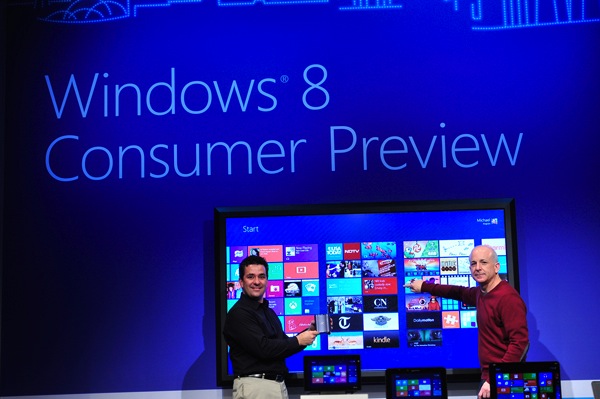
    In New York on Thursday Microsoft will have a marathon launch of their Windows 8 system and the futures of many of their hardware partners lie on the success of the new system.

    For Microsoft, Windows 8 could be the last throw of the dice for the desktop operating system that has sustained the company for thirty years.

    The figures aren’t good for Windows as Microsoft’s 2012 profit and loss shows, here are the figures broken out by operating unit segment from the company’s annual report.

    Year Ended June 30, 2012 2011 2010
    Revenue  bn $  bn $  bn $
    Windows & Windows Live Division 18,818 18,787 18,789
    Operating Income (Loss)
    Windows & Windows Live Division 11,908 11,971 12,193

    The core Windows & Windows Live Division has stagnant revenues and a slowly declining profit margin. We’ll leave the huge losses in the online division for a future post.

    Since the days of the first MS-DOS deal with IBM, Microsoft’s core business has been the licensing of operating systems to PC manufacturers and now that model is in trouble.

    For instance Dell had an 8% drop in revenue resulting in a worrying 22% drop in operating profit, their PC dominated consumer division suffered a fat 22% drop in sales and recorded a miniscule .5% profit margin. Similarly Asus had 25% drop in sales to record a 2011 loss.

    The pain being suffered by PC manufacturers’ sales and margins will almost certainly be shared by Microsoft as companies like Dell, HP and Asus simply can’t afford to pay the licensing fees which have sustained the Redmond business model for so long.

    Microsoft and their partners hope – or pray – that the PC decline is a temporary hiccup in computer sales similar to the traditional lull seen before the release of a new system.

    History’s not on their side with research company Asymco expecting sales of tablet computers to overtake PCs sometime in late 2013.

    This is not a cyclical trend – the PC industry is in structural decline; the traditional Windows upgrade cycle is dead and Google are running interference with their Chromebook networked laptops.

    Moving onto tablets and smartphones in this light makes sense for Microsoft and given the PC manufacturers have failed dismally to deliver decent tablet computers or phones over the last 15 years so it’s understandable the software giant wanted to develop their own hardware or team up with a struggling company like Nokia.

    The declining margins in personal computers means we’re seeing the end of the Windows desktop ecosystem. With the rise of the web and cloud computing the type of operating system we use is like arguing between Toyota and BMW drivers; one might be more prestigious but both will get you where you want to go.

    For Microsoft the challenge is to replace those Windows licensing rivers of gold with similar revenue streams through their phone and tablet products but with Apple and Google already dominating those fields, is it too late for the company that dominated personal computing? The next six months will tell us.

    Similar posts:

  • A quick Christmas checklist for hospitality businesses

    A quick Christmas checklist for hospitality businesses

    For listeners of my regular spot on ABC Riverland, here’s a quick checklist for regional business owners to make sure their online presence is ready for the Christmas holidays.

    Prospective customers are using the web to find businesses and attractions, so taking advantage of the free listing services by the major search engines and directories is the first step.

    Google Plus Local

    The search engine giant’s local service gives a free business listing that feeds into their results and those of many GPS devices and social media services.

    Fill in as many fields as possible, making sure you don’t forget opening hours and payment methods you accept.

    You can also upload photos and menus to your Google Local listing, all of these will help you come up higher in the search engine results.

    True Local

    News Limited’s True Local offers a similar service to Google and this also feeds into various services along with the local news sites run by the newspaper chain.

    Again, fill in as many fields as possible and make sure all your essential business details are listed.

    Sensis

    While the Yellow and White Pages may be dying, a free listing with their site will help come up on the various Telstra sites and companies that partner with them.

    Review sites

    Eatability, Yelp and Tripadvisor are all popular sites and applications used by customers to research accommodation and venues. You need to grab your listing and check what previous customers have said about you.

    Social media

    Along with having your own listing on Facebook, LinkedIn, Twitter and possibly sites like Pinterest; you should be doing regular searches to check what people are saying about you and your district.

    One of the great things about social media is it’s a great market intelligence tool. For instance if there’s lots of people coming to your town to go fishing and there’s nobody catering for them, then this is an opportunity. Google Alerts can help you with this.

    Your own website

    Most important of all is your own website. Check that it works on smartphones and tablet computers, if necessary borrow a friend’s Android or Apple device and see what your site looks like on it.

    When you review this with your web developer also check your keywords are working and make sure yourmeta-tagsall reflect what you have to offer your customers.

    The Christmas-New Year rush is too important a period for hospitality business to miss out on customers. A few small thing might get you the visitors who might have kept on driving to the next town.

    Similar posts:

  • Guarding your words

    Guarding your words

    US presidential candidate Mitt Romney and Australian radio commentator Alan Jones have in one thing in common – not understanding that almost every person they know is carrying a listening device.

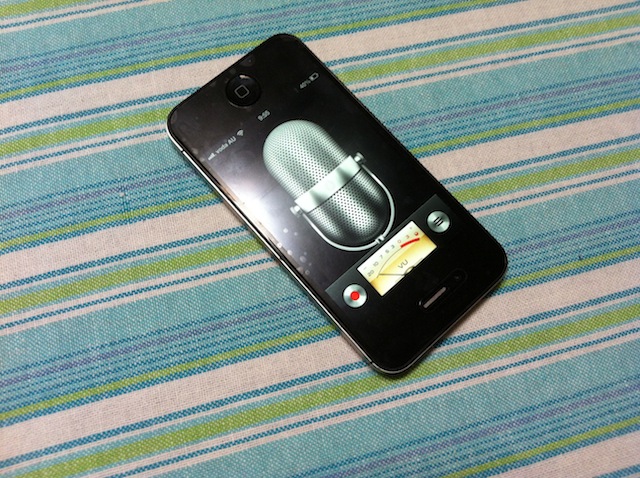
    The smartphone is a powerful tool and one of its great features is how it makes a great dictation device, you can use the built in recording applications to jot down ideas or make a record of important conversations.

    Political events are a great opportunity to record the candidates’ or speakers’ talks and this is what has caught both Jones and Romney.

    The 47% dependent on welfare slur has probably sunk Romney’s presidential campaign. At the very least it’s exposed the contradictions at the heart of the Republican agenda as they try to demonise those receiving government entitlements while trying to win the votes of older Americans who rely on state subsidies to survive.

    In many ways the US Republicans are facing the problem of electorates that believe their entitlements are sacred that all Western politicians will be grappling with over the next quarter century.

    This contradiction isn’t something either the media or the Western political classes have the intellectual capacity to deal with, so there is little chance of a rational debate on the economic sustainability of the entitlement culture.

    For Romney, this contradiction now threatens to sink his campaign.

    The Jones problem is somewhat different, this nasty little man was speaking to the next generation of Australian Liberal Party apparatchiks and the controversy about his tasteless comments will probably improve his standing in the sewer in which he floats. In the wider community outside Jones’ increasingly narrow circle of influence his comments only confirm the low opinion decent people have of this man.

    Jones though is not naive when using the media, the real naivety is among his guests. It’s been reported that before the event the audience were asked “if there were any journalists present”.

    That question being asked betrays any claim that the organisers didn’t know Jones’ comments would be offensive. It also shows how the modern political fixer misunderstands the nature of today’s media. It’s likely a recording of proceedings would have leaked out through an enthusiastic supporter showing off.

    What’s really instructive is how the kindergarten apparatchiks of the Young Liberals believe that shutting down recording devices will remove the risk of being held accountable. That mentality is pervasive through government and politics – shut down discussion and lie about what happened.

    All of these politicians have to understand something Alan Jones has known all along; that a microphone should be treated like a loaded weapon and never assumed to be turned off and safe.

    The days of what was said to the Poughkeepsie Chamber of Commerce or the Cootamundra Country Womens Association not being reported outside the local community are long gone. If you don’t want something broadcast nationally, then don’t say it.

    On balance, this is good for democracy and leadership as it makes all politicians – and business leaders – far more accountable and transparent.

    Accountability and transparency are anathema to the apparatchiks who run the political parties of the Western world. These people, despite their access to power, are ultimately going to be found wanting in a world where there is a recording device in almost every person’s pocket.

    There are genuine privacy concerns with smartphones but for business and political leaders the days of “speaking with a forked tongue” are over. This is not a bad thing.

    Similar posts:

  • They thought they didn’t have a problem

    They thought they didn’t have a problem

    As Apple fans howl about the about the new iOS6 Maps feature which replaces the old one driven by Google Maps, it’s useful to get a cartographer’s view of how Apple got things wrong.

    Michael Dobson’s analyis deep dives into the complexities of mapping which can be summed up in one phrase;  “their problem is that they thought they did not have a problem.”

    Those Rumsfeldian ‘unknown unknowns comes back to bite a company again.

    Like many things in life, mapping is a lot more difficult than it looks and assuming that a drawing or an older map is correct or the features unchanged is risky.

    This is not a job you just leave to machines sucking down data from various sources; details needs to be checked, validated and checked again before being added to a map.

    What’s worrying about Apple’s map snafu is this probably wouldn’t have happened under Steve Jobs as he’d have used the app himself and yelled at people when it didn’t work.

    Apple’s decision to run with a substandard service smells horribly of decision by committee and compromised products being release to suit managerial imperatives rather than delivering one perfectionist’s vision of what worked.

    We may well be seeing the beginning of Apple’s evolution into an anonymous corporation.

    One of the positives of that is we may also discover a less secretive or hubristic Apple.

    How Apple fix their map application is going to be interesting, they certainly have the funds to hire the best brains in mapping along with the 7,000 other employees Google are estimated to have in their mapping division, the question is should they?

    For Google, having a huge division building and improving their maps search as geolocation is a key part of their local services and search tools.

    Apple on the other hand doesn’t need a stand alone mapping division and while they can afford one, it certainly isn’t an effective use of their capital or management time.

    It may well be that Apple will have to swallow their pride and license the data feeds back from Google or even Nokia, or perhaps they could even put in a bid for Nokia just to mess with the minds of Microsoft’s management.

    Regardless of which way Apple decide to go, they’ve got themselves in an expensive mess which is going to take some time or money to fix.

    For now, I’m sticking with iOS5 on my phone as I like my mapping app too much, particularly the integrated public transit features. My guess is I’m not alone.

    Similar posts:

  • The risks of tablet pricing

    The risks of tablet pricing

    We often forget that tablet computers weren’t invented by Steve Jobs. For a decade before Microsoft and their partners like Toshiba or Dell had been selling ‘slate-like’ devices.

    The market wanted tablet computers, particularly business users in sectors like logistics and health care, but the Windows products on offer were heavy, clunky and expensive.

    It took the iPad to deliver what the market wanted —  a lightweight, easy to use and reasonably priced tablet computer. This was the reason Apple were so successful.

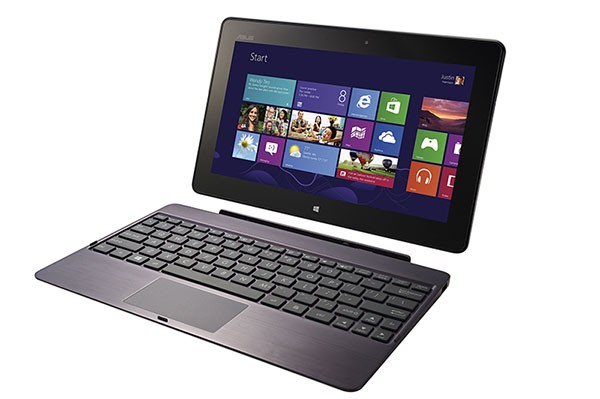
    With Asus’ pricing announcement of their new range of Windows 8 tablets it appears the mistakes made by the PC industry with tablet computers ten years ago are going to be repeated.

    The fundamental thing that will kill Windows tablets is cost and these tablets are too expensive compared to the Apple and Android competitors.

    While having Windows compatibility and the opportunity to save to USB drives or corporate networks is handy in a tablet, there seems to be little reason for customers not to buy a mid-priced laptop.

    It appears though these price points are part of Microsoft’s strategy. Steve Ballmer hinted at this in his Seattle Times interview last weekend.

    Q: The iPad has the largest share of the tablet market, but its soft spot, it seems to me, is the price.With the Surface, are you planning to compete with the iPad on price or on features?

    A: We haven’t announced pricing. I think we have a very competitive product from the features perspective. …

    I think most people would tell you that the iPad is not a superexpensive device. … (When) people offer cheaper, they do less. They look less good, they’re chintzier, they’re cheaper.

    If you say to somebody, would you use one of the 7-inch tablets, would somebody ever use a Kindle (Kindle Fire, $199) to do their homework? The answer is no; you never would. It’s just not a good enough product. It doesn’t mean you might not read a book on it….

    If you look at the bulk of the PC market, it would run between, say, probably $300 to about $700 or $800. That’s the sweet spot.

    The problem is the tablet computer market isn’t the PC market and those price points have changed.

    What’s more, the features that attract users to tablet devices or smartphones are different to that of PCs.

    Basically PCs, tablets and smartphones are different products.

    Applying PC pricing structures, or marketing models, to the tablet market is a risky strategy.

    Steve Jobs didn’t do this and Apple succeeded with the iPhone and iPad without damaging their Mac sales, whether Microsoft can pull of a similar achievement with the opposite strategy remains to be seen.

    Similar posts: