
Category: mobile

  • Towards the Zettabyte enterprise

    Towards the Zettabyte enterprise

    Toward the Zettabyte Enterprise originally appeared in Smart Company on May 31, 2012

    Two hundred years ago, the idea of equivalent power of hundreds of horses in a single machine was unthinkable; then steam engine arrived with what seemed unlimited power and that, followed by electricity and the motor car, changed our society and the way we do business.

    Back then it was inconceivable that the average person would have the equivalent of several hundred horses of power in their household, today most of us have that sitting in our driveway.

    The same thing is happening with the explosion in data, it’s changing how we work in ways as profound as the steam engine, electricity or the motor car.

    A couple of surveys released this week illustrate the how business is changing. The Yellow Social Media Report 2012 and the Cisco VisualNetworking Index both show how business and our customers are adapting to having high speed internet at their fingertips.

    The Cisco index illustrates the explosive growth of data across the Internet as more people in Asia and Africa connect to the net while users in developed countries like Australia increase their already heavy usage.

    In Australia, Cisco see a sixfold growth in traffic between now and 2016. As the National Broadband Network is rolled out, they see speeds increasing substantially as well, with Australia moving from the back of global speed tables up to the front.

    Many people are still struggling with the Megabyte or Gigabyte, but very soon we’re going to have to deal with the Zettabyte – a trillion Gigabytes.

    For businesses, this means we’re going to have to deal with even more data, it’s clear our hardware and office equipment aren’t going to deal with the massive traffic increases we’re going to see in the next few years.

    Even if we have that equipment, it’s another question whether we have the systems, or intellectual capacity to use it effectively.

    The Sensis social media report shows consumers are expecting not just rich data but also 24/7 online services.

    A worrying part of the Sensis survey is that businesses aren’t keeping up with these demands; something that jumps out with the survey is that while 79% of big businesses have a social media presence, only 27% of small businesses have bothered setting one up.

    Australian small businesses have basically given the turf away to the big end of town.

    The real worry with these statistics is that small business just isn’t taking advantage of the tools available to them — not only are they leaving the field open to bigger competitors, but there’s a whole new generation of lean new startups about to grab markets off slow incumbents.

    While the big companies are vulnerable, it’s the smaller businesses who are the low hanging, easy to pick fruit. If you’re in a profitable niche segment this is something you’ll need to keep in mind.

    In the near future we’ll be dealing with inconceivable amounts of data, the businesses that understand this will thrive while those who don’t probably won’t even understand what has hit them.

    Similar posts:

  • Now Facebook’s challenges really begin

    Now Facebook’s challenges really begin

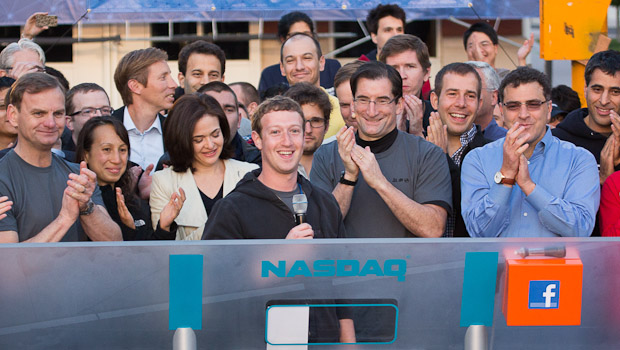
    The long awaited float yesterday of social media service Facebook was a triumph for the business’ founder Mark Zuckerberg, his management team and advisors.

    A market valuation of 100 billion dollars for a business started less than ten years ago is an impressive achievement and that sum now presents massive challenges for management who have to deliver on what investors believe the service is capable of.

    At US$38 a share, Facebook is valued at 76 times its projected 2012 earnings of 50 cents a share, and nearly twenty times its expected revenues of US$5 billion. This compares to Google which trades at less than 15 times its 2012 profit estimate and six times revenue.

    For Facebook to match Google’s value, the social media service is going to have to start making serious money beyond they can from charging egoists and corporations $2 a time for featured posts.

    Google’s success was in moving out of their walled garden, had Google focused on advertising just on their own search pages the company would be earning a fraction of the billions they now make every quarter.

    It’s difficult to see how Facebook can move off their platform into other sites and with users moving to mobile, the company will find itself even more constrained by Google and Apple who want to control access to their devices.

    A more obvious course for Facebook is to maximise income from the massive data base of likes, preferences, relationships and opinions they have amassed from their users. How they do this will probably be the biggest challenge to Facebook’s management.

    In monetizing their database, Facebook will push the limits of the law, tolerance of privacy advocates and possibly the patience of their user base. This is going to test a company that has in the past been slow to respond to public concerns.

    Another challenge is perception – with such a massive valuation, Facebook is going to attract critics regardless of what they do.

    A good example of this is the number of people criticising the float for not ‘popping’ on the stock market debut. At the end of the first day’s trading the stock had only gone up 0.6% and some in the media claimed this showed the IPO wasn’t the successful.

    The idea a successful IPO is one that soars on the first day of trading is a naive view from a 1980s mindset. The idea was born out of the privatisation of British and Australian utilities in the 1980s and 90s where taxpayers were seduced by the idea of “free money” in exchange for selling community assets cheaply.

    A ‘stag profit’ from a share that soars on its public float is theft from the existing shareholders and a transfer of wealth to insiders and their advisors.

    Silicon Valley venture capitalists and startup founders aren’t dumb and have never fallen for that trick – investors pay dearly for stock in their ventures.

    While no-one would call Mark Zuckerberg and his management team dumb they have a big job ahead of them finding revenue sources to justify the $100 billion market valuation. It’s going to be an interesting ride.

    Similar posts:

  • It’s all in the timing

    It’s all in the timing

    This morning I sat in on a corporate breakfast and heard a well known presenter talk about social media for business owners and managers.

    The advice was terrible and what was valid could have come from a 2008 book on business social media marketing.

    But the room loved it and obviously the client – a major bank – thinks the speaker’s work is worthwhile. He has a market while many of us who’ve been covering this field for a decade don’t.

    Timing is everything in business. Earlier this week stories went around the Internet about how Microsoft could have invented the first smart phone.

    Microsoft could well have done it, they tried hard enough with Windows CE devices through the late 1990s and there was also the Apple Newton and the Palm Pilot.

    While all these companies could have developed the smartphone in the 1990s it wouldn’t have mattered as neither the infrastructure or the market were ready for it.

    Had Microsoft released the smartphone in the mid 199os it would have been useless on the analogue and first generation GSM cellphone networks of the time.

    Customers were barely using the web on their personal computers, let alone on their mobile phones, so the smartphone would have been useless and unwanted.

    Ten years later things had changed with 3G networks and real consumer demand so Apple seized the gap in the marketplace left by Motorola, Nokia and the other phone manufacturers with the iPhone and now own the market.

    Apple weren’t the first to market with a smartphone, just as Microsoft weren’t the first with a Windows-style operating system and Facebook weren’t the first social media platform.

    Those who were first to the market stood by while upstarts stole the market they built.

    Plenty of people have gone broke when their perfectly correct investment strategies have been mistimed – “the market can stay irrational longer than you can stay solvent” is often proved true.

    That’s the same with the speaker this morning; he’s not the first to discover social media’s business benefits but his timing is impeccable.

    Being first is no guarantee of success if your timing is wrong.

    Similar posts:

  • The tough world of smartphones

    The tough world of smartphones

    Dell’s announcement they are going to exit the Smartphone business – for the second or possibly even third time – comes on the same day Nielsen release a survey showing smartphones are now the bulk of US mobile phone purchases.

    For Dell this shows the problem they have in being locked into the commodity PC business, what was once a lucrative business is now suffering softening margins and slowing sales. In desperation they are looking to other product lines but struggle to differentiate themselves in other markets.

    The difficulties of doing this in the smartphone sector is shown in Nielsen’s analysis of what phones are selling.

    Of those sold in the last three months, a whopping 43% were Apple products while 48% were Google Android devices.

    Even more frightening in those Nielsen figures is Blackberry’s collapse where the Canadian product has 12% of the market but only 5% of sales in recent months. It’s little wonder Blackberry’s owner RIM is laying off senior managers.

    For Microsoft, that only 4% of phones were “other” than Android, Apple or RIM show just how tough the task of selling Windows Phone is going to be, something that won’t be helped with dumb marketing stunts.

    Google’s apparent success in mobile isn’t all that it seems either; while the Android platform has nearly half the smartphone market it doesn’t appear to be particularly profitable.

    The Guardian’s Charles Arthur looked at a number of legal cases involving Google’s mobile patents and extrapolated the claimed damages to get an estimate of how much Google earns from Android.

    Arthur estimates Android has earned Google $543 million dollars between 2008 and 2011 which, given Google’s mobile revenues last year were claimed to be $2.5 billion last year, indicates Google makes more money from Apple devices than it does from its own products.

    While Arthur’s estimates are debatable, they show how Apple’s profits dominate the smartphone market. Google, like Dell in computers, are locked into the commodity, low margin end of the market.

    Just as Dell have learned that entering new markets doesn’t guarantee success, Google may have to learn the same lesson.

    To be fair to Google, at least management are aware of being too dependent upon one major source of revenue.

    Whether mobile services built around the Android platform can provide an alternative cashflow of similar size to their web advertising services remains to be seen.

    Similar posts:

  • Killing credibility

    Killing credibility

    Microsoft’s Smoked by Windows Phone Challenge aims to show their mobile phones are the fastest on the market.

    Unfortunately if you beat them, it appears you might not win the prize as Sahas Katta discovered.

    Going back on a prize in a competition that already looks somewhat biased doesn’t just hurt Windows Phone’s credibility but it hurts the whole company’s – it looks cheap, lame and petty.

    Realising the damage this does Microsoft’s brand, evangelist Ben Randolph offered Sahas a laptop and phone, although already the botched promotion has probably already hurt the product.

    Windows Phone is a “must succeed” for Microsoft and that company would stage poorly thought out stunts with high chance of backfiring is disappointing given what is at stake for them.

    Trust and reputation and the hardest things to earn and the easiest to squander, Microsoft’s management needs to be careful with this.

    Hopefully Microsoft will show us some compelling reasons to buy an alternative to an iPhone or Android handset beyond dodgy marketing stunts.

    Similar posts: