Category: new media

  • Google merges business with social

    Google merges business with social

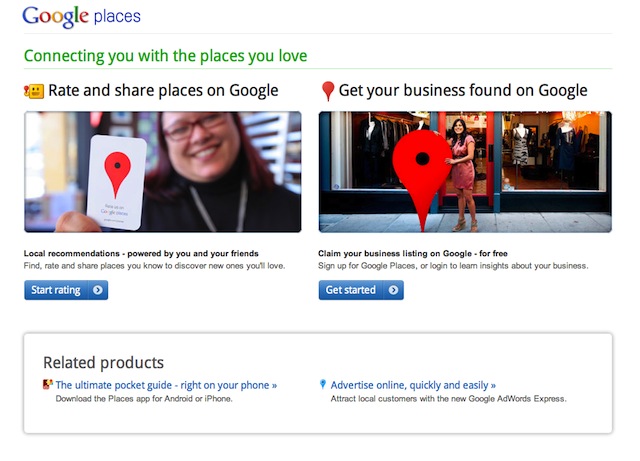
    As of today, Google Places is now part of Google Plus with the old accounts being merged into the social media and identity service.

    The effect of the merger means listings will now appear with the features of Google Plus added, for US based hospitality businesses, Zagats’ reviews are now also integrated into the results.

    For business owners, there’s little change in the administration panel and it appears any accounts that are suspended because of Google’s obscure listing policies remain in limbo.

    How the complexities of the Google Places policies mesh with the arcane and arbitrary rules applied to Google Plus identities will be an interesting thing to watch.

    One area of concern is that the owner of a Google+ Local listing will need a personal profile – for businesses this means a nominated individual has to run the account. Should that individual leave the business, then there will problems with shifting ownership.

    I have some questions in with Google’s PR folk about these aspects of the transition and hopefully we’ll get some more ideas on how to deal with these issues.

    While this merger of the two services are to be expected, it’s going to be interesting to see how it evolves. Right now it appears Google have dropped the ball on local with their focus on social and identity management.

    The identity management aspect of this integration is the key point as Google’s hope is that individuals will check into and rate businesses which in turn will give them a more complete picture of that person’s habits and preferences.

    How that pans out depends on how individuals value their personal information, it may be that once people understand the value of this data they’ll demand more than just the warm feeling of sharing their meal review with a circle of their friends.


    Similar posts:

  • Product Review: Australian Financial Review iPad app

    Product Review: Australian Financial Review iPad app

    I really wanted the Australian Financial Review’s iPad application to be great as the country desperately needs good reporting on the platforms people are using. Unfortunately Fairfax’s misguided commercial judgement gets in the way of delivering a killer app.

    Many publishers are putting faith in iPad applications, seeing them as an opportunity to catch a market that is fleeing paper publications for their online equivalents.

    To meet this demand, the Australian Financial Review has released their iPad application with a free fourteen day trial and plans starting from $59 per month for the digital editions.

    It’s telling the subscription plans favour those buying the paper editions as the feeling from using the iPad app is that Fairfax’s management would rather you bought the paper.

    This continued focus on print shows in the news not being updated – a reader of the app in an airport lounge at 6am will find little different logging at lunchtime or in a cab on the way home in the evening.

    Clinging to the old news timetable is admirable but it means the AFR isn’t taking advantage of its marketplace strengths or the talents of its staff.

    One of the reasons the iPad has become so popular as a reading device is the rich, relevant content publishers can display, for instance The New York Times iPad app, their stories on the Syrian massacre in Al-Houla link directly to Youtube clips from local news sources.

    So it is disappointing is that the AFR hasn’t harnessed the multimedia advantages of the iPad. For instance Canberra correspondent Laura Tingle’s political stories don’t even link to Laura’s video page on the service.

    Similarly a story on BHP won’t have any links to the AFR’s profile of BHP, its stock price or financial results. These are features that could make the AFR’s a killer application for anyone wanting to understand the Australian business scene.

    Compounding the issue is Fairfax’s unfortunate policy of reluctantly linking to outside sources – this short sighted view devalues all Fairfax’s online efforts as it detracts from the authority of their broadsheet and business publications. This again is true in the AFR iPad application.

    Overall, the AFR’s iPad app is a missed opportunity which is a shame as the Australian business sector desperately needs good reporting delivered through the tools today’s executives and investors are using. Hopefully the next version will do better.

    The Australian Financial Review online subscription was provided by Fairfax and the AFR. I have free subscriptions available for the best two comments on the blog this week so fire away with your views on this post or others.

    Similar posts:

  • Can Warren Buffett save local news?

    Can Warren Buffett save local news?

    Warren Buffett’s purchase of local newspaper chain General Media Publications last week raised eyebrows and the question about the future of local newspapers.

    Local news has bucked the trend of the big four gatekeepers taking over – most of us expected Google and Facebook with their local business listings, search and community functions to take over the market just as the web has stolen the income streams of the bigger metropolitan mastheads.

    What’s more, us digerati believed social media services like Facebook and Twitter would give us most of the information about what is happening in our communities and make the role of the local newspaper redundant.

    This hasn’t happened and there’s several reasons for this – a key one is current web services are great at connecting disparate communities but don’t do a good job of connecting local groups.

    A bigger failure is both Google and Facebook blew the opportunity to dominate local news.

    Basically, local news isn’t sexy, it’s much more of an ego stroke to be treated like a rock star at a conference or to negotiate a billion dollar purchase of a social media application.

    Late nights reporting goings on at the local council or chamber of commerce isn’t sexy. So Facebook and Google’s executive focused on the shiny things.

    That failure to execute by the big players has largely left the market to the incumbents and their income is largely untouched – Media General’s income is largely static, unlike the declines being seen by big city mastheads.

    A similar phenomenon is at work in other markets, in Australia Fairfax’s regional newspaper division is far more profitable than any other sector while competitor APN makes a good return from their publishing activities in smaller communities.

    Interestingly almost all of the local news incumbents are saddled with debts or poorly thought out ventures that absorb the profits coming in from their core operations.

    Part of the profitability is because local newspapers are established brands. Locals know they will get news about their community that is immediately relevant to them.

    For local businesses, they still have to advertise in the local press as that’s where their market is. Local customers might be reading about Federal politics, Kim Kardashian or Occupy Wall Street on the web, but they are still turning to the district news to find out what’s going on in their immediate community.

    How this pans out for Warren Buffett is going to be interesting, Berkshire Hathaway tends to run a lean management philosophy in its businesses and this might be one of the saving attributes for their local media investments.

    Stripping out the million dollar men who infest the top levels of the newspaper industry and investing in content – both online and in print – may well be the key to success of the local news industry.

    Key to the local news success will be energising the advertising sales teams – there’s little point in skilling up journalists in new technologies or getting editors to “think digital” if the salespeople are stuck in the mentality of display print ads being the only thing that matters. This is the same challenge metro newspapers face.

    Strong local media matters in both country and suburban communities. It’s essential to the spirit of the local town and a healthy local media is always a feature of a prosperous community.

    One of the promises of the Internet is that local groups could seize back the news about their towns and suburbs, this doesn’t appear to be happening. Maybe it’s going to take Warren Buffett to fix it.

    Similar posts:

  • Creative Quandaries

    Creative Quandaries

    In February, musician, coder and uber-geek David Lowery gave a talk to the SF Music Tech Summit on the difficulties musicians have making money in the online economy.

    Meet the Old Boss, Worse Than The Last Boss is an excellent dissection of the economics of the music industry as it currently stands – and it doesn’t look good for artists.

    David shows how the old distribution model was more rewarding for artists than today’s digital model, the old fashioned record store has largely gone out of business and has been replaced with the iTunes where Apple receive half the income of the local shop but assumes no risk, few costs and a far greater profit margin.

    Similarly, the record labels’ costs and risks haven’t substantially changed but their income has plummeted.

    We’ve seen the controllers of the music distribution business replaced with a far smaller, and more profitable, group of digital gatekeepers.

    A  great line in David’s presentation is just how much money technology company executives are making compared to their record industry counterparts of the 1980s, without taking on the responsibilities for keeping the creative supply pipeline flowing.

    Record labels value content and content creators. Sure they kept a lot of money for their executives (although even mid 90?s music executive pay is dwarfed by tech executive pay.)  But record labels unlike tech companies, know they built  their businesses on those who create content.  Therefore when they were flush with cash they set out to buy the services of as many artists as they could.  This  had the effect of sharing the wealth with musicians.  It may have been uneven it may have been wasteful, it may have not touched every artists and the labels may have pocketed most of the revenue but at least they felt they needed to give something back to the content creators.  They knew artists created something of value.

    The key words in the above passage are “content creators” as the struggles of the music industry are similar to those of writers, photographers and anybody creating original works that can be digitized.

    Probably one of the most interesting aspects of this are that many of the digerati David criticises for their utopian views on technology are themselves marginalised, and often impoverished, by the same economics.

    David links to a number of Huffington Post articles examples, yet it’s Adrianna Huffington and her contemporaries like Chris Anderson who are aggregating paid writers work and turning most of us into digital sharecroppers.

    It’s the Lords of the Digital Manor who are making a return while the bulk of content creators struggles.

    Those digirati, like myself, are making just as poor a living from their work as David’s friends in the music industry.

    What’s clear is we have to find the methods of distributing music and other valuable creative works that benefit the artist or writer, the old models of the publishing, broadcasting and music industries did this – not always fairly, but at least creators were rewarded.

    Right now we’re in a world where information is free and a small group of gatekeepers are controlling what revenues are available.

    It’s unlikely that situation is sustainable and over time we’ll see new models develop to displace the current gatekeepers who may be part of the transition effect to a changed economy.

    The person who figures out the successful model will be the 21st Century’s Randolph Hearst – hopefully they’ll spread the wealth around a bit more than the current gatekeepers.

    Similar posts:

  • Now Facebook’s challenges really begin

    Now Facebook’s challenges really begin

    The long awaited float yesterday of social media service Facebook was a triumph for the business’ founder Mark Zuckerberg, his management team and advisors.

    A market valuation of 100 billion dollars for a business started less than ten years ago is an impressive achievement and that sum now presents massive challenges for management who have to deliver on what investors believe the service is capable of.

    At US$38 a share, Facebook is valued at 76 times its projected 2012 earnings of 50 cents a share, and nearly twenty times its expected revenues of US$5 billion. This compares to Google which trades at less than 15 times its 2012 profit estimate and six times revenue.

    For Facebook to match Google’s value, the social media service is going to have to start making serious money beyond they can from charging egoists and corporations $2 a time for featured posts.

    Google’s success was in moving out of their walled garden, had Google focused on advertising just on their own search pages the company would be earning a fraction of the billions they now make every quarter.

    It’s difficult to see how Facebook can move off their platform into other sites and with users moving to mobile, the company will find itself even more constrained by Google and Apple who want to control access to their devices.

    A more obvious course for Facebook is to maximise income from the massive data base of likes, preferences, relationships and opinions they have amassed from their users. How they do this will probably be the biggest challenge to Facebook’s management.

    In monetizing their database, Facebook will push the limits of the law, tolerance of privacy advocates and possibly the patience of their user base. This is going to test a company that has in the past been slow to respond to public concerns.

    Another challenge is perception – with such a massive valuation, Facebook is going to attract critics regardless of what they do.

    A good example of this is the number of people criticising the float for not ‘popping’ on the stock market debut. At the end of the first day’s trading the stock had only gone up 0.6% and some in the media claimed this showed the IPO wasn’t the successful.

    The idea a successful IPO is one that soars on the first day of trading is a naive view from a 1980s mindset. The idea was born out of the privatisation of British and Australian utilities in the 1980s and 90s where taxpayers were seduced by the idea of “free money” in exchange for selling community assets cheaply.

    A ‘stag profit’ from a share that soars on its public float is theft from the existing shareholders and a transfer of wealth to insiders and their advisors.

    Silicon Valley venture capitalists and startup founders aren’t dumb and have never fallen for that trick – investors pay dearly for stock in their ventures.

    While no-one would call Mark Zuckerberg and his management team dumb they have a big job ahead of them finding revenue sources to justify the $100 billion market valuation. It’s going to be an interesting ride.

    Similar posts: