Category: rants

  • Expat workers and their fragile, guilded cage

    Expat workers and their fragile, guilded cage

    I was sitting on the back of a motorbike grimly clutching a briefcase full of 100 baht bills when the realities of working in Thailand really dawned on me.

    One of the downsides of being the contracts administrator in an Engineering company is that one gets stuck with the jobs that doesn’t fit anybody’s official duties.

    This time it was going to rescue Ken – not his real name – a Kiwi Project Manager who instead of enjoying Friday afternoon in a Soi Cowboy beer bar was under siege in his site hut in suburban Bangkok.

    Because of a glitch in the insanely bureaucratic payroll system our Singaporean employers used, Ken’s labourers hadn’t been paid and now they were threatening to burn down the site hut with Ken and his office staff in it.

    So the story of Chip Starnes, the US businessman freed yesterday after being held hostage by former employees in his Beijing office for six days, is very familiar. It’s a story that expat workers should understand about their status and position when they take an overseas assignment.

    While Chip seems to have come out of the ordeal unscathed apart from being in need of a good night’s sleep and a shower, it could have been much worse; shortly after I left Thailand an Australian accountant was gunned down over a business dispute involving a sugar mill outside Bangkok.

    In Dubai, two Australian property developers find themselves mired in a legal dispute that could see them facing a decade in gaol.

    The risks involved in being an expat worker are easily to overlook, particularly in places like Dubai, Hong Kong and Singapore where the life is good for western expatriate workers – the reality for Filipino maids or Pakistani labourers is another matter of course.

    When things go wrong though, they go wrong badly and the reality of life in a foreign country can be a rude shock for expats who thought they were living a privileged existence.

    The guilded cage for expats is a nice, comfortable place to live in but it is a lot more fragile than many think.

    For Ken, he escaped being burned out of his site hut by an angry mob as we arrived before the torches were lit. Some frantic dishing out of notes to the crowd – I’m still sure many of those we gave money to didn’t actually work for us – defused the situation.

    Ken still got his Friday night beers at Soi Cowboy and took the whole saga as being part of a day’s work in Thailand, but then Ken was an old Asia construction hand who had no illusions of what could befall an innocent expat. Others might not have been so relaxed.

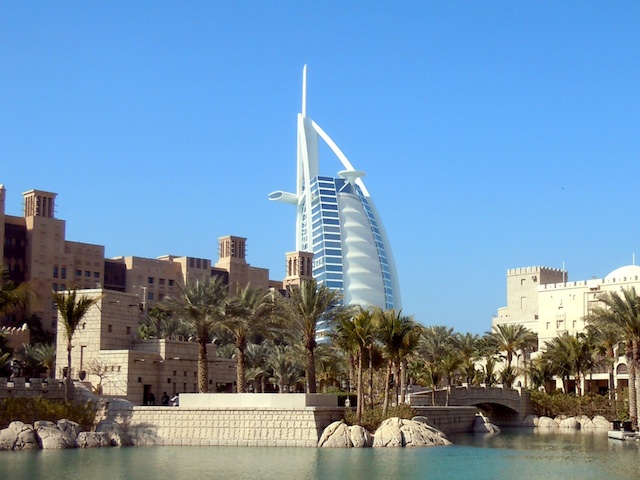
    Dubai image from SG777 through SXC.HU

    Similar posts:

  • Little shots at the moon

    Little shots at the moon

    Today I wrote a story for Business Spectator on the Google Loon project, a pilot program to see if high altitude balloons can provide affordable internet access for the developing world.

    What really fascinates me about Loon and the projects in the Google X program is the concept of the ‘moonshot’. Google explain it on their solve for [x] website.

    Moonshots live in the gray area between audacious projects and pure science fiction; instead of mere 10% gains, they aim for 10x improvements. The combination of a huge problem, a radical solution, and the breakthrough technology that might just make that solution possible is the essence of a Moonshot.

    Great Moonshot discussions require an innovative mindset–including a healthy disregard for the impossible–while still maintaining a level of practicality.

    Missing in that definition is the concept of risk – it’s easy to propose a radical, audacious solution to a problem when it’s not your money or career on the line.

    On the other hand, most organisations that have the resources to experiment with breakthrough technologies stifle any thought of true innovation or radical solutions.

    The advantage Google has is that parts of the organisation encourage those moonshots, although there are divisions of Google which are just as bureaucratic and staid as a chartered accountant’s or quantity surveyor’s office.

    Interestingly Apple were the reverse with only one guy allowed to do moonshots and everyone below him followed him either to the moon or hell, as this wonderful story tells.

    Which brings me to the little folk – the startups, small businesses and backyard inventors who don’t have the resources of Google, Apple or the US space program.

    For that matter there’s also the writers, painters, musicians and other artists who are risking everything for their vision.

    Everyday these people are risking everything for their little ideas as their homes, livelihoods and sometimes their relationships are on the line for their one big idea or audacious vision.

    These are the real risk takers and every day they are taking little shots at the moon.

    Similar posts:

  • 57 million websites and nothing on

    57 million websites and nothing on

    Twenty years ago, Bruce Springsteen sang about TV having 57 channels and nothing on.

    While little has changed on TV, today the web has 57 million websites* offering little beyond click bait and a quick rewrite of someone else’s work.

    At the moment that model works for the kings and queens of the digital manor who pocket a few pennies for each of the ten stories their overworked interns pump out in a day but it’s hard to see how that form of publishing adds value to the audience.

    The 1990s television stations and cable networks got away with no adding value – and still do today – because they are in industries that are tough for new entrants to enter.

    But on the web there are far fewer barriers to new entrants which means offering 57 channels with nothing on, or 57 million websites with no real content, isn’t a long term path to success.

    *a wild guess

    Similar posts:

  • Corporate palaces and the new Ceasars

    Corporate palaces and the new Ceasars

    One of the key traits of managerialism is executives spending vast quantities of shareholders’ money on opulent corporate headquarters, is Apple the latest company to succumb to this disease?

    Building a new headquarters is fun for managers. One company I worked for in the early 1990s was debilitated for months as executives spent most of their time moving walls, rearranging desk positions and changing lift designs to reflect their status as grand visionaries.

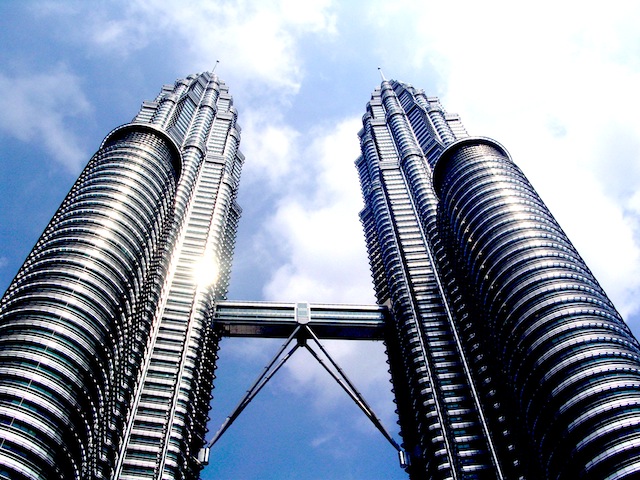
    For the company gripped with delusions of management grandeur a flashy head office is the must have accessory. It’s the corporate equivalent of the Skyscraper Index and is almost as good a predictor that a change in fortunes is imminent.

    Apple’s new headquarters is nothing if not impressive. Bloomberg Newsweek reports the building which, at two thirds the size of the Pentagon, will house 12,000 employees is currently estimated at costing five billion dollars, sixty percent over the original budget.

    The plans call for unprecedented 40-foot, floor-to-ceiling panes of concave glass from Germany. Before the Cupertino council, Jobs noted, “there isn’t a straight piece of glass on the whole building?…?and as you know if you build things, this isn’t the cheapest way to build them.”

    With over a $120 billion in cash, Apple can certainly afford to spend five or ten billion on new digs despite the grumbling of shareholders who have had to settle for a stingy 2.4% dividend from their shares.

    The big question though for Apple shareholders though is whether a project like this indicates a company that has peaked with management more intent on building monuments to itself or its genuinely visionary founder rather than deliver returns to owners or products to customers.

    On the latter point, there’s no evidence of Apple losing their way with their products yet, but it’s something worth watching in case management becomes distracted with their building project.

    For the company I worked for, the distracted managers all vanished one day when the main shareholder of the Thai-Singaporean joint venture discovered they’d been fiddling the books. They probably needed to pay for the office fit out.

    Similar posts:

  • A question of relevance – why the PM welcomes bloggers

    A question of relevance – why the PM welcomes bloggers

    The Prime Minister’s courting of bloggers in the run up to the Australian Federal election later this year shows how credibility and relevance are most important assets for any media outlet.

    Late last year the Prime Minister invited bloggers to Kirribilli House for lunch then to dinner during her Rooty Hill adventure a few weeks ago.

    The press gallery grumbled and wrote patronising articles about North Shore mummy bloggers but failed to recognise the real threat to the established media outlets – these writers are more relevant to people’s lives than the machinations of ‘anonymous political sources’, sports stars or Hollywood celebrities.

    Now the Prime Minister is giving one on one exclusive interviews to some of those bloggers, something that will irritate the nation’s political journalists even further.

    Old media’s loss of relevance

    The press galleries’ problem though is relevance, which lies at the heart of any successful media outlet.

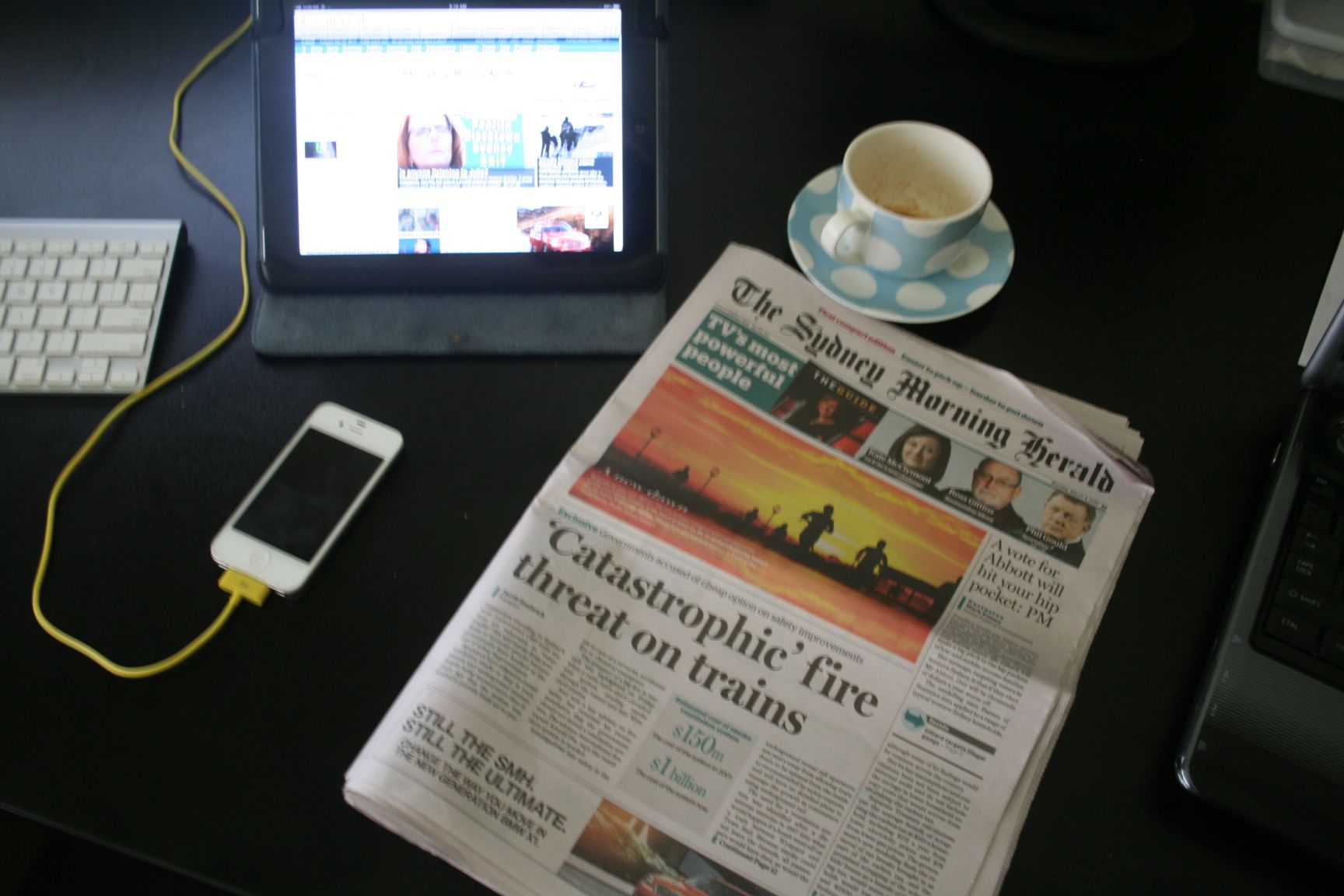
    In 1831 when The Sydney Herald’s first edition was published, the front page was made up of advertisements and shipping notices as it was with all newspapers of the time.

    That was relevant to the readers, they paid 7d – not an insubstantial amount in 1831 – to find out the latest in shipping movements, real estate sales and livestock prices which were essential to life and business in the colony.

    It wasn’t until 1944 that the now Sydney Morning Herald moved news to the front page, the London Times held out until 1966. What was now relevant to readers were photos and wire stories from around the world.

    Papers continued to do well despite the introduction of radio in the 1930s and TV in the 1950s because they were continued to be relevant to their readers. If you were looking a job, a house or where to take your mum for her 60th birthday then the local newspaper was the place to look.

    The shift to sensationalism

    In the 1980s all the media – newspapers, TV and radio stations – started a shift to sensationalism and infotainment and steadily all became less relevant to the populations they served.

    At the time media outlets got away with it as there was no-where else for people to get news. If you didn’t like stories about Princess Di’s wedding dress then you had to curl up in the corner with a good book.

    Then the web came along.

    All of a sudden engaged readers could get relevant information from all over the world.

    With social media and blogs, reporting Kim Kardishian’s latest wardrobe malfunction raised a ‘so what’ from an audience that learned about it two days ago on TMZ, the Huffington Post or Facebook.

    Making matters much, much worse were the advertising rivers of gold moved to specialist websites and Google.

    Newspaper executives found their revenues were evaporating and they worked their way deeper into the quicksand by cutting costs in the areas where their editorial strengths lay, making them even less relevant to the readerships they want to serve.

    Relevant lifestyles

    Today the mummy bloggers – along with the food bloggers, travel bloggers and political bloggers – are attracting  audiences with relevant, useful content that the audience can engage with.

    Last week’s embarrassing circus in Canberra was an example of how irrelevant the media, and much of politics, has become to the average Australian.

    Indeed it’s interesting to contrast the self important Canberra press gallery pushing non-stories while fawning over their discredited ‘anonymous party sources’ with the genuinely questioning tone of the some of the bloggers.

    So the mainstream, established media can kiss the mummy bloggers’ backsides; if they can’t find relevance in today’s society then they may as well shut up shop.

    For politicians relevance is important too – political parties that pitch themselves to 19th Century class struggles or 1980s corporatist ideologies are as irrelevant to today’s society as the Soviet Communist Party.

    It would serve the Prime Minister and her staff well to listen closely to what the mummy bloggers and their readers are saying.

    Similar posts: