Category: rants

  • Free content’s shaky foundations

    Free content’s shaky foundations

    Musician’s rights advocate David Lowrie has a takedown on his Trichordist of Pandora’s campaign to change the US music royalty payment system through the Internet Radio Fairness Act.

    Pandora and other online streaming services claim the current arrangement is unfair and puts them at a disadvantage to terrestrial AM and FM radio stations. Artists and record labels claim this is just a way to cut rights payments.

    David suggests that Pandora’s founders either lied about the sustainability of their business at the time of their IPO last year or are just being plain greedy.

    Regardless of what is true, or whether David is overstating the case against the IRFA, a truth remains that many Internet business models are unsustainable and Pandora’s may be one of them.

    Most unsustainable of all are those who rely on free content.

    Eventually the market works to filter out those who won’t pay for content – the good writers and artists move onto something more profitable, like driving buses or serving hamburgers, or they figure out they may as well control their own works rather than let some Internet company profit from their talents and labor.

    The website or service offering nothing in return for the contributor’s hard work eventually ends up distributing garbage – Demand Media or Ask are examples of this.

    In a marketplace where crap is everywhere, just pumping out more crap is not a way to make money.

    Those looking at investing in businesses which rely on free content need to remember this, if no-one values the product then you have no business.

    Sadly too many internet entrepreneurs, and corporate managers, believe the road to their wealth is through not paying artists, musicians or writers. They are the modern robber barons.

    Similar posts:

  • Is Small Business Whingeing its way to irrelevance

    Is Small Business Whingeing its way to irrelevance

    Is small business whingeing its way to irrelevance?” first appeared in Smart Company on August 16, 2012.

    Last week, TripAdvisor announced the results of a worldwide hospitality survey. One of the things that leapt out of the survey was how large hotel chains are using social media while smaller Australian establishments are languishing.

    Following on TripAdvisor’s survey was the release of accounting software company MYOB’s regular index that showed businesses are retreating from the online world with reduced usage rates of social media, eCommerce and online payments.

    At an Australian Israel Chamber of Commerce lunch in Sydney on Tuesday, MYOB’s CEO Tim Reed and Google Australia’s Tim Leeder discussed small business and the web with their Getting Australian Business Online program missing its target of 50,000 sign ups since its launch in March last year.

    The fact more than half of Australian businesses don’t have a website despite free services from Google, WordPress, Weebly and a host of others indicates a deeper apathy among small businesses towards a whole range of issues.

    Earlier this year the New South Wales state government abolished the popular Small Business September program with barely a squeak from the SME sector, with some small business groups actually welcoming what was a dramatic cut to support programs.

    Compare this to the Olympic athletes, not only do we see the AOC coming out swinging with demands for more funding but the yachting team are staging an effective campaign to reinstate NSW government programs to support their sport: The total opposite to the small business community.

    Small business, on the other hand, rolls over and accepts cuts to programs, poorly thought out regulations and government procurement policies that favour multinationals over local companies which are capable of the job.

    When small business is given a chance to have a voice, the community blows it with whingeing. At the NSW Small Business Commissioner’s roadshows earlier this year it was notable how much time was spent whingeing about group buying services, traffic clearways and council permits for coffee tables rather than sensible and achievable wins for the SME sector.

    So it wasn’t a surprise that the result of that roadshow was the cutting of useful programs and little effective change.

    The best example of this whingeing rather than action is the current campaign to increase the GST threshold and abolish penalty rates.

    Instead of focusing on the real problems facing businesses such as high rents, profit gouging from distributors and poorly thought out state and federal regulations imposed by both sides of politics – the small business and retail sectors manage to demonise their staff and customers and increase the suspicions of consumers and workers that they’re being ripped off by big, bad employers.

    In reality, the shopkeepers and other small businesses are struggling to adapt to a rapidly changing economy. They are feeling those changes earlier than the rest of the economy because they don’t have the cushions of fat margins, political connections or guaranteed incomes of the corporate, public or political sectors.

    Those struggles will give the small business sector an advantage over the bigger and slower groups – having adapted to the changed economy, those smaller businesses will be stronger and fitter than their bigger competitors.

    Chris Ridd, of cloud computing accounting service Xero, one of MYOB’s biggest competitors, puts this best.

    “Technology is an enabler and can actually help small businesses gain efficiencies, reach new customers and generate new revenue streams. Why turn your back on the one thing that can turn your business around.”

    It’s the proactive business people adopting new technologies who are going to thrive over the next decade. Whingeing about TripAdvisor, the GST or dumb government policies isn’t going to save an enterprise that’s become irrelevant.

    So make sure your website’s up to date, check what customers are saying about you on social media or review sites and have a look at those cloud computing services that can improve your business’ profitability and efficiency.

    The time to do it is now, before your business becomes irrelevant.

    Similar posts:

  • Undoing the untrained workforce

    Undoing the untrained workforce

    One of the notable things about the 1980s way of doing business was how front line workers weren’t valued for their skills and knowledge.

    In call centres, shopping malls and government departments, those who dealt with customers were seen as an unnecessary expense who should be outsourced at the first opportunity or, if it wasn’t possible to hive them off, then encourage them to get more money out of the customer while providing less service.

    An example of this was at electronic superstores where sales staff with little product knowledge were given rudimentary training and then encouraged to sell easy payment plans and expensive acccessories – the HDMI cable scam where connectors of dubious quality earned more profit and commission than the HiFi systems or plasma TVs they plugged into illustrated how lousy a deal this way of doing business for the customer.

    Much of that mentality has been inherited by web2.0 companies that think customer service is an optional extra.

    Some of those companies can’t even be bothered protecting their clients’ data properly, such is their unwillingness to provide service.

    The stack ’em high, sell ’em cheap self service culture of the 1950s and 60s reached its limits in the 1980s and was only given a reprieve by the easy credit boom of the 1990s. With the end of the credit boom, electronic or household goods stores that simply sell cheap tat on interest free terms at a fat mark up without adding value now struggle.

    Gerry Harvey is getting out of electronics partly for this reason – his business model is dead and it’s been difficult for a decade to make the fat profits on consumer computers or electricals without hooking the customers with interest free deals or expensive and pointless accessories or software.

    One of the conceits of management through the last part of the Twentieth Century was the mantra “our greatest asset are our people”, today business have to start valuing the skills, knowledge and corporate memory of their workforces.

    Similar posts:

  • Outsourcing the service economy

    Outsourcing the service economy

    Through the 1970s and 80s we accepted manufacturing industries moving jobs offshore because those jobs were done by working class, blue collar workers and the future lay in white collar, middle class service industries.

    As a consequence of moving manufacturing offshore, the US, British and Australian economies became more service based. The thought in the 1980s was that while goods could be made in Taiwan, the ‘knowledge industries’ couldn’t be.

    Then the Internet came along.

    A panel on The Future of Outsourcing convened by the Indian Institute of Technologies Association of Australia last night discussed some of these issues.

    Now the service industries are being offshored, at first it was the low skilled service jobs like call centres but it didn’t take long for higher value work – such as paralegal, medical transcription and of course IT services – to follow.

    The belief that white collar jobs couldn’t be taken over by cheaper foreign labour has been proved wrong.

    It isn’t just those working in the call centres or IT departments of telcos and big banks that are being affected, those small businesses in support industries like secretarial services or design are finding their clients are moving offshore too.

    What’s interesting with all of this is how long the executive classes can resist being outsourced. Indian and Chinese managers work for harder for less than their US, British or Australian colleagues and in many cases are better educated.

    One can only wonder how long the partners of major consulting business can hold the line as well, these guys – the vast majority are men – have done very nicely charging first world rates while increasingly paying developing world rates.

    Already Indian outsourcing companies, including at least two sitting on that Sydney panel, have set up their own consulting arms that cut out the expensive middle men. Without the overheads flashy offices and big packages for entitled partners, they’ll have a pretty competitive offering.

    While we can cry for the high paid management consultants and executives who are increasingly threatened by these changes, the Anglo-Saxon economies have a real problem as service industries move offshore.

    In Australia, the Bureau of Statistic’s 100 Years of Change in Australian Industry tracks how the nation’s industries have changed – in the 1950s Australian manufacturing peaked just shy of 30% of the workforce, by 2000 it had shrunk to 11% while service industries were doubled from around 25% to 50% of the economy.

    While it’s unlikely we’d see the service sector workforce shrink by 2/3rd over the next fifty years, there’s a good chance incomes will fall in these industries unless we start to invest in education and skills which allow Australia to stake a place in the global economy.

    One of the key takeaways from the Future of Outsourcing event was that this change is happening regardless of what we think is a fair wage for our work. It’s something our government and business leaders need to start considering.

    Similar posts:

  • Is Microsoft’s Surface Tablet Vaporware?

    Is Microsoft’s Surface Tablet Vaporware?

    In the early 1990s the term “vapourware” appeared, it was born out of big software vendors announcing mythical products with a whole new bunch of features which the opposition already had.

    Usually that next great product never appeared; it was just a ploy to stop customers defecting to the competition’s superior product.

    There were a number of ways to spot vapourware – the lack of a working prototype, vague release dates and no firm pricing being just three.

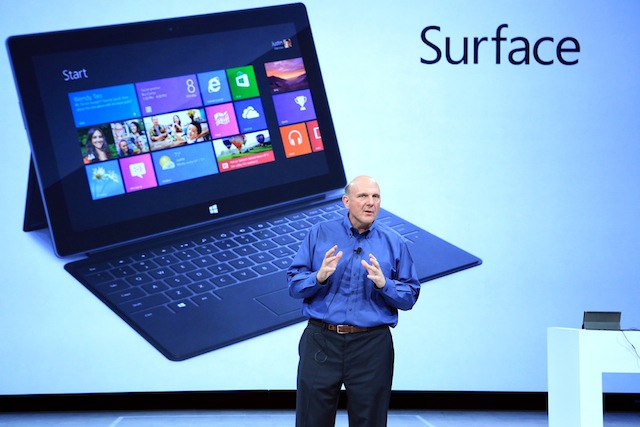
    Earlier this week, Microsoft brought tears to the eyes of grizzled IT industry veterans who missed the days of regular vapourware announcements with the “launch” of their Surface tablet computer.

    After springing the event at short notice on the tech media, forcing the poor petals to travel to Los Angeles rather than their usual haunts of Silicon Valley, Manhattan or Texas and then starting the event late, Microsoft added insult to injury by not even letting the journalists play with a working version of the Surface, let alone take one home to play with.

    One of the impressive things about vapourware are the specifications and this is true with the Microsoft Surface. The specifications of the base model Windows RT are about the same as the base model iPad with the added benefit of a keyboard, USB and Micro SD ports.

    Looking past the hype, it’s clear Microsoft are having trouble with their strategy of a unified operating system across smartphones, tablets and traditional PCs, which has forced them to announce two different versions of the Surface, running different operating systems on different chipsets.

    Having potentially incompatible products makes it even more important for tech journos and early adopters to play with the new devices to see how well they work – that version one of any new product doesn’t work well is another lesson from the 1990s IT industry.

    In the spirit of vapourware, Microsoft hasn’t mentioned what either version of the Surface will cost, which probably indicates they don’t know what the final sticker price will be either.

    Despite being funny, there was a serious side to vapourware – in the 1990s businesses often held off purchasing decisions or upgrades as they waited for promised products or features to arrive.

    While eager customers waited for products that never arrived, their productivity slipped and technologies that should have been adopted earlier ended up coming late to the office desktop.

    For Microsoft investors, the nature of the Surface announcement should be disturbing as the vapourware business tactic only works for incumbents in a strong market position and the software giant is anything but strong in the tablet computer market.

    While it would be good to see a credible competitor to the iPad, it’s going to be difficult to take Microsoft seriously until we see some working versions that we can play with.

    The lessons from the 1990s computer industry are clear – don’t fall for vapourware and buy what works for your business today.

    Similar posts: