Category: robotics

  • Could a robot put you out of business?

    Could a robot put you out of business?

    Transaction based businesses are in the firing line as robots and algorithms are taking over the tasks that are the mainstay of many service businesses.

    In How To Know if a Robot Will Take Your Marketing Job, Gartner consultant Martin Kihn identifies two factors that indicate roles at risk of being overtaken by technology.

    “The two dimensions relate to the things computers do best: (1) repetitive tasks, and (2) structured data,” states Kihn. “If you’re a knowledge worker, your biggest enemy is routine. To the extent your work is predictable, it’s codable . . . and you’re a target.”

    Kihn describes a curve where repetitive, structured jobs are at risk of automation while at the other end are more abstract analytic roles which are relatively safe from the algorithms and robots.

    will-a-robot-take-your-job

    While Kihn is focusing on marketing jobs, his message is clear for all occupations and businesses – if your company makes most of its revenue from low skill, easily automated tasks then it is ripe for being overtaken by algorithms or robotics.

    Even for businesses that are higher up the value chain, there are roles that can be replaced within the enterprise; a good example are the mining companies replacing high paid drivers with automated pit trucks.

    There are even many management jobs that may be affected as artificial intelligence advances. Approving spending or hiring requests for example can be largely dealt with by algorithms with only the rare exceptional case requiring a manager to intervene.

    So the executive suite may well be just as vulnerable as the lower status roles in an organisation.

    MIT professor Andrew McAfee who Kinh quotes has been clear that we’re on the cusp of massive change in the workplace as robots, algorithms and artificial intelligence progress. It may well be there are far more jobs and businesses at risk than we think.
    Similar posts:

  • Designing the self driving car

    Designing the self driving car

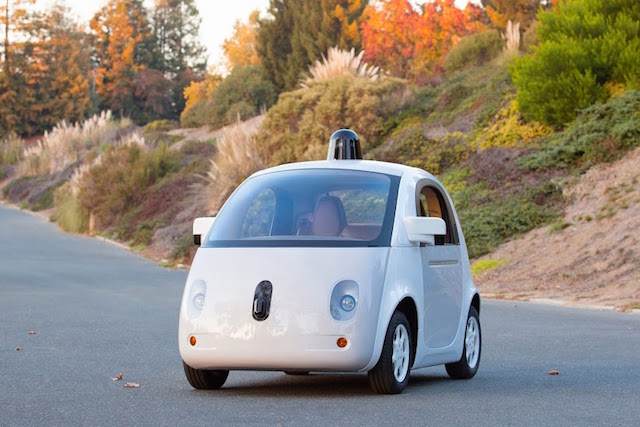
    “It certainly looks like an engineer designed it,” was one of the first reactions to Google’s announcement of its first full prototype self driving car.

    Certainly Google’s driverless vehicle looks odd, sort of like an overgrown carnival dodgem or an cartoon character police car.

    One of the interesting aspects of the driverless car is that many features into today’s automobiles aren’t necessary if you don’t have a driver – the obvious aspects being that a steering wheel, handbrakes and dashboard displays become unnecessary.

    Google have a video from earlier in the year showing the design and unveiling of the prototype. One of the fascinating aspects of the new device is how Google propose it can empower the sight impaired and disabled.

    The prototypes are stripped down vehicles with only a top speed of 25mph, with only two seats and little, if any luggage space. As the Oatmeal reports, riding in them is a little boring after the first few minutes.

    Looking at the Google vehicles it’s difficult not to think we could design something radically different if we moved away from our own prejudices of what a car should look like.

    At the beginning of last century, motor cars looked similar to the horse carts that were the standard transportation of the day; it was only in the 1930s the automobile fully took the form we recognise today.

    So it’s worth considering how we can optimise these vehicles to meet our needs and comfort rather than build them around the requirements of Twentieth Century technologies and usage.

    Tomorrow’s driverless cars will probably look very different to today’s vehicles and similarly our communities will adapt to a very different way of travelling. We will almost certainly find our cities will be very different when the driverless car becomes the norm.

    We need to think how to design them for that future, however far away it may be.

    Similar posts:

    • No Related Posts
  • Where will the jobs come from? ABC Nightlife radio

    Where will the jobs come from? ABC Nightlife radio

    If you missed the program it’s available from the Soundcloud site.

    Paul Wallbank joins Tony Delroy on ABC Nightlife across Australia from 10pm Australian Eastern time on Thursday, November 27 to discuss how technology affects your business and life.

    Last week a US company showed off its robotic security guard, with the boast it costs less than half the wages of a human officer. It isn’t just security guards, baristas or taxi drivers, many knowledge based jobs — from call centre workers to lawyers — can be done by computer programs, or algorithms.

    Even the building industry isn’t immune from the robots as 3D printing moves into making houses by squeezing concrete out of computer controlled nozzles.

    In almost every occupation technology is changing the way we work and reducing the number of workers needed to do a job. So where next for employment in the Twenty-first Century?

    Meet the K-5 robot security guard

    For this month’s Nightlife we’ll be discussing how the robots and algorithms are taking over the workplace and what this means for our communities and businesses.

    Join us

    Tune in on your local ABC radio station from 10pm Australian Eastern Summer time or listen online at www.abc.net.au/nightlife.

    We’d love to hear your views so join the conversation with your on-air questions, ideas or comments; phone in on 1300 800 222 within Australia or +61 2 8333 1000 from outside Australia.

    You can SMS Nightlife’s talkback on 19922702, or through twitter to @paulwallbank using the #abcnightlife hashtag or visit the Nightlife Facebook page.

    Similar posts:

  • The rise of the robots

    The rise of the robots

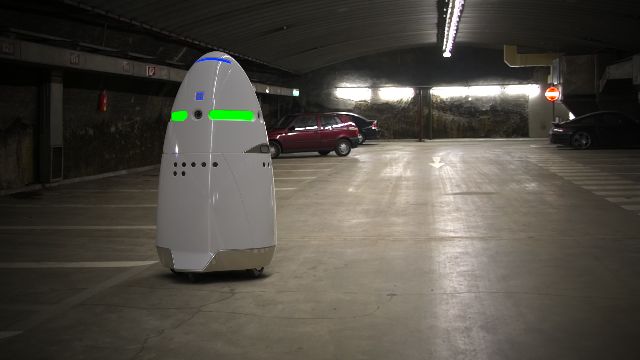
    One of the key themes of this site is how  industries and workplaces are changing, one good example of this is Knightscope’s K-5 robot, a refrigerator sized device that does many of the tasks currently done by human security guards.

    The K-5 comes with an impressive list of security features; live video,  facial recognition, behavioral analysis and a range of other tools to help organisations protect their premises.

    With an advertised running cost of $6.25 an hour, half the US mean average wage for security guards, the robots appear an attractive proposition although one suspects the limitations of the devices, not to mention the networking infrastructure involved, won’t make them feasible for most places in the near future.

    Despite its limitations, the K-5 shows the direction of robot technologies in replacing jobs that until recently were thought to be immune to automation. As the technologies inside the K-5 become smaller and lighter, future devices will become even more flexible and adaptable.

    Adding to the strengths of these autonomous devices is their constant connectivity, as the promotional video shows the robot uses cloud services to run its recognition and alarm services. Coupled with various sensors and beacons within a building, and these robot security guards become formidable devices.

    The applications for devices like the K-5 goes beyond patrolling shopping centres, car parks or industrial complexes; it’s not hard to see how similar devices can be deployed in applications like agriculture, mining or manufacturing for tasks where it would be expensive or dangerous to employ humans.

    What the K-5 illustrates Andrew McAfee’s warning of exponential technological change being about to engulf businesses, the employment implications of that should have community leaders thinking as well.

    For entrepreneurs, on the other hand, advances in robotics are another great opportunity.

    Similar posts:

  • Robochick takes on the penguins

    Robochick takes on the penguins

    An interesting little story about a robot penguin chick appeared on the I F***ing Love Science website a few days ago.

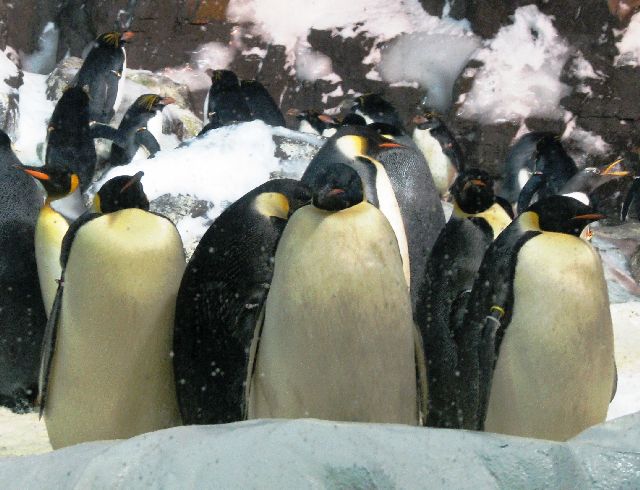
    French  researchers wanted to monitor penguin colonies in Antarctica, the problem traditionally has been that lumbering humans tend to distrupt the birds’ colonies. To overcome the problem the researchers designed a very basic dummy penguin chick which they could drive into the colonies.

    It worked very well with both the young birds and adults accepting the robot into their community which gave researchers great insights into the birds’ social structures.

    While it’s a cute example, the robot penguin shows just how many applications we’re going to see in the next few years for intelligent devices that can go into places that would be inaccessible for humans. For many industries this is going to dramtically change the way they work.

    Image courtesy of Alex Bruder through Free Images.

    Similar posts:

    • No Related Posts