Category: society

  • Culture beats strategy

    Culture beats strategy

    Writer and business consultant Joseph Michelli says”Culture beats strategy, in fact it eats it for breakfast and lunch”.

    This was one of the key points in a recent webinar about online retailer Zappos and its customer service culture.

    Joseph’s right, the culture of an organisation is the ultimate key to its success, if managers and staff work “according to the book” and declaring “it’s not my job” then you end up with a siloed organisation where management are more interesting in protecting and growing their empires over helping customers.

    With Zappos it’s interesting how it appears easy the integration into Amazon’s ownership has gone and this is probably because both have service centric cultures.

    Both companies seem to have avoided employing Bozos as Guy Kawasaki famously put it a few years ago.

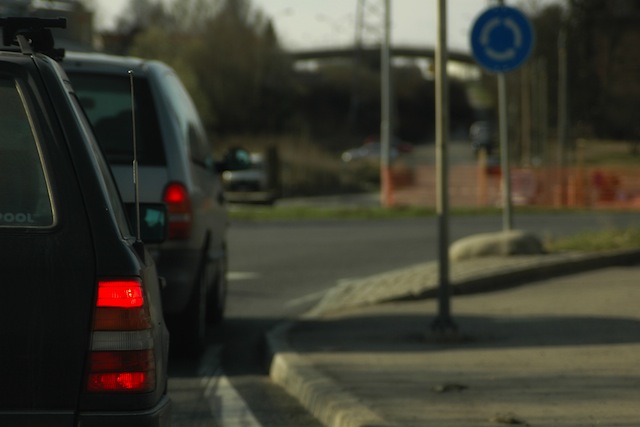
    Your parking lot’s “biorhythm” looks like this:

    • 8:00 am – 10:00 am–Japanese cars exceed German cars
    • 10:00 am – 5:00 pm–German cars exceed Japanese cars
    • 5:00 pm – 10:00 pm–Japanese cars exceed German cars

    Guy’s German car observation is spot on. When I was running a service business, one measure I used for a potentially troublesome client was how many expensive German cars were in the executive parking spaces, it was usually a good indicator that an organisation’s leaders are more interested in management perks than maintaining their technology.

    Another useful measure was where those cars are parked, a good indicator of management’s sense of entitlement is when executive parking spots are conveniently next to the building entrance or lift lobby while customers expected to find a spot anywhere within ten blocks.

    It all comes down to culture and when management are more concerned about parking spots and staff about free lunches, you know you’re dealing with an organisation where the customer – or the shareholder – isn’t the priority.
    Similar posts:

  • Taking care of our own

    Taking care of our own

    “The council ought to do something” growled a friend who’d been stuck in a peak hour traffic jam.

    That innocuous comment illustrates the fundamental challenge facing the developed world’s politicians – that we expect our governments to fix every problem we encounter.

    In the case of the local traffic jam, the cars creating gridlock are parents driving their children to two nearby large private schools.

    Despite the problem being caused by the choices of individuals – those decisions to send their kids to those schools and to drive them there – our modern mindset is “the government aught to do something” rather than suggesting people should be making other choices.

    Socialising the costs of our private decisions is one of the core beliefs of the 1980s mindset.

    Eventually though the money had to run out as we started to expect governments to solve every problem.

    We’re seeing the effects of this in the United States where local governments are now having pull up black top roads, close schools and renege on retirement funds as those costs become too great.

    As a society we have to accept there are limits to what governments can do for us.

    Increasingly as the world economy deleverages, tax revenues fall and the truth that a benign government can’t fulfill our every need starts to dawn on the populace, we’ll realise that expecting politicians and public servants to save us is a vain hope as they simply don’t have the resources.

    Bruce Springsteen puts this well in his song “We Take Care Of Our Own.”

    The truth today is the cargo cult mentality of waiting for governments or cashed up foreigners to come and save us is over.

    We’re going to have to rely more on our own businesses, families and communities to support us in times of need.

    The existing institutions of the corporate welfare state are beginning to collapse under the weight of their own contradictions.

    Joe Hockey knows this, but as a paid-up agent of the establishment he doesn’t dare nominate the massive cuts to middle class welfare and big business subsidies that are necessary to reform those institutions.

    Waiting for the council to fix the local roundabout is nice but it doesn’t address the bigger problems.

    It’s up to us to build the new institutions around our local communities and families. This is not a bad thing.

    Similar posts:

  • Are we prepraed to embrace risk?

    Are we prepraed to embrace risk?

    It’s safe to say the Transport Security Administration – the  TSA – is one of America’s most reviled organisations.

    So it’s notable when a former TSA director publicly describes the system the agency administers as “broken” as Kip Hawley did in the Wall Street Journal on the weekend.

     More than a decade after 9/11, it is a national embarrassment that our airport security system remains so hopelessly bureaucratic and disconnected from the people whom it is meant to protect. Preventing terrorist attacks on air travel demands flexibility and the constant reassessment of threats. It also demands strong public support, which the current system has plainly failed to achieve.

    The underlying question in Kip’s article is “are Americans prepared to accept risk?” The indications are that they aren’t.

    One of the conceits of the late twentieth Century was we could engineer risk out of our society; insurance, collateral debt obligations, regulations and technology would ensure we and our assets were safe and comfortable from the world’s ravages.

    If everything else failed, help was just an emergency phone call away. Usually that help was government funded.

    An overriding lessons from the events of September 11, 2001 and subsequent terrorist attacks in London and Bali is that these risks are real and evolving.

    The creation of the TSA, along with the millions of new laws and billions of security related spending in the US and the rest of the world – much of it one suspect misguided – was to create the myth that the government is eliminating the risk of terrorist attacks.

    It’s understandable that governments would do this – the modern media loves blame so it’s a no win situation that politicians and public servant find themselves in.

    Should a terrorist smuggle plastic explosive onto a plane disguised as baby food then the government will be vilified and careers destroyed.

    Yet we’re indignant that mothers with babies are harassed about the harmless supplies they are carrying with them.

    It’s a no-win.

    This is not an American problem, in Australia we see the same thing with the public vilification of a group of dam engineers blamed for not holding back the massive floods that inundated Brisbane at the end of 2010.

    While we should be critical of governments in the post 9/11 era as almost every administration – regardless of their claimed ideology – saw it as an opportunity to extend their powers and spending, we are really the problem.

    Today’s society refuses to accept risk; the risk that bad people will do bad things to us, the risk that storms will batter our homes or the risk that will we do our dough on what we were told was a safe investment.

    So we demand “the gummint orta do summint”. And the government does.

    The sad thing is the risk doesn’t go away. Risk is like toothpaste, squeeze the tube in one place and it oozes out somewhere else.

    While Kip Hawley is right in that we need to change how we evaluate and respond to risk, it assumes that we are prepared to accept that Bad Things Happen regardless of what governments do. It’s dubious that we’re prepared to do that.

    Similar posts:

  • Reinventing activism

    Reinventing activism

    In the late 1960’s the Biafran War appeared on the front pages of the world’s media partly due to a well co-ordinated advertising campaign using the relatively new broadcast marketing techniques.

    During the mid 1980s the Ethopian famine was bought to prominence by Live Aid and Bob Geldof using music videos and live television made possible by huge leaps in broadcasting technology.

    Nearly thirty years later we see an African tragedy – this time the Lord’s Resistance Army in Central Africa – again bought to the West’s attention through new media and advances in video technology.

    Each time there’s been an outpouring of outrage and determination by those of us in the West to ‘fix’ Africa’s problems. We demand our leaders do something so we march, we donate and these days we retweet or like an online video.

    In many ways  we’re like Alden Pyle, the idealistic and well meaning anti-hero of Graham Greene’s The Quiet American who believed a ‘third force’ can fix the problems of Vietnam in the 1950s.

    At the time Graham Green wrote The Quiet American in the late 1950s, the Eisenhower Administration had several hundred US military advisers in Vietnam, sent by President Truman at the beginning of the decade.

    Today, at the time of the Stop Kony campaign in 2012, the Obama Administration has ‘about’ a hundred advisors in Central Africa.

    Sometimes we don’t reinvent anything; we just use modern tools to repeat our grandparents’ mistakes.

    Similar posts:

    • No Related Posts
  • The clique

    The clique

    A Fortune story about the inner workings of social media service Facebook reportedly claims the business is increasingly dominated by friends of the Chief Operating Officer.

    On Sheryl Sandberg and the circle of friends she has brought into the company: “There’s a term spoken quietly around Facebook to describe a cadre of elites who have assumed powerful positions under the leadership of Zuckerberg’s chief operating officer: They’re FOSS, or friends of Sheryl Sandberg.

    Most tellingly is the quote, “‘You can’t really cross a FOSS,’ says one former senior manager.”

    While this may not be true at Facebook – the reporters are quoting anonymous sources so their story can’t be taken as gospel – when a small, interconnected clique runs an organisation things usually don’t turn out well.

    It’s bad enough when it’s a government agency like a police force or a not for profit like a charity, but in big and small business things are usually worse.

    The main imperative of clique is to protect its members regardless of the damage they do to their organisation or even the global economy, as we saw in the banking crisis of 2008.

    Inside the clique, you often have incompetence, corruption and almost always a strong thread of nepotism. None of this makes for an effective organisation or efficient business.

    As investors, employees, suppliers, customers and taxpayers we have to be on guard against these cliques as they rarely act in the interests of those outside their circles.

    It may not be the allegations at Facebook are true, but this is happening at other organisations right now. It’s probably happening in your government as well.

    Similar posts:

    • No Related Posts