Category: software

  • Building an ecosphere

    Building an ecosphere

    One of the keys to success for a software platform is its ecosphere  the community of developers, consultants and advocates that grow around a service.

    By far the most successful company in building a community around its products is Microsoft, who over the years have attracted hundreds of thousands of developers and partners to support Windows.

    Microsoft’s thousands of partners are the company’s greatest asset in beating back the threat posed by Google, cloud computing and Apple. The sheer size Microsoft’s supporter base gives it a natural buffer against competitors.

    Apple too have that buffer, in the company’s darkest days during the late 1990s it was the true believers who kept the flame burning. The ecosphere that has developed around the iPhone and iPad has now cemented Apple’s iOS as being the dominant mobile platform.

    The same thing happens around various industry software packages, as one company becomes identified as the leader in their sector they develop a following among users in that industry.

    At the Xero conference last weekend, the cloud accounting software company showed how an ecosystem of developers, accountants and bookkeepers are developing around their software platform.

    Companies as diverse as inventory management, point of sale system and document scanning services are plugging into Xero’s accounting data which adds functionality for customers.

    In turn, those third party services makes Xero more attractive to the bookkeepers and accountants looking for ways to make their jobs, and those of their clients, easier.

    Xero’s biggest competitor, MYOB, also has that strength with an army of certified consultants from long being the incumbent in their market.

    The battle between Xero and MYOB for dominance in the business accounting software market will depend upon how well the incumbent can hold onto their existing markets and the effectiveness in the incumbent building a ecosphere that makes the newer product more attractive.

    Disclaimer: Paul travelled to Melbourne and attended the Xero Partner conference courtesy of Xero.
    Similar posts:

  • Windows 8 to launch on October 26

    Windows 8 to launch on October 26

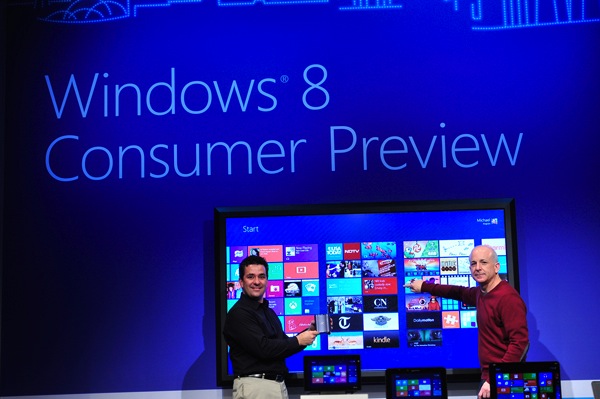
    It’s official, Windows 8 has an October 6, 2012 release date.

    For Microsoft, the pressure is now on. Not only does the desktop version have to be shipped but also the smartphone and tablet versions. Their cloud services are going to have to be flawless on the day Windows 8 goes live.

    The tablet version is doubly important as Microsoft has to convince cynics like me that the Microsoft Surface is not vapourware. With the Surface RT scheduled for release with Windows 8, Microsoft are going to have to announcing pricing and final specifications very soon. Reports are that the Surface is beginning to appear on Amazon sites so release may not be far away.

    Nokia too will now be under a lot of pressure as releasing credible Windows 8 are the only hope for the company’s future. As it is, the current range of Lumia phones are now dead in the water despite massive discounts.

    As we’ve previously discussed, Windows 8 is essential to Microsoft’s market position and will define their future – a failure will almost certainly lock the once dominant software giant to a another lost decade.

    We’ll see a lot advertising and PR hype around Windows over the next few months, the real test will come at the end of October and with the Christmas buying season.

    By the middle of next year we’ll have a good idea of just how successful Windows 8 will be. Steve Ballmer’s future depends upon it.

    Similar posts:

  • Android’s corporate wins

    Android’s corporate wins

    Telstra’s launch of the second iteration of their T-Hub device and the Commonwealth Bank’s Albert tablet Point of Sale device are notable in their choice of operating system.

    For the T-Hub, the first version was a bug plagued and slow proprietary system that which one of the reasons for the device’s market failure. Telstra’s second attempt runs on the Google Android system.

    The Commonwealth Bank didn’t make Telstra’s mistake with the Albert device, instead choosing  the open source system from the beginning.

    Choosing an open platform like Android makes it easier for the developers and company to support the device and develop new products. There’s also the advantage of thousands manufacturers supplying hardware that runs on Android.

    If we compare the costs of developing a proprietary system and sourcing hardware for it to run on, the choice of an open system is almost irresistible.

    For Microsoft, this adoption of Google Android by corporations is another blow to Windows’ dominance of the market, a few years ago all of these devices would have been running a version of Windows but Android is a cheaper, more flexible and better suited to most of the tasks required.

    It could be worse for Microsoft – Apple could be dominating this market. Apple though have had their own victory on consumer devices and increasingly companies have to cater for their customers and staff wanting an iPhone or iPad app.

    Like on smartphones, the battle is now between Android and Apple.

    Similar posts:

  • Cloud computing and Small Business September Digital Day

    Cloud computing and Small Business September Digital Day

    As part of the NSW state government’s Small Business September Digital Day for Startups and Growth Businesses, we’ll be looking at exactly what cloud computing is and how it can help businesses.

    Some of the services we discuss in the presentation are listed in the Netsmart’s web post on the 5 essential cloud computing tools for business. Although there’s many more we’ll mention that can help organisations of all sizes.

    Given the time constraints and the event’s focus is on the specific social media and cloud computing tools available to small business, much of the background information to the Online Tools to Turbocharge Your Business session is available in the previous series of posts about cloud computing previously done for the 2011 City of Sydney Let’s Talk Business series.

    Detailed information from that presentation can be found on the following pages;

    The networked business Part 1: What is cloud computing?
    The networked business Part 2: The benefits of cloud computing

    The networked business Part 3: Managing risk in the cloud

    The networked business Part 4: The business case for cloud computing

    All of the tools discussed in the Small Business September presentations are available in our ebook, Online Business Essentials which is available for all subscribers to our newsletter.

    If you’d like to see the presentations themselves, both The Networked Business and Online Tools to Turbocharge your Business are available through the Slideshare service.

    Seats are still available for both of the Digital Day presentations at the Telstra Experience Centre, Level 4, 300 George Street, Sydney. The Start Up session begins at 8.00am and the presentations for growth businesses begins at 1.00pm.

    Come along if you’d like to learn how social media and cloud computing can help your business improve productivity while building an online brand.

    Similar posts:

  • What is cloud computing?

    What is cloud computing?

    Cloud computing is about using other people’s computers to do the work for you.

    Rather than having programs running on your computer and saving information to the hard drive, a cloud service connects to your system and you access both the program and your data through a web browser such as Firefox, Internet Explorer or Safari.

    That service could be free such as Hotmail and Flickr or it could be paid for like Salesforce or Google Apps. Either way, they use a “cloud” of computers to provide the application and store their customer’s data.

    Having your applications and data saved on someone else’s servers brings a number of advantages in security, cost and flexibility.

    For businesses, that flexibility comes out of not having to buy complex software licences for their networks, instead they only pay for what they use. For home users it means not having to install software that often slows down machines and sometimes conflicts with other programs.

    As we use the Internet more on our phones or with mobile devices like the iPad, having the advantage of not needing different software versions for each device makes it easier for us to access and use the information that used to be locked in our personal computers or office servers.

    Cost too is an important factor, while many programs such as Yahoo! Mail and WordPress are free, even the paid for programs like Sassu and Basecamp offer considerable savings over their traditional competitors that require you to buy a disk and install the tool on your system.

    One of the reasons for those reduced costs is the cloud services are sharing the resources between many users. That reduces the supplier’s distribution and support costs while making it easier for them to update their program when new features or security problems appear.

    Security is probably the most misunderstood part of cloud computing. While cloud services do require a degree of trust in the supplier, most providers are providing a much more secure and trustworthy computer environment than most homes and businesses.

    There are downsides however; you do need to have a reliable Internet connection and you do have to trust that your supplier will not only keep a secure environment but also won’t share your data with others and won’t go broke.

    While some of those disadvantages with cloud computing mean that some businesses — particularly those in the medical and banking industries — have to be careful about using online services, for most homes and enterprises the cost and flexibility benefits outweigh the risks.

    Over the next few years we’ll see many, if not most, computer programs move onto the cloud as reliable Internet becomes commonplace. It is the way the IT industry is heading and where we will all be doing our computing in the next few years.

    Similar posts:

    • No Related Posts