Category: software

  • When margins collapse

    When margins collapse

    Two of the key indicators that your business model, and industry, is being threatened is declining sales and margins.

    A good example of this is the story Microsoft are urging their Chinese resellers to use Office 365 as a loss leader to get their foot in the door with customers.

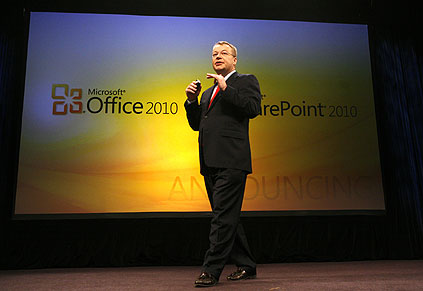
    Not so long ago Microsoft Office was a huge cash generator for the business; now it’s a loss leader.

    If anything this shows how the margins in the software business are being eroded by cloud computing. Businesses like Microsoft and its resellers that have grown fat on big margins now have to evolve to a very different marketplace.

    This means a very different way of doing business, a different way of delivering products and much more streamlined operation that doesn’t need battalions of highly paid salespeople and managers. In fact those managers and salespeople become a very expensive legacy item in a cloud computing world.

    Microsoft are by no means the only company to find themselves giving away once profitable products in order to maintain their market position but when that starts happening it’s clear the time has arrived to find a new line of business.

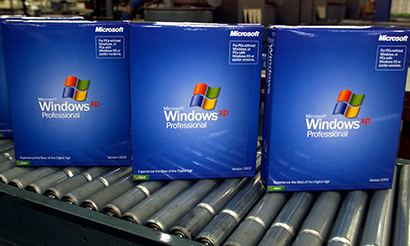
    In Microsoft’s case that’s been a pivot to the cloud, however the company will never find things as lucrative as the good old days when software was sold in boxes or licensed out with impossible to read agreements.

    Funnily, the same thing is happening in the telcommunications world. It’s an interesting time to be in business.
    Similar posts:

  • The fight for cloud computing’s sweet spot

    The fight for cloud computing’s sweet spot

    One of the great market battles of the PC era was the fight between the ‘best of breed’ software designed to do specific jobs well — Lotus 123, WordPerfect, and Harvard Graphics — versus the bundled ‘suites’ led by Microsoft Office.

    Bundled suites of programs offered a common platform and cheaper price over buying products individually.

    In the case of Microsoft Office, it also helped that the software giant was aggressive in undercutting the market and leveraging the deals it had made with hardware vendors and system integrators.

    The winner of that battle was Microsoft as it turned out customers preferred the cheaper price points of the bundled packages and the common software platform made it easier to share data across the applications.

    In the cloud computing field that fight is happening again as Zach Nelson, CEO of Netsuite, describes; “I think the next battle is going to be the same battle that happened in the client-server world. Is it the best of breed cloud apps or is it the suite?”

    Nelson believes the suite vision will win out, “the suite is going to win again for exactly the same reasons why the suite won in the client-server world — it’s very hard to synchronise data between applications.”

    Given Netsuite’s business, as its name suggests, is in providing a suite of software it’s no surprising that Nelson believes their way of doing business will prevail. Those providing ‘best of breed’ stand alone cloud applications naturally disagree.

    Chris Ridd, Australian General Manager of accounting service Xero, disagrees with Nelson’s view. “With cloud and open APIs you have the holy grail of interoperability,” Ridd says. “In the 1990s the open systems were too early and didn’t work as well as they do today.”

    Ridd also points out that Xero has over 350 add on services, ” I don’t think any suite can deliver that” he says.

    History is on Nelson’s side but it may be that in this case history doesn’t repeat as the technology has moved along and now stand alone apps are what the market wants.

    Time will tell although its unlikely whichever prevails will have anything like the success and market domination of Microsoft Office during the PC era.

    Similar posts:

    • No Related Posts
  • Salesforce faces the end of the database era

    Salesforce faces the end of the database era

    Last week we looked at the way we organise information is changing in the face of exploding data volumes.

    One of the consequences of the data explosion is that structured databases are beginning to struggle as information sources and business needs are becoming more diverse.

    Yesterday, cloud Customer Relationship Management company Salesforce announced their Wave analytics product which the company says “with its schema-free architecture, data no longer has to be pre-sorted or organized in some narrowly defined manner before it can be analyzed.”

    The end of the database era

    Salesforce’s move is interesting for a company whose success has been based upon structured databases to run its CRM and other services.

    What the company’s move could be interpreted that the age of the database is over; that organising data is a fool’s errand as it becomes harder to sort and categorise the information pouring into businesses.

    This was the theme at the previous week’s Splunk conference in Las Vegas where the company’s CTO, Todd Papaioannou, told Decoding The New Economy how the world is moving away from structured databases.

    “We’re going through a sea change in the analytics space,” Papaioannou said. “What characterised the last thirty years was what I call the ‘schema write’ era; big databases that have a schema where you have to load the data into that schema then transform before you can ask questions of it.”

    Breaking the structure

    The key with programs like Salesforce and other database driven products like SAP and Oracle is that both the data structures — the schema — and the questions are largely pre-configured. With the unstructured model it’s Google-like queries on the stored data that matters.

    For companies like Salesforce this means a fundamental change to their underlying product and possibly their business models as well.

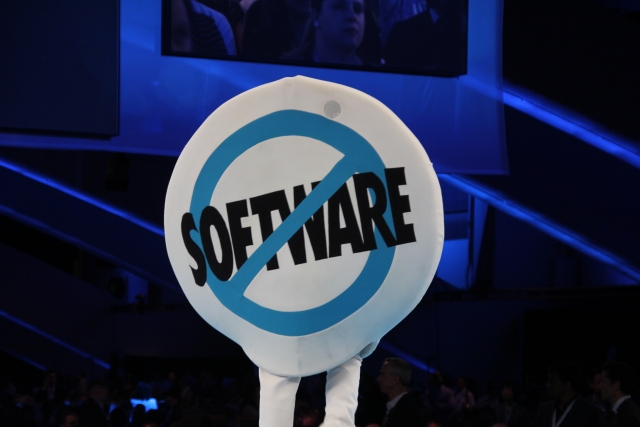
    It may well be that Salesforce, a company that defined itself by the ‘No Software’ slogan is now being challenged by the No Database era.

    Paul travelled to San Francisco and Las Vegas as a guest of Salesforce and Splunk respectively

    Similar posts:

    • No Related Posts
  • One, two, skip a few. Microsoft hopes Windows 10 will save a declining PC market

    One, two, skip a few. Microsoft hopes Windows 10 will save a declining PC market

    A few days ago I asked if Windows 9 would be Microsoft’s last desktop operating system.

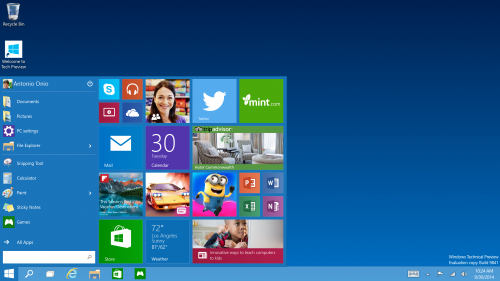
    Yesterday the company partially answered the question by announcing the next version will be named Windows 10 which conveniently skips version nine.

    Skipping around numbers isn’t unusual for Microsoft, most famously Word skipped from version two to six just to overtake competitor WordPerfect in the late 1990s.

    Windows itself has gone 3.0, 3.1, 3.11, 95, 98, ME, XP, Vista, 7 and 8 in the past — that’s without mentioning the Windows NT family — so jumping to Windows 10 doesn’t detract from any logic in the Microsoft’s naming system.

    The key point from Microsoft’s announcement is the business focus along with the continuation of Windows 8’s unified experience across PCs, smartphones and games consoles that has proved less than successful.

    One area where Microsoft has conceded defeat is in the battle for a Start button with Windows 10, one of the biggest irritants upgrading users found with the new operating system and one of the reasons why many users chose the older Windows 7 software when buying a PC.

    How the Start button will work on Windows Phone remains to be seen although Microsoft seem committed to the ‘One Windows’ vision despite its technological and marketplace difficulties.

    Another interesting development with the new product is the Windows Insider Program, billed as an ‘open collaborative development effort to change the way Windows is built and delivered’.

    Back in the old days this was called a beta program where testers were invited to try out new software to test the product and fine tune user experiences. At least it shows Microsoft are embracing the language, if not the spirit, of the collaborative economy.

    Microsoft have released a YouTube video Introducing Windows 10 with Windows Vice President Joe Belfiore outlining the features of the new system.

    Whether Windows 10 is enough to shore up the declining fortunes of the company’s Windows division and Joe’s job will be a key question for analysts and industry watchers over the next three years.

    Similar posts:

    • No Related Posts
  • The business or your sanity

    The business or your sanity

    Yesterday Microsoft confirmed the rumours that it would buy Minecraft developer Mojang for 2.5 billion dollars.

    Following the announcement, Mojang founder Markus Persson — aka Notch — wrote a touching blog post on his leaving the company he founded.

    The business had become too big and the demands of Minecraft’s legion of fans were taking their toll; it was time for Persson to move on to keep his sanity.

    “If I ever accidentally make something that seems to gain traction, I’ll probably abandon it immediately.”

    For all the hubris we hear from technology company founders and CEOs, it’s those like Persson who probably will end up making the most difference to the world.


    Similar posts: