Quirky, the well funded Internet of Things startup that came to attention for its connected egg holder, announces a restructure.
It looks like the IoT isn’t the easy road to riches, regardless of how well funded a business is.

Quirky, the well funded Internet of Things startup that came to attention for its connected egg holder, announces a restructure.
It looks like the IoT isn’t the easy road to riches, regardless of how well funded a business is.

“We aren’t small businesses” cries Tank Stream Ventures’ Managing Partner Rui Rodrigues in Business Spectator yesterday.
Rodrigues’ point was tech startups have a very different set of needs to the local small business. “Bob down at the corner shops has been there for 10 years, and he’ll be there for another, he might sell milk, or office chairs, or even fix your watch,” he writes.
Technology startups on the other hand “have ambitions to become big companies, global empires. They are high-growth technology businesses and they are working on goods and services that you might not yet know you need.”
Rodrigues’ comments come from the Silicon Valley Greater Fool mindset where the end game for investors is to flip the business to a bigger company or make out like bandits in a stock market listing. Under that model profitability doesn’t matter, “too early is considered a deterrent for investors looking at a business.”
Not making a profit is fine for a company promising unlimited future growth to the market or a flipper based on finding a greater fool but for most startups those lack of returns see all but a few spectacularly successful ones shrivel away as the company’s funds exhaust before the founders achieve their objective. For Bob the locksmith who doesn’t have a fall back option of returning to a management consulting job, he needs the income.
What’s more fallacious in Rodrigues’ piece is the idea today’s tech startups themselves will be great employers themselves. Even the successful ones haven’t proved to be job generators in the way traditional business have been.
For the traditional small business sector the risks aren’t insubstantial either as the majority of proprietors will barely make a living while risking their assets, time and often health – something understated by the motivational writers urging people to quit their jobs and prove themselves.
For both the startup community and the small business sector the real challenges lie in being undercapitalised. Most startups will fail because of insufficient capital while the majority of small businesses never quite reach their potential because they lack the funds required to invest in the proper tools.
Much of this comes down to banks retreating from small business lending thanks to the ill thought out Basel rules that treat home mortgages as almost risk free which has discouraged any form of finance not backed by residential property.
In fact many of the challenges facing traditional small businesses such as high rents, unnecessary regulation and high labour costs are as much a problem for the thirty something renting a desk in a tech incubator as they are for 55 year old Bob who’s been running the local locksmiths for the last twenty years.
Silly schemes like the Australian government’s depreciation scheme aren’t addressing this problem, indeed the Abbott administration’s intention is to provide a brief sugar hit to the nation’s GDP as small business owners buy new laptop computers and toolboxes. It does nothing to address the uncompetitiveness of Australian business or its attractiveness to local investors.

How successful can crowdfunding be for IoT hard? We looked at some of the downsides of campaigns recently and story in Smart Company on some of the IoT gadgets at the recent Internet of Things World exhibition showed how many of projects are being funded by the crowd.
The notable thing about the projects at the conference was how many had not only been successful crowdfunding projects but had also smashed their targets.
The lesson from that is a successful campaign has to catch the imagination and excitement of the crowd, not just be a worthy idea.
How many if these products end up being successful remains to be seen, the test will be how accurately the founders have estimated their costs.
If it were just the enthusiasm of the funders, then the projects are almost certain to succeed.

“There’s great availability of capital for young companies,” says Doron Kempel, the CEO of software defined data center company SimpliVity.
Since being founded in 2009, the company has had five rounds of funding and raised $276 million dollars in equity and debt.
The notable thing is Kempel says the banks are keen to lend money to his business, something that probably underscores how difficult it is for banks to find suitable places to place funds.
As one of the unicorns – Simplivity’s last fund raising gave the company a valuation of over a billion dollars – it shouldn’t be surprising that banks are comfortable lending money to the business but it also underscores just how much money is available to startups with the right investors.
For those investors the paper returns are good as well, with Kempel observing each round of funding sees the company’s valuation triple.
So for companies with good ideas and unique stories it seems right now is a good time to be raising money, particularly if the founders can get one of the pedigree venture capital firms to invest.
The question now though is how many coffee apps and delivery services can the also ran VCs support?
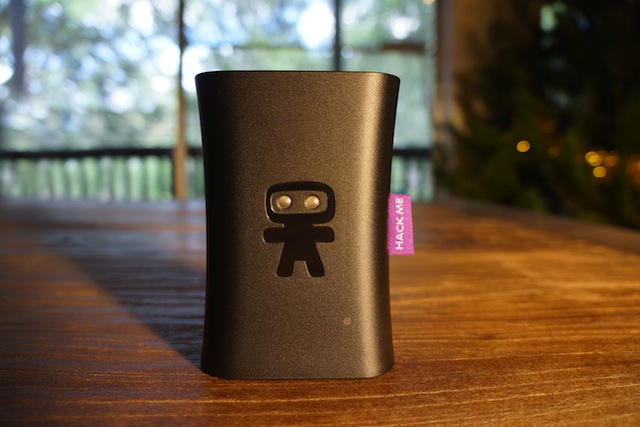
Yesterday Internet of Things startup Ninja Blocks announced it was shuttering its doors after three years of operations, two successful Kickstarter campaigns and three successful fundraising campaigns that netted $2.4 million.
Ninja blocks aimed to become the centre of the smarthome with its simple controllable device but, as many other startups have found out, the costs and complexities of designing, manufacturing and shipping hardware are not trivial.
Last year I spoke to Ninja Blocks and a similar IoT startup which also failed, Moore’s Cloud, about their opportunities and challenges. In the light of both companies failing they are worth watching again.
Daniel Friedman, CEO of Ninja Blocks outlined the company’s plans along with the limits of crowdfunding.
The CEO of Moore’s Cloud, Mark Pesce, had much stronger views on crowdfunding and its limits.
From the Moore’s Cloud and Ninja Blocks story it would be tempting to conclude that pure IoT hardware startup plays are doomed to failure, however the lessons of companies like Fitbit and the Pebble watch show otherwise.
A very good example of success is Spanish IoT company Libelium whose founder and CEO Alicia Asin told Decoding The New Economy two years ago how the company had started under the shadow of the 2009 economic crisis and thrived since.
The failure of Ninja Blocks and Moore’s Cloud really tell us we’re in the early days of the IoT and the business models and technologies are not certain. It’s also a commentary on the risks involved in startup businesses, as investor Dave McClure says, “not every one will be a unicorn.”
As the markets grow and the technologies evolve we’ll be seeing many more IoT startups, few will become billion dollar unicorns and many will fail. That’s the nature of new industries.