Category: telcos

  • How the cloud beat the telcos

    How the cloud beat the telcos

    Yesterday this site looked at the telcos’ battle to diversify in a world of declining sales and margins.

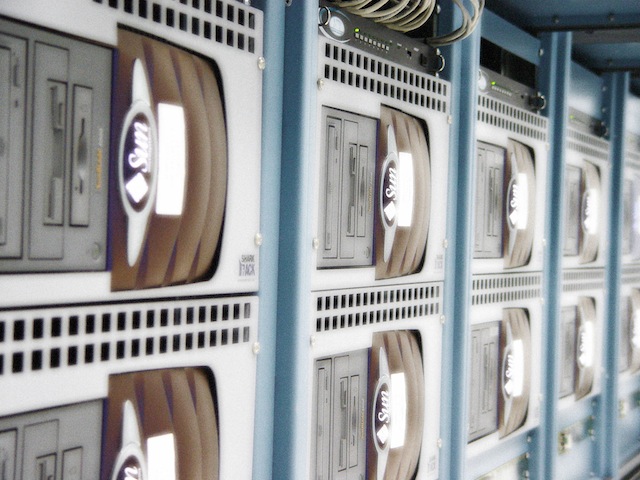
    One of the areas where telecommunications providers failed dismally was in data centres – what should have been a relatively easy area for them to move into turned out to be an industry that was culturally alien to them.

    This week showed how costly that failure was for the telcos as AWS, Microsoft and Google all reported huge growth in their cloud revenues. Microsoft’s cloud business nearly doubled in value while AWS grew almost 50%.

    While for Google, the company is still grossly dependent upon advertising for its profits, at least their cloud services are the fastest growing part of their business. Their struggle to diversify is beginning to show some results.

    The telcos though can only look and wonder at what might have been.

    Similar posts:

    • No Related Posts
  • Telcos and the battle to diversify

    Telcos and the battle to diversify

    How Australia’s incumbent telco, Telstra, deals with the industry’s commoditisation is the topic of my interview in Diginomica with the company’s Hong Kong based director of Global Platforms, Jim Fagan.

    The need to diversify is pressing upon Telstra with the company’s income down 3.6% in its last financial report with mobile sales, by far their biggest revenue earner, down eight percent.

    Across the developed world, telcos are seeing their markets slowing with global smartphones sales largely static, formerly big profit generators like SMS declining and broadband data rates collapsing.

    In the US both formerly untouchable telcos are struggling which has seen them attempting to diversify with AT&T buying Time-Warner for $85 billion and Verizon buying Yahoo! despite its problems that saw a $250 million discount after the service’s hacking scandal.

    With the pressures on the telco industry, it’s not surprising they are looking at alternative income streams and Telstra’s strategy seems to play more to their traditional strengths than a media play, which Telstra has tried previously and failed.

    It could be though that Telstra, like all telcos, could be destined to become a utility service. While that might disappoint executives and shareholders who dream of glamour, excitement and high profits, that might not be a bad thing.


    Similar posts:

  • A gigabit milestone for mobile networks

    A gigabit milestone for mobile networks

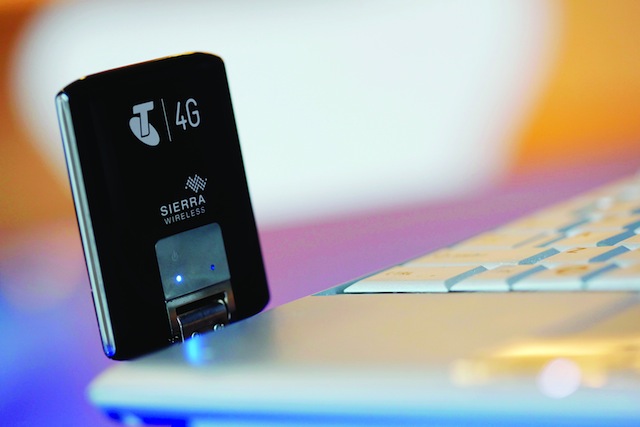
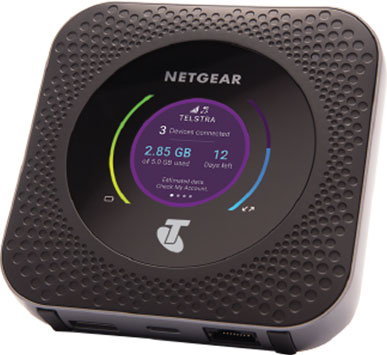
    Yesterday communications vendors Qualcomm, Netgear, Ericsson and Telstra, unveiled their Australian gigabit LTE service that gives users high speed internet connections over the 4G mobile network.

    Billed as a world’s first, Telstra will offer customers the Netgear supplied hotspots that can connect up to twenty devices over WiFi.

    Listening to the Telstra spiel yesterday, it wasn’t hard to conclude the company is making a pitch for the market frustrated by the National Broadband Network’s tardy rollout and patchy service.

    The service doesn’t come cheap though, as Finder’s Alex Kidman points out, an hour’s movie streaming on one device could easily cost $4500 dollars on Telstra’s current plans with one of the company’s executives emphasising the product is “aimed at the premium end of the market.”

    Being aimed at the premium end of the market is shame for Qualcomm as their spokespeople were keen to show off the gaming, AR and VR potential of the Snapdragon CPUs driving these devices. It would be a brave or very affluent family that bought one of these devices for their kids given the data costs.

    While the Telstra Gigabit LTE service might be an NBN replacement for deep pocketed customers, telco veteran John Lindsay points out the mobile network can’t support too many people doing so unless many more cells are deployed.

    For the moment the Telstra service is going to be attractive for companies needing high speed. low volume connections in the central business district and as the gigabit LTE upgrades roll out across the country, it will be useful for travellers as well as frustrated NBN customers.

    Ultimately the gigabit LTE product is another step toward the 5G networks that we’ll be seeing appear at the end of the decade, something that both the Ericsson and Telstra PR folk were keen to highlight.

    The key message for consumers and businesses is the rate of innovation in the mobile communications market is not slowing and another generation of connected devices is coming that will change things as dramatically as the smartphone did.

    Similar posts:

    • No Related Posts
  • Huawei’s attempt to shape the cloud

    Huawei’s attempt to shape the cloud

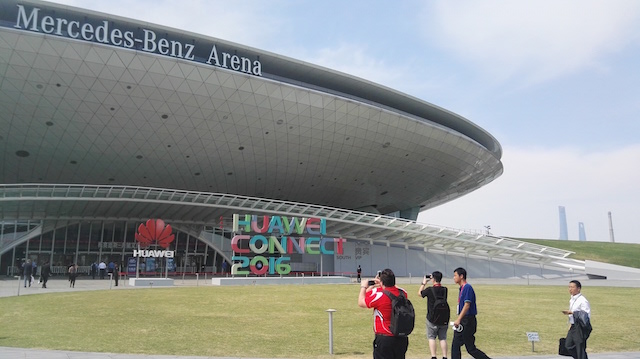
    For the last two days Chinese network equipment vendor Huawei has been holding its first Huawei connect conference in Shanghai.

    There’s alway plenty to announce at these conferences and Huawei had consultancy partnerships with both Accenture and Infosys, their IoT strategy and their big push into cloud computing.

    Ken Hu, the company’s current CEO, even had a new word – cloudification – to describe how business processes are going onto the cloud. Although during the segment on their relationship with SAP, the Huawei executives were at pains to emphasise that in their view most enterprises are a long way from going to a public cloud and will be hosting their own services for some time yet.

    Despite the clumsy buzzwords, Huawei does have an interesting selling point in the market with its tie up with telcos giving it both a strong sales channel and a unique selling point. How well they execute with telecommunications companies that are notoriously poor at selling these services remains to be seen.

    Huawei’s internet of things services are a similar proposition. Being close to the carriers means the company is well positioned to compete in the market, particularly in M2M applications, but again that closeness to telcos could be a hindrance.

    The big message from Huawei Connect is that Chinese companies are genuine competitors to European and North American companies like Ericsson and Cisco, something illustrated on Tuesday when Tencent previewed their new head office in Shenzhen that will act as a live R&D lab for their IoT offerings.

    Overall Huawei Connect was a good example of the Chinese government’s efforts to shift the nation’s economy up the value chain.

    Similar posts:

  • Rolling out innovation on 5G mobile networks

    Rolling out innovation on 5G mobile networks

    “We’re in the flip phone era of 5G networks, people don’t realise today’s 4G mobile standards were written for the era of the flip phone,” says John Smee, the Senior Director of Engineering at Qualcomm Research

    John was speaking to me at chipset manufacturer Qualcomm’s San Diego head office to discuss the next generation of mobile phone services.

    Putting together communications standards isn’t a simple thing, as John says “what we’re discussing now is what today’s five year olds will be using when they turn fifteen.”

    John sees the new standard as giving the next generation of internet giants their market opening, pointing out companies such as Facebook and Uber benefitted from the rollout of 4G networks and some of today’s startups will get a similar boost from 5G services. “A few clicks and you’ve ordered a ride. That wouldn’t have been possible without 3G connectivity, high powered smartphones and networks that are scalable.”

    “What are going to be some interesting new startups that become huge multibillion dollar industries from 2030,” he asks. “By definition we don’t understand the future.”

    For telco executives being a ‘dumb pipe’ is one of their nightmares and John believes they can avoid that fate in a 5G world by concentrating on their advantages with licensed spectrum. “If they are looking a high reliability and low latency services then the quality of the connectivity they can offer becomes essential,” he says.

    While the standards groups continue to work on the 5G standards, the technologies continue to evolve. John Smee’s message is that these new products are going to offer opportunities for new companies.

    The trick is to figure out which of today’s startup companies will be the Uber or Facebook of 2025.

    Similar posts:
    • No Related Posts