Category: telcos

  • Will mobile banking drive the developed world’s economies?

    Will mobile banking drive the developed world’s economies?

    Microsoft founder Bill Gates suggests mobile banking can revolutionise developing nation’s economies says in a guest post for online magazine The Verge.

    “People being able to participate on their phone, no matter where they live, even if they’re in a remote rural village in Tanzania or Kenya, they’ll be able to save small micro-payments,” Gates told The Verge during an interview in New York. “They can participate on the economy through their phone, but also in the fall when it’s time to pay the school fees, they’ve saved the money for the year. That’s transformative for their family.”

    Gates’ piece appeared at the same time French telco Orange announced a partnership with Ecobank to provide mobile payments in several African countries.

    Bringing banking to the masses through mobile phones is one example of how emerging markets can leapfrog the technological and institutional barriers that have given the western world a head start.

    For poor and remote communities, a combination of cheap photovoltaic (PV) cells and cellular base stations mean it’s possible to connect into the global economy without the need of massive government or corporate investment.

    As Gates points out, this has the potential to dramatically change the economies of many emerging markets.

    Similar posts:

  • Links of the day – redesigning the car and South China Mall.

    Links of the day – redesigning the car and South China Mall.

    The CES extravaganza continues in Las Vegas with a wave of announcement, most of which I’m ignoring, however the motor industry continues to show off new developments with Mercedes displaying their vision of how a driverless car will look.

    Other interesting links today include an analysis of the ill fated South China Mall’s flaws and how Amazon is reorganising its R&D efforts after the failure of the Amazon Fire.

    Mercedes redesigns the car

    A little while back I suggested that we could do better in redesigning the driverless carMercedes have gone ahead and done it.

    Mercedes’ redesign of the driverless car indicates just what can be done when we rethink what passengers will need in the vehicles of the future.

    Ford recalls a vehicle for a UI upgrade

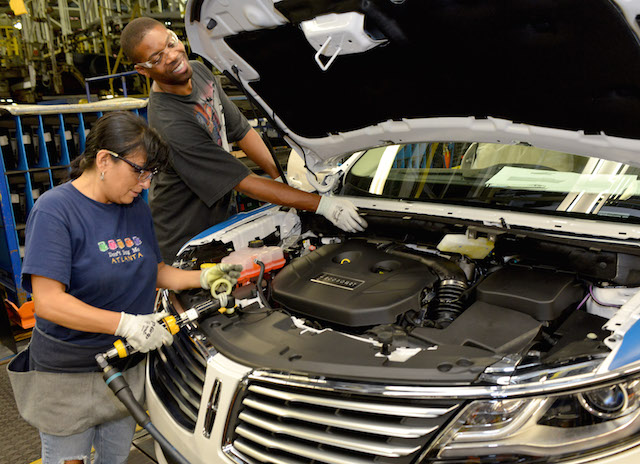
    Ford has recalled its Lincoln MKC SUV models for a software upgrade after discovering drivers were shutting down the cars by accident.

    What’s notable with this story is how software changes are now one of the main reasons for recalling vehicles and how design flaws in an automobile’s computer programs are relatively quickly discovered and resolved.

    We will probably find in the near future car manufacturers will carry out the upgrades remotely rather than ask owners to bring their vehicles into dealerships.

    A long running security flaw is exposed

    In August 2013 a security researcher warned UK online greeting card vendor Moonpig that its system exposed up to six million users’ account and financial details. Until Monday the company had ignored him. This is a tale of classic management disregard for customer security and one area where business culture needs to dramatically change.

    Rumours of an AOL – Verizon merger

    It’s a speculative story but if a merger between US telco Verizon and former internet giant AOL goes ahead it may mark another wave of telcos moving into content services, although it’s hard not to think that Verizon could spend its money more wisely.

    After a flop, Amazon restructures its R&D

    The Amazon Fire was by all measures a miserable flop as a smartphone however it seems the company learned some important lessons from the device’s market failures. Instead of abandoning its research efforts, the online behemoth is increasing it’s R&D budget and reorganising its development division.

    Design fails of the South China Mall

    South China Mall just south of Guangzhou has been the poster child of Chinese malinvestment during the nation’s current boom. In a blog post from 2011, a shopping mall expert visits the development and points out the major design faults in the complex which may well have doomed the project from the beginning.

    Similar posts:

    • No Related Posts
  • Painting a target on the competition

    Painting a target on the competition

    “We’re coming for our competitors” is the warning BlackBerry’s President of Global Enterprise Services, John Sims has for the marketplace in an interview last month.

    Sims laid out how BlackBerry’s future lies in managing big data, providing collaboration tools and securing the internet of things. In the short term however, the company needs emerging markets to keep its mobile handset market going.

    In an interview last month on Australia’s Gold Coast at the Gartner Symposium, Sims laid out some of BlackBerry’s vision of the company’s future.

    Securing the endpoints

    The key product is the BlackBerry Enterprise Services which Sims sees as providing the endpoint security for corporate mobile devices and for the internet of things, something that ties into the company’s QNX investment.

    For the moment though its handsets are a key part of the company’s immediate future and Sims sees the latent demand from lapsed BlackBerry as essential to success, “there are tens of millions of BlackBerry users who are still sitting on their old handsets.”

    “The classic, when it comes along is targeted at that market. We know people are waiting.”

    “When we went from the Gold to the Q10, too much changed. You had to go from the BBOS to the BlackBerry 10 and that’s a big change, we changed the keyboard, we took away shortcuts and we changed too much at the same time. With the Classic we’re almost doing a retrofit.”

    With the recently released Passport smartphone, Sims says the company is struggling to keep up with demand,  “The Passport has done well,” he said. “The problem with it is us, not demand. It’s a supply issue not a demand issue.”

    A week after that interview, BlackBerry announced the company would give Canadian buyers of the Passport subsidies of $600. How that ties into the narrative of a popular device isn’t quite clear.

    Sims hopes the release of the Classic won’t suffer from supply problems, “we think is going to be more popular so we can be sure when it comes out we’ll be able to get that into the market in sufficient quantities to meet demand.

    Discovering emerging markets

    The other hope for BlackBerry’s handset business lies in developing markets, “Latin America is very important,” Sims says. “India’s very important and then there are number of important South East Asian markets.”

    Part of that emerging market strategy is tied into selling mid priced smartphones into the market, Sims says. “People will say ‘the Z3 is a low end device’, if you go visit Indonesia the Z3 is not a low end device. It’s a middle market device.”

    “Xiaomi is doing the low end devices at less than a hundred bucks and we’re doing a device at around $170. So we’re focused on the middle market, people who are professionals or aspiring professionals.”

    “With those people in those markets we want to establish the BlackBerry brand as something they are comfortable with,” says Sims in outlining how he sees getting the handsets into business people as being the driver for the company’s other services and products.

    Struggling with China

    China remains an enigma for BlackBerry however, “in the last couple of years we haven’t focused on China, it’s a huge market and it’s hard for external parties to be successful on their own. Local partnerships are important.”

    “John Chen (BlackBerry’s CEO) was recently in China and met with some of the local partners to talk about the possibilities of the future. It’s very preliminary and there’s nothing of any substance there yet but it is on our horizon that we’ve got to have something in the China Market.”

    We’re coming for you

    Despite the struggles BlackBerry has with its handset business, Sims is defiant about the company’s position in the endpoint security market.

    “Ultimately it becomes a question of scale, we’ve got scale because we have a global network. None of the other EMM vendors – Good, Mobile Iron or Airwatch – none of them have the Big Data requirements that we have.”

    “A year ago BlackBerry was defensive. We’re not defensive any more. People like Airwatch, Mobile Iron or Good should thank us that we were asleep at the wheel a few years ago and that allowed them to build their companies. That party’s over.”

    “We’re coming after them. We have targets painted on each of those companies and as we execute our enterprise strategy we’re coming after them. If I was them I’d be feeling the breathing on the back of the neck.”

    For BlackBerry the future lies in security services and the internet of things, though for the short term the company’s cash flow and market position depends upon sales of its handsets.

    As the interview with John Sims shows, the company’s success depends upon a few key assumptions coming true; that’s a high risk market.

    Paul travelled to the 2014 Australian Gartner Symposium on the Gold Coast as a guest of BlackBerry.

    Similar posts:

  • Towards the future mobile network

    Towards the future mobile network

    What will the next generation of smartphones look like? Earlier this week the GSM Association released their roadmap for the future 5G network standard, the next generation of mobile communications that will start appearing towards the end of this decade.

    The GSMA is the peak global telco industry body which includes amongst its membership most of the world’s telephone companies and the vendors who manufacture the network equipment, so the organisation’s view is a good representation of the industry’s long term vision.

    Much of the future standard is actually an amalgam of existing technology and concepts such as heterogeneous networks where phones and mobile internet of things devices can switch from the phone network to private WiFi systems without users noticing the handover.

    The GSMA sees eight main areas for the 5G standards;

    • data rates of 1Gbps down
    • latency of less than one millisecond
    • network densification in determining base station locations
    • improving coverage
    • making networks more availabile
    • reducing operating costs
    • increasing the field life of devices.

    That latter point is particularly pertinent as battery life remains a major concern for smartphone users and getting power to internet of things devices is one of the greatest barriers to adoption.

    With the 5G standard not expected before the end of the decade, it’s hard to imagine how much technology may have changed in that time, something the GSMA acknowledges; “Because 5G is at an early stage there may be many use cases that will emerge over the coming years that we cannot anticipate today.”

    The report though does try to anticipate some of the applications we may see the 5G standard driving such as autonomous vehicles, cloud based offices and augmented reality technologies. All of these though are advancing rapidly under the existing fixed line, 3G and 4G telco networks.

    For the moment rolling out the 4G standard remains the industry’s main game with the existing technology only making up five percent of the world’s mobile connections at present. This is the area the GSMA sees as being the big opportunity over the rest of the decade.

    In another report the GSMA claims the 4G rollout in Europe, currently at less than 10% of connections but expected to be over half by 2020, will drive economic growth on the continent.

    The mobile industry is playing a central role in supporting economic activity and recovery in the region, contributing 3.1 per cent to Europe’s gross domestic product (GDP) in 2013, equivalent to EUR433 billion4, including EUR105 billion generated directly by mobile operators. By 2020, it is estimated that the industry will generate a total economic value of EUR492 billion.

    There’s no doubt telecommunications networks are to the 21st Century what the highways were to the Twentieth and the railways to the nineteenth. As with the construction of previous century’s networks one of the big challenges will be raising the capital to build the systems and making wise investment choices.

    For the developing world raising the capital required for those networks might be the hardest task of all, however for those countries and regions not making the investments may leave them further behind the western nations than they are today.

    Ultimately what eventually is included in the 5G standard will reflect many of the political and economic realities of the next five years; no international standard is free from political or commercial influences during its drafting. The job for the standards bodies is not to get left too far behind market or technological advances.

    In describing a vision for the sector’s future the GSMA 5G report lays out many of the opportunities and challenges facing the telecommunications industry over the rest of the decade. With these technologies becoming the centre of our working and home lives, what happens won’t just determine what smartphone we own in 2020 but the shape of our societies.


    Similar posts:

    • No Related Posts
  • Customer service and the internet of things

    Customer service and the internet of things

    Improved customer service is the main reason for companies investing in the internet of things reports the Harvard Business Review.

    Having surveyed 269 businesses for their Internet of Things: Science Fiction or Business Fact?  report commissioned by US telco Verizon, the Harvard Business Review team found 51% of companies expected improved customer service as being the main result from their IoT deployment.

    Of those who have deployed IoT technologies, 62% reported they had seen improved customer responsiveness with authors citing jet engine manufacturers, share car services and stock feed companies having benefiting from their investments.

    Tying together technologies that until recently have been stand alone is the key part of the returns realised by companies, allowing older monitoring systems to work better together and increase the value of the data they gather.

    IoT can enable “an incredible unlocking of information about processes that companies never had before,” said Vernon Turner, senior vice president of research and IoT executive lead at International Data Corp. (IDC). Companies that take the time to review and analyze these workflows will quickly find that there are significant opportunities to be found, such as increased efficiency. But the biggest change IoT brings to consumer companies is the increased contact with customers, Turner said.

    Of the IoT investments, the main area nominated for companies in the next year is asset tracking with 36% of respondents saying that will be their main focus. Combined with the 19% looking at fleet management, it shows that sector will probably the most lucrative for businesses servicing the IoT market.

    Risks in the IoT

    While tying together these technologies brings a lot of opportunities there’s no shortage of risks as devices that were never intended to be connected to the net are suddenly part of the global network. The survey shows some managers are aware of the risks that the IoT presents to their businesses with 46 percent citing privacy and regulatory compliance as being risks.

    Another challenge facing IoT deployments is a lack of skills with two out of five respondents flagging they can’t find workers with the skillsets needed to leverage IoT data. The task of managing the volumes of data also worries a third of the managers surveyed.

    The Verizon and HBR survey shows that managers and businesses are still in the early days of understanding the tasks and challenges presented by the internet of things — one suspects that were managers fully across the privacy and security implications the number of respondents flagging concerns would be close to one hundred percent.

    For companies like Verizon who are catering to the M2M and IoT marketplaces this survey is a handy roadmap that lays out the market opportunities for the next two years.

    Similar posts:

    • No Related Posts