Category: Uncategorized

  • Reinventing business in an online world

    Reinventing business in an online world

    Jonah Peretti, the founder of Buzzfeed and formerly of the Huffington Post is widely thought of as one of the smartest thinkers in digital media.

    In a long interview with the Felix Salmon, the former Reuters journalist and himself one of the savviest commentators on the online space, Peretti discusses the direction of both online publishing and business in general.

    “Why do they need so much revenue?” is one of the questions Peretti poses about the recent New York Times’ innovation report and it’s a question worth posing of many organisations – particularly those that are in sectors with declining revenues and margins.

    Reinventing organisations

    As Yammer founder and now Microsoft employee Adam Pisoni told Decoding The New Economy last year, modern collaboration tools mean modern businesses don’t the need the management layers and staff numbers that older companies needed, this is something that has been lost on many modern media organisations.

    Peretti’s views about communications and how stories turn viral is a worthwhile read in itself while his points about fundraising are very pertinent, particularly where he observes that venture capital investors have been reluctant to fund startups which pay writers.

    What stands out in the interview is Peretti’s charitable view towards others in the industry, here’s his view on the New York Times’ innovation report.

    I did read it. There were a lot of interesting things in it. I think in some places, they were a little bit overly critical of their tech and product team. When you look around the industry, The New York Times has a really great website. They’re building lots of things themselves and integrating them. It doesn’t feel like a Frankenstein website with things bolted on from millions of other places. I was a little surprised at the tone, how critical they were of their web products.

    The key question Peretti asks is how do we re-imagine our industries: “What would this be if the readers and the publishers were not focused on making something similar to print?”

    Reinventing industry

    While Peretti’s question is asked of the newspaper industry, it’s a question that every business can ask itself as manufacturing, marketing and supply chains are being reinvented.

    Following that point, Peretti points out the risks in focusing on simple metrics; too much emphasis on one figure can lead to perverse results in the publisher’s view and following a mission rather than chasing a number is a much better strategy to long term success.

    As Salmon says in the introduction, there’s a lot to learn from Jonah Peretti about where the internet and digital media is taking the publishing industry and the business world in general.

    Similar posts:

    • No Related Posts
  • Googling your business

    Googling your business

    Google’s small business services have been a constant irritation of this site, with the view that local listings have been a missed opportunity for the service.

    Overnight, the search engine giant has launched their new Google My Business site to bring together the disparate services offered to local enterprises.

    At first look it’s a fairly slick way to get new businesses signed up, albeit dependent upon Google+ for the initial login. For businesses with existing Google small business accounts, the site directs you to the revamped Google Places administrator screen.

    The immediate observation is that Google+ integration is a weakness as it relies on one ‘real person’ account to administer the listing; this will create problems for business as staff leave and founders retire.

    Black Box Verification

    Another problem is the black box verification process still remains – it’s hard for businesses to keep their listings fresh and up to date when there’s a risk doing so will see their entries might be suspended for violating some vague rules.

    For local businesses it’s essential to have the search engine listing and the Google My Business site makes it easier to get it running, however the problems with Google’s local business strategy remain.

    With Google, Facebook and the other online empires neglecting small business, this market is still a great opportunity for a disruptive players.

    Similar posts:

    • No Related Posts
  • Regent Street fights back

    Regent Street fights back

    Main street shopping strips have had a hard time over the past forty years as supermarkets and big box stores have steadily drained customers away, however the new wave of retail, manufacturing and logistics technologies may be an opportunity to revitalise them.

    A good example of shopping strips using new technologies is London’s Regent Street with its smart shopping app that integrates with iBeacon location devices,  the website Contactless Intelligence reports how shopkeepers, landlords and the local authorites are rolling out an initiative as part of a £1 billion regeneration project.

    London’s Regent Street is a fairly unique mainstreet in that it’s extremely upmarket which gives it a lot of advantages over most neighbourhoods, but it does point the way for how other shopping strips can use new technologies to reinvent themselves.

    Similar posts:

    • No Related Posts
  • Riding the slowkansen

    Riding the slowkansen

    Newcastle, a 160km north of Sydney is a drive easily done in less than two hours but for masochists and commuters there’s the three hour train trip affectionately known as the shitkansen by the locals.

    The train trip itself has parts that are genuinely spectacular as it winds through the hills and rivers of the New South Wales’ Central Coast, albeit at speeds that are slower than in the 1933 timetables.

    One of the reasons for the slow and spectacular trip is the Hawkesbury River and Broken Bay and that presents a natural barrier between Sydney, the Central Coast and Newcastle.

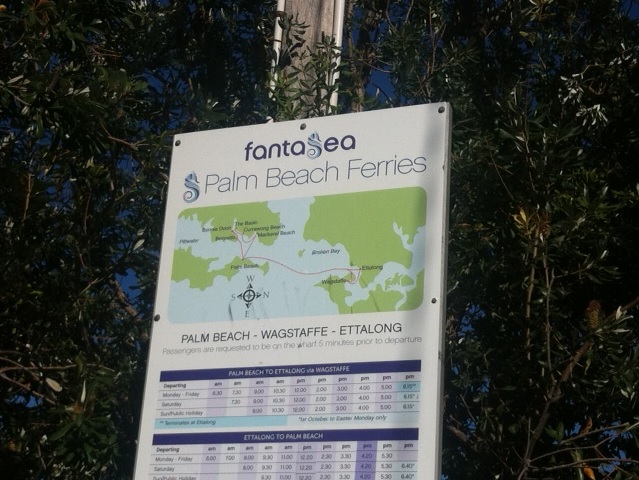
    That natural barrier also presents an opportunity for a third, prettier route between the two cities using the private ferry service that runs between Central and Sydney’s northernmost suburb of Palm Beach.

    Catching the slow train

    slow-train-newcastle-sydney-shitkansen

    Starting from the original Newcastle Railway Station, the trains run twice an hour during the day with one ‘fast’ service taking two-and-a-half hours and slow trips taking three.

    interior-of-newcastle-sydney-slow-train

    Inside the trains things are relatively comfortable although quite grubby. The purple colour scheme are the refurbished older carriages, the original 1970s ones being in a fairly awful green. The news trains feature a modern vandal proof colour scheme although the seats are more uncomfortable for a three hour journey.

    Another weakness with the train service is the spartan facilities, apart from graffiti covered toilets there are absolutely no passenger amenities so bringing your own food and drink is essential along with fully charged electronics as there are no power outlets available.

    closing-newcastle-sydney-railway-line

    Amazingly, rather than improving the railway service to the state’s second biggest city the government plans to abandon the last five kilometers and replace the trains with buses. If there was one example of the 1960s thinking that dominates Australian politics, this venal and ill-thought out proposal is a wonderful example.

    The Central Coast

    While the parts of the ride between Sydney and Newcastle are spectacular, the stretch south to the Central Coast are the boring parts featuring little more than housing estates and low grade scrub until arriving at Gosford where the train runs alongside Brisbane Water until Woy Woy.

    woy-woy-shopping-centre

    On alighting the train at Woy Woy, the immediate impression is a town that won’t win any heritage awards with its neglected main street and an anonymous shopping mall. All of which is a pity as its location between the hills and waterways is sensational.

    Sadly there’s little reason to hang around so getting a bus to Ettalong is the best thing to do.

    bus-woy-woy-to-ettalong

    From Woy’s Woy’s dismal transport interchange – a fate that waits Newcastle’s truncated railway service – buses leave every few minutes for the 15 minute journey to Ettalong. If you have a Sydney transport travelpass then your ticket is valid on the private bus service.

    Ettalong

    If you’re stopping for lunch or a break during the journey, Ettalong isn’t a bad choice with a lot more coffee bars, restaurants and bakeries than the rather depressing choices at Woy Woy.

    Since this writer’s last visit to the town three years ago when its centre was struggling with many empty shops; its fortunes have improved dramatically and it’s gone back to being a good destination for a day trip in itself.

    Catching the ferry

    ettalong-palm-beach-ferry

    The ferry itself is a twenty minute trip including a brief stop at the village of Wagstaffe. Its route winds through the sandbanks of Brisbane Water before getting to the open water of Broken Bay.

    lion-island-hawkesbury-ettalong-to-palm-beach-ferry

    Midway across the bay, the ferry passes Lion Island and the mouth of the Hawkesbury River before entering Pittwater and the Northern Suburbs of Sydney.

    Palm Beach

    arrival-at-palm-beach-ferry-wharf

    The wharf at Palm Beach is a classic wooden structure in a lovely location. Across the carpark and road is a general store, the Barranjoey House restaurant and a fish and chip shop.

    For a takeaway meal, the fish and chip shop is nicer than the general store but you can enjoy either at the park alongside the ferry wharf.

    For a sit down meal, Barrenjoey House has an expensive restaurant along with a bar with an outdoor seating area if you’re looking for a cold drink while waiting for a bus to Sydney.

    The bus to Sydney

    l90-bus-from-sydney-to-palm-beach

    The bus back to Sydney takes about 90 minutes. It isn’t the most comfortable journey however the views of the city’s gorgeous Northern Beaches are worthwhile if you’re sittiing on the left side when heading south.

    Once past Long Reef, the journey is mainly suburbia except when crossing the Spit and Harbour Bridges. A more interesting option that will add another hour to the journey is to switch buses at Warringah Mall and travel to the city via the Manly Ferry.

    Taking the Slowkansen from Newcastle to Sydney isn’t the trip for anyone in a hurry with it adding up to two hours to an already slow three train hour journey but it’s a lot more interesting than the regular way to travel between the two cities.

    Similar posts:

  • Digital natives and iPads

    Digital natives and iPads

    I’m writing up a review of  the Emergency Services Integrated Communications Vehicle that was showcased at the Melbourne Cisco Live event a few weeks back.

    An comment by one of the National Safety Agency people during the tour was notable; “we need to have modern technology if we want to attract young people.”

    The spokesperson was talking about offering iPad and Android apps for the emergency services workers, particularly in the context of firefighting volunteers having an average age approaching 50.

    Needing the latest technology to attract younger volunteers or workers is an interesting view which I’m not wholly convinced about.

    Do we really need the latest technology do attract younger workers and volunteers or are is this another example of trying to apply tech to a more fundamental problem?

    Similar posts:

    • No Related Posts