Tag: 3D printing

  • Fashion’s move to digital commerce

    Fashion’s move to digital commerce

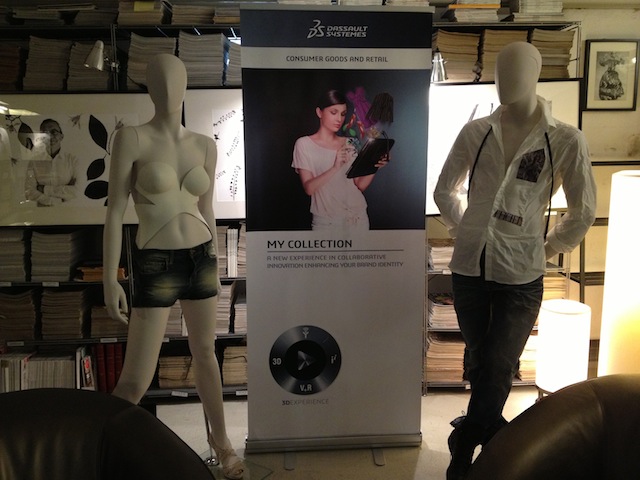
    How does 3D design change the fashion industry? Susan Olivier of Dassault Systemes sees ‘digital commerce’ driving fundamental changes to fashion and retail businesses.

    For slower retailers and fashion houses, this move to digital commerce threatens their very existence.

    ‘Digital commerce’ is more than just e-commerce in the view of Olivier, Vice President of Consumer Goods and Retail of the French 3D design software house, it’s a bringing together of technologies that alter the relationship between customers, retailers and designers along with the manufacturing and logistics companies that bring the products to market.

    Retail’s two big challenges

    Olivier sees the two biggest challenges to the retail industry as being the 2009 downturn of the global economy and the rise of the connected consumer.

    The downturn forced manufacturers and retailers to examine their supply chains, product design and manufacturing to squeeze out inefficiencies along with understanding consumer sentiment better.

    Designing for inner beauty

    “They found they could work differently with suppliers, how do I design for cost?” Asks Olivier, “how do I work on designing for what we call for ‘inner beauty’ and maybe change the inner design to take out costs without hurting performance or visual performance?” Olivier asked.

    “Those brands who survived are those who learned to do both things very well – work better with consumers and work better with their supplier base.”

    Who has the power?

    “Consumers on the other hand found ‘we have the power’ coming out of the down global economy,” says Olivier. “When consumers buy on price then brand loyalty gets strained.”

    The connected consumer also adds further risks for retailers as customers are now better informed than ever before.

    “If retailers aren’t careful, she knows more about the product than the poor staff on the floor does and she knows which stores have it in inventory than the poor staff on the floor does.”

    Bringing together the digital continuum

    One of Olivier’s areas of expertise is in Product Lifecycle Management (PLM) – planning the design, manufacturing, marketing and retirement of various products.

    A notable feature of modern the modern consumer goods industry is the compressed life cycle of products, “it used to be a life cycle was 18 months,” says Olivier. “The goal was to get it below 12 months, for many brands it’s now 12 weeks.”

    A scenario Olivier gives is the design process where a rapid virtual prototype can be shared across manufacturers, store managers and focus group.

    “I can create models in 3D and look at different options,” says Olivier. “How’s the outsoul of this shoe going to perform with this upper? Is it comfortable if I make changes? I might send a sample to a 3D printer before I make the mould.”

    “I can share it with my visual display teams and my store managers and I can share it before I commit to production and get feedback from my stores and I can share it with my consumer focus groups. ”

    “Now I have the power to do that weeks or months in advance before having to put the knife to the goods.” States Olivier, “that’s a completely different way of connecting the way companies think about product, bring it to life and bring it to market.”

    “Those are the kinds of things we’re enabling when I talk about bringing together the different points of the digital continuum.”

    “Now I’m in store I want to take the same images to educate my sales staff. I want them to take a tablet device and show the consumer what is in inventory, not just in this store, and I can have it shipped to their home within 24 hours.”

    “So that’s why I’m saying ‘digital commerce’,” says Olivier. “It could be online, it could be a kiosk in the store, it could be an iPad the sales assistant has in front of them.”

    Susan Olivier’s digital commerce model is the present day reality of retail – today’s merchant has to be across consumers’ sentiment along with working closely with suppliers to get products to get products to the customer quickly. The old ways of selling goods, particularly fashion, are over.

    Similar posts:

    • No Related Posts
  • Hotels and 3D printing

    Hotels and 3D printing

    One of ADMA Forum’s second day speakers, Phil McAveety, EVP of Starwood Hotels, had a look at the hotel of the near future.

    In Phil’s view, the key to success in the hotel business lies in providing in a unique guest experience as the world’s middle classes explode.

    The role of the 3D printers in the hotel experience where guests can order a pair of sneakers or swimming goggles to be printed up when they’ve forgotten their own is one of Phil’s fascinating views on how technology will change the hospitality industry.

    Its a shame that most hotels have old style door keys, All Things D looks at a start up called KeyMe that stores details about door keys on the cloud which customers can download 3D printing files.

    These two examples illustrate just how a technology like 3D printing will change industries.

    Similar posts:

  • Could 3D printing be lurching up the hype cycle?

    Could 3D printing be lurching up the hype cycle?

    3D printing is undoubtedly a game changing technology that changes the economics and scalability of manufacturing. But is it possible the technology is becoming over-hyped?

    Two stories today illustrate the opportunities and potential of 3D printing; a home made SLR camera and NASA manufacturing their own rocket parts.

    NASA’s experiment shows how precision, low demand components could be made. One of the problems with procuring parts like rocket engine injectors is that the production runs are low so the manufacturing costs are high given there are no economies of scale involved.

    Additive manufacturing, or 3D printing also has the advantage that components can be manufactured in one piece rather than requiring assembly from a number of different parts. In turn this reduces production times and errors.

    Printing your own camera seems a bit of waste of time and money seeing that cameras aren’t particularly expensive and the one printed isn’t a digital SLR – your have to find somewhere to buy and process the film.

    The point though with Bozardeux’s project is that it is open source – anyone can modify or adapt the design and that is where the potential lies.

    While the possibilities are endless with 3D printing, it may well be that the technology is being overhyped. Both the rocket engine injector and the SLR camera are early stage proofs of concept, neither are ready for full time use.

    It also has to be kept in mind that traditional manufacturing methods aren’t going away – there will always be products more suited to mass production or using materials that can’t be fed through a 3D printer.

    Right now we’re on the early stage of the hype cycle with 3D printing and while the potential is clear, the immediate future of the technology being oversold is also becoming apparent.

    That of course means opportunity for many entrepreneurs and their investors, but it also means you have to be very careful in choosing technologies or where to place your bets.

    In poker it’s said if you don’t know who the patsy is at the table, then it’s probably you. The same is true when a new technology is being hyped.

    Similar posts:

  • Open source manufacturing

    Open source manufacturing

    Chinese business website Caixin Online has a great video on China’s Open Source Hardware Movement, this is an area that promises to change the manufacturing industry.

    Open Source is the philosophy of sharing intellectual property and allowing anyone to improve the idea on the proviso they share their changes with the rest of the world.

    The hope is that open sourced products end up being more reliable than proprietary designs due to scrutiny from hundreds, or thousands, of reviewers.

    Until recently, open source has been largely restricted to the software world but now it’s moving into broader Engineering and manufacturing circles.

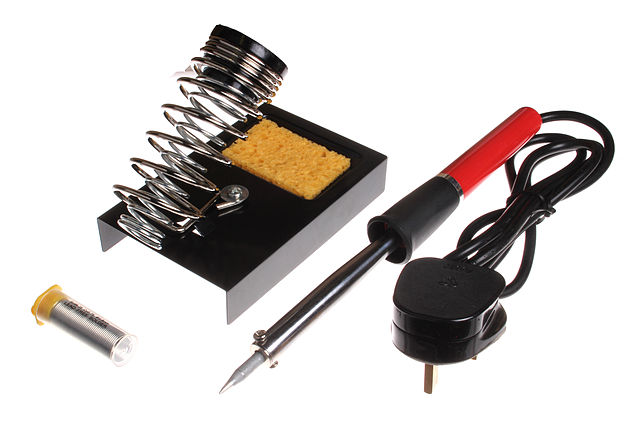
    As the Caixin video shows, the open source hardware movement is introducing geeks to a tool which many thought was dead – the soldering iron.

    I noticed this a week or so ago when I walked into a co-working space and found the lady I was meeting hunched over a soldering iron putting together a part for a quadcopter.

    Right now soldering parts to build quadcopters or game controllers is just the beginning, the really interesting things start when open source meets 3D printing – then we’ll see some real game changing things happen.

    Soldering iron picture courtesy of Bomazi through Wikimedia Commons.

    Similar posts:

  • 3D printing comes of age

    3D printing comes of age

    It may well be that a technology has reached mainstream acceptance when the media starts writing scare stories and politicians demand that something must be done.

    Should that be the case, then 3D printing has come of age with the story of the first gun being fabricated and demands that legislation be passed preventing people manufacturing their own firearms.

    The story does raise a range of issues about community safety that 3D printing is going to present. When anybody can design and manufacture a piece of equipment, how can we be sure it is safe – or legal – to use?

    We’re going to be facing these issues very soon as retail 3D printers have started appearing.

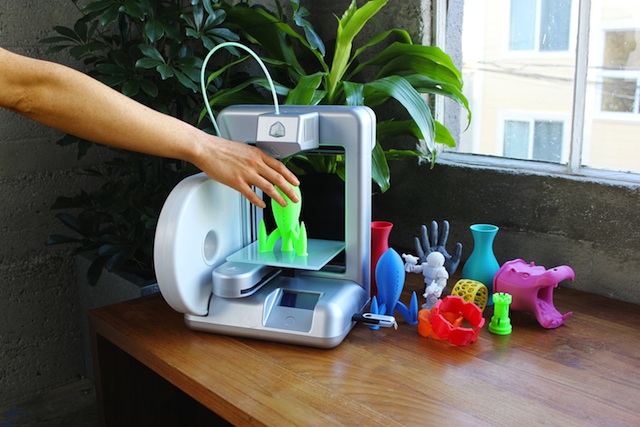
    At $1299, the Cube 3D printer isn’t quite affordable for most households or offices but we can expect prices to fall as more devices come onto the market.

    At the more advanced end of the 3D printing market, The University of Wollongong’s Centre for Electromaterials Science has opened a research unit at Melbourne’s St Vincent’s Hospital to create tissue material with biological 3D printers  with the scientists beginning animal trials to reproduce skin, cartilage, arteries and heart valves.

    So at one end of the spectrum we have hackers making plastic guns that freak politicians and scaremongering journalists out, while at the other there are scientists pushing the barriers of medical science.

    We live in interesting times – and 3D printing is making things even more exciting.

    Similar posts: