Tag: advertising

  • The rise of new business models

    The rise of new business models

    As always Mary Meeker’s State of the Internet report hits us with mass of information, this year compressed onto a 355 slide Powerpoint presentation.

    There’s a wealth of detail in the report but two big trends stood out – that global internet advertising spend will overtake TV ad revenues and music industry revenues have reversed a 16 year decline as subscription services gain market share.

    Subscriptions becoming the main revenue source for music companies suggests ]new internet business models are slowly evolving although how that lessons can be applied to other industries remains to be seen.

    In the world of advertising, that online is now attracting a greater spend than TV is a major milestone in the shifting marketplace. Although Facebook and Google’s dominance – Meeker estimates 85% of revenue growth is going to the two companies – will present challenge to advertisers and agencies.

    Also notable is how mobile revenues and handset sales are slightly better than flat, indicating the biggest market of last decade is now mature.

    There’s many other insights in this report so it’s worth spending a few hours on it to reflect on how some of these trends may affect your industry.

    Similar posts:

    • No Related Posts
  • Television’s argument for relevance

    Television’s argument for relevance

    One of the notable things about the media’s collapsing business model is how television has suffered nowhere near the same downturn in advertising revenues as the other channels.

    This has been baffling for many of us pundits so a series of interviews I’m doing with media executives on digital disruption was a good opportunity to discuss why television is holding the line where print has dismally failed.

    While the executive has to remain anonymous at the moment, the series is for a private client, their view on why television has so far avoided the advertising abyss is simple – accountability.

    We have something, as do my friends at other media companies, that YouTube and Facebook don’t have which is we create quality content. What will differentiate us is we have premium, locally produced content that is one hundred percent brand safe and one hundred percent viewable and, most importantly, is independently measured by third parties.

    My view is that advertisers in that environment is a much more powerful experience than advertising in Facebook or YouTube

    While many of us may laugh at Australian commercial TV being described as ‘quality’, it does appeal to audiences far bigger than the typical YouTube channel or Facebook Live stream.

    The advertising industry’s established systems also, unsurprisingly, work for the television industry in giving the sector accountability that the online services lack in a world where ‘click fraud’ – software tricks to report false web impressions – is rampant.

    Even more importantly for the new media giants is the ‘brand safe’ message being pushed by the incumbents. The advertising crisis for Google is real and the established players intend to exploit it.

    While the TV executive is pushing their own product, it’s clear the fight for advertising and marketing dollars is far from over.

    Similar posts:

    • No Related Posts
  • Counting the digital pennies

    Counting the digital pennies

    With media companies around the world struggling to make money, the publishing platforms on Facebook and Google promised to bring in much needed income streams. They appear not to have worked.

    Business Insider reports how US based premium publisher trade body Digital Content Next surveyed its members on their online platform income and discovered some disappointing answers.

    On average, premium publishing companies generated $773,567 in the first half of 2016 by distributing their content on YouTube. Content published to Facebook earned an average of $560,144 in the period, Twitter generated an average of $482,788, and Snapchat generated $192,819 for each publisher in the sample.

    To call these returns derisory is an understatement and it illustrates how the current media model is unsustainable as it’s impossible to sustain a basic newsroom, let alone produce investigative features with those sort of budgets.

    It isn’t just the media model that’s unsustainable, Business Insider cites the CEO of Digital Content Next, Jason Klint, who flagged in a blog post last year that all the growth in digital advertising is being accounted for by Facebook and Google – the rest of the industry is shrinking.


    Even Facebook and Google aren’t immune from the unsustainable model that’s currently in place, Klint points out that fraud and intermediaries further skew the model which undermines advertisers’ confidence in the platforms and online media in general.

    For the moment though, the intermediaries seem to be doing okay. Klint cites IAB research which claims AdTech companies are making 55% of the online advertising industry’s revenues while publishers are only getting half.

    That illustrates how the tail is currently wagging the dog with publishers and content creators losing out while middlemen who add little in the way of value get the bulk of the revenue. That too is not sustainable.

    We’re still in early days for online media and the models are still being worked out. While we wait for the 21st Century’s David Sarnoff many sectors are threatened including the advertising, marketing and PR industries. At least the publishers aren’t alone.

    Similar posts:

    • No Related Posts
  • Medium and the broken media model

    Medium and the broken media model

    How do you make money from online publishing? Medium’s Ev Williams shows he is as far away from the answer as the rest of us.

    In a blog post yesterday Ev announced his company is firing fifty staff as online advertising revenues fall short.

    Online advertising’s disappointing revenues are no surprise to pretty well anyone observing the online publishing industry for the past five years, it seems to have come as a revelation to Ev and the investors who’ve staked an estimated $140 million in the venture.

    That money, which most online publishers would gag for, seems to have gone on a bloated headcount given the company can afford to fire fifty people. It’s a shame the company’s investors didn’t appoint a board that checked management’s hiring practices.

    Something that should worry other publishers is the organisation’s Promoted Stories division is being shut down as part of the restructure. This underscores how branded content doesn’t scale the same way traditional advertising does and won’t represent a major revenue stream for online publications.

    It isn’t the first time Ev Williams has got it wrong, in founding Twitter he and his team turned their back on ordinary users and developers to focus on courting celebrities in the hope big brands would pay large amounts to be associated with them. It didn’t work.

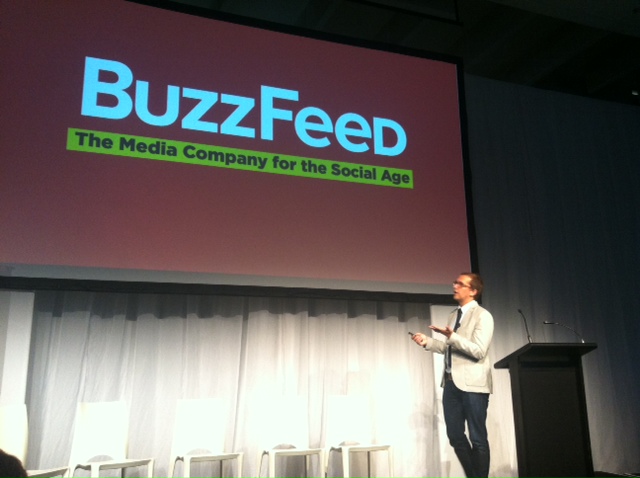
    Contrasting Ev’s Twitter and Medium experiences with that of Buzzfeed founder Jonah Peretti is interesting. While Buzzfeed still hasn’t found the formula for profitability, Peretti and his team have gained a deep understanding of what works in online publishing.

    To be fair to Ev, we’re all trying to figure out the revenue model that will work for online media, his travails with Twitter and Medium show just how hard it is to find a way for publishers to make money from the web. What is clear though is burning a lot of cash on sales staff is not the answer.

    Similar posts:

    • No Related Posts
  • Jonah Peretti’s seven digital advantages

    Jonah Peretti’s seven digital advantages

    Buzzfeed founder Jonah Peretti laid out his vision of the changing media industry in his year end memo but he missed the one item most important – revenue.

    “Print revenue is decelerating at a rapid pace, cable subscriptions and TV ratings are starting to decrease even for live sports, and traditional media businesses are at various stages of a terrifying decline,” writes Peretti in accurately describes the challenges facing the industry.

    Buzzfeed’s success has largely relied on sharing across social media, particularly Facebook. In his memo Peretti lays out how he sees the modern social and personalised publishers as having seven digital advantages over the push model of the mass media days.

    1. Instant access to fresh content
    2. On-demand access to entire media libraries
    3. Nearly free distribution enabling many free ad-supported services
    4. Global distribution providing access to content from every market
    5. Data about audiences allowing personalization and customization of content experience
    6. A feedback loop between audiences and content creators making media production more dynamic and responsive
    7. Social experiences where people can use content to communicate and connect with the people who matter to them and weave media into their daily lives

    Peretti is absolutely right, those digital advantages put online platforms far ahead of print publishers and broadcasters although the advertisers haven’t quite figured out how to make these positives work for them.

    That advertisers can’t get their models to work on the digital platforms is also a problem for Peretti and Buzzfeed and the site had to half its 2016 revenue estimates earlier this year.

    In the search for new opportunities, Buzzfeed hired a new Vice President of Marketing earlier this month as it appears the branded content model is too labor intensive and video isn’t proving to be the river of gold most online publishers hoped.

    The advertising model appears to be just as broken for online publishers as it is for the traditional channels.

    As Peretti has pointed out in previous end of year memos, new media platforms always struggle in their early years.

    The difference in the modern media world is the internet destroyed the scarcity of publisher and broadcaster controlled advertising space, replacing it with an almost unlimited inventory supplied by Google, Facebook and other services that take most of the profit.

    A better comparison to today’s online advertising conundrum are the early days of radio where it took RCA’s David Sarnoff to figure out how to make broadcasting profitable.

    Like radio, online has great advantages over the older distribution methods but the revenue models that worked for those more traditional businesses don’t work on the newer medium.

    Peretti, like every online publisher, is trying to find that new model and it seems he’s as further away from discovering it as the rest of us.

    Similar posts:

    • No Related Posts