Tag: advertising

  • The dreams of social media services

    The dreams of social media services

    “LinkedIn is the world’s biggest publishing platform,” states Olivier Legrand.

    Legrand, LinkedIn’s Head of Marketing Solutions for Asia Pacific & Japan, was speaking at the company’s Connectin Sydney conference where the service was demonstrating its credentials as a marketing and advertising service to Australia’s largest corporations.

    The view that LinkedIn is a publishing platform is problematic for content creators — it creates a conflict for those using the service to distribute or publicise their work and again it shows social media services are not your friends.

    It’s understandable LinkedIn wants to get corporate advertisers on board seeing the business’ stock currently trades at eighty-four times revenue, however a focus on becoming an advertising driven media company at a time when advertising driven media companies are heading the way of the wooly mammoth seems to be a risky strategy.

    Another risk for LinkedIn as a publishing platform is that user generated services can, and will be, gamed resulting in a dramatic decline in quality and value in the site.

    Every social media service now sees itself as a media company and it may turn out they are correct, however that future of publishing will be very different from last century’s newspaper and broadcast models they are trying to emulate.

    Even if the dreams of social media services do come true, the advertising driven media industry, an the publishing world, will be very different to the world they hope to be part of.

    Similar posts:

    • No Related Posts
  • Fear in the cloud – the loss of trust in online business

    Fear in the cloud – the loss of trust in online business

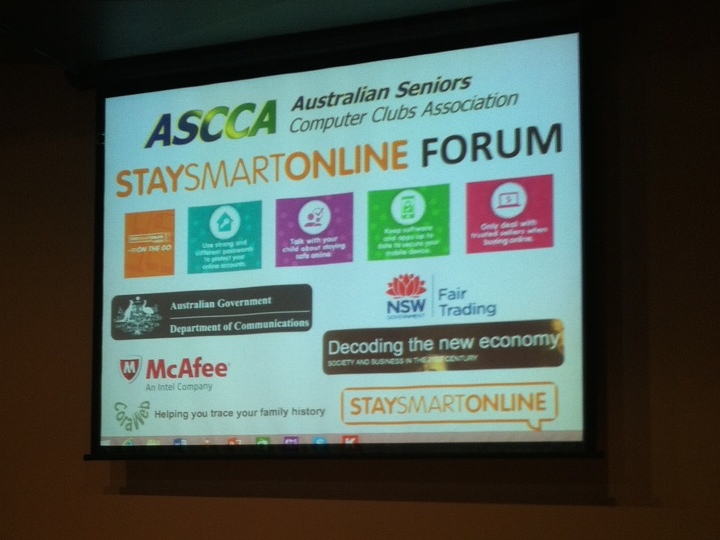
    Today I spoke about online safety to the Australian Seniors’ Computer Clubs Association about staying safe online.

    Hopefully I’ll have a copy of the presentation up tomorrow but what was notable about the morning was the concern among the audience about security and safety of cloud services.

    The ASCCA membership are a computer savvy bunch – anyone who disparages older peoples’ technology nous would be quickly put in their place by these folk – but it was notable just how concerned they are about online privacy. They are not happy.

    Another troubling aspect were my answers to the questions, invariably I had to fall back on the lines “only do what you’re comfortable with”  and “it all comes down to a question of trust.”

    The problem with the latter line is that it’s difficult to trust many online companies, particularly when their business models relies upon trading users’ data.

    Resolving this trust issue is going to be difficult and it’s hard to see how some social media platforms and online businesses can survive should users flee or governments enact stringent privacy laws.

    It may well be we’re seeing another transition effect happening in the online economy.

    Similar posts:

    • No Related Posts
  • Is digital enough to save magazines and newspapers.

    Is digital enough to save magazines and newspapers.

    “Globally the newspaper industry’s revenue decline will end in 2015” declares PwC in their 2104 Global Media and Entertainment report released earlier this week.

    While PwC thinks the decline for print – both in newspapers and magazines – is over, however there’s little if any growth on the horizon with the company forecasting 0.1% growth per annum for newspapers and 0.2% for magazines over the next four years.

    The reason for the stabilisation in revenues is the move to paid apps and paywalls, which means advertising is less important to the print industry’s revenues.

    Circulation revenue will almost match advertising revenue by 2018. In 2013, while circulation revenue rose globally after years of decline, advertising revenue continued to fall. Circulation’s share of total revenue will rise from 47% in 2013 to 49% by 2018, meaning consumers may soon become publishers’ biggest source of revenue.

    PwC’s view is consistent with the advertising trends flagged by Mary Meeker in her State Of The Internet report last week and, if the forecasts are correct, it will show the magazine and newspaper industries are making the transition to a new business model.

    One of the strange points in the PwC report is the talk of ‘Digital First’.

    ‘Digital-first’ is becoming the norm for newspaper publishers. For many years, news publishers’ digital output was led by their print products. But increasingly, titles will be reorganised as ‘digital-first’ operations, publishing content that works best on connected devices.

    This is true, but newspaper managements have been proclaiming their ‘Digital First’ strategies for close to a decade; any media company that doesn’t put its digital channels first is doomed to extinction anyway.

    Which is one of the important points of the PwC survey; it’s about the global industry and while that might be flat-lining, individual outlets will still fail. That’s something which concentrate the minds of those managing some of the more poorly run media empires.

    Similar posts:

    • No Related Posts
  • Bridging the online advertising gap

    Bridging the online advertising gap

    At the Code Conference held outside Los Angeles last week, analyst Mary Meeker delivered her annual State of the Internet slideshow covering the trends and opportunities in the online world.

    One of the most watched graphs is the time spent on media versus the advertising spend on that channel.

    For years Meeker has shown print is receiving a higher share of advertising dollars for the amount of time consumers spend on it compared to online channels.

    That implies print revenue is due for collapse and online advertising revenues will surge. Here’s the 2014 chart.

    2014-advertising-spend-gap-mary-meeker-kpcb

    If we track this over the last five years, here’s what we see with the ‘difference’ column being the sum of print’s over-representation and online’s (mobile and web) under-spending.

    Year Print time Print share Online time Online share difference
    2010 12 26 28 13 29
    2011 7 25 36 23 31
    2012 6 23 38 25 30
    2013 5 19 45 26 35

    The collapse in print’s share of consumer time, down 60% in five years, is stunning and the 2012-13 changes may indicate advertising spend may is now collapsing as marketers start to adapt to the changed marketplace.

    It could be however that advertising as we know it has to change; one of the key reasons for online – particularly mobile’s – spending being under represented is because no-one is quite sure what works in the newer mediums.

    Advertisers may know that consumers are moving from print channels, but at least they know what works in print. Online the experts’ guesses are still not much better than the amateurs’.

    In short, we’re still watining for the digital era’s David Sarnoff. As Mary Meeker keeps reminding us, it’s a $20bn a year opportunity.


    Similar posts:

    • No Related Posts
  • Three business lessons from the New York Times

    Three business lessons from the New York Times

    “The New York Times is winning in journalism,” starts the newspaper’s much discussed internal Innovation Report. Then in great detail it goes on to describe how the audience is being lost to upstarts like the Huffington Post and Buzzfeed.

    Given the number of digital forests that have been felled discussing the report in the last week, it’s not worthwhile giving an in depth analysis of the study – particularly given Nieman Labs’ comprehensive dissection of the document.

    What does stand out though are a number of over-riding themes that apply to almost any business, not just struggling traditional media outlets.

    Being digital first

    A constant mantra in the NY Times report is about being ‘digital first’ – if you’re thinking about that today, then you’re probably too late in your industry.

    Every industry is now digital: If you’re designing widgets, you’re doing it on CAD system; if you’re selling real estate, you’re listing online (one of the great killers of the old metropolitan newspaper model) and if you’re selling doughnuts, you’re placing your suppliers’ order electronically and maybe 3D printing your icing patterns in the near future.

    There isn’t one industry that isn’t being radically changed by digital technology.

    Breaking down silos

    One of the areas that’s been most resistant to digital change, and yet is the most threatened, is management.

    Silos within organisations are a triumph of management power and make it difficult for a business to be dynamic when it’s necessary to negotiate with different fiefdoms just to change the colour of paperclips.

    Those silos are fine when industries are cosy and there’s little competition but when disruptors enter the market those management empires become a dangerous, and expensive, weakness.

    The New York Times study spends a great deal of its pages discussing how to break down silos within its own organisation and this is something every business owner or manager should be exploring.

    With modern communication, information management and workplace collaboration tools many management roles are no longer needed.

    For smaller businesses, this is the greatest strength when competing against larger corporations as Huffington Post, Buzzfeed and Business Insider  have shown in stealing the market from the New York Times.

    You need to be found

    One of the toughest conclusions from the NY Times study is that the quality of content actually doesn’t matter in the marketplace; The Huffington Post and Buzzfeed do an excellent job of taking the NYT’s work, repackaging it and redistributing it in a way readers prefer.

    That might be a transition effect – it’s hard not to think that should original content creators like the NY Times be driven out of business then Buzzfeed will have to start employing more journalists and Arianna paying her writers – however right now gloss beats quality.

    Buzzfeed and the Huffington Post are attracting audiences because their stories are easy to find online and their headlines almost beg you to read them.

    For non-media businesses, the lesson is you need to be found; you may be the best restaurant, electrician or accountant in town but if you’re on the fifteenth page of Google in search results for your industry and suburb then you’re doomed.

    The New York Times faces its own unique set of challenges, as do the publishing and media industries, many of the lessons though from the NYT  Innovation paper though can be applied to many businesses.

    Similar posts:

    • No Related Posts