Tag: Australia in the Asian Century

  • Can Huawei come in from the cold?

    Can Huawei come in from the cold?

    Last Friday the Parliamentary Joint Committee on the National Broadband Committee met in Sydney, I’ll have a story on this in tomorrow’s Business Spectator.

    An interesting exchange during the meeting was  between the committee’s chair Rob Oakeshott and Mike Quigley, the CEO of NBNCo.

    Rob Oakeshott: “You have advice that either as a department or a statutory body that says there are certain companies that should not be involved with the National Broadband Network build? If so, is that advice still in place?”

    Mike Quigley: “Well chair, we work very closely with the appropriate government agencies in this area, obviously there are things we can and things we can’t say, but we have a very close working relationship with those entities and we obviously take their advice on things we should and shouldn’t do.”

    “Their advice is still in place and we’re following it.”

    I’m going to be in Melbourne tomorrow attending the Australian Davos Committee’s China Forum where, among other luminaries, the Prime Minister and various key people in the Australian-Chinese relationship will be talking.

    The company in question is Chinese communications vendor Huawei and their banning from Australian contracts adds an interesting dimension to the discussion on trade relations between the two countries.

    Australia has followed the US lead in blocking the Chinese communication hardware company from key contracts like the NBN on security grounds and it’s hard to see how this doesn’t test the patience of the PRC.

    We’ll see how this issue plays out as it’s one that seems to be largely overlooked when we discuss trade ties and relationships with Chinese companies.

    Similar posts:

  • Why Australia needs foreign ownership

    Why Australia needs foreign ownership

    Such are the vagaries of radio that I’ve been asked to comment on ABC Radio South Australia about foreign ownership based on an article that was picked up by The Drum 14 months ago.

    That article was written shortly after Dick Smith came out grumbling about the prospect of Woolworths selling the electronics store chain named after him to foreign interests.

    My point at the time was that foreign owners would be preferable to some poorly managed, undercapitalised local buyer as the Australian retail industry – even in a declining market like consumer electronics – needs more innovation and original thinking.

    As it turned out, Dick Smith Electronics was sold to Anchorage Capital, a private equity turn around fund with an interesting portfolio of businesses.

    In the meantime, the argument about foreign ownership of property and businesses, particularly farms, has ratcheted up as opportunistic politicians and the shock jock peanut gallery that sets much of Australia’s media agenda have found a cheap, jingoistic issue to score points from.

    So why is foreign ownership of businesses like farms, mines and factories important for Australia?

    A fair price for hard work

    The main reason for supporting foreign buyers for Aussie businesses is it gives entrepreneurs a chance to get a fair price for their hard work.

    A farmer or factory owner who builds their business shouldn’t have to accept a lower price because Australians don’t want to pay for the asset.

    It’s not a matter of being able to pay Australians as have plenty of money to invest – a trillion dollars in superannuation funds and three billion dollars claimed for negative losses in 2009-10 show there’s plenty of money around – it’s just that Aussies don’t want to invest in farming, mining or other productive sectors.

    We’re already seeing this play out in the small business sector as baby boomer proprietors find they aren’t going to sell their ventures for what they need to fund their retirement.

    Access to capital

    Should the protectionists get their way then the businesses and farms will eventually be sold to undercapitalised Australian investors at knock down prices.

    This is the worse possible thing that could happen as not only do the entrepreneurs miss out, but also the factories and farms decline as they are starved of capital investment.

    Cubby Station

    A good example of both the lack of capital affecting investment and finding a fair price for ventures is Queensland’s Cubby Station.

    While I personally think Cubby Station is an example of the economic bastardry and environmental vandalism that are the hallmarks of the droolingly incompetent National Party and its corrupt cronies, the venture itself is a good example of why the agriculture sector needs foreign investment.

    Having been converted from cattle to cotton in the 1970s, Cubbie grew as successive owners acquired water licenses from surrounding properties.

    Eventually the company collapsed under the weight of its debts in 2009 and the property was allowed to run down by the administrators until it was bought by Chinese backed interests at the beginning of 2013.

    At the time of the acquisition, the company’s former chairman told The Australian,  “on reflection, I would go into those things with an even stronger balance sheet — in other words, with less gearing.”

    In other words, the company was under-capitalised.

    Competition concerns

    Another reason for encouraging foreign ownership is that Australia has become the Noah’s Ark of business with duopolies dominating most key sectors.

    Bringing in foreign owners at least offers the prospect of having alternatives to the comfortable two horse races that dominate most industries.

    The property market

    An aspect that has excited the peanut shock jocks has been the prospect of Chinese buyers purchasing all the country’s property.

    For those of us with memories longer than goldfish, today’s Chinese mania is almost identical to the Japanese buying frenzy of the late 1980s.

    Much of what we read about the Chinese buying homes is self serving tosh from property developers and real estate agents and what mania there is will peter out in a similar way to how the Japanese slowly withdrew.

    This isn’t to say there shouldn’t be concerns about foreign ownership – tax avoidance, loss of sovereignty and Australia’s small domestic market are all valid questions that should be raised about overseas buyers, but overall much of the hysteria about foreign ownership is misplaced.

    What Australians should be asking is why the locals aren’t investing in productive industries or buying mining and farming assets.

    The answer almost certainly is that we’d rather stick with the ‘safety’ of the ASX 200 or the residential property market.

    We’ve made our choices and we shouldn’t complain when Johnny Foreigner sees opportunities that beyond negative geared investment units or an tax advantaged superannuation fund.

    Similar posts:

  • is G’day China a good idea?

    is G’day China a good idea?

    Yesterday’s announcement by the Prime Minister’s  of an Australia Week in China may prove far more successful than the G’day USA events the idea is based upon.

    G’day USA has been run for a decade and showcases Australia’s attractions, skills and businesses at events in Los Angeles and New York.

    It’s been moderately successful but an emphasis on movie stars appearing at black tie Hollywood events illustrates Australian governments’ disproportionate focus in throwing money at US movie producers.

    If China Week follows the US example we can expect private, exclusive dinners where Twiggy Forrest, Clive Palmer and the BHP board entertain Chinese plutocrats over bowls of shark fin soup and braised tigers’ testicles.

    Should China Week follow that model then it will probably share G’day USA’s middling successes.

    The opportunity to do it differently though is great as the Chinese-Australian relationship is far younger and hasn’t been locked into Crocodile Dundee type stereotypes on both sides.

    As the Chinese economy matures and evolves, there’s an opportunity for Australian businesses and industries which haven’t been available for exporters to the US.

    Done properly, G’day China could help the profile of Australian businesses in many sectors, particularly in those affected by the great Chinese rebalancing.

    Let’s hope they do it properly.

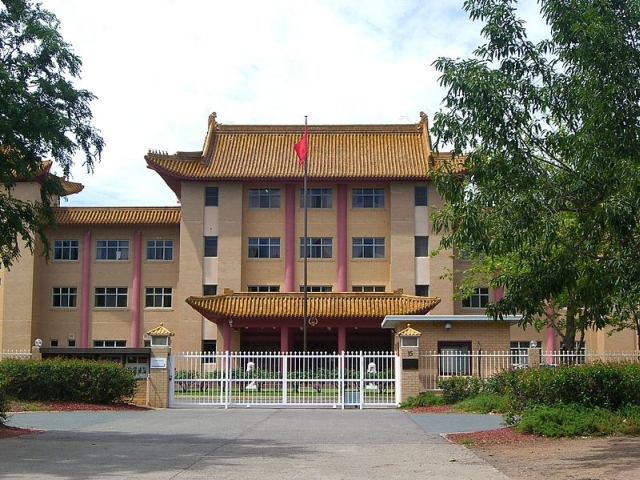
    Image of the Chinese embassy in Canberra, Australia from Alpha on Wikimedia

    Similar posts:

  • Australia and the Chinese Mexican stand off

    Australia and the Chinese Mexican stand off

    Twenty years ago visitors to Sanya on the south coast of China’s Hainan Island could find themselves staying at the town’s infectious diseases clinic, converted into a backpackers hostel by a group of enterprising doctors.

    The Prime Ministers and Presidents attending of Boao Asia Forum this week won’t get the privilege of staying at the infectious diseases hospital as Sanya’s hotel industry has boomed, bust and boomed again following the island being declared a tourism zone in 1999.

    Instead, their focus is on the pecking order of nations and for the Australians the news is not good. As the Australian Financial Review reports, the Aussies have been seated well below the salt by their Chinese hosts.

    On the Boao list, Australia is outranked by Brunei, Kazakhstan, Myanmar, Zambia, Mexico, and Cambodia – even New Zealand Prime Minister John Key gets higher billing.

    Central and South East Asian countries make sense as countries like Myanmar and Kazakhstan are China’s  neighbours with strong trade ties.

    That the Kiwis have been given priority over the Aussies by the Chinese government is not surprising in light of this.

    An unspoken aspect for the Australian attendees to the Baoa conference is how long Canberra’s political classes can continue their forelock tugging fealty to the US without offending the nation’s most important trading partner.

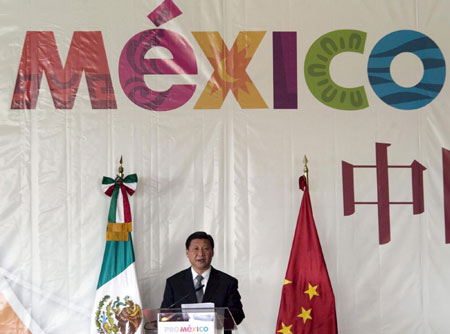
    Mexico’s entry on that list could be one of the most important with consequences for Australia and the world.

    During the 1992 US Presidential campaign candidate Ross Perot coined the phrase “the great sucking sound” in his opposition to the North American Free Trade Agreement and the risk of losing jobs to lower cost Mexico.

    As it turned out, the giant sucking sound was China – it turned out China’s admission into the World Trade Organisation had far greater consequences for the United States and Mexico than NAFTA.

    Mexican manufacturing was one of the greatest victims of China’s rise as US companies found it easier to subcontract work to Chinese factories rather than setup their own plants in Mexico.

    Now China is finding its own costs creeping up and labor shortages developing and Mexico is attractive once again. The Chinese and Mexican governments have been working on their relationships for some time.

    As manufacturing moves out of China, the shifts in world trade we’ve seen in the last two decades are going to be repeated, this time with Chinese moving up the value chain the lower level work moving to Mexico and other nations.

    The leaders at the Baoa conference have their work cut out for them in dealing with another decade of global change.

    Similar posts:

  • High cost politics – how the Australian election will fail business

    High cost politics – how the Australian election will fail business

    “Running costs have gone crazy” complains Sydney restauranteur Jared Ingersoll at the same time the Australian events industry warns it’s being crushed by a higher dollar.

    While the closure of an inner city cafe doesn’t mean that much, a bigger warning about Australian costs comes from Royal Dutch Shell who have put their gas investments on hold due to project blowouts.

    Natural gas investments are the core of Australia’s economic policies with the country’s Asian Century report identifying energy exports as being the country’s main revenue earner over the next quarter century.

    Costs of doing business in Australia have been steadily on the increase since the Howard government introduced the GST which triggered Australia’s transition to a high cost country.

    It didn’t have to be that way but Howard’s addiction to middle class welfare meant what should have been a opportunity to reform the economy during the mid 2000s was squandered with gifts handed out by one of the highest spending governments in Australian history.

    While Whitlam at least spent money on bringing sewers to the suburbs, Howard spent his on subsidies to rich schools and parking permits to self-funded retirees.

    It would take a brave government to undo Howard’s work which isn’t something we can expect from the populist and cowardly Australian Labor Party that lacks any of the honesty or strength required to confront the whining middle classes about their unsustainable entitlements.

    Which makes the election announced last week interesting. In her election announcement the Prime Minister made a mention of dealing with the high Australian dollar, which at least shows the Labor Party sees there’s a problem – although they certainly don’t have the stomach to make the tough decisions required.

    On the other side of politics though it’s all unicorns and magic puddings. Tony Abbot and his friends are partying like it’s 1999.

    The Liberal Party policy paper released last week is notable for not acknowledging the global financial crisis and maintaining that taxes can be cut while Howard’s middle class welfare state can be expanded.

    The best example of the Liberal’s addiction to middle class welfare is their promise to introduce a parental leave scheme. As their Strong Australia policy document explains;

    Paid parental leave ought to be paid at a person’s wage rate, like holiday pay and like sick pay, because it is a workplace entitlement, not a government benefit.

    Not only does the Liberal Party believe that high paid workers should get subsidies for their nannies, but that employers should pick up the bill, just like holiday and sick pay.

    Middle class welfare and a massive business cost increase to boot.

    In a Smart Company poll last week, the small business readers overwhelming endorsed the Liberal Party.

    They should be careful what they wish for.

    For those worried about getting Australia’s high cost base down there are serious debates to be had about our tax and welfare systems along with tackling issues like high property prices, over-regulation, aging population and workforce skills.

    Most importantly, we have to define what Australia wants to be in the 21st Century.

    Little, if anything about these issues will be discussed before September and in the meantime the Dutch disease will slowly strangle Australian business. We need better.

    Similar posts: