Tag: big data

  • Skills, data scientists and the decade’s big IT trends

    Skills, data scientists and the decade’s big IT trends

    As we all get buried under a tsunami of data, the challenge is managing it. The MIT Technology Review this week looks at the rise of the data scientist, a job title unknown a few years ago.

    The problem for industry is the skill sets required to become a data scientist are fairly esoteric.

    Data scientist has become a popular job title partly because it has helped pull together a growing number of haphazardly defined and overlapping job roles, says Jake Klamka, who runs a six-week fellowship to place PhDs from fields like math, astrophysics, and even neuroscience in such jobs. “We have anyone who works with a lot of data in their research,” Klamka says. “They need to know how to program, but they also have to have strong communications skills and curiosity.”

    Over the last twenty years we’ve done a pretty poor job teaching maths and statistics which is going to create a skills shortage as industry struggles to find people qualified to figure out what all of this data means.

    While Big Data might be to this decade what plastics were to the 1960s, it’s not the only technology change that’s affecting business as the McKinsey Quarterly describes the ten IT trends for the decade ahead.

    The thing that really stands out with McKinsey’s predictions is the degree of reskilling the workforce is going to need, today’s workers are going to need an understanding of programming, logic and statistics as much the kids currently at school.

    If you’re planning on being in the workforce at the end of this decade right now may be the time to consider getting some of these skills.

    Just as businesses will be separated by how they use Big Data, workers may too find those skills divide the winners from the losers.

    As the amount of data flooding into our lives explodes, we’ll all need to think about how we can get the skills to manage and understand data.

    Similar posts:

  • Can maps change the way we work?

    Can maps change the way we work?

    “Work the Way You Live” is Google’s motto for their enterprise maps service which the search engine giant hopes to make as ubiquitous in business as it is in the home.

    At Google Atmosphere the company showed off their mapping technology and how it can be used by large organisation. It’s a compelling story.

    The technology behind Google Maps is impressive – twenty petabytes of images, one billion active monthly users, 1.6 million map tiles served every second and a target of getting those tiles onto the users screen within ten milliseconds.

    Maps are one of the Big Data applications that cheap computing makes possible, until a few years ago even desktop computers would have struggled with the sort of mapping technology that we take for granted on our smartphones today.

    Rethinking products

    google-street-view-enabled-treadmill

    Adding mapping technologies to products allows businesses to rethink their products. A good example of this is the internet connected treadmill.

    Using the treadmill a jogger, or a walker, can map out a route anywhere in the world and the screen will show them the Google Street View as they travel along the route. The treadmill even adjusts to the changing gradients.

    The Google Maps driven treadmill is a trivial example of the internet of machines, but it gives a hint of what’s possible.

    The search for truth

    ground-truth-and-google-maps

    The success of a map depends on whether it can be trusted – this is what caught Apple out with their mapping application which was released before it was ready for prime time. Google, and most cartographers, take seriously errors and changes.

    In the early days of Google Maps, the company would pass errors and changes onto the private and government mapping providers they licensed the data from. It could take months to fix a problem.

    “It was really hard, you have to get maps from all over the world to create the product,” says Louis Perrochon, the Engineering director of google maps for business.

    “That’s a limitation if you work with third party data so we started a project called Ground Truth where we build our own maps.”

    Google pulls together its Street View data, satellite images and information sent in from the public through their Map Maker site and the Maps Engine Lite to build an accurate map of an area.

    Changing consumer behaviour

    Having accurate and accessible maps has changed the way consumers have behaved; “this revolution hasn’t happened slowly,” says Google Enterprise Directore Richard Suhr, “it’s happened really quickly.”

    “Customers have become savvy about spatial. What this means is that businesses are starting to rethink the problem.”

    “What are the exciting things I can do with maps, what else can I do with my data.”

    That’s a big question of all businesses – how they use the massive amount of information in their organisation will mark the winners from also runs over the next decade. Maps are one way to visualise their data.

    While Google Atmosphere was a marketing event for the companies mapping technologies the message is clear – mapping is changing the way we work and play and it’s affecting business.

    How is mapping changing the way your business works?

    Similar posts:

  • Fifty trillion shades of grey

    Fifty trillion shades of grey

    If you give me six lines written by the hand of the most honest of men, I will find something in them which will hang him said the 17th Century French politician Cardinal Richelieu.

    Today those six lines could be written on a social media site or be six disparate points drawn from a database. Without context those six lines could condemn us.

    Something that’s missed when we talk about Big Data is the risk of false positives – if you dip into the stream, you can prove anything against person.

    The world isn’t black or white, there are fifty trillion shades of gray and that’s why it’s important to think before posting an image on the web, firing someone or calling the cops.

    In an era where we’re quick to judge and condemn people, the stakes are very high.

    Similar posts:

  • Recruiting big data

    Recruiting big data

    One of the predictions for 2020 is that decade’s business successes will be those who use big data well.

    A good example of a big data tool is recruitment software Evolv that helps businesses predict not only the best person to hire but also who is likely to leave the organisation.

    For employee retention, Evolv looks at a range of variables which can include anything from gas prices and social media usage to local unemployment rates then pulls these together to predict which staff are most likely to leave.

    “It’s hard to understand why it’s radically predictive, but it’s radically predictive,” Venture Beat quotes Jim Meyerle, Evolv’s cofounder.

    There are some downsides in such software though – as some of the comments to the VentureBeat story point out – a blind faith in an alogrithm can destroy company morale and much more.

    Recruiters as an industry haven’t a good track record in using data well, while they’ve had candidate databases for two decades and stories abound of poor use of keyword searches carried out by lazy or incompetent headhunters. The same is now happening with agencies trawling LinkedIn for candidates.

    Using these tools and data correctly going to separate successful recruitment agencies and HR departments from the also-rans.

    It’s the same in most businesses – the tools are available and knowing them how to use them properly will be a key skill for this decade.

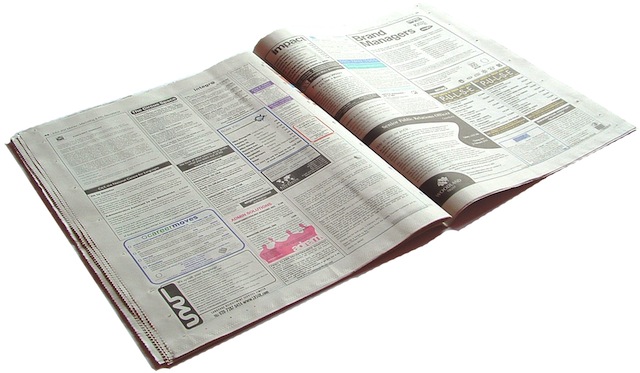
    Job classifieds image courtesy of Markinpool through SXC.HU

    Similar posts:

  • Leadership in a connected world

    Leadership in a connected world

    Managing a business or government agency as information pours into organisations is one of the great challenges for modern executives.

    As part of the Australian Cisco Live event, a panel looked  at Public Sector Leadership in a Connected World, many of the issues discussed apply to private sector executives as they do to public sector managers.

    Cisco’s Director of Global Public Sector Practice, Martin Stewart-Weeks, kicked off the panel with the observation that “we now live in a world where information has become completely unmanageable.”

    Martin quoted from David Weinberg’s book Too Big To Know, Rethinking Knowledge Now That the Facts Aren’t the Facts, Experts Are Everywhere, and the Smartest Person in the Room Is the Room. The author has a good explanation of his book in this YouTube clip.

    Trusting the community seems to be the biggest problem facing politicians and the public service, policy consultant Rod Glover puts the general distrust towards governments on the failure of leaders to consult over changes and decision.

    Economist Nick Gruen and Australian Industry Group adviser Kate Pound echoed this problem in that a change of culture is needed among leaders towards the way information is controlled and managed.

    Nick sees that culture changing while Rod thinks there will need to be demonstrated successes before risk adverse public service leaders will be prepared to adopt new ways of managing.

    Kate’s view is that culture change will require a realignment of incentives which will make managers accountable for the delivery of services. She cites a situation where businesses are obligated to register online but the agency’s website doesn’t work.

    So the problem is as much gathering the right data along with processing the information inside an agency. Both are challenges for organisations with rigid hierarchies and  information flows.

    Information is no longer power — it’s how you use it. But the structures are still based around access and control of knowledge.

    The big culture shift for politicians, public servants and corporate executives is we can no longer hoard information.

    For managers in both the public and private sectors, the task is now to share information and trust the right people will use it well.

    Paul travelled to Cisco Live courtesy of Cisco Systems

    Similar posts: