Tag: business

  • Can Yahoo! disrupt the disruptors?

    Can Yahoo! disrupt the disruptors?

    Yahoo! CEO Marissa Mayer packed out the room for her interview at the World Economic Forum this week where she spoke about some of the challenges her and the company face.

    One of the areas she sees for Yahoo! is in collaborating with other tech industry giants.

    Mayer also is making a point of collaborating with companies such as Apple Inc., Google and Facebook, instead of competing.

    “It ultimately means there’s really an opportunity for strong partnerships,” she said.

    The problem for Yahoo! is that it doesn’t have a lot to offer companies like Apple, Google or Facebook – they are steaming along on their own and have moved ahead of the areas which Yahoo! dominated a decade ago.

    Generally in the tech industry partnerships are more the result of the sector’s also-ran coming together in the hope that their combined might will overcome the leader’s advantages.

    It’s the same philosophy that thinks tying the third and fourth placed runners legs together will make them faster than the winner.

    A good example of this is Microsoft’s tie up with Nokia over the Windows Phone. If anything, the net effect has put Windows Phone and Nokia even further behind Apple and Google in the handset market.

    Even when two tech companies have united to exploit their individual strengths, the results usually end in tears. Probably the best example of this was the IBM and Microsoft joint venture to develop the OS/2 operating system which eventually sank under IBM’s bureaucrat incompetence and Microsoft’s disingenuous management.

    Those two examples show how partnerships only work when each party has something valuable to contribute and all sides are committed to the venture.

    Marissa Mayer’s task is to find Yahoo!’s strengths and build on them, then she’ll be in a position to enter partnerships on an equal basis.

    Whether its worth entering into partnerships with the big players though is another question. It may well be that Yahoo! has more to offer smaller businesses and disruptive startups.

    Entering into a desperate alliance with Apple or Facebook could possibly be the worst thing Yahoo! could do, the company is no longer a leader and now needs to be a challenger or a disruptor.

    Facebook’s locking competitors out of data feeds is an example of how complacent the big four internet giants are becoming, Yahoo! are in the position to upset that comfortable club.

    The value of partnerships is that we all have weaknesses and strengths, a properly thought out venture builds on the various parties’ strengths and covers their weak spots. Right now Yahoo! has more weaknesses than strengths.


    Similar posts:

  • Firing your customers

    Firing your customers

    Running your own business can be tough, but one of the therapeutic advantages of dealing with the stresses of self-employment is the ability to fire stroppy customers.

    Steve Cody, the proprietor of marketing agency Peppercom, gives a list of five types of clients worth sacking in Inc Magazine.

    It’s a good list although it misses the general “pain in the ass” client who demands a solid gold level of service for a pittance. These are particularly common if you pitch to the lowest end of the market.

    Lists like Steve’s are good reminder of Pareto’s Law, or the 80/20 rule which is usually put in terms of 80% of business revenues come from 20% of customers.

    The converse is also true, 80% of business hassles come from just 20% of customers and they are almost certainly not the most profitable ones.

    Pandering too much to the bad customers can hurt your health as well – running your own business is stressful enough without dealing with troublesome clients.

    So sacking bad clients is good, not only is it therapeutic but it also helps the bank account. It’s worthwhile doing whenever a customer drives you too far.

    Go on, you know you want to.

    Similar posts:

  • Proudly designed in Gyeonggi

    Proudly designed in Gyeonggi

    “Designed by Apple in California ” is the boast on the box of every new iPad or Macbook. That the slogan says ‘designed’ rather than ‘made’ says everything about how manufacturing has fled the United States.

    Last year the New York Times looked at Apple’s overseas manufacturing operations, pointing out that even if Apple wanted to make their product in the the US many of the necessary skills and infrastructure have been lost.

    Now the US is facing the problem that Asian countries are looking at moving up the intellectual property food chain and doing their own designs.

    In some ways this is expected as it’s exactly what Japan did with both the consumer electronics and car industries during the 1960s and 70s.

    The big difference is that Japanese manufacturers travelled to the US and Europe to study the design and manufacturing methods of the world’s leading companies. In the 1990s and 2000s, the world’s leading companies gave their future competitors the skills through outsourcing and offshoring.

    In the next decade we’ll see the latest consumer products coming with labels reading “Designed by Lenovo in Fujian” or “Developed by Samsung in Gyeonggi”.

    For western countries, the question is what do we want to be proudly be putting our names to?

    Image from Kristajo via SXC.HU

    Similar posts:

  • Digital hunter gathering

    Digital hunter gathering

    It has come to this – we’ve had the digital natives, the digital immigrants and now we have the digital hunter-gatherers.

    This is the logical end of the ‘sharing economy’ philosophy which sees retweets, mentions and Facebook likes a hard asset.

    Unfortunately having 100,000 Facebook friends giving the thumbs up to your latest retweet of an article of dubious value doesn’t translate into income – most of the digital curators find themselves living a hunter-gatherer lifestyle.

    Life as a hunter gatherer is not pretty or easy – it’s short and brutal. The only certainty as a hunter gatherer is if you don’t find something to eat today, you will starve tomorrow.

    In some ways, it’s fair to say the modern social media expert is not dissimilar to the prehistoric hunter gatherers in that their days are numbered and starvation is a near certainty.

    One conceit of modern times is that life was so much better in the pre-industrial era; that before the industrial revolution people worked less and primitive man lived a noble life unshackled by possessions.

    That’s all nonsense. Mankind shifted to an agricultural and then an industrial society because life is a lot better than fighting sabre toothed tigers for buffalo or trying to live on berries.

    Myths like this are part of masking the steady decline in middle and working class incomes. George Freedman, the CEO of the Stratfor security consultancy, discussed this in his blog post The Crisis of the Middle Class and American Power.

    The rise of the precariat, workers employed on a casual or project based basis, is part of that erosion of incomes. As Freedman says, the “the decline of traditional corporations and the creation of corporate agility that places individual workers at a massive disadvantage”.

    In this respect, today’s digital hunter gatherers are more like the day labourers of a hundred years ago where workers, like my great-grandfathers, would wait at the gates of the factories or docks hoping to be picked for the day’s work.

    One of the truths of today’s workforce is that it’s a harder place than a generation ago and the expectation of naturally rising incomes is gone for the bulk of the population.

    This means we have to re-imagine our own roles in a changed economy. The assumptions of the post-war economy which have sustained us for over fifty years no longer hold.

    Hunter gathering hopefully won’t be option which we end up with.

    Reproductions at the Museo del Mamut, Barcelona 2011 from quinet on Flickr

    Similar posts:

  • NFC and the car key revolution

    NFC and the car key revolution

    Many businesses have made easy money by ‘clipping the ticket’ of the customer, new technologies like Near Field Communications and cloud computing threaten the easy profits of many organisations.

    During yesterday’s 2UE Tech Talk Radio spot where Seamus Byrne and I stood in for Trevor Long, host John Cadogan raised the prospect of replacing car keys and even dashboards with smartphones equipped with Near Field Communications (NFC) systems.

    Since NFC technologies appeared we’ve concentrated on the banking and payments aspects of these features but there’s far more to this technology than just smartphones replacing credit cards.

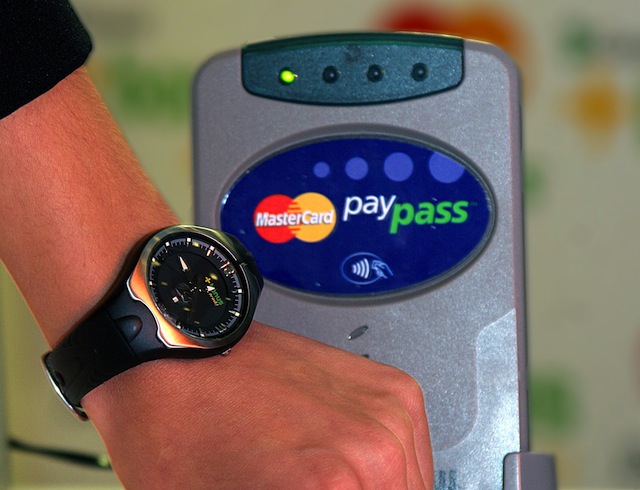
    With the right software an NFC equipped smartphone, tablet computer, or even a wristwatch could replace any electronic controller – this is already happening with Wi-Fi or Bluetooth enabled home sound systems, TV remote controllers and games consoles.

    An important effect of this is that it cuts out expensive custom replacements like bespoke control units or electronic car keys.

    Car keys are a good example of how what was previously a high cost profitable item becomes commodified and those business that had a nice revenue stream find new technology cuts them out.

    As keys become replaced with NFC enabled devices then then the scam of with new sets of keys costing up to a thousand dollars with fat profits for everybody involved becomes redundant.

    This is something we’re seeing across industries as incumbent businesses find their profitable activities disrupted by smart players using new technology.

    Just as manufacturing and publishing have been dealing with these disruptions for the past two decades, it’s coming to all industries and it’s going to take smart operators to deal with the changes.

    Similar posts: