Tag: BYOD

  • Apple in the mobile enterprise

    Apple in the mobile enterprise

    “You wouldn’t say, let me go buy an enterprise car,” Apple Chief Executive Officer Tim Cook told Box CEO Aaron Levie at the BoxWorks conference in San Francisco this week . “You don’t get an enterprise pen to write with.”

    Cook was talking about Apple’s position in the enterprise computing world, something conventional IT industry wisdom says isn’t the company’s strong point.

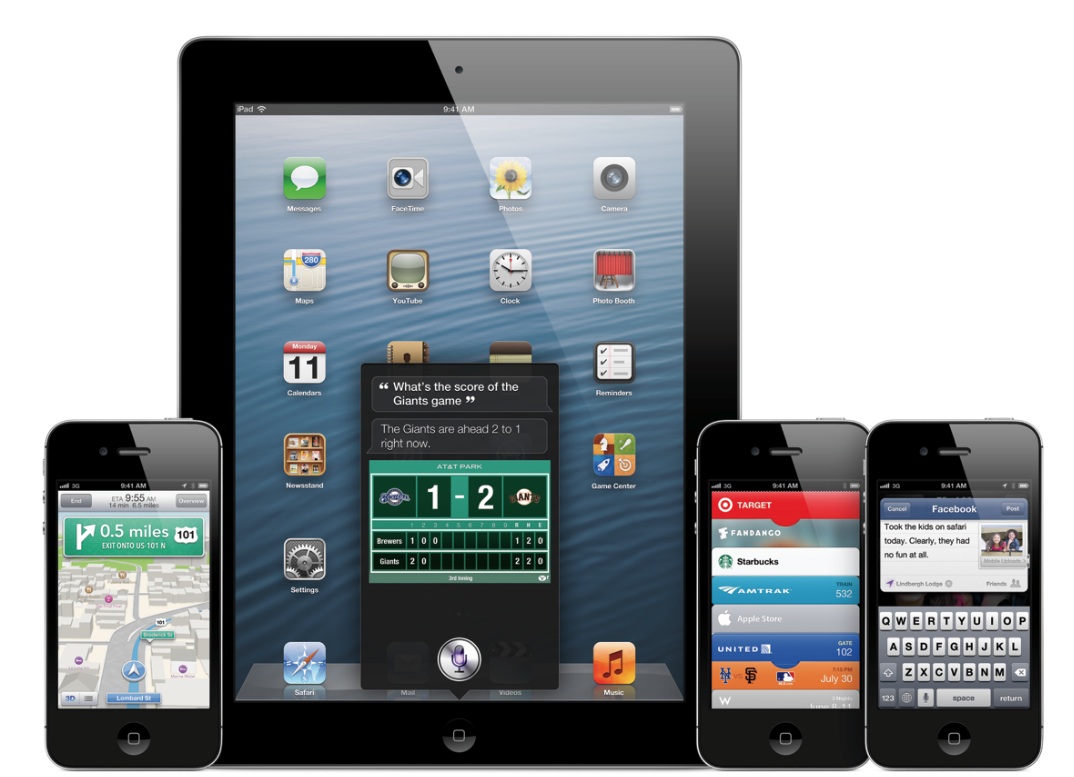
    While this was true in the days of desktop computers and network servers, the arrival of the iPhone and iPad changed that. Suddenly Apple were driving business computing as staff from the Chairman of the Board down to the office junior started bringing in iOS devices.

    Up until the iPad, the Bring Your Own Device discussion was a debate, once the tablet appeared any argument was over as all levels of businesses started bring their devices into the office.

    One of the key arguments for using an iPad were the applications available and one of the most important applications in the early days was Evernote.

    Sadly for Evernote, those early successes haven’t continued and now the company is being flagged as potentially the first billion dollar ‘tech unicorn’ to fail.

    If Evernote does fail, it will show that even having a compelling product at the right time isn’t a guarantee for success.

    Apple however is basking in its success and, as Cook points out, the shift to mobile is now defining business and his company is probably the best positioned to exploit that.

    Similar posts:

    • No Related Posts
  • Potentially unwanted applications – what are we are installing on our smartphones?

    Potentially unwanted applications – what are we are installing on our smartphones?

    One of the notable things about the technology industries is there are always new terms and concepts to discover.

    During a visit to Sophos’ Oxford headquarters last month, the phrase ‘Potentially Unwanted Applications’ – or PUAs – raised its head.

    PUAs come from the problem application developers have in making money out of apps or websites. The culture of free or cheap is so ingrained online that it’s extremely hard to make a living out of writing software.

    As result, developers and their employers are engaging in some cunning tricks to get customers to download their apps and then to monetize them, particularly in the Android world which lacks the tight control Apple exercises over the iOS App Store.

    “What’s interesting about Android,” says Sophos Labs’ Vice President President Simon Reed, “is it’s attracting aggressive commercialisation.”

    The fascinating thing Reed finds about this ‘aggressive commercialisation’ is where the distinction lies between malware and monetisation and when does an app or developer cross that line.

    Reed’s colleagues Vanja Svajcer & Sean McDonald explore where that line lies in a paper titled Classifying PUAs in the Mobile Environment which they submitted to the Virus Bulletin Conference last October.

    In that paper Svajcer and McDonald discuss how these applications have developed, the motivations behind them and the challenge for anti virus companies like Sophos and Kaspersky in categorising and dealing with them.

    The authors also flag that while the bulk of the revenue generated by these apps comes from advertising, there are serious privacy risks for users as developers try to monetize the data many of these packages scrape from the phones they’re installed on.

    Svajcer and McDonald do note though that potentially unwanted applications aren’t really anything new, we could well classify many of the drive by downloads that plagued Windows 98 users at the beginning of the century as being PUAs.

    What we do need to keep in mind though that what is driving the development of PUAs is users’ reluctance to pay for apps and that it’s going to take a big change in customer attitudes for this problem to go away.

    For businesses, this is something managers are going to have to consider as they move their line of business applications onto mobile devices, as Marc Benioff proposed at the recent Dreamforce conference.

    Sophos’ Simon Reed believes potentially unwanted apps won’t be such a problem in the workplace however. “Consumers may have a different tolerance towards PUAs than commercial organisations,” he says.

    The prevalence of PUAs on mobile devices does underscore though just how careful organisations have to be with who and what can access their data. It’s another challenge for CIOs.

    Similar posts:

    • No Related Posts
  • Google, Facebook and the Silicon Valley paradox

    Google, Facebook and the Silicon Valley paradox

    One of the great advertising campaigns of the 1980s featured entrepreneur and Remington Shaver CEO Victor Kiam telling the world “I liked the product so much I bought the company”.

    The modern equivalent of Victor Kiam’s slogan is “eating your own dogfood” where businesses use their own products in day to day operations. It’s a great way of discovering weaknesses in your offerings.

    One of the paradoxes of modern tech companies is how they don’t always eat their own dogfood when it comes to their business philosphies – they expect their customers to take risks and do things they deem unacceptable in their own businesses and social lives.

    The best example of this are the social media services where founders and senior executives take great pains to hide their personal information, a phenomenon well illustrated by Mark Zuckerberg buying his neighbours’ houses to guarantee his privacy.

    Just as noteworthy  are the policies of Google’s IT department, for past five years most tech evangelists – including myself – have been expounding the benefits of business trends like cloud computing and Bring Your Own Device (BYOD) policies.

    Now it turns out that Google doesn’t trust BYOD, Windows computers or the Cloud, as the company’s Chief Information Officer, Ben Fried tells All Things D of his reasoning of banning file storage service Dropbox;

    The important thing to understand about Dropbox,” Fried said, “is that when your users use it in a corporate context, your corporate data is being held in someone else’s data center.”

    This is exactly the objection made by IT departments around the world about using Google’s services. It certainly doesn’t help those Google resellers trying to sell cloud based applications.

    Fried’s view of BYOD also echoes that of many conservative IT managers;

    “We still want to buy you a corporate laptop, get the benefits of our corporate discounts, and so on. But even more importantly: Control,” Fried said. “We make sure we know how secure that machine is that we know and control, when it was patched, who else is using that computer, things like that that’s really important to us. I don’t believe in BYOD when it comes to the laptop yet.”

    Despite these restrictions on Google’s users, Fried doesn’t see himself or his department as being controlling types.

    “But the important part,” Fried said, “is that we view our role as empowerment, and not standard-setting or constraining or dictating or something like that. We define our role as an IT department in helping people get their work done better than they could without us. Empowerment means allowing people to develop the ways in which they can work best.”

    Fine words indeed when you don’t let people use their own equipment or ask for a business case before you can use Microsoft Office or Apple iWork.

    That Google doesn’t give its staff access to many cloud services while Facebook’s managers restrict their information on social media shows the paradox of Silicon Valley – they want us to use the products they won’t use themselves.

    Back in the 1980s, Victor Kiam liked what he saw so much that he bought the company. You’d have to wonder if Victor would buy Google or Facebook today.

    Similar posts:
    • No Related Posts
  • Driving change from the top

    Driving change from the top

    One of the hallmarks of the PC era was how  innovations in workplace technology tended to be driven by the middle ranks of organisations.

    The PC itself is an example, it’s adoption in the early 1990s was driven by company accountants, secretaries and salespeople who introduced the machines into their workplaces, usually in the face of management opposition.

    Many of the arguments against introducing PCs at the time are eerily similar to that against the Internet or social media over the next twenty years.

    Sometime in over the last few years that pattern changed and the adoption of new technologies started being driven by boards and executives.

    The turning point was the release of the Apple iPad which was enthusiastically adopted by executives and directors, suddenly, Bring Your Own Device policies were in fashion and the pattern of the c-suite driving change had been established.

    Now a similar problem is at work with social media, the story of David Thodey driving the use of Yammer in Telstra is one example where executives are leading the adoption of services in large companies.

    The lesson for those selling into the business market is to grab the imagination of senior executives and the board, with competitive pressures increasing on companies they may well be a receptive audience.

    Similar posts:

  • Three screens, one screen

    Three screens, one screen

    One of the points that came out of Blackberry’s Z10 launch last week was CEO Thorsten Heins’ talking about the company’s ‘one screen’ strategy.

    Blackberry sees the smartphone as being the centre of people’s computer usage with them replacing personal computers and tablets as the main computing tool.

    This is at odds with the rest of the phone and computer industries who are struggling with managing the three or four devices that most people use.

    Apple overcame this by having different operating systems – OS X and iOS – and even then the mobile iOS is subtly forked for the different ways people use tablets versus  smartphones.

    With Windows 8, Microsoft chose to go the opposite way with an operating system which works on all devices. Sadly it doesn’t seem to have worked.

    Blackberry’s strategy is to assume smartphones will be their main communications device. It’s a big bet which doesn’t align with what seems to be experience of most people.

    Over the last few years Blackberry’s smartphone market share has collapsed from 40% to 4%, so it’s the time for brave bets although its hard to see that customers will use smartphones instead of PCs or tablets is the right call.

    It’s an interesting question though – can you see your smartphone being your main computer?

    Similar posts: