Tag: change

  • The age of the curious business

    The age of the curious business

    Last year the Committee for Economic Development, Australia (CEDA) warned over 40% of the nation’s jobs were at risk from automation over the next 15 years.

    While that focus was on the risks to workers, it’s equally threatening for small business. Many companies and sole traders are facing the same disruptions from technological change.

    This isn’t a new phenomenon, in the Twentieth century the motor car displaced thousands of small businesses that catered to the horse drawn economy and family run corner stores were displaced by the arrival of supermarkets in the 1950s.

    Beyond the personal computer era

    At the end of the last century the personal computer’s arrival revolutionised small businesses as suddenly tools that were previously only in the reach of big organisations were suddenly accessible to the most modest venture.

    One of the early beneficiaries of that shift to desktop computers in 1990s was the bookkeeping industry which took off as a legion of home based contractors catered for local small businesses.

    As the internet and smartphones came along, the bookkeeping market changed as features like bank feeds and receipt apps automated many previously manual tasks.

    Despite those challenges the bookkeeping industry has survived and continues to grow with IBIS World estimating the overall accounting industry, which includes bookkeepers, grew 2.6% per year over the past five years.

    Close to customers

    The success of bookkeepers and accountants in navigating change is probably due to industry being close to their clients along with being early adopters of new technology, two things that caught the taxi industry out when Uber arrived.

    Uber’s success in upturning the taxi industry illustrates just how important understanding emerging technologies is for smaller businesses. One industry currently facing massive disruption from robots is the construction sector.

    The trades were thought to be relatively immune from automation – after all, who’s going to build a robot plumber? But now robots are moving into trades like bricklaying, as Australian startup Fastbrick Robotics shows.

    Fastbrick are building a commercial bricklaying machine, Hadrian X, that automates the trade’s physical work and integrates with 3D printing technology.

    In one respect the robot bricklayers are bad for the trade’s employment prospects but for older brickies with bad backs having a machine to help you is a godsend while for employers it improves productivity and reduces workplace accidents. It won’t be the end of the trade but the contractors who survive will have adapted to a very different construction industry.

    Restructuring industries

    That Fastbrick integrates with design software shows how the dynamics of the construction are changing. In 2014 Chinese company Winsun demonstrated how they can build ten houses in a day with large scale 3D printers.

    While we may not see that particular technology in Australia, aspects of it will be used and they are going to change all the trades and professions related to the building industry.

    Architects are one building industry group that have long dealt with technological change. Like bookkeepers, the arrival of personal computers completely changed their profession and those who adapted thrived.

    Now with cloud computing services plugging into builders’ supply chains like Winsun and machines like Fastbrick’s, architects are closer than ever to the worksite and their customers. The ones who are adapting are the earlier adopters who are getting into these technologies further.

    Disrupting the professions

    Accountants and architects aren’t the only professions being affected, lawyers are facing a new wave of services using artificial intelligence to do many legal tasks ranging from a chatbot that appeals traffic fines to a program that predicts US Supreme Court decisions.

    Like other sectors, it’s the early adopters in the legal sector who are adapting to a very different industry with much of the manual, lower level work being automated out.

    The wave of technology we’re now seeing appear – including robots, autonomous vehicles, machine learning and artificial intelligence – are going to change our industries and workplaces dramatically in the next few years.

    What the accounting industry and the architecture profession teach us is the businesses closest to their customers and those adopting technology early will be the ones who thrive in a very different industries. Researching, experimenting and paying attention will be the keys to business survival.

    An open mindset

    Even for the trades, survival during this wave of technological change will be a matter of watching the marketplace closely while being open to new methods and technologies.

    Assuming it won’t happen to your industry is probably one of the riskiest things of all. Ten years ago the idea of smartphones revolutionising the taxi business or that robots could replace bricklayers was unthinkable. Now it’s almost expected.

    The forces that are changing the workplace are also changing industries and markets, so small businesses will also be affected. It’s going to pay to be smart and curious.
    Similar posts:

    • No Related Posts
  • Keynote speaking and presentations

    Keynote speaking and presentations

    How is your business or community adapting to radically changing marketplaces and society?

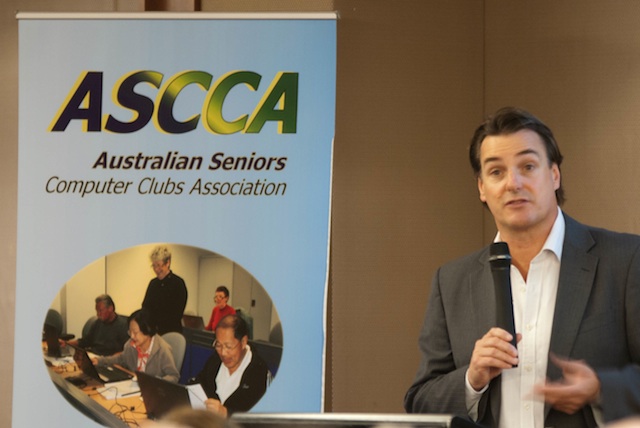
    Speaker, writer and broadcaster Paul Wallbank has been at the forefront of helping businesses and communities find opportunities in this rapidly changing era for twenty years.

    Paul’s presentations are lively, interactive and designed to both entertain and challenge audiences looking at how their companies, industries and communities are going to prosper in the connected century.

    Some of the areas Paul covers are the workplace of the future, employment in the age of robots, how the internet of machines is changing markets and what technologies like cloud computing, social media and Big Data mean to your business.

    All keynotes, presentations and workshops can be customised to suit your unique needs. Topics include;

    Future Proofing your business
    Decoding the new economy
    Leadership in a digital era
    Tools for the new economy
    Why Broadband Matters
    The Future of Business

    You can view many of Paul’s presentations at his Slideshare site.

    Previous presentations have included;

    The future office. What will the office of the future look like?
    Web 4 Free. Doing business on the web with a shoestring budget.
    The elder guru; exploding the myths of the digital divide.
    The top ten solutions for getting the most from small business IT
    What does it all mean? cutting through computer jargon.

    All presentations are available as keynotes or workshops and Paul will tailor the content to suit your organisation’s or industry’s unique characteristics.

    Paul connects the dots to show how your industry, business and family are being affected by changing trends in technology, economics and global demographics.

    In explaining trends and technologies such as the internet of everything, cloud computing, social networking and broadband technologies, Paul deciphers the jargon and helps audiences identify opportunities and understand the risks in the new economy.

    If you’d like to find how your business or community group can get more from their technology contact Paul for more information.

    Similar posts:

  • A constancy of change

    A constancy of change

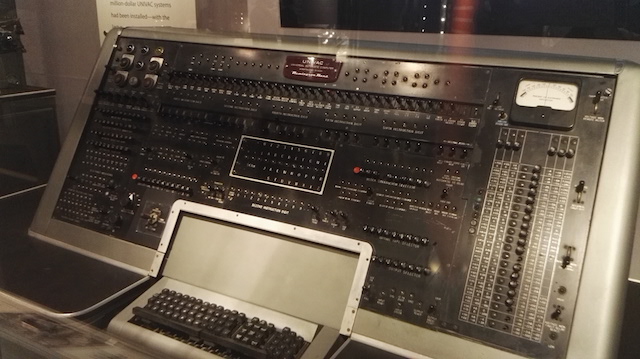
    One constant about the technology sector is change, and a visit to Silicon Valley’s Computer History Museum emphasises just how much the industry has changed over the years.

    Notable are all the gone and forgotten brands that were in their day giants of the industry along with the efforts by various countries, Britain in particular, to compete with the US in computing.

    But most striking are the old roles that rose and fell as technology evolved over the past century, from the Morse Code operators whose skills were essential for safe shipping and telegraph communications through to punch card operators and the ‘tape apes’ of the 1980s.

    Most of those roles rose, became lucrative and then disappeared as technology evolved, just as the loom weavers’ jobs did in the eighteenth century.

    Like the loom weavers and the companies that employed them, history and technology overtook them. Something that today’s business giants and high paid occupations need to keep in mind.

    No industry is static and few jobs are safe in today’s rapidly changing world. It’s why we need to be making the investments in the skills and technologies that will define the future economy.

    We can’t assume today’s jobs will be those of tomorrow.

    Similar posts:

    • No Related Posts
  • Confidence and open communications

    Confidence and open communications

    One of the big technology industry stories currently is the merger of Dell and data storage giant EMC, which at seventy billion dollars will be the biggest merger in the tech industry’s history.

    With fifty thousand employees managing such a change presents a challenge for EMC’s managers and something noticeable attending the company’s EMC World conference in Las Vegas this week is how upbeat almost all the staffers about the impending merger.

    In an interview with David Goulden, the CEO of EMC’s Infrastructure division, which is the company’s core business, I asked him how they were keeping staff morale up in the face of changes that will almost certainly cost jobs.

    “Change creates uncertainty,” says Goulden. “One thing I’ve learned from this is you cannot over-communicate and that’s true internally and it’s true with our customers. We’ve put an incredible amount of effort in communications so our teams are engaged to go and speak to their customers.”

    As change is now a constant in all industries Goulden’s lesson should be noted by all managers and business leaders – clear, honest and open communications with employees and customers is essential in keeping the trust of the markets and workforce.

    The old model of restricting information and hoping no-one finds out is increasingly harder to sustain and from a business point of view unprofitable in the medium term as well.

    Paul travelled to Las Vegas as a guest of EMC and Netsuite.

    Similar posts:

  • Waiting for an innovation miracle

    Waiting for an innovation miracle

    Many companies are waiting for an innovation miracle said Autodesk CEO Carl Bass at the company’s final press and analyst conference at the Autodesk University conference in Las Vegas late last year.

    “Change happens when new people enter the market or companies find new ways to do things or they are scared by competitors doing something they can’t do,” Bass said in an answer to a question from a Korean journalist about dealing with changing markets.

    “The two things I hear over and over again from customers – you stand back and scream because they are all the same – most of our customers want to innovate,” Bass continued.

    Building for sustainable change

    “Generally they mean they want to build sustainable, competitive changes. They want to create products that have the ‘Apple Premium’ that someone wants to pay more for because it’s the best product in the category and they want to sustain that for as long as possible.

    “The second thing that’s almost universal with our customers is when they have a good idea, they want to get that to market as quick as possible. To the extent we supply the tools to help them fulfil those two big needs of ‘how can I innovate and do something I wasn’t capable of doing?’ or ‘how can I shorten the time between when I think about this to when I can sell this?’ Those are things that will motive people.”

    At this stage Autodesk CTO Brian Kowalski chimed in, “there is slightly depressing moment in the innovation conversation where the customer says ‘I really want to transform into an innovative company. Can you help me do that using exactly the same tools, people and mindset I currently have. They are hopeful our answer will be ‘yes, we can help you.”

    For those organisations Kowalski had bad news pointing out that creating a corporate environment that embraces change requires all three of the ‘people, processes and technology’ triangle. Just adding a new product over the top of the existing culture won’t change the business.

    Sympathy for the corporation

    Bass though has a sympathetic view towards those large organisations seeking to change.

    “Companies do believe there’s some miracle that happens and one of the things I’ve seen most clearly is this idea among startups and VC backed firms is that big companies are just dumb and unaware,” Bass stated. “There almost no large company anywhere in the world that doesn’t know what is going on the world, some of these companies have whole armies of people whose only job is to figure out what’s new and exciting and interesting.”

    “People on the other side don’t understand this, they (big company managers) know what’s going on and what’s different, they may not have the wherewithal to change but the idea that car companies didn’t see changes coming – that they couldn’t see a Tesla – they knew but there were a bunch of reasons why they couldn’t make it to the other side.”

    Skilling the next generation

    Another aspect that troubles Bass are the skills of the next generation of managers, engineers and software developers.

    “The second thing I wanted to say about tools is that I go to a lot of universities and I talk to academics about what’s coming next,” he says. “What depresses me a little bit is the faculties have all sorts of new ideas and methodologies but they are teaching using old software tools. No student I know would want a twenty year old cellphone but they sit dutifully and learn twenty year old software. I think that’s one area they have to change first.”


    Bass and Kowalski make some important points about the challenges facing organisations seeking to adapt to changes markets, workforces and a rapidly evolving society – it’s not easy and the issues facing all businesses are complex.

    Paul attended Autodesk University in Las Vegas as a guest of Autodesk.

    Similar posts:

    • No Related Posts