Tag: communications

  • Confidence and open communications

    Confidence and open communications

    One of the big technology industry stories currently is the merger of Dell and data storage giant EMC, which at seventy billion dollars will be the biggest merger in the tech industry’s history.

    With fifty thousand employees managing such a change presents a challenge for EMC’s managers and something noticeable attending the company’s EMC World conference in Las Vegas this week is how upbeat almost all the staffers about the impending merger.

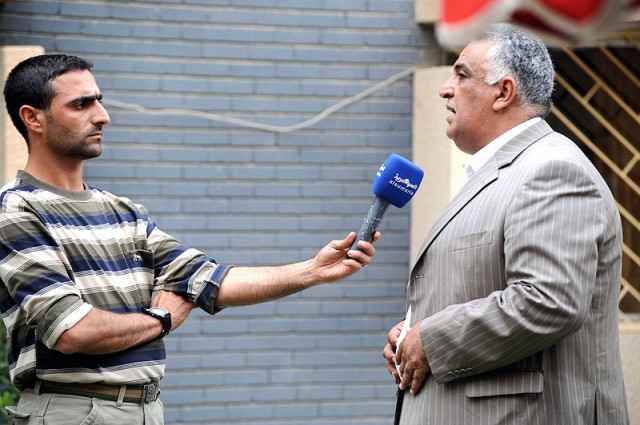
    In an interview with David Goulden, the CEO of EMC’s Infrastructure division, which is the company’s core business, I asked him how they were keeping staff morale up in the face of changes that will almost certainly cost jobs.

    “Change creates uncertainty,” says Goulden. “One thing I’ve learned from this is you cannot over-communicate and that’s true internally and it’s true with our customers. We’ve put an incredible amount of effort in communications so our teams are engaged to go and speak to their customers.”

    As change is now a constant in all industries Goulden’s lesson should be noted by all managers and business leaders – clear, honest and open communications with employees and customers is essential in keeping the trust of the markets and workforce.

    The old model of restricting information and hoping no-one finds out is increasingly harder to sustain and from a business point of view unprofitable in the medium term as well.

    Paul travelled to Las Vegas as a guest of EMC and Netsuite.

    Similar posts:

  • Crisis management for startups

    Crisis management for startups

    What does a startup do when it’s faced with a PR crisis? Recently Australia witnessed a spectacular example of what not to do when Sociabl, a startup that promised to connect users with celebrities, flamed out spectacularly.

    Sociabl promised to connect punters over video with celebrities for a fee ranging from $500 up to $100,000 for individuals like Richard Branson with half the money going to a charity of the celebrities choice.

    The app and its two young founders had plenty of coverage and all looked good until one of them, Brandon Reynolds, appeared on prime time evening show A Current Affair to spruik the service.

    Unfortunately for Brandon he was interviewed by one of the celebrities listed by his app and the host, singer and presenter David Campbell, had never heard of the service.

    A true PR disaster

    Needless to say the interview didn’t go well with poor Brandon meekly declaring at one point “we’re not a major fraud!” You can watch the train wreck on the show’s website.

    To compound the problem Brandon then wrote a defiant Medium post – later removed – accusing the program of slandering him and posting a pile of correspondence with the various celebrities’ agents.

    Earlier this week I was invited to join a panel consisting of a journalist, a startup founder and a lawyer who also runs a startup along with myself we looked at how a startup can avoid a Sociabl like disaster. The lessons from it were clear.

    Stop digging

    Rule one in crisis management is when you find yourself in a hole, the first thing to do is stop making it deeper.

    Brandon clearly missed that memo and his defiant post that accused the journalists and the network of defaming him only antagonised them. What’s worse, the attempt to throw the celebrities’ agents under the bus was only going to take him and his business partners into a new world of pain.

    So when things are looking bad, stopping and taking a deep breath is the first thing to do. The absolute wrong action is lashing out publicly at media, advisors or business partners.

    It’s probably not a crisis

    There is no doubt Sociabl’s debacle was a crisis, but it’s an outlier and a situation that few startups or any businesses will find themselves. In most cases what appears to be a crisis is just a minor hiccup that looks like a big problem because you’re too close to it.

    Most startup founders and small business owners are working hard, under stress and deeply emotionally engaged in their business. It’s understandable to over-react to what is often a minor, or even imagined, crisis.

    By stopping digging, or panicking, and taking that deep breath you have the opportunity to get things into perspective. It’s also the opportunity to take advice.

    Talk to your friends

    One of the first things any new business should set up is an advisory board or panel. Helping with a crisis is exactly what those advisors are for. Talk to them and get their wisdom, usually they’ll bring some perspective and more experienced friends will know how to manage a crisis (if it exists).

    An important aspect of asking for advice is actually taking what’s offered. One way of burning bridges with friends and trusted advisors is to ignore their advice after asking for it.

    If you have investors then talk to them, particularly if they have seats on your board. They’ll want to know about the crisis anyway and if they’re experienced may well be the best people to help.

    Get professional help

    For early stage startups this tip isn’t much use as good PR and crisis communications professionals quite rightly charge a lot of money for their services.

    If you do have raised substantial money however, then a good PR agency should be one of the first professional services engaged with the funds. Sociabl claimed to have raised $210,000 which probably wasn’t enough to get a good one.

    Had Sociable engaged a competent and professional PR firm, it’s likely they would have avoided the disaster on A Current Affair.

    Rally the fans

    If you have loyal customers, user or supporters then a crisis is the time to get them onside by engaging honestly on the web, through email and on social media. Be honest, be open and be quick to reply.

    If you have made a genuine mistake then it’s likely your fans will support you as long as you come clean. All bets are off however if you’re ripping those loyal supporter off.

    Have a plan

    Early in your business do a risk analysis to identify where things could go wrong and have a plan to deal with known risks. Hopefully you’ll never use it but it’s handy to have when something foreseeable happens.

    Don’t be a fraud (of any size)

    “We’re not a major fraud” will go down as one of the greatest lines of the current startup mania and one that Brandon Reynolds will struggle to live down for many decades.

    At this stage I should point out I don’t believe Reynolds and Sociabl were a fraud of any size – he and his team simply didn’t understand how the world of celebrity engagement and the media work.

    The key lesson is don’t be dishonest. Only make claims you can justify and promises you can deliver. Hell hath no fury like customers, investors or journalists who believe they have been misled.

    For those raising money through crowd sourcing this is an important point as overstated claims and missed delivery dates will not only cause a crisis but see loyal supporters desert you.

    More importantly, a crisis brought on by dishonesty may get the attention of the authorities if you’ve breached consumer law with your customers or securities regulations with your investors. Don’t be evil is a good philosophy for a young business.

    In summary, the best advice for a startup in avoiding a crisis is not to put get in the position where you might find yourself in one however sometimes things are outside your control, when they do take a deep breath and talk to your friends.

    Similar posts:

  • Data and the art of Public Relations

    Data and the art of Public Relations

    The Public Relations industry has been mismeasured and undervalued, believes Rebekah Iliff, the Chief Strategy Officer of PR analytics company AirPR.

    San Francisco based AirPR is an analytics company founded in 2011 on technology tracking the performance of PR campaigns. Despite being relatively young, the business counts among its customers Fortune 1000 companies such as Rackspace, Experian and the New York Stock Exchange.

    Analysing stories

    The idea behind AirPR is by analysing the responses to stories, be they articles in mainstream media sites, social media posts or the client’s own content, PR people are able to get a much better insight into what is working in the marketplace.

    “You can no longer just throw out a PR campaign and say ‘oh, we got 200 million impressions.’ No CEO is going to buy that,” says Iliff. “You’re going to have to have deep data that you can dive into and then report the things that are going to work.”

    Part of the reason PR is failing, Iliff believes, is because practitioners are only making decisions on ten to twenty per cent of the data they have. To make the most of the information they have available involves a rethink on how companies get their message out to the community.

    Shifting PR thinking

    “We’re trying to shift people from thinking about PR in a linear fashion to get into thinking about it in a networked fashion. A really good PR strategy or narrative looks like a spider web, there’s all these things connected to each other.”

    Making those connections is creating a new set of demands on the PR industry as new tools and communications methods evolve.

    “The PR professionals of the future who are be best placed to be successful will be the ones who take an interest in the analytics, who understand how to talk about so they can improve the storytelling.”

    Stopping the pitching

    In Iliff’s view part of the PR industry’s problems lie with how new entrants are taught is how to pitch to journalists, rather than to evaluate what works for their clients. “The second someone comes into an agency on a green level they should be bought into the analytics conversation and be taught how to measure it.”

    “Instead they are taught ‘your job is to create storylines and pitch to journalists’, which by the way ninety percent of what you pitch no-one’s going to return because it’s irrelevant.” She says.

    “Journalists give you credibility and they’re a third party endorsement but they can’t tell the story the way you want to tell it. There’s a disconnect between the role of journalist is, the role of the journalist is not to sell to your customers, the role of the journalist is to tell the story from an objective viewpoint that puts you in the context of where you fit in the industry. I don’t think people get that.”

    “You should be writing the story, following it through and understanding the metrics around it so you can go back and create a better story. It’s like that connective tissue between parts of PR instead of siloing.”

    Breaking the data silos

    The siloing of the analytics functions of PR and marketing remains a problem for the industry as well, Iliff stays and her advice to communications professionals entering the fields is to understand the data aspects.

    “Get a Google Analytics certification, it’s very simple to do,” she states. “Take a couple of Coursera courses on basic statistics and how to analyse data – what’s the difference between prescriptive, descriptive and predictive data – very simple things that if you know how to talk about so you can have a discussion with the engineers.”

    As the media industry evolves as it becomes even harder to pitch to fewer journalists working for a shrinking number of traditional outlets, Iliff thinks the future for the PR industry is with making its own content.

    Focusing on owned media

    “I think in the next five years a lot of things will change because of a couple of things, one is that we have access to data so owned media programs will become stronger for the people who are focusing on it and it will become a huge component in driving leads and sales. So people will stop spending so much time pitching.”

    “Things like owned media will be used in a more comprehensive and compelling manner to offset a lot of the things that aren’t working on the earned marketing side.”

    “My hope is that brands just hire an internal storyteller like Dell has done and Adobe has done and HP to tell you the story and connect with their customers. That’s the closest point between A and B.”

    Taking PR seriously

    Ultimately Iliff believes PRs will be taken more seriously in business is if they show they can use the data they have to show companies how to more effectively communicate.

    “The only way you’re going to get a seat at the table, the only way you’re going to be taken seriously, is if you have data and you have the most relevant data.”

    With data analytics reshaping most industries, it’s hard to see how the PR sector can resist those fundamental changes. How public relations practitioners apply that knowledge to their work is going to be key to their relevance in the business of the future.

    Similar posts:

  • Meshing together an alternative internet

    Meshing together an alternative internet

    Can groups and communities build their own internet connected networks? The Mother Jones website describes how in Athens some neighbourhoods are doing exactly that.

    Many of the new communications applications are enabling adhoc networks between smartphones and other devices. In times of civil emergencies and natural disasters, those networks may well turn out to be more reliable than the telecommunications networks.

    With the various mesh technologies available, we’re seeing another way people can go ‘off the grid’ which will change many of the existing business models of many industries and possibly empower communities in unexpected ways.

    Similar posts:

    • No Related Posts
  • Why do we still use fax machines?

    Why do we still use fax machines?

    If you’re in the ABC Canberra area at 4.05pm, I’ll be talking about this with Adam Shirley. Listen live here.

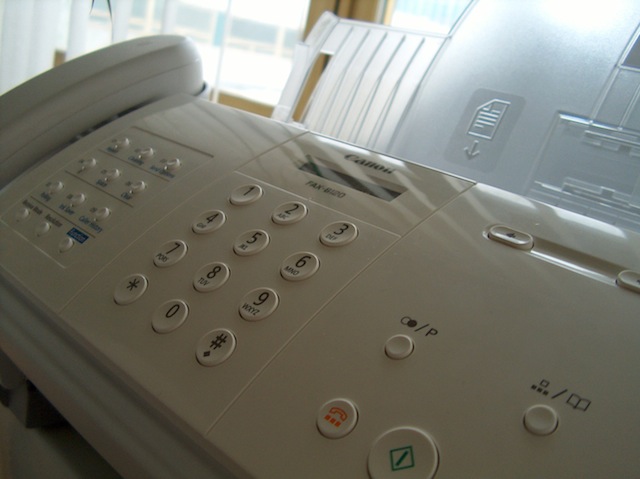
    One of the most frustrating statements in modern business is “you’ll have to send a fax.”

    Facsimile machines, once the pinnacle of 1980s business communications although they were first invented in 1843, started to die once the internet became common and email became the dominant messaging system.

    Once dial up modems started becoming standard on computers, receiving faxes electronically became feasible and for while businesses struggled with the notoriously unreliable software to receive facsimile messages without the hassle of paper.

    Eventually however they passed away as most business found there was no need for faxes and anything requiring a signature could be electronically signed or a scan of the original document sent.

    Some industries and sectors – particularly the legal world and some government agencies – still hold out the need to send an ‘original’ by fax, party under the fallacy a facsimile copy is more secure, reliable and legally more valid than an email or electronically lodged document.

    During the ABC Canberra program one listener pointed out the medical industry is dependent upon the older technologies, “we couldn’t operate without them” she told the producers. In a time of connected medical equipment and electronic data interchange, the medical industry has little justification in using outdated manual methods but habits die hard in a very conservative industry.

    None of the myths around the reliability of fax are true and the reality is details sent by fax are just as easily intercepted by nefarious employees or third parties as emails. In many respects a fax is less secure than electronically interchanged data.

    If you do have the need to send or receive a fax though all is not lost, services like eFax will still send or receive messages and then, ironically, email them onto you.

    However there is a downside with these services, as one harried PA whose organisation still receives faxes due to its dealings with the legal profession described, the vast bulk of messages they receive are junk messages mainly offering cheap deals on office supplies.

    The fax machine is another example of a transition effect where a stop gap product was effective for a short period as businesses adapted to new technologies, the SMS is going through a similar process now. Neither will be the last example of this.

    Similar posts:

    • No Related Posts