Tag: competition

  • Breaking up the tech giants

    Breaking up the tech giants

    One of the stark realities of the technology industry is there is no third place – if you aren’t the biggest or second biggest in a mature market then you need to get out.

    With internet businesses it’s now appearing there may not even be room for second placed businesses as increasingly each market segment is dominated by one player.

    For Silicon Valley’s leaders, having a monopoly is their nirvana. As PayPal founder Peter Thiel once wrote, competition is for losers, which is ironic given his fortune is based upon challenging the banking and payment oligopolies.

    So with attitudes like Thiel’s, and the massive power of companies like Amazon, Facebook and Google, it’s not surprising there are now calls to break up the tech giants.

    There are some compelling arguments for this, the splitting of Bell Labs in the 1950s spawned the birth of Silicon Valley and the breaking up of AT&T created the conditions for development of the internet and mobile network. Monopolies stifle genuine innovation.

    For customers, the argument is moot. Very rarely does a monopoly result in anything but poorer service and higher prices.

    Even for shareholders, there’s a good argument for breaking up monopolies. A company with massive market power is often over staffed and poorly managed and the splitting of Standard Oil in the 1911 gave rise to dozens of new oil companies who returned far more to investors than the staid giant ever would.

    It’s hard though to see how companies like Google, Facebook and Amazon could be broken up. Unlike telephone networks, oil refineries and gas stations it’s difficult to separate assets or products. Breaking up Google, for example, may only result in more monopolies over smaller markets.

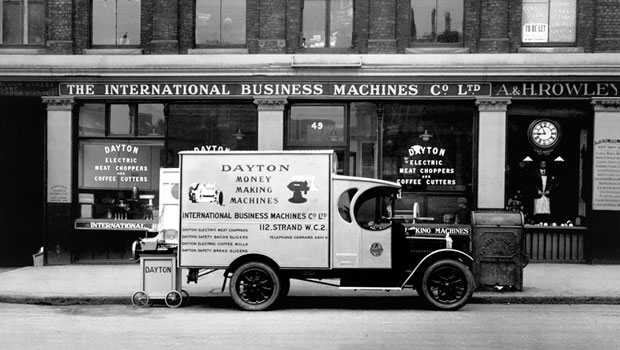
    However in the tech industry, a monopoly may not be permanent thing. Forty years ago IBM was the untouchable incumbent and twenty years ago it was Microsoft. Both today are shadows of what they once were as markets overtook them.

    So perhaps it’s too early to call for the breaking up of today’s tech giants because, like Microsoft and IBM, their success is based on a fleeting technological moment.


    Similar posts:

    • No Related Posts
  • Daily links – Chinese property developers go onto internet

    Daily links – Chinese property developers go onto internet

    Today’s links have a distinctly Chinese flavour around them with a look at how the country’s smartphone manufacturers are coming to dominate their market, Tencent’s plans for global domination and how property developers are looking to the internet to save their falling sales.

    Uber and Microsoft make their regular appearances to round out the links in their changes to billing and security.

    Chinese property developers turn to the web

    Faced with declining sales, Chinese property developers embrace – the Internet!

    How Chinese smartphone makers are beginning to dominate the market

    The rise of China’s smartphone makers: 10 of the top 17 smartphone manufacturers now come from China.

    An interview with Tencent

    Business Insider has an intriguing interview with one of the VPs of Chinese internet giant Tencent.

    In his Q&A, S. Y. Lau discusses how Chinese communities are seeing their incomes rise due to the internet. One of the famous case studies of connectivity are India’s Kerala fishermen who used SMS to arbitrage their market. We may be seeing a similar story with Chinese tea farmers.

    Microsoft restrict warning of patches to paying customers

    In a short term money grabbing exercise, Microsoft have unveiled a plan to only inform enterprise customers of upcoming security patches. My prediction is this won’t last.

    Uber cuts prices

    Car hiring service Uber has cut its fares in thirty US cities while guaranteeing drivers their incomes. This is probably a move to keep competitors like Lyft at bay.

    Similar posts:

    • No Related Posts
  • Frenemies in the age of tectonic shifts

    Frenemies in the age of tectonic shifts

    “Apple lives in an ecosystem,” Steve Jobs told the 1997 MacWorld conference. “It helps other partners and it needs the help of other partners.”

    A few minutes later Jobs unveiled Apple’s deal with Microsoft, much to the disgust of many of the company’s true believers in the audience – something not helped by Bill Gates appearing on video midway through the presentation.

    “We have to let go of the idea that for Apple to win, Microsoft has to lose;” said Jobs after the booing died down.

    I was reminded of Jobs’ and Gates’ deal when talking to Pat Gelsinger, the CEO of virtualisation software company VM Ware at their annual VM World conference in San Francisco this week.

    Gelsinger was discussing the myriad deals VM Ware has made with companies that are their superficially their rivals as markets radically change. The company has even gone as far to embrace the open source Open Stack that was originally set up as competition to VM Ware’s proprietary technology.

    “The idea of frenemies – or co-competition – isn’t new to the IT industry.” Said Gelsinger, “as we are in this period that we’ve called the tectonic shifts that are underway.”

    “All of us need to be somewhat careful about who’s our friends and who’s our enemies as we go through that period and be as nice as we can to everybody because who’s our friends and who’s our enemies in six months or twelve months could change a whole lot.”

    That lesson has been harsh in the IT industry as various unstoppable businesses have found the market has shifted rapidly against them. A process that’s accelerating as cloud computing changes the software industry.

    “I always quip that ten years ago or fifteen years ago Sun would have been buying Oracle. Those shifts can occur quite rapidly,” Gelsinger says.

    VM Ware itself is on the brunt of one of those shifts as its core business of creating virtual services in company’s data centres is being disrupted by cloud computing companies like Amazon, Google and – ironically – Microsoft.

    Adapting to that changing market is the key task for Gelsinger and VM Ware’s management team, “our philosophy has been about doing the right thing that technology enables us to do.” Gesliner states, “do the right things for our customers and enable the ecosystem to join us on the journey.”

    For companies like VM Ware and Microsoft no-one predicted that one of their biggest threats would come from an online book retailer, yet Amazon Web Services has upended the entire software industry.

    The challenges for VM Ware today or Apple nearly two decades ago are being repeated in many other industries as competitors appear from unexpected directions, which is why it’s important not to ignore and sometimes co-operate with your competitors.

    We shouldn’t also ignore the other main reason why companies like Apple, Microsoft and, possibly, VM Ware have survived massive market shifts over time – a deep and loyal customer base.

    Understanding and responding to your customers’ needs is possibly the greatest management skill needed in every business today. Are you listening to what your market is telling you?

    Paul travelled to VM World in San Francisco as a guest of VM Ware

    Picture of Steve Jobs and Bill Gates via Joi Ito on Flickr

    Similar posts:

    • No Related Posts
  • On being evil

    On being evil

    “Don’t be evil” are the opening words of Google’s corporate code.

    When it was framed in the late 1990s there was one company in particular everyone in the tech industry thought of when the word ‘evil’ was being used.

    At the time Microsoft defined evil in the technology industry. The main reason was their crushing of real or potential competitors like Netscape, Java or the troubled IBM joint venture of OS/2.

    Topping everything though was Microsoft’s tactic of fake error messages designed to scare customers away from the competing DR-DOS system in the early 1990s.

    So it’s rather delicious that Microsoft seems to be getting a taste of its own medicine twenty years later as Google Maps returns an error message on Windows Phones.

    This is particularly galling for Microsoft as Windows Phone is essential for the company’s resurgence and, as Apple have learned, maps are a critical feature for smart phone users.

    It’s too early to accuse Google of having become evil as Microsoft did during their period of dominance as Tim Wu discusses in Why Does Everyone Think Google Beat The FTC but the search giant is flexing its muscles on many fronts.

    For Microsoft, they are learning what life’s like when you’re not the toughest, meanest kid on the block.

    Karma can be a real bitch.

    Similar posts:

  • Owning the customer

    Owning the customer

    During the tech boom of the late 1990s the early wave of web developers had a business model that required locking customers into a relationship.

    Having spent thousands of dollars for designing and building a website, a business then found they would have to spend hundreds of dollars every time they wanted to make even a minor change.

    While that model didn’t work out for web designers as new tools appeared that made it easy for customers to look after their own sites, it’s still the ambition of many businesses to ‘own’ as much of the customer as possible.

    Department store credit cards, supermarket petrol cards and airline frequent flier programs are all examples of how big businesses try to lock their customers into their ecosystem.

    Possibly the dumbest, and most counterproductive all, are the media companies with policies of not linking outside their own websites. The idea is to keep readers on their sites but in reality it damages their own credibility and betrays their lack of understanding how the web works.

    The airlines too have discovered the risks in trying to ‘own’ their customers as their devaluing frequent flier programs has irritated and disillusioned their most loyal clients.

    Many businesses, particularly banks and telcos, try to tie you up into knots of contractual obligations with reams of terms and conditions. All of this is an attempt to make the customer a slave to their business.

    Outside of having a legally protected monopoly, you can’t ‘own’ a customer – the customer has to grant the favour of doing business with them.

    They’ll only do business with you if they trust that you’ll do the right thing by your promises; whether it’s delivering the cheapest product, the best service or quickest delivery. The moment their trust begins to slip, you risk losing their business.

    Executives who talk of the concept of owning the customer are either working in organisations with little competition or those steeped in 1980s management practices. If you hear them talking like that, it might be best to take your business, and investments, elsewhere.

    Owning customers didn’t work for the web designers of the early 2000s and it won’t work for businesses in other sectors. The only way to ensure most of your clients keep coming back is to deliver on what you’ve promised them.

    Similar posts: