Tag: computers

  • Creating a Silicon Brain

    Creating a Silicon Brain

    Should we be rethinking how computers are designed? The co-founder and CEO of chip designer Nervana, Naveen Rao, believes so as artificial intelligence applications change the way systems work.

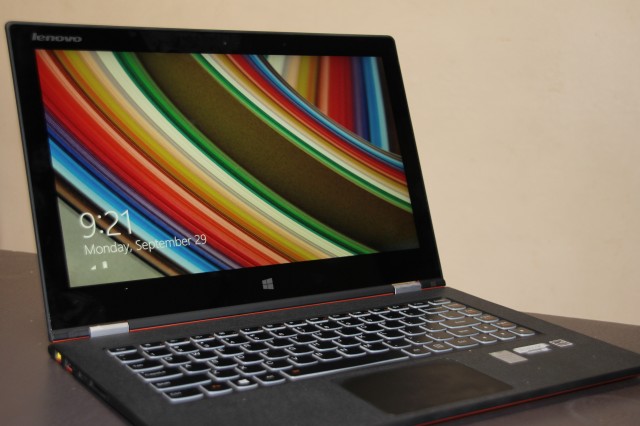
    “A brain only uses 20 watts of power to do far more than a laptop,” observes Naveen Rao at a breakfast following Intel’s Artificial Intelligence Day in San Francisco last week.

    “Presumably the brain is doing more computation than your laptop,” he continues. “What are we missing? Why is there such a big difference between what a computer can do and a brain can do. Let’s try to understand that and maybe what we learn can change how we design computers.”

    A lifetime passion

    Rao, whose company was acquired by Intel for over four hundred million dollars last August, was discussing the quest to make computers operate more like brains and less like adding machines.

    For Rao this has been a lifetime passion, having graduated as an electrical engineer and spending most of his career designing computer chips at Sun Microsystems and various startups he quit his job to do a PhD in neuroscience, “after ten years, I wanted to return to my passion of trying to use biology to better understand computers.”

    From that combination of study and experience Nervana was founded in 2014 and raised twenty million dollars from investors before being acquired by Intel.

    Replicating the bird, not the feathers

    The key part in creating a computer that acts more like a brain is to get the individual CPUs to be working together in a network similar to the mind’s neural paths, “look at a bird compared to a plane.” Rao says,” we don’t replicate the feathers, but we do the function.”

    Doing this meant rethinking how processors are designed, “there are tried are true methods of chip architecture that we basically questioned.”

    “We don’t need high levels of generality. We don’t need this to work on energy or weather simulations. We removed some of that baggage.”

    Paring back the processor

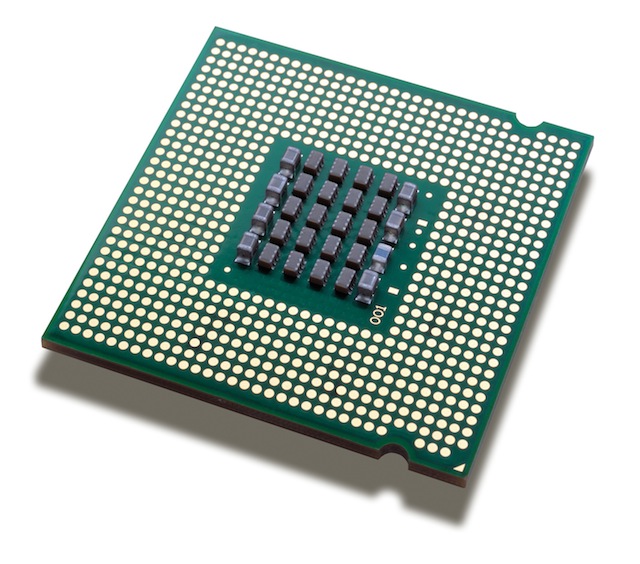
    So the Nervana team stripped down the individual processor and removed many functions, such as a cache, that are built into today’s advanced CPUs. Those lighter weight, and less power hungry, units can then be combined into neural networks more suited to artificial intelligence functions than today’s computers.

    “Nvidea, this sort of fell into their laps,” observes Rao of Intel’s key competitor in the AI, graphics and gaming space. “It just so happens the graphics functions on their chips are suited to Artificial Intelligence applications.”

    Without the more complex functions of modern CPUs, Rao and the Nervana team see the opportunity to build more flexible computers better suited to artificial intelligence applications.

    Intel focuses on AI

    That focus on AI has seen Intel branding its AI initiatives under the Nervana brand name as the iconic Silicon Valley company tries to move ahead with more nimble competitors like Qualcomm and NVidea.

    For the computer industry, artificial intelligence promises to be the next major advance, something necessary if we are ever going to make sense of the masses of data being collected by smart devices and the reason why Microsoft, Google, Amazon and Facebook are all making massive investments in the field.

    Regardless of whether Intel and Nervana are successful in the AI marketplace, Rao sees the entire field of neural computing as a great opportunity. “It’s exciting, there’s lots of chances to innovate.”

    Paul travelled to San Francisco as a guest of Intel
     

    Similar posts:

    • No Related Posts
  • Goodbye Moto

    Goodbye Moto

    It appears faded mobile phone brand Motorola has proved disappointing for Chinese computer giant Lenovo reports TechCrunch.

    For Lenovo, this is concern as the company explores ways to diversify away from the shrinking PC and tablet marketplaces although the smartphone market which itself suffers from poor  margins doesn’t seem to be the opportunity the company is looking for.

    It does however show that Google is often right in casting off companies it doesn’t see a future in.

    Similar posts:

    • No Related Posts
  • Reaping the security dividend

    Reaping the security dividend

    Boards and executives have finally got the message about security John Stewart, Chief Security and Trust Officer at Cisco.

    For most of the computer era security has been seen as an inhibiter to innovation and speed to market, but now with most businesses finding they face a three year time frame to transform in face of digital disruption Stewart says corporate managments now see security of their products as being a valued feature.

    Stewart bases his view on an online survey, Cybersecurity as a Growth Advantage, where Cisco polled 1,014 senior executives with extensive cybersecurity responsibilities in 10 countries and 11 in-depth interviews with senior executives and cybersecurity experts.

    From this, Cisco found a third of businesses now sees security as being a competitive advantage.

    Digital disruption drives the shift

    Stewart puts this down to boards and senior executives realising how widespread digital disruption is, “it’s highly unlikely Weight Watchers saw the disruption coming from Fitbit,” he muses. “In fact it’s hard to see how anyone could have seen that coming.”

    As a consequence of these widespread and often unexpected disruptions, corporate leaders are trying to shore up their existing positions against unforeseen competitors by shifting to digital platforms as quickly as they can.

    “We have to do digital and if we are going to do digital we have to have strong cybersecurity controls,” says Stewart in explaining why cybersecurity is an important part of this strategy.

    Security as a cornerstone

    “By making cybersecurity a cornerstone of their businesses, security-led digital organizations are able to innovate faster and more effectively, because they have significantly greater confidence in the security of their digital capabilities,” Stewart says.

    Certainly managers are worried about the risks of going digital with Cisco reporting many businesses have put projects on hold due to concerns about security risks, “a lack of cybersecurity strategy can cripple innovation and slow business, because it can hinder development of digital offerings and business models.”

    According to Cisco’s findings, seventy-one percent of executives said that concerns over cybersecurity are impeding innovation in their organizations. Thirty-nine percent of executives stated that they had halted mission-critical initiatives due to cybersecurity issues.

    Encouraging moves

    While the possibility that corporate leaders are taking cyber security seriously is encouraging, that change is yet to be seen in the marketplace, particularly in the consumer Internet of Things market where being first trumps security, design considerations or even basic safety.

    The real test for how important cybersecurity really is remains in the marketplace — will customers pay more for secure products?

    One sense that in Cisco’s marketplace of enterprise customers where security failures could have expensive, embarrassing and possibly catastrophic consequences, customers will pay more for trustworthy devices. In the consumer field it may well be different.

    Probably the most important finding from Cisco’s survey is that businesses are now understanding security has to be designed into products and processes rather than being bolted on as an after thought. If that is true, then we have come a long way.

    Similar posts:

    • No Related Posts
  • Virtual reality hits the market

    Virtual reality hits the market

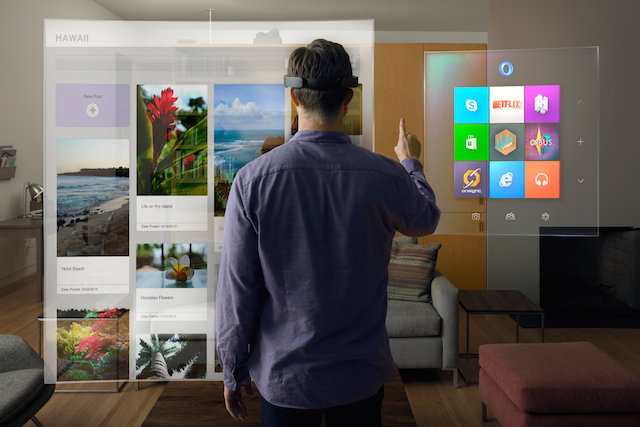
    After virtual reality viewers being the big item at both the Mobile World Congress in Barcelona and Las Vegas’ Consumer Electronics Show earlier this year, it’s not surprising they are appearing on the market.

    Yesterday both Microsoft’s HoloLens and HTCs Vive were made available to the public. At $3,000 for the Microsoft viewer and $800 for the HTC device, these products won’t get much traction in the mass market.

    For those wanting a cheaper VR device, Google Cardboard has also come onto the market for $15 and while it depends upon a smartphone with the right software and lacks the features of more expensive and sophisticated devices, it is an affordable consumer product.

    Like all early stage technologies, the current crop of VR viewers are expensive and somewhat cumbersome but over the next few years we can expect the price of these devices to collapse and become far more usable.

    We’re in early times for the virtual reality industry. What we’re seeing today is laying the ground for much more exciting things.

    Similar posts:

    • No Related Posts
  • Coming to the end of Moore’s law

    Coming to the end of Moore’s law

    One constant in the modern computer industry is Moore’s law, the rule described by Intel co-founder Gordon Moore that the number of transistors on a microprocessor will double every two years.

    Nature magazine reports chip makers are now about to abandon Moore’s law as they reach the physical limits of etching an ever increasing number of transistors onto silicon.

    This doesn’t mean the microprocessor industry is about to stagnate however as the demand for more mobile and energy efficient chips is expected to boom as the Internet of Things evolves and wearable technologies become commonplace.


    Similar posts:

    • No Related Posts