Tag: construction

  • The age of the curious business

    The age of the curious business

    Last year the Committee for Economic Development, Australia (CEDA) warned over 40% of the nation’s jobs were at risk from automation over the next 15 years.

    While that focus was on the risks to workers, it’s equally threatening for small business. Many companies and sole traders are facing the same disruptions from technological change.

    This isn’t a new phenomenon, in the Twentieth century the motor car displaced thousands of small businesses that catered to the horse drawn economy and family run corner stores were displaced by the arrival of supermarkets in the 1950s.

    Beyond the personal computer era

    At the end of the last century the personal computer’s arrival revolutionised small businesses as suddenly tools that were previously only in the reach of big organisations were suddenly accessible to the most modest venture.

    One of the early beneficiaries of that shift to desktop computers in 1990s was the bookkeeping industry which took off as a legion of home based contractors catered for local small businesses.

    As the internet and smartphones came along, the bookkeeping market changed as features like bank feeds and receipt apps automated many previously manual tasks.

    Despite those challenges the bookkeeping industry has survived and continues to grow with IBIS World estimating the overall accounting industry, which includes bookkeepers, grew 2.6% per year over the past five years.

    Close to customers

    The success of bookkeepers and accountants in navigating change is probably due to industry being close to their clients along with being early adopters of new technology, two things that caught the taxi industry out when Uber arrived.

    Uber’s success in upturning the taxi industry illustrates just how important understanding emerging technologies is for smaller businesses. One industry currently facing massive disruption from robots is the construction sector.

    The trades were thought to be relatively immune from automation – after all, who’s going to build a robot plumber? But now robots are moving into trades like bricklaying, as Australian startup Fastbrick Robotics shows.

    Fastbrick are building a commercial bricklaying machine, Hadrian X, that automates the trade’s physical work and integrates with 3D printing technology.

    In one respect the robot bricklayers are bad for the trade’s employment prospects but for older brickies with bad backs having a machine to help you is a godsend while for employers it improves productivity and reduces workplace accidents. It won’t be the end of the trade but the contractors who survive will have adapted to a very different construction industry.

    Restructuring industries

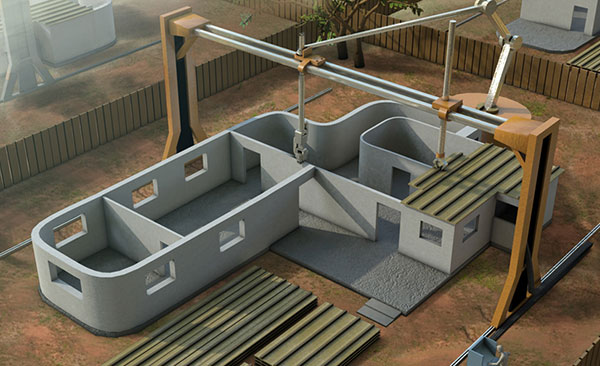
    That Fastbrick integrates with design software shows how the dynamics of the construction are changing. In 2014 Chinese company Winsun demonstrated how they can build ten houses in a day with large scale 3D printers.

    While we may not see that particular technology in Australia, aspects of it will be used and they are going to change all the trades and professions related to the building industry.

    Architects are one building industry group that have long dealt with technological change. Like bookkeepers, the arrival of personal computers completely changed their profession and those who adapted thrived.

    Now with cloud computing services plugging into builders’ supply chains like Winsun and machines like Fastbrick’s, architects are closer than ever to the worksite and their customers. The ones who are adapting are the earlier adopters who are getting into these technologies further.

    Disrupting the professions

    Accountants and architects aren’t the only professions being affected, lawyers are facing a new wave of services using artificial intelligence to do many legal tasks ranging from a chatbot that appeals traffic fines to a program that predicts US Supreme Court decisions.

    Like other sectors, it’s the early adopters in the legal sector who are adapting to a very different industry with much of the manual, lower level work being automated out.

    The wave of technology we’re now seeing appear – including robots, autonomous vehicles, machine learning and artificial intelligence – are going to change our industries and workplaces dramatically in the next few years.

    What the accounting industry and the architecture profession teach us is the businesses closest to their customers and those adopting technology early will be the ones who thrive in a very different industries. Researching, experimenting and paying attention will be the keys to business survival.

    An open mindset

    Even for the trades, survival during this wave of technological change will be a matter of watching the marketplace closely while being open to new methods and technologies.

    Assuming it won’t happen to your industry is probably one of the riskiest things of all. Ten years ago the idea of smartphones revolutionising the taxi business or that robots could replace bricklayers was unthinkable. Now it’s almost expected.

    The forces that are changing the workplace are also changing industries and markets, so small businesses will also be affected. It’s going to pay to be smart and curious.
    Similar posts:

    • No Related Posts
  • Prefabricating change in the construction industry

    Prefabricating change in the construction industry

    One of the industries being dramatically reinvented by China is the construction sector as the nation’s demand on labor and materials puts stresses on the economy.

    An answer local developers and builders have found to these constraints has been to turn to prefabricated construction.

    While prefab building isn’t new, Chinese builders are pushing the techniques of designing, manufacturing and assembling the structures.

    In Changsha, the capital of southern China’s Hunan Province, local construction company Broad Group built a 57-story building using 1200 in 19 days.

    Coupled with large scale 3D printing and computerised design tools, the Chinese builders are redefining the construction industry with methods that are far more efficient and less labor intensive.

    For companies, and countries, that depend upon the construction industry for employment and profit these techniques could be another disruption.

    Again we’re seeing there are few industries immune from major disruption as technology changes business.

    Similar posts:

    • No Related Posts
  • 3D Printing promises to change architecture and building

    3D Printing promises to change architecture and building

    One of the longest running large scale 3D printing projects is based at the UK’s Loughborough University where since 2007 researchers have been working on developing the technology’s applications to the construction industry.

    Loughborough’s technology, named Freeform, offers faster and more flexible ways of casting concrete and building structures using a computer controlled concrete pouring system. For property developers the attraction is cheaper buildings while for architects the technologies offer more innovative structures.

    In late November the team announced a venture with Swedish building company Skanska SA to develop the world’s first commercial concrete printing robot.

    The venture, which will include collaborations with companies including iconic UK architects Foster and Partners, Buchan Concrete, Scandinavian contracting giant ABB and Lafarge Tarmac, aims to have the first commercially available robot printer available by mid 2016.

    Competing with the European venture is Chinese company WinSun who earlier this year showcased its 3D printer capable of producing ten houses every 24 hours. An interesting aspect of WinSun’s project is that the printing rig was build out of existing parts and controlled by an off the shelf Computer Aided Design and Manufacturing software system.

    While the Chinese results are relatively crude, they show the potential for the technology. The economics of the WinSun project are enhanced by using waste building site material for the concrete which only increases the attraction of these machines to cost conscious property developers.

    The Chinese and British are not just the only countries working on these technologies, in the Netherlands the 3D Print Canal House shows how techniques and materials are being developed while in the United States the University of Southern California’s Contour Crafting project is looking at how to use large scale 3D printing in a range of construction scenarios including building space colonies.

    While using moon dust to build structures in space is some way off, both Freeform and WinSun show what will become commonplace on building sites in the near future.

    These technologies promise to radically change architecture and the building industry with ramifications for jobs and the economics of building structures.  3D printing buildings is another example of how industries and employment will be very different by the middle of this century.

    For businesses, it’s another example of how managers have to prepare for very different marketplaces.

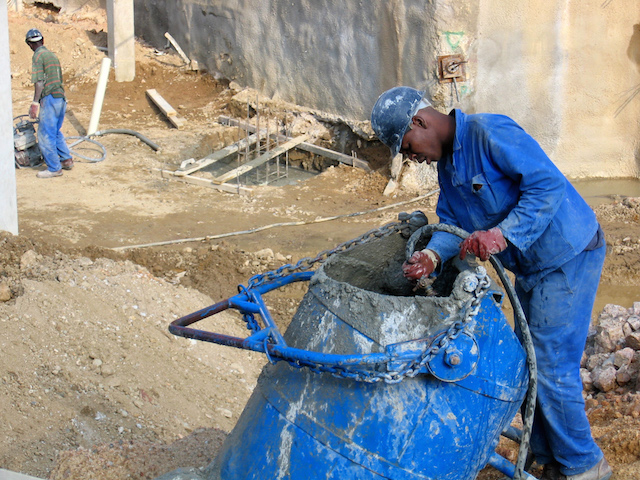
    Builder image courtesy of thesaint through Freemimages.com

    Similar posts:

  • Building a house with 3D printing

    Building a house with 3D printing

    Much of the discussion around 3D printing has focused on making your own coffee cups, toys and small mechanical parts, but what if we start thinking about using these devices to build houses?

    University of Southern California spin off Contour Crafting received attention at the CES over the bold claim by the program’s director, Professor Behrokh Khoshnevis, that it will be soon possible to build a house in 24 hours.

    That’s an audacious claim although it doesn’t include site works or fitting out, much less the design of the structure.

    Contour Crafting isn’t the only university spin off experimenting with 3D printing to build structures; Freeform Construction, part of the UK’s University of Loughborough, has also been working on developing the technology.

    The British team haven’t been as audacious as their US colleagues and, rather than see whole buildings being constructed, they see potential applications being in fabricating specialised parts including cladding panels and complex structural components.

    Like all robotic applications working in hazardous environments is another aspect touted for the technology.

    The British team is almost certainly right in their view, 3D printing is unlikely to fabricate entire buildings onsite but it will have applications in the building industry which will have ramifications for tradesmen, architects and project managers.

    For architects this technology could prove to liberating as it gives designers the opportunity to create structures that haven’t been feasible or possible with existing materials and techniques.

    Some trades though may not fare so well should this technology appear on building sites, it certainly doesn’t look like good news for bricklayers and form workers.

    It will probably take sometime for this technology and it’s still very much under development, Contour Crafting itself won awards in 2006 and the machines are still under development.

    Bill Gates famously pointed out that in the short term we over-estimate the effects of technology while in the long term we underestimate them and that’s almost certainly the case with using 3D printing to build structures.

    Similar posts:

    • No Related Posts
  • Now may not be a good time to buy Melbourne property

    Now may not be a good time to buy Melbourne property

    There’s plenty of indicators that can be used to predict the health of an economy

    While my favourite is the mini-skirt index, the most reliable is when rich folk start building huge skyscrapers.

    Whenever developers propose a hundred storey building it marks the top of the property cycle. Should they get to actually build the thing, you can be guaranteed a nasty economic downturn is about to hit.

    The Skyscraper Index’s historical record

    This track record was set with the very first megatower – the Empire State building was started just before the 1929 stock market crash and completed as the great depression tightened its hold on the United States.

    Forty years later New York’s ill-fated World Trade Center opened just in time to welcome the 1973 oil shock and subsequent recession.

    A more recent example is Dubai’s Burj Khalifa, the world’s tallest building which was topped out in time for the city’s property crash and economic rescue by neighbouring Abu Dhabi.

    In Australia, the most notable downfall was 1980s entrepreneur Alan Bond who planned to build a 140 storey tower on the World Square site opposite Sydney’s Town Hall.

    The site was excavated but Bond went broke before work started and the hole remained for over a decade until a more modest 40 storey tower was built on the site.

    Australia 108

    So the news that property developers want to build a 108 storey tower on Melbourne’s Southbank should worry the Victorian government and unsettle the state’s property owners.

    What’s always notable about these super skyscrapers is the garishness of the project. While Australia 108 won’t match the Burj for sheer Las Vegas gaudiness, it will feature the ‘Star burst’, a star-shaped Sky Lobby and hotel at the top of the tower.

    Why the Skyscraper index works

    The reason why 100 storey buildings are such a reliable economic indicator is because they illustrate there’s too much dumb money in the economy. It rarely makes sense to build such tall buildings.

    Designing and building high rise buildings is complex and expensive – the higher you go, the more construction challenges there are as this Popular Mechanics article describes.

    Skyscrapers are subject to the law of diminishing returns as the taller the building is, the more space that’s needed for services like elevators, air conditioning, water supplies and fire protection which reduces the landlord’s rentable floorspace on the lower levels.

    When a building reaches a hundred storeys, there’s little space available on the lower floors for paying tenants. So the economics don’t add up.

    Builders, property developers and financiers know this so when they start proposing projects that don’t make commercial sense it’s a fair indication the locals are gripped with irrational exuberance and Adam Smith’s invisible hand is going to deliver a short, sharp slap to the back of the economy’s head.

    Does it matter to Australia?

    And so it is in Melbourne, which is going to be interesting to watch as South East Queensland is the only Australian metropolitan area to suffer a prolonged property downturn in the last twenty years.

    Hopefully Melbourne’s woes won’t affect the rest of the Australian economy but given how much the nation has invested in property and the stratospheric debt levels to service that speculation, it may well be that the rest of the country will follow Victoria.

    Winning the next election might not be a good thing for Tony Abbot and his followers who genuinely believe a Liberal government will deliver a magic pudding to the home of every dinky-di Working Australian.

    Similar posts: