
Tag: crowdfunding

  • Crowdfunding future businesses

    Crowdfunding future businesses

    Three years after the Jobs Act was signed into law by President Obama, the US Securities and Investment commission has proposed the rules for crowdfunding business capital.

    Behind the Jobs Act was the idea that new ways of funding businesses are needed in an era when banks, thanks to the flawed Basel Accords, have stepped away from what could be argued is one of the key functions of a financial systems – funding the wheels of commerce.

    So the new regulations are needed and the idea that funding can be raised quickly from crowds of supporters is one that ties well with the current ideas of crowdfunding products.

    Crowdfunding a business, particularly where equity is involved, is a very different matter than asking supporters for a few hundred dollars to manufacture a smartwatch, produce a music album or write a book. Modern securities law is based upon three centuries of charlatans defrauding investors.

    The SEC’s caution is clear in the guidelines that restrict crowdfunding to a small group of businesses seeking funding through Federally approved services and drastically limit the amounts that can be raised.

    • A company can raise a total of $1 million through crowdfunding in a 12-month period
    • In any 12-month period, individual cannot stake more than $100,000.
    • Individuals earning less than $100,00o per year can invest either $2,000 or 5% of their annual income.
    • People with greater than $100,0000 can stake 10 percent of the lesser of their annual income or net worth

    For companies the eligibility for crowdfunding even tighter with the following prohibited;

    • non-U.S. companies
    • securities trading companies registered under the Exchange Act
    • certain investment companies
    • companies the SEC has disqualified
    • companies that have failed to comply submit annual reporting requirements
    • companies that have no specific business plan
    • Companies that have indicated that their business plan is to engage in a merger or acquisition with an unidentified company or companies.

    That latter provision presents a problem for the tech startup based upon the current Silicon Valley ‘greater fool’ business plan however luckily for them, crowdfunding equity won’t be countered for companies worth under $25 million for other securities reporting requirements.

    What will be interesting is how savvy startup founders can use these rules – perhaps use this system to create a company structure and then use product specific crowdfunding projects to raise working capital.

    Just like project based crowdfunding, it’s likely these schemes will be used as a market test to measure community interest in a business. This may well also be a way to attract investors hungry for hot new startups to invest it.

    What is likely though is the current insider driven model of startup funding will remain. While there’ll be many worthy businesses seeking capital through crowdfunding, we can be sure the bulk of startup money will come through the insular world of VCs and tech investors.

    The main criticism though of these proposals are the low limits. This will make crowdfunding unworkable for all but the earliest and smallest of new ventures. The money will be handy for those who qualify, but more needs to be done to spark investment in the businesses of the future.

    Similar posts:

  • The sharing economy’s wobbling wheels

    The sharing economy’s wobbling wheels

    Ride service Uber had a setback last month when the California Labor Commission ordered the company pay one of its drivers, Barbara Ann Berwick, over four thousand dollars for expenses.

    For sharing economy services like Uber this is a problem as their business model depends upon shifting all the costs and as much of the risks as possible onto contractors.

    Should the ruling set a precedent the economics of these services start to look shaky and could even challenge the shifting of risks to users and contractors.

    Take away the new age romanticism spouted by some over services like Uber, Freelancer and 99 Designs and there’s a ruthless business model that minimises costs and risks, that low level of overheads is why these companies have been so successful in attracting investors.

    For the workers, carrying the costs and the risks isn’t such a good deal. “If you work it out,”Barbara Berwick said, “if I didn’t get compensated for expenses, I’d be working for less than minimum wage.”

    While the ruling makes life less precarious for drivers like Berwick, it may curb the enthusiasm of the investor community for the sharing economy.

    Similar posts:

    • No Related Posts
  • Crowdfunding a successful project

    Crowdfunding a successful project

    How successful can crowdfunding be for IoT hard? We looked at some of the downsides of campaigns recently and story in Smart Company on some of the IoT gadgets at the recent Internet of Things World exhibition showed how many of projects are being funded by the crowd. 

    The notable thing about the projects at the conference was how many had not only been successful crowdfunding projects but had also smashed  their targets.

    The lesson from that is a successful campaign has to catch the imagination and excitement of the crowd, not just be a worthy idea.

    How many if these products end up being successful remains to be seen, the test will be how accurately the founders have estimated their costs.

    If it were just the enthusiasm of the funders, then the projects are almost certain to succeed.

    Similar posts:

    • No Related Posts
  • Apple Watch shows us the limits of 3D printing and crowdfunding

    Apple Watch shows us the limits of 3D printing and crowdfunding

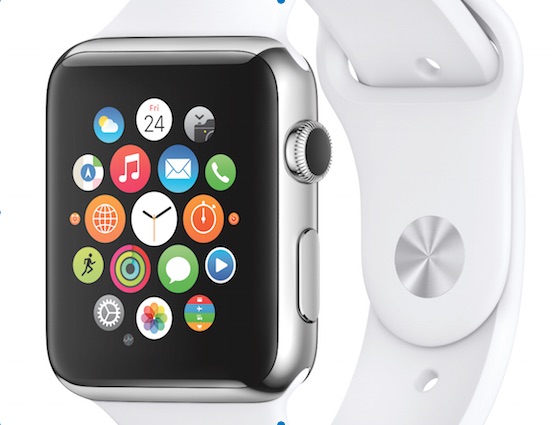
    Ahead of its launch the Apple watch has been criticised for its price and upmarket focus but the product shows what it costs to manufacture high quality goods along with the limitations of both 3D printing and crowdfunding.

    In its Watch Craftsmanship videos Apple shows off some of the workmanship that goes into manufacturing the device and the Atomic Delights blog has a deep look at the processes and the design decisions behind the company’s choice of techniques.

    What Apple’s series shows is that making top end devices is capital intensive and very, very hard. It also puts lie to the idea that raising a few thousand, or even million, dollars on Kickstarter will get a luxury item to market.

    Greg Koenigin, the author of the Atomic Delights blog, gushes about Apple’s attention to detail and high quality manufacturing.

    I see these videos and I see a process that could only have been created by a team looking to execute on a level far beyond what was necessary or what will be noticed. This isn’t a supply chain, it is a ritual Apple is performing to bring themselves up to the standards necessary to compete against companies with centuries of experience.

    It’s clear Apple isn’t stepping back or making any compromises in making its mark on the watch industry, even though the entire global market for timepieces is less than one quarter’s income from the iPhone.

    At the other end of the market the 3D printing revolution continues with Feetz raising $3 million for its customised shoemaking operation.

    While Feetz is an impressive and quirky business with great promise it shows the rough-and-ready face of the makers’ movement and the businesses relying on 3D printing services, it’s a world away from the Apple Watch.

    While both crowdfunding and 3D printing are going to have a massive effect on business and manufacturing, the truth is that other manufacturing methods are still going to be used by deep pocketed companies. Nothing is ever as simple as we think.

    Similar posts:

    • No Related Posts
  • Crowdfunding as product testing

    Crowdfunding as product testing

    A story from the Wall Street Journal describes how Sony have crowfunded their FES watch project, a smartwatch with an electronic paper wrist strap.

    Sony’s decision to crowdfund new projects is fascinating, not least because it gives researchers and entreprenuerial employees the opportunity to commercialise projects at little cost or risk to the company but also as a powerful way to judge the market demand for an idea.

    The FES watch campaign is good example how companies, big and small, can use crowdsourcing and crowdfunding. As we see more creative applications of the two concepts we may well see some radically new management methods and business models arise.

    Similar posts: