Tag: design

  • Breaking the break-fix business model

    Breaking the break-fix business model

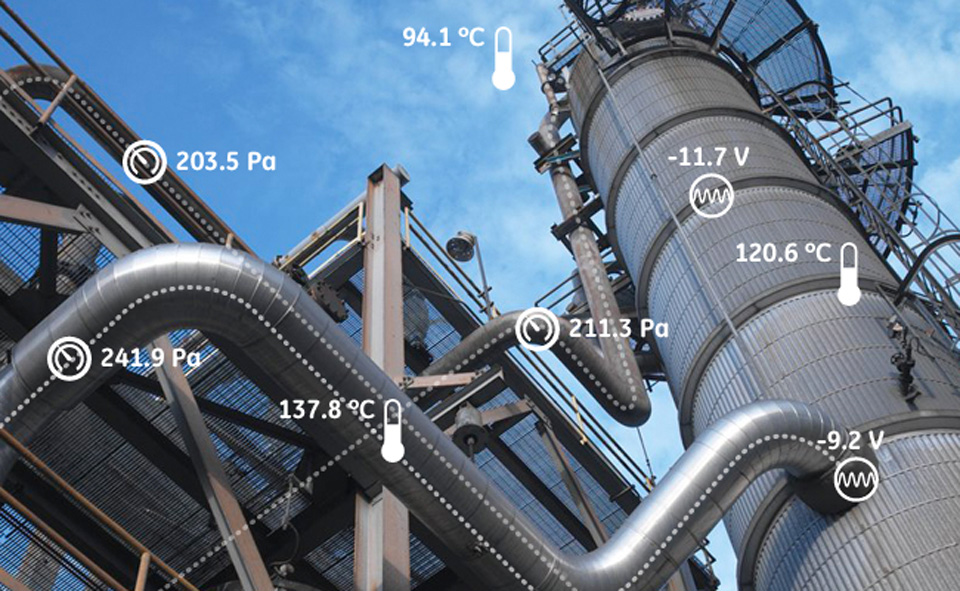
    One of the most profitable areas for many companies has been in fixing broken products, now the internet of everything promises to put an end to that business model.

    ‘Break-fix’ has always been a good profit earner with business ranging from construction companies to washing machine manufacturers making good money from fixing failed products.

    Speaking at a lunch in Sydney earlier today GE’s CEO of Global Growth and Operations, John Rice, described how the Internet of Everything is changing in the industrial landscape.

    One of the big business changes Rice sees is in the ‘break-fix’ model of many industrial suppliers.

    “We grew up in companies with a break fix mentality,” Rice says. “We sold you equipment and if it broke, you paid us more money to come and fix it.”

    “Your dilemma was our profit opportunity,” Rice pointed out. Now, he says engineering industry shares risks with their customers and the break-fix business is no longer the profit centre it was.

    Goodbye to the TV mechanic

    This is true in many other industries as products become both more reliable and less economical to repair – the local TV repairman has largely vanished and the backyard computer support businesses are going the same way.

    For many businesses, this means a change to how they service their customers and the nature of their operations. For many, it means close monitoring of their products will be essential to manage risk.

    Rice also flagged how grid computing will improve the reliability of equipment and networks citing how giant wind turbine talk to each other.

    “Every wind turbine has an anemometer on top that’s used to judge wind speed and direction,” says Rice. “If you had a problem with the anemometer the wind turbine shut down until someone could come out – maybe a week later – to climb to the top of the turbine, diagnose the problem and start the thing back up.”

    “Today the technology is such that the wind turbines talk to each other so if you’re in a wind field of thirty turbines you don’t rely on one anemometer,” points out Rice. “This is a very simple example of machine to machine interface.”

    Wind turbines and the road toll

    Rice’s example of wind turbines talking to each other is similar to Cisco’s scenario of using the internet of everything to reduce the road toll where cars communicate with road signs, traffic lights and each other to monitor conditions on the highway ahead.

    Those machines talking together also give early warnings of problems which reduces downtime and risk for industrial users, it also means less money for businesses who’ve made money from those problems.


    Similar posts:

    • No Related Posts
  • Fashion’s move to digital commerce

    Fashion’s move to digital commerce

    How does 3D design change the fashion industry? Susan Olivier of Dassault Systemes sees ‘digital commerce’ driving fundamental changes to fashion and retail businesses.

    For slower retailers and fashion houses, this move to digital commerce threatens their very existence.

    ‘Digital commerce’ is more than just e-commerce in the view of Olivier, Vice President of Consumer Goods and Retail of the French 3D design software house, it’s a bringing together of technologies that alter the relationship between customers, retailers and designers along with the manufacturing and logistics companies that bring the products to market.

    Retail’s two big challenges

    Olivier sees the two biggest challenges to the retail industry as being the 2009 downturn of the global economy and the rise of the connected consumer.

    The downturn forced manufacturers and retailers to examine their supply chains, product design and manufacturing to squeeze out inefficiencies along with understanding consumer sentiment better.

    Designing for inner beauty

    “They found they could work differently with suppliers, how do I design for cost?” Asks Olivier, “how do I work on designing for what we call for ‘inner beauty’ and maybe change the inner design to take out costs without hurting performance or visual performance?” Olivier asked.

    “Those brands who survived are those who learned to do both things very well – work better with consumers and work better with their supplier base.”

    Who has the power?

    “Consumers on the other hand found ‘we have the power’ coming out of the down global economy,” says Olivier. “When consumers buy on price then brand loyalty gets strained.”

    The connected consumer also adds further risks for retailers as customers are now better informed than ever before.

    “If retailers aren’t careful, she knows more about the product than the poor staff on the floor does and she knows which stores have it in inventory than the poor staff on the floor does.”

    Bringing together the digital continuum

    One of Olivier’s areas of expertise is in Product Lifecycle Management (PLM) – planning the design, manufacturing, marketing and retirement of various products.

    A notable feature of modern the modern consumer goods industry is the compressed life cycle of products, “it used to be a life cycle was 18 months,” says Olivier. “The goal was to get it below 12 months, for many brands it’s now 12 weeks.”

    A scenario Olivier gives is the design process where a rapid virtual prototype can be shared across manufacturers, store managers and focus group.

    “I can create models in 3D and look at different options,” says Olivier. “How’s the outsoul of this shoe going to perform with this upper? Is it comfortable if I make changes? I might send a sample to a 3D printer before I make the mould.”

    “I can share it with my visual display teams and my store managers and I can share it before I commit to production and get feedback from my stores and I can share it with my consumer focus groups. ”

    “Now I have the power to do that weeks or months in advance before having to put the knife to the goods.” States Olivier, “that’s a completely different way of connecting the way companies think about product, bring it to life and bring it to market.”

    “Those are the kinds of things we’re enabling when I talk about bringing together the different points of the digital continuum.”

    “Now I’m in store I want to take the same images to educate my sales staff. I want them to take a tablet device and show the consumer what is in inventory, not just in this store, and I can have it shipped to their home within 24 hours.”

    “So that’s why I’m saying ‘digital commerce’,” says Olivier. “It could be online, it could be a kiosk in the store, it could be an iPad the sales assistant has in front of them.”

    Susan Olivier’s digital commerce model is the present day reality of retail – today’s merchant has to be across consumers’ sentiment along with working closely with suppliers to get products to get products to the customer quickly. The old ways of selling goods, particularly fashion, are over.

    Similar posts:

    • No Related Posts
  • How form factors evolve as tech affects design

    How form factors evolve as tech affects design

    Technology often dictates design. As tech evolves, we can rethink the design of many things we take for granted.

    While out helping a friend shop for computers this morning, it occurred to me how the keyboards of laptop PCs have changed.

    For many years, notepad keyboards were restricted to roughly 80 characters as the 4 x 3 ratio of screens have dictated the dimensions of of the keys. Here’s an example.

     80-character-keybaord

    In recent times though the wider screen dimensions of laptops has seen the resurrection of an older layout — the 102 key layout with an added numerical pad.

     102-character-keyboard

    What’s interesting about this is how technology form factors evolve.

    Not so long ago mobile phone manufacturers were competing to create the smallest handset. Cellphones like the  Motorola Razr pushed the limit on how small phones could be.

    With the arrival of the smartphone, the size and shape of mobile phones changed. Now the limiting factor was a screen big enough to read the internet on and display a thirty key keyboard.

    Now reliable handwriting recognition software means that some phones can eliminate the use of keyboards at all, which means we may start to see the race to create smaller cellphones restarting.

    The layout of all of the items we use, from cars to computers, is largely determined by technology limitations. As the tech evolves, we can start to rethink how a device is designed, just as the laptop and iPhone designers did.

    With whole new display, input and sensing technologies being developed, there are many household items that may well look different in the near future.

    Similar posts:

  • Towards the social media enabled jet engine

    Towards the social media enabled jet engine

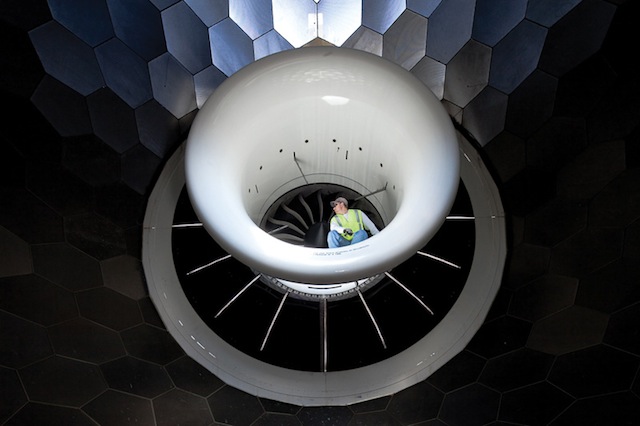
    “What if my jet engine could talk to me and what would it say?” Asked Beth Comstock, General Electric’s Chief Marketing Officer, at the Dreamforce 2012 conference.

    The idea of social media connected jet engine is strange, but the idea that a key piece of technology can talk to engineers, pilots, salespeople and management makes sense.

    At the Dreamforce conference, Salesforce.com were showing how their Chatter social communications tool can be applied to more than just salesteams, in GE’s case by giving their new GEnx engine the opportunity to talk to its support teams.

    In flight telemetry is nothing new to the aviation industry, ACARS – Aircraft Communications Addressing and Reporting Systems – have allowed airlines to monitor the performance of their aircraft over high frequency radio or satellite links during flight since 1978.

    The difference today is the sheer amount of data that can be collected and who it can be shared with. If relevant data is being shared with the right people it makes managing these complex systems far easier.

    More importantly, it helps teams collaborate. The GEnx engine is a new design that’s fitted to Boeing’s latest airlines including the troubled and late Dreamliner 787 so streamlining the design process of a new, high performance piece of technology pays dividends quickly.

    Although things can still go wrong – one wonders what the final tweet from this engine would have been.

    We’ve been talking for a long time about how social media and cloud computing services improve collaboration in a work place, the GEnx jet engine illustrates just how fundamental the changes these technologies are bringing to organisations.

    If an industrial jet engine can be using social media it begs the question why service based companies and workforces aren’t. It’s where the customers and staff are.

    These tools are radically changing the way we work right now – the question is are we, and the organisations we work for, prepared for these changes?

    Paul travelled to Dreamforce 2012 courtesy of Salesforce.com

    Similar posts:

  • Making business accessible

    Making business accessible

    Internet payments giant Paypal yesterday released a survey showing how businesses with a website grow faster than those without an online presence.

    There’s surprise to anyone paying attention that a business website is essential, but what happens if a business’ site isn’t accessible to those with impaired eyesight or a disability?

    We tend not to think about accessibility issues when building websites and that oversight might be hurting the effectiveness of our online marketing efforts.

    Access iQ was launched two weeks about by Media Access Australia, a not for profit organisation that works to improve disabled access to the media which was formed out of the sale of the Australian Caption Centre in 2005.

    Federal Disability Commissioner Graeme Innes pointed out at the Access iQ launch that accessibly makes life easier for everyone – making shopping centres and footpaths easier for wheelchairs to navigate also made those places more accessible for parents with prams, the elderly and able bodied people. Everybody, particularly the shopkeepers, won by making things easier for everybody.

    What’s true in the physical world has even more effect online, as the features which accessibility programs use are the same ones the all important search engines use when ranking websites.

    Titles, headings and metadata – the descriptions of the site, pages and images built into websites – are important as they let search engines and accessibility programs understand what a site is actually about.

    Getting your metadata right is a basic part of Search Engine Optimization and it’s key to having an accessible website as well.

    A good tool for checking how well metadata is being used on your website is the Australian diagnostic site BuiltWith, whose free service gives you a basic report on how a page is using SEO best practices.

    While how well a site uses headings and metadata is important, its also important that the site works properly. Problems with a website’s design make it run slower and can affect how it works in some browsers. So minimising design errors on a page matters as well.

    The best tool for checking a website’s underlying code is the W3C’s Markup Validation Service. This checks your site is complying with web standards and picks up an errors that might have crept into the design. Eliminating as many errors as possible means the site runs quicker while improving the SEO and accessiblity aspects.

    For checking accessiblity issues, the Web Accessibility Evaluation tool (WAVE), shows you where problems might lie in your site and steps through each part of a page highlighting potential issues.

    While a web site’s code isn’t something business managers and owners should spend a lot of time worrying about, the accessibility and SEO does matter so it’s good practice to use these tools to check how your site is performing.

    Once you’ve run these tests, sit down with your website developer and see where you can improve. The more accessible a web site is, the more it will help your customers.

    Similar posts: