Tag: distribution

  • When business models die

    When business models die

    To say the motor industry is facing disruption on multiple fronts is an understatement.

    A global glut of motor vehicles is depressing the world market, a range of emerging manufacturers from China and India are challenging incumbents and a new breed of electric, autonomous vehicles designed by tech companies are arriving on the market.

    To cap it all off, today’s young adults in western markets aren’t too interested in buying cars reversing the consumer attitudes which had made the motor industry among the world’s most powerful.

    Exacerbating the motor industry’s woes are its antiquated business models, particularly the dealership networks that lock both franchisees and manufacturers into expensive relationships that increase costs, reduce flexibility and do little to add value.

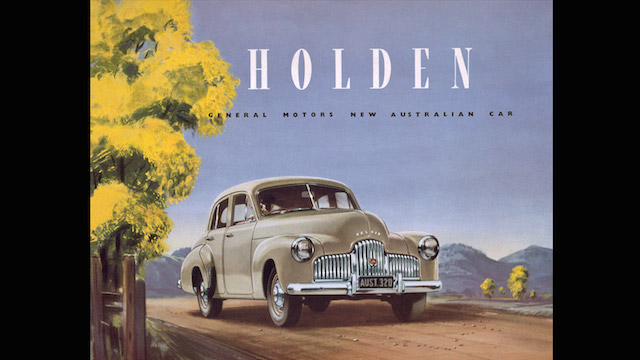
    The tale of Australia’s General Motors Holden is a good example, as sales stagnate and the company winds up its Australian manufacturing operations its rationalising its national dealer network.

    Unsurprisingly the dealers being axed are less than happy as Wheels Magazine reports.

    What’s notable about the story is the level of control the manufacturers have over their franchisees.

    Hoffman said Holden had even contacted him to say that once the contract expires, the car maker would send someone to take down $30,000 worth of signage. He will also lose the right to service Holden-badged cars under its capped-price servicing scheme – any cars he sells between now and the day the signs come down, he’s unlikely to see again when service time rolls around. Holden will also buy back any unsold new cars, parts and specialist tools.

    That absolute model of franchising had value when the manufacturers’ brands were strong and consumers were born into a ‘Ford’, ‘General Motors’ or ‘Chrysler’ family. Today, the brands are largely interchangeable outside the premium or luxury markets and attempting to lock-in customers is increasingly difficult.

    More telling is the inflexibility of pushing stock out to the dealers which may or may not get sold while centralising marketing. The resulting disconnect between consumers and supplier means increased costs and a slow response to changing market conditions.

    The motor industry was one of the defining businesses of the Twentieth Century, affordable motor cars changed every society and transformed the cultures of affluent nations.

    Now that influence is waning and it remains to be seen how today’s incumbent manufacturers will evolve, if they survive at all, in today’s very different society.

    One thing is for sure – the existing dealership structure won’t be around for much longer.

    Similar posts:

    • No Related Posts
  • Distribution is not the problem

    The web is too efficient at information distribution, which is the problem for newspapers whose business model was built out of the difficulty the working man and woman had in finding out what was happening in the world around them.

    In today’s society, there’s no excuse for not knowing what is going on. If you only choose to keep up to date with what the Kardashians are wearing, the weight of Olympic swimmers or who won last night’s reality TV extravaganza then you only have yourself to blame.

    The web’s efficiency means there’s no shortage of ‘stuff’ pouring into our lives – music writer Bob Lefetz puts it well when he says “Kids don’t have a short attention span, anybody who says that is completely ignorant. They’ve got an incredible shit detector”.

    Distribution is not the challenge, that bit is insanely easy. It’s delivering quality and getting the message about our products heard above the Internet’s constant buzz.

    As consumers, and more importantly as citizens, it’s up to us to filter that noise and not accept dross any more.

    Similar posts:

  • Creative Quandaries

    Creative Quandaries

    In February, musician, coder and uber-geek David Lowery gave a talk to the SF Music Tech Summit on the difficulties musicians have making money in the online economy.

    Meet the Old Boss, Worse Than The Last Boss is an excellent dissection of the economics of the music industry as it currently stands – and it doesn’t look good for artists.

    David shows how the old distribution model was more rewarding for artists than today’s digital model, the old fashioned record store has largely gone out of business and has been replaced with the iTunes where Apple receive half the income of the local shop but assumes no risk, few costs and a far greater profit margin.

    Similarly, the record labels’ costs and risks haven’t substantially changed but their income has plummeted.

    We’ve seen the controllers of the music distribution business replaced with a far smaller, and more profitable, group of digital gatekeepers.

    A  great line in David’s presentation is just how much money technology company executives are making compared to their record industry counterparts of the 1980s, without taking on the responsibilities for keeping the creative supply pipeline flowing.

    Record labels value content and content creators. Sure they kept a lot of money for their executives (although even mid 90?s music executive pay is dwarfed by tech executive pay.)  But record labels unlike tech companies, know they built  their businesses on those who create content.  Therefore when they were flush with cash they set out to buy the services of as many artists as they could.  This  had the effect of sharing the wealth with musicians.  It may have been uneven it may have been wasteful, it may have not touched every artists and the labels may have pocketed most of the revenue but at least they felt they needed to give something back to the content creators.  They knew artists created something of value.

    The key words in the above passage are “content creators” as the struggles of the music industry are similar to those of writers, photographers and anybody creating original works that can be digitized.

    Probably one of the most interesting aspects of this are that many of the digerati David criticises for their utopian views on technology are themselves marginalised, and often impoverished, by the same economics.

    David links to a number of Huffington Post articles examples, yet it’s Adrianna Huffington and her contemporaries like Chris Anderson who are aggregating paid writers work and turning most of us into digital sharecroppers.

    It’s the Lords of the Digital Manor who are making a return while the bulk of content creators struggles.

    Those digirati, like myself, are making just as poor a living from their work as David’s friends in the music industry.

    What’s clear is we have to find the methods of distributing music and other valuable creative works that benefit the artist or writer, the old models of the publishing, broadcasting and music industries did this – not always fairly, but at least creators were rewarded.

    Right now we’re in a world where information is free and a small group of gatekeepers are controlling what revenues are available.

    It’s unlikely that situation is sustainable and over time we’ll see new models develop to displace the current gatekeepers who may be part of the transition effect to a changed economy.

    The person who figures out the successful model will be the 21st Century’s Randolph Hearst – hopefully they’ll spread the wealth around a bit more than the current gatekeepers.

    Similar posts: