Tag: economy

  • Sydney’s Mayoral Tech Race – the Liberal’s Christine Forster

    Sydney’s Mayoral Tech Race – the Liberal’s Christine Forster

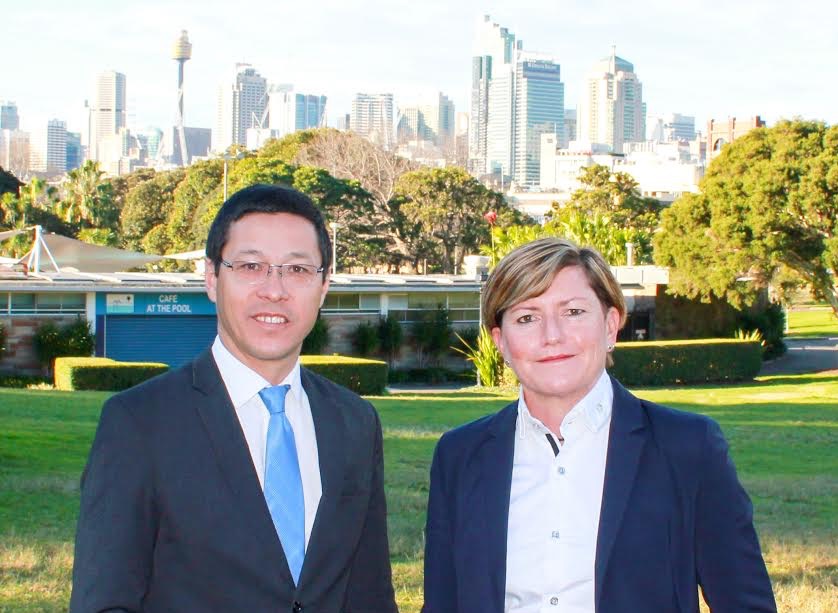
    Of all the contenders in the City of Sydney elections, the Liberal Party’s Christine Forster seems the candidate with the best chance of beating incumbent Clover Moore. For the city’s tech industry and startup communities, the Liberals have made a strong pitch.

    At the last council election in 2012, the Liberal Party’s Edward Mandla – who has since defected to the Sydney Matters group – was the second placed candidate with 16% of the popular vote after incumbent Clover Moore’s 51%. With the voting rules changed this year to allow business owners to vote alongside residents, Forster is expected to pick up a substantially bigger proportion of the poll

    Like Sydney Matters’ Angela Vithoulkas, Christine Forster sees Brisbane as being the example Sydney should be following in encouraging startups. In her detailed tech policy Forster laid out what is probably the most ambitious agenda of the major candidates.

    The Liberal policy paper points out Sydney is home to nearly two thirds of the Australian startup community but doesn’t rate well internationally. She proposes addressing that through establishing a Sydney Emerging Entrerpeneurs Program to provide support and small grants.

    Forster promises an incubator offering affordable office space based on ‘The Capital’ in Brisbane setting up a working hub to address the crippling commercial rental costs and establishing global ‘launching pads’ for local entrepreneurs in key overseas centres.

    “To help promote Sydney to US companies wanting to establish an outpost to expand into Asia, we will establish an office in San Francisco, and investigate further offices in Guangzhou and Singapore,” Councillor Forster is quoted in the policy’s media release as saying.

    Of the standard questions we asked the four major candidates, Cr Forster’s team answered them in bullet points;

    What are your policies relating to encouraging tech startups?

    • I will commit to Council providing affordable office space for start-ups
    • I plan to establish an Incubator, similar to The Capital’ in Brisbane
    • I will establish a ‘Sydney Emerging Entrepreneurs Program’ providing practical support and small grants to the city’s best emerging start-ups. (One of these already exists in Brisbane.)
    • Appoint a Digital Director for the City of Sydney
    • Set up a ‘City of Sydney Digi-Challenge’ to help solve local council issues though digital leadership
    • Have clear goals for digital policy achievement benchmarked against globally accepted measures.

    What do you see as Sydney’s strengths in this sector?

    • Sydney is Australia’s most visible global city. People and businesses want to come here to live and work.
    • Sydney is home to an educated, technically literate population and three world class universities.
    • Sydney already has a strongly entrepreneurial culture and outstanding local success stories – think of Atlassian and Freelancer.com.

    What are we not doing well at the moment?

    • Lord Mayor Clover Moore doesn’t intuitively see business as part of the community – she treats business as the enemy
    • Council has not embraced new technologies, it is not business-friendly and dealing with it is notoriously bureaucratic, expensive and time-consuming
    • Clover has mishandled opportunities for the community because she doesn’t understand what businesses need. One notable example is Council’s failure to secure an anchor tenant for its Oxford St properties
    • Business contributes around 80% of rates to the City of Sydney but the Council has not been living up to its own KPIs.

    What are we doing well?

    • Not a lot. We’re trading on our name and on the fact that Sydney is physically beautiful and well located.

    How do you see the City’s relations with state and Federal government affecting current efforts?

    • Any relationship needs to be more collegial than it has been. There are situations where I disagree with tech and innovation policies at the State and Federal levels but where these arise, I prefer to negotiate to achieve a solution. Clover has made much of “taking the fight up” to other levels of government – I don’t believe it’s a fight, it has to be a negotiation.

    Currently Victoria and Queensland are doing better at attracting businesses. Should we do anything to counter that and, if so, what?

    • I don’t believe we should think in adversarial terms – I want Australia to attract more business.
    • But that doesn’t mean Sydney has nothing to learn from Brisbane or Melbourne.
    • I want to set up a ‘Revive Oxford St’ taskforce bringing together residents, business, local and state government representatives to build a strategy – at the moment I’m thinking a QVB-style development in which we offer organisations with experience reviving retail precincts an opportunity to tender on how they could sensitively revive this important cultural precinct
    • I want to establish a dedicated office in our sister-city of San Francisco to promote Sydney’s potential as a stepping-stone for tech companies interested in expanding into Asia. The office will provide advice on establishing an office in Sydney.
    • I will also improve Council’s online services. I’ve got costings to show that with 10% of services moving to digital we could cut costs by $5-$10m p.a. That money could then be reallocated to community projects in each of the eight villages.

    How can Sydney compete globally against cities like Singapore, Shanghai and even Wellington?

    • By making it easier to do business for a start, but also improving the city’s amenity. One of my policies is a simple but important one – increase the number of bins and make recycling easier in public areas to get rubbish off the streets.
    • Facilitate the establishment of a ‘SydneyOne’ ticket that covers all local arts, culture and tourism destinations. If Singapore and London can do this – and make it available online – so can Sydney.
    • We are also investigating ways of delivering free Wi-Fi in public areas.

    How does your tech industry policy fit in with other key Sydney employment sectors like the creative industries, financial services and education?

    • I want it to cease to be a ‘poor relation’. Sydney has a global reputation in finance, the arts and education. Walk through Martin Place and look up; walk through Sydney University or UTS and look around you; go to the Opera House. These activities are so obvious as to be stereotypical. I want people to think of our tech sector in the same way. I want there to be 10 Freelancer.coms, not one.


    Christine Forster and the Liberal Party have an ambitious program to place Sydney as global centre and, given the Liberals also hold government at state and Federal level, their platform does hold the promise of improved relations between the city council and other layers of government.

    However the state government has been very slow in identifying the tech sector as being important to the regional economy and its focus on property development makes one wonder what the priorities would be if every level of government was dominated by the Liberals – the decision to sell the Australian Technology Park over the protests of the tech community speaks volumes on Macquarie Street’s attitude towards the sector.

    At the Federal level, the innovation agenda seems stalled and confused with little likelihood of any reforms to address the causes of Sydney’s high property prices being addressed or further changes to the tax system to encourage investment in new technologies and businesses.

    If anything, the declining fortunes of the Liberal Party at a state and Federal level may well damage Forster’s local campaign and detract from her message. The message though does flag an understanding at the local government level of the importance of the tech community to the city.

    Similar posts:

  • Sydney’s Mayoral Tech Race – Sydney Matters’ Angela Vithoulkas

    Sydney’s Mayoral Tech Race – Sydney Matters’ Angela Vithoulkas

    In the second of our series on the tech policies of the Lord Mayoral candidates for the upcoming City of Sydney elections, we look at the policies of the Sydney Matters team, the independent business focused group.

    Sydney Matters is led by Angela Vithoulkas, who’s operated a central Sydney coffee shop with her brother for 25 years. Angela, who is a friend of this writer, ran as a Lord Mayoral candidate in 2012 and won election as a councillor.

    Angela’s team includes the founder and editor of Startup Daily, Mat Beeche, as well as Edward Mandla who was elected to council as a Liberal candidate but defected from the party earlier this year.

    The Sydney Matters platform is the only one that has a specific tech policy which reflects both Angela’s and Mat’s backgrounds and interests in technology and how it affects the business sector.

    What are your policies relating to encouraging tech startups?

    As Lord Mayor I will work with Tech Sydney, Startup Aus, FinTech Australia and other key players. I would like to explore concepts like having a Chief Entrepreneur in Residence program at Town Hall – similar to what Advance Queensland recently announced.

    What do you see as Sydney’s strengths in this sector?

    “The People, in 2011 the startup scene we have in Sydney didn’t exist in the same way it does today – and it exists today because passionate people said I am going to change things.”

    What are we not doing well at the moment?

    “We are fragmented, we need closer connections – physical hubs where tech startups can collaborate, meet serendipitously, make it easier for them to do business with each other – proximity can be helped by the city looking at smarter real estate opportunities for the tech sector.”

    What is Sydney doing well? 

    The City of Sydney’s Tech StartUps action plan is a step in the right direction but we need to build on this and work in collaboration with other levels of Government to drive our tech startup industry forward.”

    How do you see the City’s relations with state and Federal government affecting current efforts? 

    “To make inroads we all need to be on the same page and collaborating for the interest of the sector.”

    Currently Victoria and Queensland are doing better at attracting businesses. Should we do anything to counter that and, if so, what?

    “When I sat down with Mat Beeche who is on my ticket and asked that very same question, I was surprised by his answer – The stats show that NSW is actually performing a lot better than the media would have you believe.

    “Sydney has attracted some huge tech companies to Sydney including data and analytics startup Qualtrics, valued at $1 billion that chose Sydney for its APAC operations.

    “Fintech startup Acorns is in Sydney, HealthTech startup ClassPass is in Sydney, Dropbox chose Sydney, Market Research startup SurveyMonkey chose Sydney and most recently Social Media Snapchat chose Sydney to set up their sales operations office for the region.

    “Our problem is that we perhaps are not being as vocal about the achievements of the NSW government who put in a lot of hard work behind the scenes to have these organisations choose our city as their destination of choice for expansion.

    “What the City of Sydney needs to do is work closer with Macquarie street from a PR and Media perspective to change this perception.”

    How can Sydney compete globally against cities like Singapore, Shanghai and even Wellington?

    “By being more proactive and being an exemplar – Wellington does a great job of that.”

    How does your tech industry policy fit in with other key Sydney employment sectors like the creative industries, financial services and education?

    “Tech Startups sit across all industries including creative industries, financial services and education – so our policy is about them as well.”

    Of the four candidates we interviewed, the Sydney Matters team probably has the most comprehensive tech strategy. It’s notable how they’ve paid attention to what other Australian cities – particularly Brisbane – have been cultivating their startup and tech communities.

    Councillor Vithoulkas’ point about Sydney not marketing itself well is a fair point and that probably reflects more on the cultural differences between the harbour city and its interstate counterparts where Sydneysiders are far less likely to be cheerleaders for their cities than their Melbourne or Brisbane counterparts.

    In many ways their strategy is not greatly different from existing council policy which in some ways is probably good for continuity for the business community.

    Similar posts:

  • Huawei’s attempt to shape the cloud

    Huawei’s attempt to shape the cloud

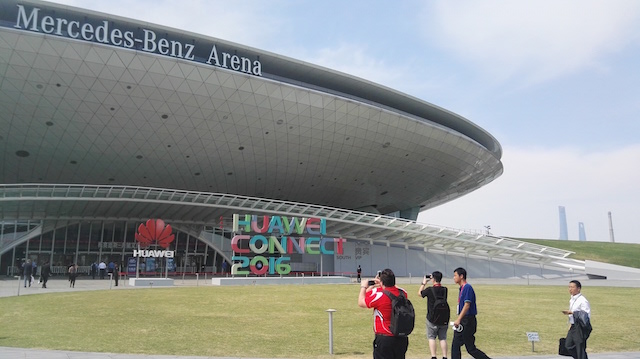
    For the last two days Chinese network equipment vendor Huawei has been holding its first Huawei connect conference in Shanghai.

    There’s alway plenty to announce at these conferences and Huawei had consultancy partnerships with both Accenture and Infosys, their IoT strategy and their big push into cloud computing.

    Ken Hu, the company’s current CEO, even had a new word – cloudification – to describe how business processes are going onto the cloud. Although during the segment on their relationship with SAP, the Huawei executives were at pains to emphasise that in their view most enterprises are a long way from going to a public cloud and will be hosting their own services for some time yet.

    Despite the clumsy buzzwords, Huawei does have an interesting selling point in the market with its tie up with telcos giving it both a strong sales channel and a unique selling point. How well they execute with telecommunications companies that are notoriously poor at selling these services remains to be seen.

    Huawei’s internet of things services are a similar proposition. Being close to the carriers means the company is well positioned to compete in the market, particularly in M2M applications, but again that closeness to telcos could be a hindrance.

    The big message from Huawei Connect is that Chinese companies are genuine competitors to European and North American companies like Ericsson and Cisco, something illustrated on Tuesday when Tencent previewed their new head office in Shenzhen that will act as a live R&D lab for their IoT offerings.

    Overall Huawei Connect was a good example of the Chinese government’s efforts to shift the nation’s economy up the value chain.

    Similar posts:

  • The moment Australia’s innovation dreams died

    The moment Australia’s innovation dreams died

    It started so well but has ended in a whimper. I’ve just filed a story for Diginomica on how Australian’s Innovation Agenda died, strangled by the nation’s complacency.

    While writing it, I found the moment Prime Minister Malcolm Turnbull’s credibility evaporated. At a media stunt in suburban Sydney, Turnbull and his treasurer Scott Morrison visited the Mignacca family who own two speculative properties and had just bought another for their one year old daughter.

    That stunt illustrated everything that is wrong about modern Australia’s investment and taxation policies. The Mignacca’s could be improving their skills and education, they could be setting up a business to provide the jobs and growth that was the cornerstone of Turnbull’s re-election campaign or they could be developing innovative new products for their industries.

    Instead they are speculating on property – and borrowing heavily to do it.

    The Mignacca’s are doing nothing wrong and are responding rationally to the incentives in Australia’s tax system as well as doing exactly what their peer and parents did, speculating on property to secure their retirement.

    Not that this strategy is without risk, like 85% of the Australian workforce both of the Mignacca’s jobs are in domestically facing service industries and in the face of an economic downturn the young couple could find their properties falling in price at the very time they can’t afford to keep them.

    In ditching the Innovation Statement and adopting the comfortable rhetoric of his predecessors, Turnbull betrayed the Mignaccas, Australia’s economy and his own stated view about the nation’s property addiction.

    Moreover, he killed any credibility he had in being able to recast Australia’s economic future.

    One suspects history won’t be kind on Malcolm Turnbull and the day he travelled to the Mignacca’s home will go down as the moment he lost the future.

    Similar posts:

  • Keynote speaking and presentations

    Keynote speaking and presentations

    How is your business or community adapting to radically changing marketplaces and society?

    Speaker, writer and broadcaster Paul Wallbank has been at the forefront of helping businesses and communities find opportunities in this rapidly changing era for twenty years.

    Paul’s presentations are lively, interactive and designed to both entertain and challenge audiences looking at how their companies, industries and communities are going to prosper in the connected century.

    Some of the areas Paul covers are the workplace of the future, employment in the age of robots, how the internet of machines is changing markets and what technologies like cloud computing, social media and Big Data mean to your business.

    All keynotes, presentations and workshops can be customised to suit your unique needs. Topics include;

    Future Proofing your business
    Decoding the new economy
    Leadership in a digital era
    Tools for the new economy
    Why Broadband Matters
    The Future of Business

    You can view many of Paul’s presentations at his Slideshare site.

    Previous presentations have included;

    The future office. What will the office of the future look like?
    Web 4 Free. Doing business on the web with a shoestring budget.
    The elder guru; exploding the myths of the digital divide.
    The top ten solutions for getting the most from small business IT
    What does it all mean? cutting through computer jargon.

    All presentations are available as keynotes or workshops and Paul will tailor the content to suit your organisation’s or industry’s unique characteristics.

    Paul connects the dots to show how your industry, business and family are being affected by changing trends in technology, economics and global demographics.

    In explaining trends and technologies such as the internet of everything, cloud computing, social networking and broadband technologies, Paul deciphers the jargon and helps audiences identify opportunities and understand the risks in the new economy.

    If you’d like to find how your business or community group can get more from their technology contact Paul for more information.

    Similar posts: