Tag: economy

  • Building a digital economy

    Building a digital economy

    Yesterday the NSW Government hosted the Sydney leg of their Digital Economy Industry Action Plan forum meetings.

    The aim of the action plan, one of a series for targeted industries, is to develop “a vision and strategy for the Digital Economy over the next decade in NSW.”

    So how do we build a “digital economy industry” in a country that seems to be hell bent on staking everything on China’s continuing demand for coal and iron ore?

    Picking winners

    One of the things implicit in forums and plans like this is that the government has identified the ‘digital economy’ as a priority for economic development.

    To help identify the opportunities the New South Wales plan breaks the sector into various industries;

    • Digital content and applications
    • Information services and analytics
    • Smart networks and intelligent technologies
    • Autonomous systems
    • E-research
    • ICT service innovation
    • ICT biomedical innovation
    • ICT safety and security innovation
    • Locally developed technologies and applications

    The underlying assumption is the state has some sort of natural advantage in these areas or the potential to develop into a leader.

    If these are the foundations of a region’s digital industries then we have to understand how they were identified as it’s difficult to build an industry if we don’t know what we can do.

    The role of government

    An important question is the role of government, an unfortunate thing with bureaucrats and politicians is they sometimes over estimate the influence they have on industry and the economy in general.

    In NSW the state government’s role is going to be at best marginal, they can establish policies and offer financial incentives but business needs access to essential skills, finance and infrastructure.

    Walking the talk

    It’s all very well for governments to proclaim they support local businesses but if they prefer to buy from multinationals – even if the big boys are more expensive and have a less than stellar delivery record – then the domestic industry cannot thrive.

    To be fair to governments, this reluctance to buy from local suppliers is shared by Australian corporations and on its own is probably one of the biggest obstacles for innovative companies and entrepreneurs to thrive in Australia.

    Until this attitude changes among governments and corporations, it’s  difficult to see how local businesses can develop and survive.

    Open data

    For the digital industries, open data is probably the most important aspects. Unfortunately the current generation of Australian public servants, managers and politicians share an almost Stalinist view about access to taxpayer owned information.

    Without making public data accessible so entrepreneurs can develop new applications and existing industries can improve productivity, governments are only giving lip service to building a digital economy.

    A good example of this is the expressed desire of successive state and Federal governments to build Sydney as a global financial centre.

    To do this, free and open investment information is essential yet company and stock exchange data that is assumed to be public information in the United States and much of Europe or Asia is propitiatory and locked away behind paywalls.

    Government and corporate obsessions with controlling information makes it unlikely any Australian state or city can be global centre in the digital economy or the banking sector which the NSW government sees as an other priority sector.

    Consistent standards

    Another area governments can improve is by having open standards across government agencies so, for instance, land information can be properly matched with health data or public transport details.

    Right now policies on data and things like social media or content platforms is fragmented making the cost of government and doing business more expensive and convoluted than it should be.

    Promote advantages

    One of the weaknesses in Australia’s overseas marketing is the nation is portrayed as a bunch of alcohol swilling beach bums cuddling koalas.

    Google Maps founder Lars Rasmussen once said Google’s head office reaction when he suggested establishing a development office in Sydney was “what are you doing to do? Sit on Bondi Beach and drink Fosters?”

    A missed opportunity in Australia’s disjointed tourism and investment campaigns is ignoring the nation’s diverse ethnic and skills base. We need more emphasis on the multilingual skills of the state’s workers and less on bikini babes.

    Capital Problems

    Whenever a group like the forums gather, there’s always complaints about Australian business’ access to capital.

    Australia’s taxation, finance and social security system favours speculation on the share and property markets rather than long term investments or taking risks on new business ideas.

    Three generations of these policies have a created a population who, understandably, see owning property as the safest way to provide for retirement. The banking system has responded to this and is reluctant to lend for anything not secured by real estate assets.

    At the same time we’ve allowed the compulsory superannuation system to be dominated by flaccid ticket clippers who are content to charge working Australians outrageous fees for hugging the stock indexes.

    Sadly what should have been a source of capital for innovative businesses largely spends its time lobbying governments for more protection and a bigger cut of workers’ incomes.

    The access to capital is a serious problem for Australian business and one that can’t be kicked up the road for ever by Liberal or Labor Federal governments but it isn’t something the states can fix.

    Not only do the distorted investment priorities of Australian society damage developing industries, it almost certainly guarantees the dream of making Sydney a global financial centre unattainable.

    Education

    One of the canards that always pops up at industry development forums is that educators aren’t in touch with employers’ needs.

    There’s a certain type of business manager or owner who believes the roles of schools, technical colleges and universities is a sausage machine popping out perfectly formed young workers who can pick up a spanner, hair clippers or a copy of Photoshop and start productive work straight after being shown where the tea room is.

    Those business owners are deluded.

    None of that’s to say educators shouldn’t be adapting to their times as well as being open and transparent but the idea that the role of schools is to equip kids with the skills we need today would see them unprepared for next decade’s economy.

    Equally however, Australia’s universities and training colleges have been encouraged to offer third rate courses to overseas students attracted by the prospect of getting permanent residence in the country. That bums on seats model had hurt the quality of the nation’s education sector and the skill levels of graduates.

    Attitudes

    The most essential part of building any nation’s industry is the attitude of people – if the prevailing view is it’s too hard, or threatens established interests then it won’t happen.

    Probably the best advantage New South Wales, and all of Australia have, is a comparatively young, diverse and outward looking population.

    The best thing the government can do in trying to build new sectors, be they in the digital economy or anywhere else, is to fix what they can such as procurement, open data or taxation and get out of the way.

    A constant dreams of governments is to build the next Silicon Valley, just as it once was to build the next Detroit or Birmingham.

    The era of the big engineering works passed, at least in the Western world, and the age of venture capital driven social media platforms will probably be over soon as well.

    Aping someone else’s success – while ignoring the historical factors and accidents that created it  – seems a guaranteed way to disappointment.

    The best part to build a digital economy, or any thriving society, is to encourage the risk takers and the inventors. Bring them together, let them loose and you build the next economic powerhouse.


    Similar posts:

  • Irrelevance and the media

    Irrelevance and the media

    It’s a shame we weren’t around when dinosaurs became extinct. Then again, maybe we are.

    News Limited business commentator Terry McCrann writes about the “Bleakest of views from the shopfronts” in his Sunday column describing the problems of retail.

    All of the problems Terry cited are from big retailers – Woolworths, Dick Smith, Harvey Norman and JB HiFi. To make it clear he was talking about corporate issues there’s even a reference to General Motors.

    Nowhere does Terry talk about smaller businesses or those challenging the big guys, folk like Ruslan Kogan or the Catch of the Day team. It’s all about the big end of town.

    Terry’s article illustrates the problem of relying on incumbent mainstream media commentary; that it is Big Media talking about Big Business and Big Government.

    “Small”, “ordinary” or “average” has no place in their conversation, if you can call the pronouncement of mainstream media commentators a conversation at all.

    We can understand this – for a journalist, it’s good for the ego and career to look like a “heavy hitter” in big business. For the politician, small business and community groups can’t pay the speaking and consulting fees paid by corporations to supplement their meagre retirement benefits.

    Increasingly what happens in the corporate board rooms or the once smoke filled rooms of political caucuses is out of touch with the real world.

    This has become particularly acute since the responses to the 2008 crash proved to the management classes that their bonuses and perks will be protected by government bailouts regardless of how many billions of shareholder wealth they manage to destroy.

    In the United States we see this in political controversies being focused on contraception – an issue settled forty years ago – while the country faces fundamental challenges to its economic base and the basic welfare of its citizens and industries.

    While in Australia the media ‘insiders’ rabbit on about pointless internal party politics and soothing articles on how everything else is fine, we just need to be more optimistic. Yet the real questions about how we take advantage of the country’s greatest export boom, position the economy for the next 50 years and the nation’s dependence on the Chinese economy are being ignored.

    Terry McCrann’s story is emblematic of just how out of touch Big Media, and their friends in Big Business and Big Government, are with the real world.

    All we can do is let them get on with it and not take them too seriously.

    Similar posts:

  • Competing in a high cost world

    Competing in a high cost world

    It’s often said that Australian businesses can’t compete and the nation can no longer can support manufacturing or high tech industries.

    With the high Australian dollar, many economists, business leaders and politicians have said industries have to adapt to being an expensive economy. Interestingly, few of these experts explain how businesses should, or can, adapt.

    At the recent Kickstart forum I had the opportunity to meet two Australian companies succeeding with high tech products and using the high dollar to their advantage.

    David Jackman of Pronto Software, a thirty year old business intelligence company, is proud of the fact the business he leads does most of its development in Australia. As business owned by it’s employees – Pronto had  an employee buy out in the late 1990s – he sees his role as building the business to last centuries like some European businesses.

    Linus Chang developed his Melbourne based business, Backup Assist, when he discovered the data backup tools built into Microsoft Windows weren’t very good. Taking the basic Microsoft products, he added the features that made these tools usuable at a fraction of the cost of bigger companies’ data backup software.

    Today Backup Assist is sold in 124 countries with the US as the biggest market.

    Both Backup Assist and Pronto find keeping the bulk of the software development in house in Australia makes sure they are producing high quality, effective products.

    Software development isn’t the only sector dealing with the high cost evironment, David Jackman says Pronto has many customers in the Australian manufacturing industry who have adapted to a high cost environment with niche and high value added products.

    Identifying these opportunities is where the challenge lies; what do our businesses do well that customers in international markets are prepared to pay for?

    We also have an advantage in being a relatively open economy with first world standards. This is another reason why investment in new infrastructure like the National Broadband Network is important.

    One thing is for sure, selling low priced commodity products with small margins is not where the future lies, even if the Aussie dollar collapses.

    We have success stories and businesses adapting to being a high cost economy, it’s a matter of understanding how our industries can add value while  do this.

    Similar posts:

  • Is the problem in the cockpit?

    Is the problem in the cockpit?

    In the Daily Reckoning newsletter editor Callum Newman uses Malcolm Gladwell’s description of power relationships to draw a parallel between Korean pilots crashing planes into mountains and the economy, pointing out our politicians are like distracted, doomed aviators ignoring the obvious features they about to collide with.

    Is that fair though? In a plane the passengers are strapped in their seats and have to take their the pilots in trust, in real life we have control — all of our actions affect the vehicle that is our economy.

    Unlike a plane we can jump out and do our own thing, we can refuse to buy one good or service and we can set up a business for ourselves when we see a market that isn’t being serviced.

    Where the analogy does work though is our politicians – and many business leaders – aren’t paying attention to major demographic and economic shifts.

    The question is “why?” Most of these people aren’t stupid and they have access to better information than most of us, which is one of the reasons they are in power.

    Perhaps it’s because we don’t want to hear the truth; that our assumptions about what the state will provide and how our economy is developing are flawed.

    In many ways, particularly in a modern Western democracy, our politician are mirrors of ourselves. They tell is what they think we’d like to hear.

    The problem isn’t in the cockpit, it’s back at the boarding gate where we’re more worried whether we’ll get a packet of nuts than whether we should agree to embark on a rough journey to a destination we don’t expect.

    Similar posts:

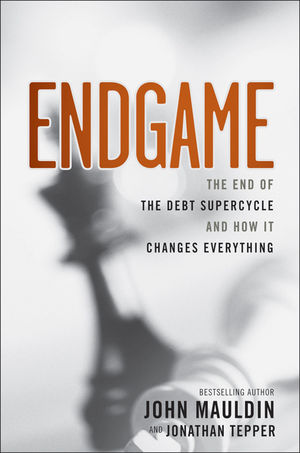
  • Book review: Endgame by John Mauldin

    Book review: Endgame by John Mauldin

    “There are no good choices – only bad ones” could sum up John Mauldin and Jonathan Tepper’s Endgame which looks at how our economies will evolve the end of the late 20th Century debt “supercycle” that has driven the world economy for the last fifty years.

    Endgame examines the choices that confront governments, societies, businesses and investors as the world economy adapts to the realities of the West’s aging populations and excessive debt levels.

    Much of Endgame relies on This Time Is Different by Carmen Reinhart and Kenneth Rogoff which the examined eight centuries of financial crises. While Reinhart’s and Rogoff’s conclusions are that speculative bubbles driven by debt almost always result in a banking crisis and painful economic restructure, each episode does have unique characteristics.

    In each case governments have three basic choices; reforming spending which is rare and maybe impossible given the debt levels in many nations, inflating debts away as Western governments have done since WWII or through outright defaults which have been associated with less developed nations.

    As we see with the convulsions the European Union is currently going through and the massive support given to banks around the world since the 2008 banking crisis, the default option is the one which governments will avoid at all costs.

    While the bulk of the book concentrates on the US, John does dedicate several chapters to the how the debt endgame will play out in other nations including Japan –“a bug in search of a windshield” – the UK, Eastern Europe and Australia, where he finds a massive property bubble that he believes could be the most spectacular endgame scenario of all.

    The clear lesson from Endgame is the post World War II social compact of working taxpayers supporting the aged, the sick and unemployed is over and was only propped up the illusion of wealth generated by loose credit and financial engineering throughout the 1980s, 90s and early 2000s.

    Some are hoping the Chinese economy can provide the global demand that was provided by US consumers. While Endgame doesn’t specifically look at this aspect, it’s unlikely China’s economy can do this.

    With consumers and governments now exhausted by debt and at the limits of what they can spend, the assumptions that have driven the economy along with our investment and consumption patterns of the last fifty years no hold true.

    Endgame is primarily a book for investors and John Mauldin’s emphasis is on where the safest investments will be in at the end of the debt supercycle. His view is it depends on whether governments choose to eliminate their national debts through deflation or inflation.

    For business owners, wage earners and retirees this is an important question too and Endgame describes what the consequences for everyone are under either scenario.

    The message of Endgame isn’t overwhelming negative; John Mauldin also looks at where the opportunities will lie after the credit endgame plays out. “We don’t know where the jobs will come from, but they will come” is another theme of the book.

    Whether you’re an investor or a business affected by the changing economy or building those businesses of the future, this is an important book for understanding the changing economic world in which we live.

    Similar posts: