Tag: education

  • Disrupting the education ripoff

    Disrupting the education ripoff

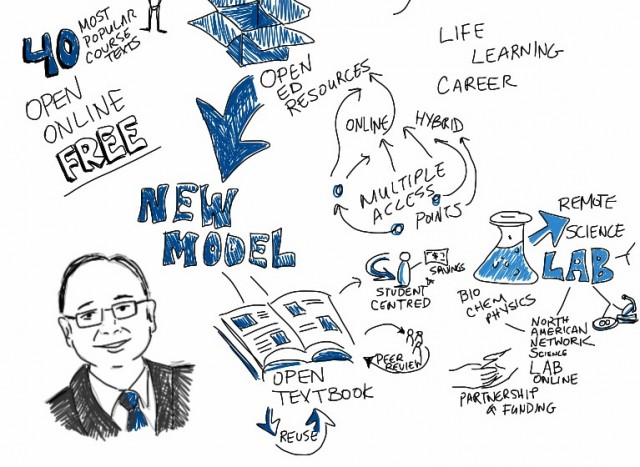
    British Columbia’s government has announced they are going to make most undergraduate textbooks free online or printed at low cost as part of their BC Campus program.

    One of the first lessons for university students is that they are going to be robbed at the campus bookshop – text books are one of the greatest rorts on the planet.

    This scam takes several forms with faculties stipulating the latest editions as course material through to individual professors having a nice little earner in demanding their, often poorly written and out-of-date, textbooks being essential reading for any unfortunate student taking their classes.

    Naturally all of these books are sold at eye wateringly high prices far in excess of what equivalent texts are selling for outside the university bookshop.

    Given all of this it’s no coincidence that the publishers who specialise in academic texts have been the least affected by the online models that have undermined the business models of the mainstream book sellers.

    Over the years there’s been a range of business ideas to setup exchanges to circumvent this legally sanctioned extortion racket and most have failed as the universities and faculty members have protected their cash cows with various tricks to prevent students from buying reasonably priced textbooks.

    That British Columbia’s government now sees that this is a barrier for cash strapped and debt ridden students is an encouraging sign and one that recognises the 1990s model of treating students – particularly international students – as easy money is over.

    For the Canadian and Australian education sectors which had come to depend upon an expensive “bums on seat” model of financing their faculties, the waves of change and competition is now threatening them.

    Probably the biggest threat to this model is from the top tier universities offering courses online. This is radically changing higher education as it’s making it easier for poorer people to access the best institutions.

    For the second rate institutions, this means they have to be providing real value for the fees they charge. A certificate purporting to be a degree is not going to be good enough.

    While it’s too early to call the end of the textbook ripoff – people don’t let juicy little rorts go easily – its days are numbered. Although we may find the old scams replaced by something DRM related.

    Image from Visual Notes of Honourable John Yap’s announcement at #opened12 / Giulia Forsythe / CC BY-NC-SA

    Similar posts:

  • Risk free fallacies

    Risk free fallacies

    One of the conceits of the late Twentieth Century was that we can engineer risk out of our lives.

    Derivatives like Collateral Debt Obligations were thought to overcome financial risks, think contracts would eliminate business risks and wise central banks would massage the economic cycle to banish the risks of economic crises.

    In schoolyards, the kids are banned from doing cartwheels and playing ball games – in response to a recent edict prohibiting physical activity at a local school an education department spokesman said the ban was to prevent, and not in response to, playground injuries.

    So nothing’s happened to provoke a ban, just someone decided there was risk and the first reaction is to eliminate it rather than manage it.

    In a litigious society where a culture of blame has developed this reaction is understandable. If a kid gets hurt in the playground then the parents might blame the teacher and one should be under no illusion that in the NSW state education system, the industrial concerns of teachers will always trump the welfare of students.

    So the cartwheels must stop.

    The strange thing with our culture of blame is that when something goes seriously wrong, such as the implosion of the banking system due to greed and misunderstanding of risk, no-one is held responsible.

    For lawyers, this culture is understandable. After all, their job is to warn clients of legal risks and it’s true that every time we walk down the street or jump in our car we might make a mistake that could see us in court.

    But we learn to manage that risk and we accept the odds every time we choose to drive down to the supermarket.

    The danger in believing we can eliminate risk is that removing one element of risk often results in unexpected consequences – they are even more unexpected when you don’t understand the risks in the first place. CDOs and the shadow banking system are a good example of this.

    Government seek to pass laws eliminating risks and in doing so create new risks, particularly when the Acts they pass are poorly written and badly thought out.

    There is always the question of what risk we are addressing – in the modern corporatist political system, the PR risk to a government always takes priority over a real risk to citizens. Passing a law to protect the minister’s backside might make life more risky for others.

    As helicopter parents, always hovering over our children and blaming teachers, schools, neighbours and other parents when something goes wrong, we’re creating a whole set of risks we don’t understand.

    For politicians, managers and leaders their main responsibility is to manage risk, not pretend it’s been eliminated by the latest memo, law or silly schoolyard ban.

    Similar posts:

  • Transparent falsehoods

    Transparent falsehoods

    Transparency, openness, innovation and entrepreneurialism are all popular buzzwords, but do organisations really value these attributes?

    At a cloud computing conference this week I sat in on an innovation presentation. Almost everyone in the room was wearing a dark suit.

    Despite their dress, most of those folk desperately wanted to be ‘innovative’ and almost all of them worked in organisations that would really benefit with a dash of genuine creative thinking.

    I thought of that conference when reading of the attempted shutting down of a primary school student’s food blog by her local education authority.

    The saga of the Never Seconds food blog illustrated the classic responses of managers when faced with something they can’t control – shut it down on whatever grounds you can find.

    In the case of Never Seconds it was because the food service staff feared they would lose their jobs. Bless the council for caring so much about their staff.

    As always in these situations, it was an opportunity missed to promote the school district and improve the services they provide.

    Never Seconds is also a great place where other school students shared their school lunches. It is a great idea to promote healthy eating for kids.

    Thankfully the Argyll and Bute Council relented on their ban and the Never Seconds blog is back for lunch.

    Educators around the world talk about promoting children’s curiosity and creativity yet when a child expresses them in a way that threatens staff or bureaucrat power, they are quickly slapped down.

    The same happens in the workplace, most organisations will treat truly innovative and original thinkers like the naughty children they probably were.

    For too many organisations – businesses, political parties and even schools – words like innovation, creativity, openness and transparency are just empty buzzwords.

    Similar posts:

  • The real digital divide

    The real digital divide

    The real digital divide isn’t between the young and the old; it’s between those who are prepared to explore new technologies and those who hide from change.

    We’re often told that there’s a divide between the “digital natives”, those who grown up with computers, and the “digital immigrants”, those who’ve had to learn about computers.

    In reality this isn’t true, the real digital divide is about being prepared to learn and explore the possibilities being opened up every day by the Internet and computers.

    I was reminded of this shortly before Christmas when talking to a group of forty year old business owners who dismissed Internet tools like Twitter and LinkedIn out of hand – “a waste of time” “just for kids” and “I tried and received Chinese spam” being a few of the objections.

    The contrast is the Australian Seniors Computer Clubs Association who prove you’re only as young as the computers you tinker with. These seniors, some of whom were retired well before computers became commonplace, are prepared to explore and discover possibilities that change their lives and the lives those around them.

    The forty somethings all had successful businesses and they were the first to admit mobile phones, email and websites had changed the way they work. Yet nearly half of them didn’t have a website for their own business; a statistic consistent with business surveys that find almost 50% of small enterprises don’t have a website.

    In many respects these businesses and their owners are reminiscent of the handloom weavers of the early 19th Century. At first technology worked in their favour and pushed wages up but as industrialisation continued they found their skills redundant and incomes falling. Eventually their trades and businesses disappeared; which is what will happen to complacent companies and industries in today’s industrial revolution.

    A similar thing is happening to society and individuals. While you won’t disappear if you aren’t using the net, those who won’t will find it harder to do pay bills, communicate and simply get things done. Eventually they’ll find themselves marginalised as not being connected will make it harder for family and friends to keep in touch.

    All of this is unnecessary, it’s just a matter of being prepared to try and to give something a go. The real digital divide is between those who choose to give things a go and those who don’t.

    Similar posts: