Tag: future

  • Industries of the future on display

    Industries of the future on display

    One of the challenges we face in looking at the economy’s future is going lies in identifying what tomorrow’s industries will be.

    I’ve spent the day at the 500Startups pitch day at the Computer History Museum in the heart of Silicon Valley listening to the startups on the program making their investment spiels and in many ways those businesses are a glimpse of the future economy.

    While not all of these businesses will survive, and many will pivot over time, they do indicate directions the economy is taking.

    The question though is what sectors will drive jobs growth over the next quarter century and whether those industries will pay enough for workers and their families to survive, let alone keep a consumerist economy ticking along.

    Similar posts:

  • Google bets on artificial intelligence

    Google bets on artificial intelligence

    Breaking with the company’s tradition of the Sergi, Google’s CEO Sundar Pichai writes this year’s founders letter laying out how the search engine giant is focusing of artificial intelligence and the machine learning.

    Pichai’s view of the world seems to tie in very closely with founders Larry Page and Sergei Brin with him laying out a vision of making the internet and computers accessible to all.

    The challenge for Google is the shift away from personal computers, something that the company is struggling with and a factor that Pichai acknowledges.

    Today’s proliferation of “screens” goes well beyond phones, desktops, and tablets. Already, there are exciting developments as screens extend to your car, like Android Auto, or your wrist, like Android Wear. Virtual reality is also showing incredible promise—Google Cardboard has introduced more than 5 million people to the incredible, immersive and educational possibilities of VR.

    Whether Google can execute on that vision and manages to diversify its revenues away from depending almost exclusively upon web advertising will be what defines Pichai’s time as the company’s CEO. He has a challenging task ahead.

    Similar posts:

    • No Related Posts
  • Government in a digital era

    Government in a digital era

    Governments are struggling with the new channels of communication and the structures that will manage our societies are far from certain.

    Last night the University of New South Wales’ School of Computer Science and Engineering in Sydney held a panel discussion about Digital citizens and the future of government. The group looked at how the open government movement is progressing and how public servants and politicians are dealing with a data driven world.

    The panel featured Dominic Campbell, the founder of the UK’s FutureGov who are currently advising the Australian Digital Transformation office; Penny Webb-Smart, the Executive Director of Service Reform for the NSW Government’s clumsily named Department of Finance, Services and Innovation and Amelia Loye, a social scientist who worked on Australia’s first Action Plan for Open Government.

    Centralising decision making

    One key question for the panel was how governments use data which gives rise to two views. The prevalent view is information systems tend to centralise power – something that has been a feature of the last two centuries – while access to information is a democratising forces that hands control back to individuals and local communities.

    Amelia made the point in some respects we’re already at the point where individuals can take control, “the tools for participatory government are already available, we have to start looking at – and talking about – how to use them,” she said.

    That conversation certainly isn’t happening at the moment despite the odd blurting of fine words from ministers and public servants and while in some areas government data is being freed up, in others it’s increasingly being hoarded for political purposes or due to ill thought out privatisations.

    Commercial in confidence

    Private sector data is another problem for the open data movement as many of the functions carried out by governments are outsourced to companies which generally reluctant to share information with the public. This leaves communities with an incomplete picture of the data affecting them.

    The main unanswered question in the discussion was the relationship between local and central governments, the panel’s consensus was central government would become more dominant and in the Australian context the states would become irrelevant. This however may not be true.

    Centralised government is by no means a given, as the prevailing corporatist ideologies of Western governments strive to cut services it’s likely communities are going to increasingly find ways of delivering those services independent of national bureaucracies and politicians in capital cities.

    Cumbersome central governments

    Another unspoken aspect was the increasing cumbersome nature of central government. In fast moving economies it’s hard for the decision making structures based in capital cities to quickly react to societal and political changes. National governments may simply be too big to manage the data flows coming into them.

    The main conclusion out of the evening’s discussion is there is great uncertainty about the structure of government in the digital era.

    Uncertainty over how governments will be shaped by today’s changes isn’t surprising, increased communications and the change in public finances radically altered the role of government last century – the wars and economic downturns of the first third of the century saw the introduction of central government income taxes which central power in capital cities.

    Changing communications

    Similarly mass media communications, the radio and television, dramatically changed the politician’s role and how citizens interacted with government.

    One great mistake today is many of our political, public service and business leaders think the current models are inviolate and fixed when in actual fact they are dynamic systems which are evolving with technology.

    Governments are a reflection of the societies and economies they lead. Just as both the economy and society are changing so too will the structures of the public service and politics. We may not recognise some of those changes until well after they’ve happened.

    Similar posts:

  • Towards the post journalist media world

    Towards the post journalist media world

    For years I resisted attending the Tech Leaders conference, formerly Kickstart, as I felt a bit of an imposter being invited to attend as a journalist.  As a consequence I missed the peak days of the event.

    In the ‘good old days’ dozens of journalists, most in the employ of profitable media companies, would fly to a Queensland resort to wine, dine and debauch themselves as PR agencies who were picking up the tab would try to introduce their clients and pitch to the group of hungover scribes.

    Funding these events was relatively straightforward, public relations agencies and their clients were happy to pay substantial sums for access to journalists. In the golden days of technology journalism, large IT supplements were full of lucrative advertising for jobs and products.

    That river of advertising gold has long dried up and in the technology industry that shift has been exacerbated by the collapse in IT industry margins which has further hurt advertising budgets.

    As the industry has faded so too have the numbers of media professionals, many journalists have either moved into PR roles themselves or are now desperate freelancers.

    The industry shift to freelancers has been problematic for the organisers as the remaining staff journalists are chronically time poor so can’t lightly take a day away from the desk and the independent reporters don’t offer direct access into trade journals and general news outlets.

    Events like Tech Leaders are giving the PR industry a glimpse of the journalist free media landscape of the near future where the traditional pitching to outlets in the hope of being published is effectively obsolete. Looking at the numbers at Tech Leaders, it’s clear that world is not far off.

    The question everyone in the industry has to ask is ‘how do people perceive I add value?’ For many, including myself, the answer is ‘we don’t’.

    In an age where there is an almost unlimited supply of information and commentary, journalists and PR people have to find a new way to convince the market they add value.

    Similar posts:

    • No Related Posts
  • When autonomous vehicles and humans collide

    When autonomous vehicles and humans collide

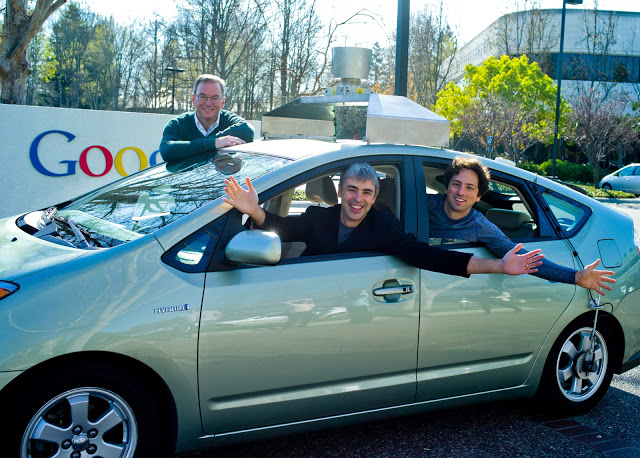
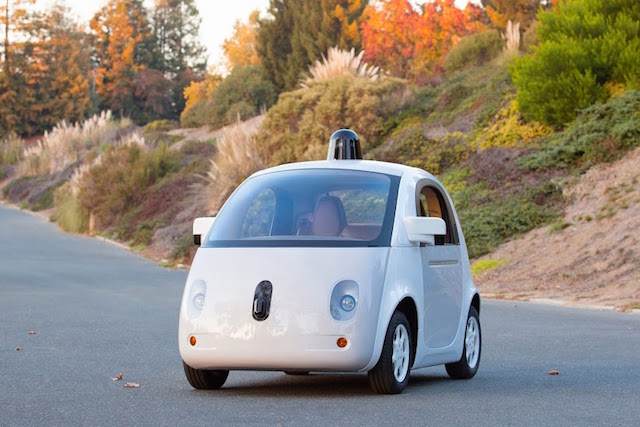
    With the rapid advances in driverless cars, it was only a matter of time before the question of what happens when people encounter them would be answered.

    It turns out not too well for the autonomous vehicles reports Bloomberg citing a study by the University of Michigan’s Transportation Research Institute that found driverless cars have accident rates double those of normal vehicles.

    As it turns out, those accidents are usually minor and are caused by humans colliding with the autonomous vehicles as the law abiding computers catch drivers unawares.

    That people aren’t very good at driving cars isn’t a surprise but now we’re seeing what happens when distracted, mistake prone humans encounter cautious and usually correct computers.

    We now have to start thinking about what happens when artificial intelligence encounters human frailty.

    Similar posts: