Tag: GE

  • GE’s Predix predicament – an industrial giant finds software is hard

    GE’s Predix predicament – an industrial giant finds software is hard

    Industrial giant General Electric is finding software is hard, reports Business Insider.

    The company, which former CEO Jeff Immelt declared was a ‘digital industrial company’ is finding its Predix software system and associated cloud services are far more complex and difficult to manage than expected.

    Back in 2015, I toured the head office of GE Software outside of Silicon Valley and interviewed the division’s boss, Bill Ruh.

    Ruh was upbeat about the internet of things – or Industrial Internet in GE’s terminology – with an estimate the IoT was worth $14 billion to the company as it found new efficiencies and markets.

    Today that vision’s looking a little tarnished as the company struggles with a 25% share price drop and a self imposed ‘time out’ on Predix’s development.

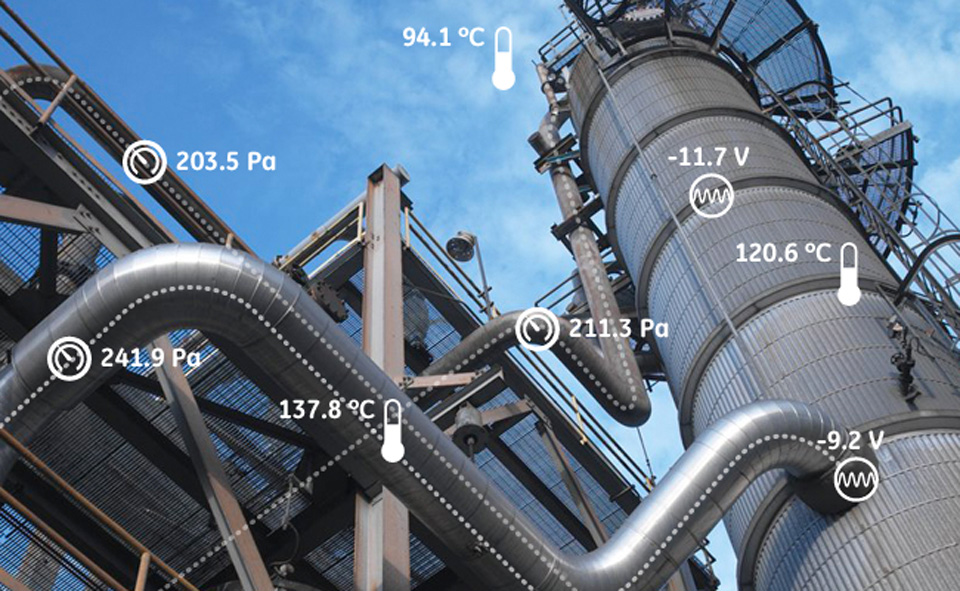
    GE’s IoT predicament illustrates just how complex the engineering and management challenges of the Internet of Things really are.

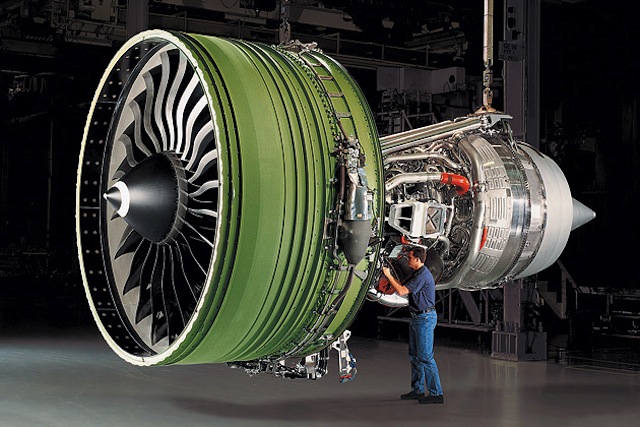
    The software needs of a sensor in a train brake pad are very different to that of fuel pump in a jet engine or the blade controllers of wind turbine.

    Added to that is the challenge of organising, storing and securing the information these devices collect. This is the main reason why GE is moving its data management services to AWS and Microsoft Azure.

    That a company with the resources and top level commitment of GE is struggling with this underscores the complexity of the internet of things. That complexity is something every IoT advocate and connected device vendor fails to consider at their, and their customer’s, peril.

    Similar posts:

    • No Related Posts
  • Profiting from the industrial internet

    Profiting from the industrial internet

    Opening the first official day of Oracle Open World, CEO Mark Hurd spoke with James Fowler, the Chief Information Officer of General Electric about the company’s digital transformation.

    Fowler described how the company intends to be driving $15 billion in revenues from its digital operation in the face of stagnant industrial spending.

    Earlier in the presentation Hurd had described the problem of stagnant spending facing all major industrial companies, whether they are enterprise software providers like Oracle or engineering organisations like GE, where companies are ‘sweating the assets’ ruthlessly.

    For GE, making a compelling argument for companies to reinvest in new capital equipment is essential while Oracle is facing an industry wide decline in revenues and a structural shift to cloud technologies which Hurd described in stark tones.

    Last year, he claims, the major tech companies saw a gross decline of $16.4 billion in revenues while cloud services only picked up by billion meaning the market shrank by fifteen billion dollars.

    That decline would deeply worry a salesperson like Hurd given the declining market means smaller commissions and fewer sales so it’s unsurprising the company is pivoting as hard as it can into the cloud.

    GE on the other hand is making a huge bet on the future of its market by proactively shifting onto digital and cloud services.

    The challenge though for all these companies is making money from these new business models those who figure it out will be the industrial giants of the next century. There’s no guarantee any of today’s will be among them.

    Similar posts:

    • No Related Posts
  • Towards the zero defect economy

    Towards the zero defect economy

    At 2.03 in the morning of July 11, 2012, a Norfolk Southern Railway Company freight train derailed just inside the city limits of Columbus, Ohio.

    The resulting crash and fire caused over a hundred people to be evacuated, resulted in over a million dollars in damages and created massive disruption throughout the US rail network.

    Could accidents like this be avoided by the Internet of Things? Sham Chotai, the Chief Technical Officer of GE Software, believes applying sensor technology to locomotives can detect conditions like defective rails and save US railway operators around a billion dollars a year in costs.

    “We decided to put the technology directly on the locomotive,” says Chotai in describing the problem facing railroad operators in scheduling track inspections. “We found we were mapping the entire railway network, and we were mapping anything that touched the track such as insulated joins and wayside equipment.”

    This improvement in reliability and its benefits to business is something flagged by then Salesforce Vice President Peter Coffee in an interview with Decoding the New Economy in 2013.

    “You can proactively reach out to a customer and say ‘you probably haven’t noticed anything but we’d like to come around and do a little calibration on your device any time in the next three days at your convenience.’”

    “That’s not service, that’s customer care. That’s positive brand equity creation,” Coffee says.

    Reducing defects isn’t just good for brands, it also promises to save lives as Cisco illustrated at an Australian event focused on road safety.

    Transport for New South Wales engineer John Wall explained how smarter car technologies, intelligent user interfaces and roadside communications all bring the potential of dramatically reducing, if not eliminating, the road toll.

    Should it turn out the IoT can radically reduce defects and accidents it won’t be good news for all industries as John Rice, GE’s Global Head of Operations, pointed out last year in observing how intelligent machines will eliminate the break-fix model of business.

    “We grew up in companies with a break fix mentality,” Rice says. “We sold you equipment and if it broke, you paid us more money to come and fix it.”

    “Your dilemma was our profit opportunity,” Rice pointed out. Now, he says engineering industry shares risks with their customers and the break-fix business is no longer the profit centre it was.

    A zero defect economy is good news for customers and people, but for suppliers and service industries based upon fixing problems it means a massive change to business.

    Similar posts:

    • No Related Posts
  • How software defines the Industrial Internet

    How software defines the Industrial Internet

    The Internet of Things is a three legged stool of the consumer, enterprise and industrial applications says Vice President of GE’s software division, Bill Ruh.

    “It’s about connecting machines, connecting people and driving a new kind of experience. For the consumer it’s a social experience, for the enterprise it’s a whole new way of how their IT departments running, in the industrial space it’s a revolution where we get to rethink how we operate.”

    Ruh sees the IoT as being worth over 14 trillion dollars to GE over the next two decades, making it bigger than the other two legs combined.

    Eliminating downtime

    Most of that value comes from three areas; improved resource utilisation, operational optimisation and eliminating unscheduled downtime.

    “The fact is downtime is expensive, for airline 41% of all delays and cancellations are due to mechanical errors. If we get rid of those your life gets better, my life gets better and the airline’s lives get better.”

    “Zero unscheduled downtime doesn’t sound sexy but it’s one of the most profitable and sexiest topics ever.” In this Ruh agrees with Salesforce’s Peter Coffee that eliminating outages is a key part of delighting the modern customer.

    Ruhe sees that the industrial sector hasn’t used IT and the internet well in the past, “RFID was going to change the world and it didn’t, we saw smartgrids were going to be the biggest thing and it didn’t achieve a lot of the hype that people saw.”

    “Now the technology is aligned not just with technology for technology’s sake but to an outcome that leads to growth for an industrial sake.”

    An example of the operational efficiencies that Ruh is particularly proud of is GE’s PowerUp technology that promises to improve the output of wind turbines, “it is a series of technologies used to analyse information about every wind turbine on a farm and to dynamically adjust each and every one to optimise the wind speed.”

    “When you do that we’ve found we can generate up to five percent more electricity per wind farm because of software, which adds twenty-five percent more profitability.”

    “In the next generation of wind turbines all this kind of software is going to be embedded in it from the design phase through to the operational phase,” Ruh says. “It’s going to change how our customers are going to operate wind turbines.”

    Building digital twins

    Another aspect Ruh sees with the changes is how machines and data will work together where equipment or parts are shipped with a ‘digital twin’, a software representation of the device that lets the customer test scenarios on their computers.

    “I can now do ‘what if’ analysis on that machine using its data and that’s going to change how things work. That takes everything from 3D modelling, to manufacturing, to maintenance to operations.”

    Building on domain knowledge

    Ultimately Ruh sees GE’s strength with the Industrial Internet being the company’s domain knowledge, “this world is different and you cannot come from outside and pretend you’re going to learn it as you go.”

    “The way people buy equipment is totally different, we have equipment that’s eighty years old and we still support it. That’s totally different from the software world.”

    Similar posts:

    • No Related Posts
  • The engineer’s return – GE heads back to its roots

    The engineer’s return – GE heads back to its roots

    In his mission to refocus GE on its engineering roots, CEO Jeff Immelt last week announced a restructuring plan that will see the company divest most of its real estate portfolio and shrink its finance arm faster than expected.

    Bloomberg News reports the stock market took the announcement very well with the shares jumping 8.7% on the news.

    GE now expects “high-value industrials” such as jet engines, oilfield equipment and diesel locomotives to generate more than 90 percent of earnings by 2018, up from just over half in 2014.

    That the company’s announcement has been taken so well by the market shows how the US economy is slowly shifting from financial engineering and debt driven spending to building real products.

    For the rest of the world there’s a clear message – the 1980s era of Gordon Gekko is coming to a close. It’s time to start figuring out where the real growth is going to come from rather than just goosing household spending with easy credit.

    Where companies like GE are going today is where governments will be looking in five to ten years time. Some will find they are further behind than others when the shift becomes apparent.

    Similar posts: