Tag: innovation

  • Could advertising have saved Blackberry?

    Could advertising have saved Blackberry?

    Could advertising have saved Blackberry wonders Joyce Yip on the Marketing Interactive site.

    Yip cites Samsung’s blanket advertising as one of the reason’s for the Korean brand’s success while Blackberry could only afford a token presence for the new Z10 phone.

    While there’s no doubt Samsung and Apple’s marketing muscle has helped them dominate the smartphone market, advertising alone doesn’t explain the dominant brands’ success.

    Blackberry was doomed from the moment a business friendly smartphone was released, no-one expected it at the time but it turned out to be the iPhone.

    Compared to the iPhone, the Blackberry was woefully underfeatured and once corporate users discovered email wasn’t the only use for a smartphone, the Canadian company’s fate was sealed.

    While the Z10 and Q10 phones were well featured devices, they are way too late for a market where Apple and Samsung have most of the sales and take all the profit.

    It’s tempting to think advertising and marketing may have saved Blackberry, but the company was overtaken by a fundamental market change which left it stranded.

    For a while in the late 2000s Blackberry looked untouchable in the corporate market and no-one would have expected Samsung and Apple to disrupt their position. That’s the real lesson Blackberry teaches us.

    Similar posts:

  • Reducing the road toll through the internet of everything

    Reducing the road toll through the internet of everything

    How can modern computer technology cut the road toll?

    Transport for NSW’s John Wall spoke last week at Cisco’s Internet of Everything presentation in Sydney about some of the ways the connected motor car can reduce accidents.

    John’s presentation comes from personal experience, having being a volunteer for nearly thirty years at his local State Emergency Service brigade where he was often among the first responders to local vehicle accidents.

    Some of the improvements in technology see the road toll falling as people travel less because of remote working, teleconference and business automation. Many of the applications though are built into the vehicles, street signs and the roads themselves.

    Finding the safest route

    John’s first suggestion for improving driver safety is having navigation systems sourcing traffic, weather and other information to suggest the best route for the driver. An intelligent system may also modify the recommended journey based on the experience of the driver and state of the vehicle, such as the tyre conditions.

    Watching the eyes

    Fatigue kills and all of us have driven when we were really too tired to be behind the wheel.

    The first in car technology John discussed is facial recognition technology that detects when drivers are fatigued. Tying this feature into the vehicle’s entertainment system with a stern aviation style “PULL OVER – YOU ARE TIRED” warning could well save hundreds of lives a year on his own.

    Connected road signs

    One of the underpinning factors of the internet of everything is cheap computers and transmitters embedded into almost anything. Road signs and sensors talking to cars could help reduce driver errors such as entering curves too fast.

    Those signs can also be plugged into weather conditions so if there’s ice, fog or rain then the car can be told of the hazards ahead.

    Going on the grid

    Signs are not the only devices that could be talking to each other, vehicles themselves could be talking to each other. Should one car hit a slippery or soft patch on the road, it could tell following vehicles that there’s a problem ahead and respond accordingly.

    That technology too could help traffic planners and road authorities, as data on traffic speeds and road conditions feed into their databases it becomes easier to identify black spots or road design problems before lives are lost.

    Helping the first responders

    A wrecked car or roadside sensor can also help those first responders attending an accident. The vehicle itself could transmit the damage and give rescuers valuable, time saving information, on the state of the occupants.

    Similarly, the system could also warn emergency services such as hospitals and ambulances of the injuries likely and what’s needed to treat the injuries on site, in transit and at the casualty ward.

    Importantly, a smart vehicle can also warn those first responders of potential risks such as live air bag gas cylinders, car body reinforcements or high voltage cables as they attempt to free trapped occupant from a wreck.

    The rescuers themselves may be wearing technologies like Google Glass that help them see this information in real time.

    Bringing together the technology

    As Kate Carruthers points out, the internet of everything is the bringing together of many different technologies – wireless internet, cloud computing, grid networks and embedded devices all come together to create a virtual safety net for drivers.

    By the end of this decade that we will all be relying on these technologies to help us drive. Which means we might find our licenses start to be endorsed for the level of technology in our vehicles, just as we used to have to get qualified to drive a car with a manual transmission.

    Concluding his presentation, John Wall told the story of Jason, a cyclist from his town who was killed in a road accident and left a young family. In his slide he showed Harry, Jason’s young son, playing with the flowers on his father’s memorial.

    “I hope for Harry is that when Harry learns to drive that things will be different on our roads and things will be different because we are all connected,” said John.

    It’s a strong reminder of the real human opportunities and costs when we adopt new technologies.

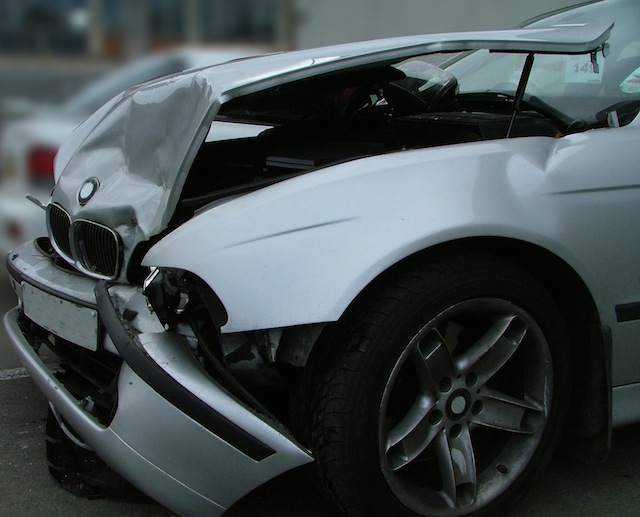
    Car crash image courtesy of jazz111 through SXC.HU

    Similar posts:

  • Is Australia falling behind on the internet of everything?

    Is Australia falling behind on the internet of everything?

    Last Friday Cisco Systems presented their Internet of Everything index in Sydney looking at how connected machines are changing business and society.

    Cisco Australia CEO Ken Boal gave the company’s vision of how a connected society might work in the near future with alarm clocks synchronising with calendars, traffic lights adapting to weather and road conditions while the local coffee shop has your favourite brew waiting for as the barista knows exactly when you will arrive.

    While that vision is somewhat spooky, Boal had some important points for business, primarily that in Cisco’s view there is $14 trillion dollars in value to be realised from utilising the internet of machines.

    Much of that value is “being left on the table” in Boal’s words with nearly 50% of businesses not taking advantage of the new technologies.

    Boal was particularly worried about Australian businesses with Cisco lumping the country into ‘beginner’ status in adopting internet of everything technologies along with Mexico and Russia, with all three lagging far behind Germany, Japan and France.

    cisco-country-capabilities-internet-of-everything

    In Boal’s view, Australian management’s failure is due to “the focus on streamlining costs has come at the cost of innovation.”

    This something worth thinking about; in a business environment where most industries only have two dominant players and the corporate mindset is focused on maximising profits and staying a percentage point or two ahead of the other incumbent, being an innovator itsn’t a priority – it might even be a disadvantage.

    For Australian business, and society, that complacency is a threat which leaves the nation exposed to the massive changes our world is undergoing.

    Similar posts:

  • The sport of racing dinosaurs

    The sport of racing dinosaurs

    The admission from Bud Selig, the US Major League Baseball Commissioner, that he has never used email raised lots of eyebrows around the world.

    As Business Insider notes, Selig is 79 years old and there are plenty of other sports administrators challenged by technology so it’s understandable that the commissioner might not see the need to use a technology that became common twenty years ago.

    Bud Selig’s story illustrates a much more important issue facing the professional sports industry, that it’s run on an aging business model.

    The last fifty years has been very good for professional sport as television and Pay-TV networks bid sporting rights higher across the world.

    In most nations, the dominant sport did extremely well as broadcasters fought each other; the Olympics, Soccer leagues in most of the world along with baseball, American football and basketball in the US, Cricket in India, Aussie Rules in Australia, Rugby in South Africa and New Zealand all became incredibly rich.

    There weren’t many competitive pressures on the managements of those sport as the dominant sports rarely had any competition, it was a matter of just playing the TV executives off each other.

    As a consequence, many sports are run by people with a somewhat exaggerated sense of privilege – they believe it’s their talent, not Rupert Murdoch’s or NBC’s money, that is responsible for their game’s riches.

    Bud can dismiss the disbelieving gasps of people in the real economy because for most of his career the only competition he’s had to deal with was from his colleagues has he fought his way to the top job which he won in 1998.

    In the real economy, there’s no such luxury. In fact, email may be becoming yesterday’s technology as social media and collaborative tools take over. David Thodey at Telstra and Atos’ Thierry Breton are two leaders in this field.

    The danger for sporting organisations is that they are ripe for disruption, so far broadcast media rights have stood up well while revenues in other parts of the entertainment and publishing industries has collapsed. There’s no guarantee though that broadcast sports will remain immune from those changes.

    Should disruption come along, even just in the form of sporting rights stagnating, many professional codes will suddenly find inefficiencies like Bud Selig are an expensive luxury.

    While Bud’s story is amusing, in reality there’s little the rest of us can learn from how Major League Baseball’s senior executives run their offices.

    Image of Bud Selig courtesy of bkabak through Flickr.

    Similar posts:

  • Driving change from the top

    Driving change from the top

    One of the hallmarks of the PC era was how  innovations in workplace technology tended to be driven by the middle ranks of organisations.

    The PC itself is an example, it’s adoption in the early 1990s was driven by company accountants, secretaries and salespeople who introduced the machines into their workplaces, usually in the face of management opposition.

    Many of the arguments against introducing PCs at the time are eerily similar to that against the Internet or social media over the next twenty years.

    Sometime in over the last few years that pattern changed and the adoption of new technologies started being driven by boards and executives.

    The turning point was the release of the Apple iPad which was enthusiastically adopted by executives and directors, suddenly, Bring Your Own Device policies were in fashion and the pattern of the c-suite driving change had been established.

    Now a similar problem is at work with social media, the story of David Thodey driving the use of Yammer in Telstra is one example where executives are leading the adoption of services in large companies.

    The lesson for those selling into the business market is to grab the imagination of senior executives and the board, with competitive pressures increasing on companies they may well be a receptive audience.

    Similar posts: