Tag: innovation

  • Five years of the app store

    Five years of the app store

    It’s been five years that the Apple App Store has been open for business. in that time they’ve revolutionised the smartphone industry, reinvented the tablet computer and had fifty billion downloads.

    While the App Store wasn’t an original idea, plenty of telcos and handset manufacturers, had them, Apple were the first to get the formula right for the iPhone.

    Their success in changing the smartphone industry lead to their dominance of the tablet industry, another sector which had settled incumbents who were disrupted by Apple’s entry into the market.

    It’s notable how in both the smartphone and tablet markets, the established incumbents were struggling with the same business model that Apple got right. This is something other industries should pay attention to.

    Similar posts:

  • What happened to the not so nifty fifty?

    What happened to the not so nifty fifty?

    One of the must read investment blogs is John Mauldin’s weekly Thoughts From the Frontline. This week’s post is a particularly compelling guest post from tech investor Andy Kessler.

    Kessler’s post is the forward to George Gilder’s book Knowledge and Power and in describing his investment journey Kessler mentions the 1970s Wall Street view of investing in Nifty Fifty, the fifty biggest stocks on the US market which – because they were perceived as safe investments – traded on substantial price equity ratios.

    Trading cost 75 cents a share, but who cares, there were only 50 stocks that mattered, the Nifty Fifty, and you just bought ’em, never sold.

    Towards the end of 1972, Xerox traded for 49 times earnings, Avon for 65 times earnings, Polaroid for 91 times earnings.

    Numbers like that were unsustainable and those days of safe investing couldn’t last. So what happened to The Nifty Fifty?

    It’s hard to track down today’s figures but an academic paper from 2002 looked at how those stocks performed over the following thirty years. It isn’t pretty.

    nifty-fifty-annualised-returns

    Few of the Nifty Fifty performed well over the subsequent thirty years, which should give pause for those just buying the top stocks like the Dow-Jones, FTSE 100 or ASX 20 – just because they are big doesn’t mean they are safe.

    In fact names like Eastman-Kodak, Polaroid and Digital Equipment Corporation on the Nifty Fifty shows just how risky such assumptions are.

    Kessler also has a good point about today’s index huggers who are the modern equivalent of the 1970s buyers of the Nifty Fifty.

    An index is the market. It’s a carrier, a channel, as defined mathematically by Shannon at Bell Labs in his seminal work on Information Theory. An index can only yield the predictable market return, mostly devoid of the profits of creativity and innovation, which largely come from new companies outside the index.

    Like the Nifty Fifty today’s index funds are safe and predictable – until they’re not – while at the margins, the next great businesses and industries are being built far from the attention of the funds managers.

    For Australians there’s a particular sting in the tail from Kessler’s post as the bulk of compulsory superannuation goes into the local market’s stop stocks. It wouldn’t be too unfair to describe the modern Aussie funds manager’s motto as being “buy the ASX Eight and have lunch with your mate.”

    Forty years ago, an investment in Eastman Kodak would have looked pretty nifty. Today Kodak has gone. We should remember that when we’re looking for ‘safe’ places to put our money.

    Bull Market image by Myles through SXC.HU

    Similar posts:

  • Michael Dell’s struggle to transform his business

    Michael Dell’s struggle to transform his business

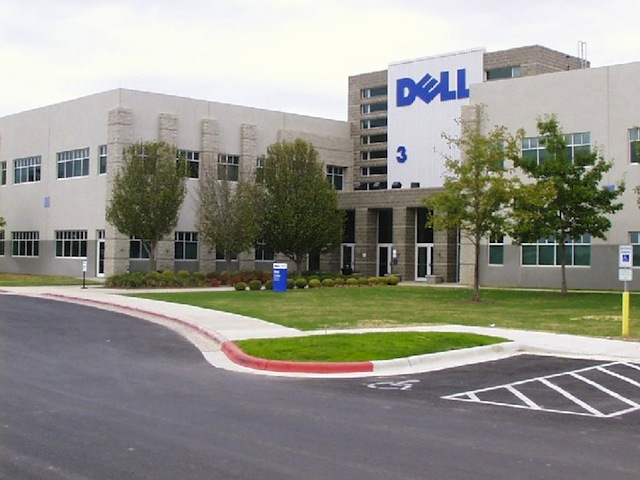
    Michael Dell continues to press on with his buy out bid for the computer manufacturing giant he created with a presentation to shareholders stating his case why Dell Computers would have a better future as a private company.

    Dell’s assertion is the company has to move from being a PC manufacturer to a Enterprise Solutions and Services business (ESS) as computer manufacturing margins collapse in the face of a changing market and more nimble, low cost, competitors.

    What’s telling in Dell’s presentation is just how fast these changes have happened, here’s some key bullet points from the slide deck.

    • Dell’s transformation from a PC-focused business to an Enterprise Solutions and Services (ESS) -focused business is critical to its future success, especially as the PC market is changing faster than anticipated.
    • The transition to the “New Dell” is highly dependent on challenged “Core Dell”performance.
    • The speed of transformation is critical, yet “Core Dell” operating income is declining faster than the growth of “New Dell” operating income.
    • Dell’s rate of transformation is being outpaced by the rapid market shift to cloud.

    The market is shifting quickly against Dell’s core PC manufacturing and sales business and the company’s founder is under no illusions just how serious the problem is.

    Should Michael Dell succeed, the challenge in transforming his business is going to be immense – Dell Computing was one of the 1990s businesses that reinvented both the PC industry and the vast, precise logistics chain that supports it.

    It was PC companies like Dell and Gateway who showed the dot com industry how to deliver goods quickly and profitably to customers around the world. Businesses like Amazon built their models upon the sophisticated logistics systems and relationships the computer manufacturers created.

    A lesson though for all of those companies that followed Dell and Gateway is that those supply chains may turn around and bite you in the future, as Michael says in his presentation;

    Within the PC market, Dell faces increasingly aggressive competition from low cost competitors around the world and shifts in product demand to segments where Dell has historically been weaker.

    Those low cost competitors were many of Dell’s suppliers as over time the company’s Chinese manufacturers, Filipino call centres and Malaysian assemblers have developed the management skills to compete with the US retailers rather than just be their contractors.

    Something that’s being missed in the debate about globalisation at present is that its not just low value work that can be done offshore – increasingly sales, marketing and legal are moving offshore along with programmers and engineers. Now the same thing is happening with management.

    The same thing is also happening with corporations as Asian giants like Samsung, Huawei, Wipro and others displace US and European incumbents.

    Dell Computing has been a much a victim of that move as it has been of the decline in the PC market which means its more than one battle Michael Dell has to fight.

    It may well be that Dell can survive, but we shouldn’t underestimate just how great the challenge is as the company faces major changes to its markets and the global economy.

    Similar posts:

  • Little shots at the moon

    Little shots at the moon

    Today I wrote a story for Business Spectator on the Google Loon project, a pilot program to see if high altitude balloons can provide affordable internet access for the developing world.

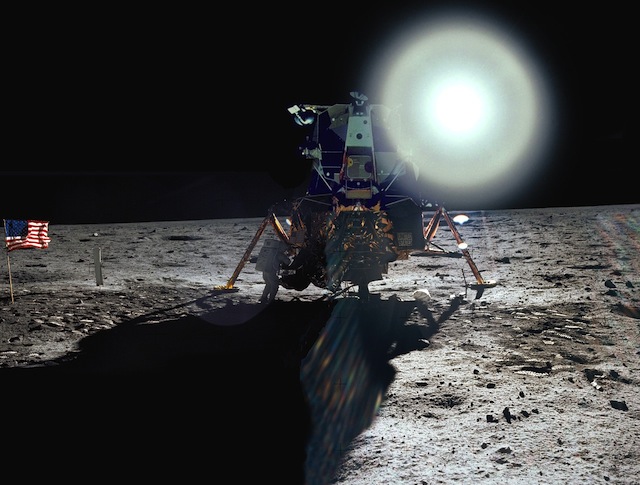
    What really fascinates me about Loon and the projects in the Google X program is the concept of the ‘moonshot’. Google explain it on their solve for [x] website.

    Moonshots live in the gray area between audacious projects and pure science fiction; instead of mere 10% gains, they aim for 10x improvements. The combination of a huge problem, a radical solution, and the breakthrough technology that might just make that solution possible is the essence of a Moonshot.

    Great Moonshot discussions require an innovative mindset–including a healthy disregard for the impossible–while still maintaining a level of practicality.

    Missing in that definition is the concept of risk – it’s easy to propose a radical, audacious solution to a problem when it’s not your money or career on the line.

    On the other hand, most organisations that have the resources to experiment with breakthrough technologies stifle any thought of true innovation or radical solutions.

    The advantage Google has is that parts of the organisation encourage those moonshots, although there are divisions of Google which are just as bureaucratic and staid as a chartered accountant’s or quantity surveyor’s office.

    Interestingly Apple were the reverse with only one guy allowed to do moonshots and everyone below him followed him either to the moon or hell, as this wonderful story tells.

    Which brings me to the little folk – the startups, small businesses and backyard inventors who don’t have the resources of Google, Apple or the US space program.

    For that matter there’s also the writers, painters, musicians and other artists who are risking everything for their vision.

    Everyday these people are risking everything for their little ideas as their homes, livelihoods and sometimes their relationships are on the line for their one big idea or audacious vision.

    These are the real risk takers and every day they are taking little shots at the moon.

    Similar posts:

  • The Present is Unevenly Distributed

    The Present is Unevenly Distributed

    “The future is already here – it’s just not evenly distributed” said author William Gibson in a quote often used by futurists and speakers.

    A great example of this is the Australian Government’s National Digital Economy Strategy which was re-released last week.

    The report itself was met with howls of indifference as the objectives were modest with little new really added since its first release in 2011. What’s notable though almost all the stated objectives for 2020 are achievable today. Here’s the list.

    • Government service delivery—by 2020, four out of five Australians will choose to engage with the Australian Government online.
    • Households—by 2020, Australia will rank as one of the top five OECD countries in terms of the proportion of households that connect to broadband.
    • Businesses and not-for-profit organisations—by 2020, Australia will rank as one of the top five OECD countries in the proportion of businesses and not-for-profit organisations using online opportunities to drive productivity improvements and expand their customer base.
    • Health and aged care—By 2015, 495,000 patients in rural, remote and outer metropolitan areas will have had virtual access to specialists and by 2020, 25 per cent of all specialists will be participating in delivering telehealth consultations to remote patients. By 2020, 90 per cent of high priority consumers such as older Australians, mothers with babies and those with a chronic disease, or their carers will be able to access individual electronic health records.
    • Education—by 2020, Australian schools, registered training organisations (RTOs), universities and higher education institutions will have the connectivity to develop and collaborate on innovative and flexible educational services and resources to extend online learning to the home and workplace and the facilities to offer students and learners the opportunity for online virtual learning.
    • Teleworking—by 2020, Australia will have doubled its level of telework to at least 12 per cent of Australian employees.
    • Environment and infrastructure—by 2020, the majority of Australian households, businesses and other organisations will have access to smart technology to better manage their energy use.
    • Regional Australia—by 2020, the gap in online participation and access between households and businesses in capital cities and those in regional areas will have narrowed significantly.

    With the exception of the telehealth objective, where the barriers don’t lie in the technology, all of these laudable aims could have been achieved in the past 15 years.

    Some of them already have but it’s been missed by the cossetted bureaucrats who write these reports.

    For the businesses who aren’t already “using online opportunities to drive productivity improvements and expand their customer base”, these folk are digital roadkill anyway and may as well get jobs driving taxis today.

    Probably the most depressing of the objectives is the first one focusing on government service delivery. Here’s Bill Gates’ comment about online government services while visiting Australia.

    The Government itself needs to become a model user of information technology, literally seeing government will work with its citizens, with its businesses without paper exchange will be able to do in our taxes, licences, registrations, all these things, on a basis where you don’t have to know the organisation of government and its various departments, you don’t have to stand in line, you don’t have to work with paperwork.

    Gates’ comments were made in September 2000.

    That a vision for the future is so modest, mundane and achievable today is probably the most disappointing thing of all with reports like the Australian National Digital Economy strategy.

    Not only is the future unevenly distributed but so too are the jobs and prosperity that will flow from it, if you’re going to have a vision. You better have a good one.

    Image courtesy of pdekker3 on sxc.hu

    Similar posts: