Tag: innovation

  • Innovations customers don’t need

    Innovations customers don’t need

    The news that ESPN is closing down its 3D sports channel is the beginning of the end for an innovation that nobody really wanted.

    In the 1980s, telephone companies rolled out digital services under the name ISDN – Integrated Services Digital Networks – which were expensive and appealed to few businesses, gaving them the nickname Innovations Subscribers Don’t Need.

    3D TV fits that description of an innovation which customers never wanted. While the technology was seen being the great hope of stimulating sales in a moribund consumer electronics market, consumers were never really convinced.

    The 3D TV push of the last two years is typical of many technology products in that there isn’t an immediate need for them but manufacturers and retailers hope that they can hype a market into existence.

    Usually that model fails, but not always.

    Sometimes though, these technologies are subject to their own hype cycle and over time they come back in ways we don’t quite expect.

    It’s difficult to see how 3D TVs can make a comeback but who knows? What we do know though is they were expensive toys for the few who bought the hype.

    Similar posts:

  • Steve Ballmer’s big platform change

    Steve Ballmer’s big platform change

    All Things D today reports that Microsoft is considering a major restructure to reflect changed computing markets.

    One of the big messages from The State Of The Internet report is we are seeing three simultaneous changes to the computer industry – the shift from personal computers to smartphones, tablet computers and wearable systems – and Microsoft is at the centre of these transformations.

    One graph, first released by Aysmco and expanded in the Meeker presentation, illustrates how fundamental these shifts are to Microsoft’s business.

    mary meeker computingmarketshare-640x480

    Microsoft’s domination of the computer industry was almost total at the beginning of the century and remained so until the iPhone was released in 2007. Then suddenly things changed.

    With the success of Android and the iPad, the market shifted dramatically against Microsoft and the WinTel market share is now back to 1985 levels when the Commodore 64 was a credible competitor.

    The change that Microsoft faces shouldn’t be understated, although the company’s strengths with products like Office, Azure and Hotmail (or whatever this year’s name for their online mail product is) give the once untouchable incumbent some opportunities, particularly in the cloud.

    At the end of Mary Meeker’s presentation at the D11 conference, Walt Mossberg asked her about Microsoft’s view that tablets and smartphones are just new computing platforms. Meeker dismisses that with the observation that the data is clear, the market has shifted to Apple and Google.

    “Google and Apple are driving innovation,” says Meeker. “Microsoft is not.”

    The numbers aren’t lying for Microsoft. That’s why Steve Ballmer has to move fast and think creatively about the company’s future.

    Similar posts:

  • Does closed government hurt business and the economy?

    Does closed government hurt business and the economy?

    Earlier this week I interviewed Vivek Kundra, the former US Chief Information Officer and now Salesforce executive, on innovation, technology and government with some of the Australian business perspectives run as a story in Business Spectator.

    Something that stood out for me from the interview were Vivek’s views on the effects of governments making both innovations and information freely available.

    “Two policy decisions that transformed the future of civilisation – GPS opening and human genome project through the Bermuda Principles.”

    While it’s probably too early to draw conclusions on how the opening of the human genome data will change business, it’s certainly true the Global Positioning System has allowed whole new industries to evolve and it’s an important lesson on making technology available to the masses.

    The Global Positioning System was, like the internet, a US military technology developed during the Cold War with the Soviet Union.

    After Korean Airlines flight 007 was shot down by Soviet fighters in 1983, President Reagan approved civilian use of the GPS – then named Navstar – to prevent similar tragedies.

    Such a decision was controversial, this was military technology being given over to the general population which could be used by enemy forces as well as airlines and truck drivers.

    No doubt if the GPS technology was developed in the UK or Australia, there would have been demands to monetize the service. It almost certainly would have been sold off to a merchant bank that would have charged for the service and stunted its adoption.

    By making GPS freely available, the US gained a competitive advantage which maintains the nation’s technological and economic lead over the rest of the world.

    This openness isn’t just an advantage for technology companies. While US governments are no means perfect, the relatively open nature of local, state and Federal administrations is an advantage for the United States economy and society. As Vivek says,

    Making data available provides three concrete functions; it allows citizens to fight corruption, it allows you to build the next billion dollar companies and it transforms government functions by breaking down silos.

    When the default position of government is to classify everything as secret or ‘commercial-in-confidence’, there’s little chance of an entrepreneurial culture growing in that society – instead you have a business culture that favours connected insiders who can trade off their privileged contacts within government.

    A culture of closed government reflects the business culture of a society and the reluctance of both the private and public sectors to openly share knowledge is why countries like Britain and Australia will struggle to emulate the United States.

    Similar posts:

  • Ending the motor industry’s 1950s delusions

    Ending the motor industry’s 1950s delusions

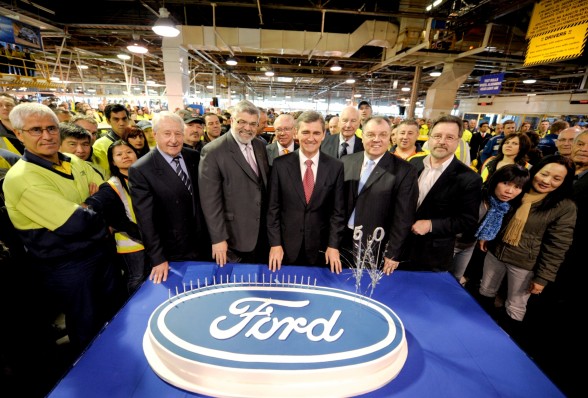
    Today Ford announced the pending closure of its Australian manufacturing operations, bringing to an end ninety years of the company building automobiles down under.

    Ford’s announcement is small on a global scale – the Broadmeadows factory built 40,000 cars out of a worldwide supply of sixty-three million – it does illustrate some major structural issues facing both the global automobile industry and the Australian economy.

    An Automotive Depression

    Over capacity has been the curse of the automobile industry for decades as governments have propped out producers around the world.

    KPMG’s 2012 Global Automotive Survey forecast the global industry would be 20 to 30 percent over capacity in 2016.

    This doesn’t seem to worry industry executives or their government supporters, as KPMG reported;

    Alarmingly, most auto executives still seem to regard the risk of overcapacity and excess production as a necessary evil to remain competitive. As the rapid growth of recent years eventually slows down, manufacturers that fail to address overcapacity could face some tough decisions.

    Ford’s Australian executives could at least be credited with facing some of those tough decisions.

    Many governments though are still in denial as they continue to subsidise motor manufacturers in an effort to copy the industry model that worked for the US Midwest during the 1950s.

    Indeed, the Australian government in 2008 committed 5.2 billion dollars to support their domestic industry through to the end of this decade. Ford’s announcement today coupled with General Motor’s cutbacks last year show that policy is in ruins.

    At the Ford and government press conferences, journalists pressed the Prime Minister and the Ford Australia’s CEO about repaying some of the millions of corporate welfare doled out to the multinational over the last decade. Naturally little was to be said about that.

    In a stark comparison to Ford Australia’s announcement, US electric car manufacturer Tesla Motors repaid a $465 million US government loan.

    While no-one can say Tesla’s future is certain, at least US investors are putting their money on 21st Century technologies instead of propping up declining industries of the last century.

    Australia’s predicament

    The car industry is just one sector that faces global overcapacity – ship building, real estate and mining are just three with similar excess production.

    For Australia, the mining industry is winding down investment as worldwide production capacity expands. At the same time, the blue sky projections of China’s resources demand are being challenged.

    While the mining boom comes to an end, Australia now has to face the consequences of the nation’s economic decision to focus on resources and property speculation in the 1990s and early 2000s.

    As the Thais and Indonesians found in 1997, and the Irish and Icelanders a decade later, economies based on unsustainable foundations seem to work fine until suddenly they don’t.

    It may well be that Australia is about find out what happens when the economic tide suddenly changes.

    One bright side is that the government has the best part of five billion dollars to invest in new industry – assuming Australia’s politicians can wean themselves off their 1950s view of the world economy.

    Image of Ford Australia celebrating 50 years of Falcon Production courtesy of Ogilvy Communications.

    Similar posts:

  • Disrupting the incumbents

    Disrupting the incumbents

    One of the truisms of modern business is that no incumbent is safe, Microsoft, Nokia and Hauwei are good examples of just how businesses that five years ago dominated their industries are now struggling with changed marketplaces.

    In the last two days there’s been a number of stories on how the smartphone and computer markets are changing.

    According to the Wall Street Journal’s tech blog, PC manufacturers are hoping Microsoft’s changes to Windows 8 reinvigorates the computer market.

    Those hopes are desperate and somewhat touching in the face of a structural shift in the marketplace. These big vendors can wait for the Big White Hope to arrive but really they have only themselves to blame for their constant mis-steps in the tablet and smartphone markets.

    Now they are left behind as more nimble competitors like Apple, Samsung and the rising wave of Chinese manufacturers deliver the products consumers want.

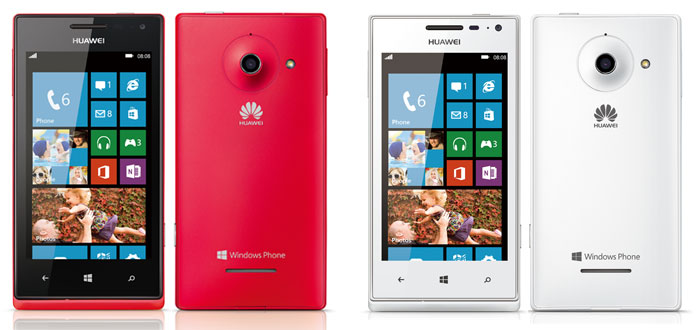
    All is not lost for Microsoft though as Chinese telecoms giant Hauwei launches a Windows Phone for the US markets which will be available through Walmart.

    Hauwei’s launch in the United States is not good news though for another failing incumbent – Nokia.

    Nokia’s relationship with Microsoft seems increasingly troubled and the Finnish company is struggling to retain leadership even in the emerging markets which until recently had been the only bright spot in the organisation’s global decline.

    Yesterday in India, Nokia launched a $99 smartphone to shore up its failing market position on the subcontinent.

    For the three months to March, Nokia had a 23 percent share of mobile phone sales in India, the world’s second-biggest cellular market by customers, Strategy Analytics estimates. Three years ago it controlled more than half the Indian market.

    India isn’t the only market where Nokia is threatened – in February Hauwei launched their 4Afrika Windows Phone aimed at phone users in Egypt, Nigeria, Kenya, Ivory Coast, Angola, Morocco and South Africa.

    The smartphone market is instructive on how many industries are changing, almost overnight the iPhone changed the cell phone sector and three years later Apple repeated the trick with the iPad, in both cases incumbents like Motorola, Nokia and Microsoft found themselves flat footed.

    As barriers are falling with cheaper manufacturing, faster prototyping and more accessible design tools, many other industries are facing the same disruption.

    The question for every incumbent should be where the next disruption is coming from.

    In fact, we all need to ask that question as those disruptions are changing our own jobs and communities.

    Similar posts: