Tag: innovation

  • Necessity, innovation and the birth of the web

    Necessity, innovation and the birth of the web

    The man who invented the world wide web, Tim Berners-Lee spoke at the launch of the CSIRO’s Digital Productivity and Services Flagship in Sydney yesterday.

    In telling about how the idea the idea of web, or Hyper Text Markup Language (HTML), came about Berners-Lee touched on some fundamental truths about innovation in big organisations.

    In the 1990s the European Laboratory for Particle Physics (CERN) in Geneva had thousands of researchers bringing their own computers, it was an early version of what we now call the Bring Your Own Device (BYOD) policy.

    “When they used their computers, they used their favourite computer running their favourite operating system. If they didn’t like what was available they wrote the software themselves,” said Tim. “Of course, none of these talked to each other.”

    As a result sharing data was a nightmare as each scientist created documents using their own programs which often didn’t work on their colleagues’ computers.

    Tim had the idea of standard language that would allow researchers to share information easily, although getting projects like this running in large bureaucratic organisations like CERN isn’t easy.

    For getting HTML and the web running in CERN Tim gives credit to his boss, Mike Sendall, who supported him and his idea.

    “If you’re wondering why innovation happens, one of the things is great bosses who let you do things on the side, Mike found an excuse to get a NeXT computer,” remembers Tim. “‘Why don’t you test it with your hypertext program?’ Mike said with a wink.”

    There’s much talk about innovation in organisations, but without management support those ideas go nowhere, the story of the web is possibly the best example of what can happen when executives don’t just expect their workers to clock in, shut up and watch the clock.

    One key point Tim made in his presentation was that it was twenty years after the Internet was invented before the web came along and another five years until the online world really took off.

    We’re at that stage of development with the web now and with the development of the new HTML5 standard we’re going to see far more communication between machines.

    Berners-Lee says “instead of having 1011 web pages communicating, we start to have 1011 computers talking to each other.”

    These connections mean online innovation is only just beginning, we haven’t seen anything yet.

    If you want your staff to stay quiet and watch the clock, that’s fine. But your clock might be figuring out how to do your job better than you can.

    Tim Berners-Lee image courtesy of Tanaka on Flickr

    Similar posts:

  • Proudly designed in Gyeonggi

    Proudly designed in Gyeonggi

    “Designed by Apple in California ” is the boast on the box of every new iPad or Macbook. That the slogan says ‘designed’ rather than ‘made’ says everything about how manufacturing has fled the United States.

    Last year the New York Times looked at Apple’s overseas manufacturing operations, pointing out that even if Apple wanted to make their product in the the US many of the necessary skills and infrastructure have been lost.

    Now the US is facing the problem that Asian countries are looking at moving up the intellectual property food chain and doing their own designs.

    In some ways this is expected as it’s exactly what Japan did with both the consumer electronics and car industries during the 1960s and 70s.

    The big difference is that Japanese manufacturers travelled to the US and Europe to study the design and manufacturing methods of the world’s leading companies. In the 1990s and 2000s, the world’s leading companies gave their future competitors the skills through outsourcing and offshoring.

    In the next decade we’ll see the latest consumer products coming with labels reading “Designed by Lenovo in Fujian” or “Developed by Samsung in Gyeonggi”.

    For western countries, the question is what do we want to be proudly be putting our names to?

    Image from Kristajo via SXC.HU

    Similar posts:

  • Was the netbook the Trabant or Model T of the computer world?

    Was the netbook the Trabant or Model T of the computer world?

    Taiwanese technology website Digitimes reports Asustek have shipped their last eeePC netbooks, bringing to an end a product that promised to change the computing world when they were first released in 2007.

    At the time the eeePC netbook picked up on a number of trends – cheap hardware, the maturity of the open source Linux operating system, affordable wireless access and, most importantly, the accessibility of cloud computing services.

    There’d been a pent up demand for usable portable computers for years but Microsoft and their hardware partners consistently released clunky, overpriced tablet computers that simply didn’t deliver on their promises.

    For users wanting a cheap, fairly robust portable computer then netbooks were a good choice, at the price you could even risk having one eaten by lions.

    into the lions den with an Asus eeePC netbook

    Unfortunately for netbook a few things went against the idea.

    Customers don’t like Linux

    An early blow to the eeePC was that retail users don’t like Linux. Most computer users are happy with Windows and MacOS and weaning them off what they know is a very hard sell.

    Sadly on this topic I have first hand knowledge having suffered the pain of co-founding a business in the mid 2000s that tried to sell Linux to small businesses.

    Asustek discovered this when they found customers preferred the more expensive Windows XP version over the original Linux equipped devices.

    Unfortunately Microsoft’s licenses damaged the economics of the netbook and held the manufacturers hostage to Microsoft who, at the time, wasn’t particularly inclined to encourage customers to use cloud services.

    Manufacturer resistance

    Microsoft weren’t the only supplier unhappy with netbooks. Harry McCracken at Time Tech describes how chip supplier Intel worked against the products.

    For manufacturers, the netbooks were bad news as they crushed margins in an industry already struggling with tiny profits. However all of them couldn’t ignore the sales volumes and released their own netbooks which cannabilised their own low end laptop and desktop ranges.

    In turn this irritated the army of PC resellers who found their commissions and margins were falling due to the lower ticket prices of netbooks.

    The rise of the tablet

    The one computer manufacturer who stayed aloof from the rush into low margin netbooks was Apple who had no reason to rush down the commodity computing rabbit hole. It was Steve Jobs who launched the product that made netbooks irrelevant.

    “Netbooks aren’t better at anything… they are just cheaper, they are just cheap laptops” Jobs said at the iPad launch in January 2010.

    Immediately the iPad redefined the computer market; those who’d been waiting a decade for a decent tablet computer scooped the devices up.

    Executives who wouldn’t have dreamt of replacing their Blackberries with an iPhone, let alone using an Apple computer proudly showed off their shiny iPads.

    The arrival of the iPad in boardrooms and executive suites also had the side effect of kick starting the Bring Your Own Device movement as CIOs and IT managers found that their policy of Just Say No was a career limiting move when the Managing Director wanted to connect her iPad to the corporate network.

    Rebuilding PC margins

    Around the time of the iPad’s released the major PC manufacturers declared a detente over netbooks and joined Intel in developing the Ultrabook specification.

    Intel designed the Ultrabook portable computer specification

    The aim of the Ultrabook was to de-commodify the PC laptop market by offering higher quality machines with better margins.

    While the Ultrabook has worked to a point, competition from tablet computers and the demands of consumers who’ve been trained to look for sub $500 portables means the more expensive systems are gradually coming down to the netbook’s price points.

    Today’s Ultrabook will be next month’s netbook.

    For the PC manufacturers, the lesson is that computers have been a commodity item for nearly a decade and only savvy marketing and product development – both of which have been Apple’s strengths – is the only way for long term success in the marketplace.

    Those US based manufacturers who haven’t figured this out are only go to find that Chinese manufacturers – led by companies like Taiwan’s Asustek – will increasingly take the bottom end of the market from them.

    The car industry is a good comparison to personal computers in commoditisation – with the passing of the netbook, the question is whether we’ll remember the eeePC  as a Trabant, Model T Ford or a Volkswagen Beatle.

    Similar posts:

  • Uber’s New Year’s test

    Uber’s New Year’s test

    Update: It appears Uber passed the New Year’s Eve test without problems. There were almost no complaints at all.

    New Years Eve 2011 was a tough night for customers of the Uber hire car booking service in New York City when fares surged as partygoers headed home.

    This year, Uber hopes to overcome problems by making sure customers are aware with big warnings of prices and even a sobriety test so users can confirm they know what they are doing when they agree to catch a cab.

    Uber’s dynamic pricing matches supply with demand, which means a more reliable service but also opens the company to allegations of price gouging during busy periods.

    Those allegations are exactly what happened in New York last year and in 2012 Uber’s risks of bad publicity are far higher as the service is now international with operations in cities like London, Paris and Sydney.

    Sydney will be the first city to encounter the effects of surge pricing and big risks lie in the Harbour City as Sydneysiders are used to fixed cab fares and enjoy a good whinge when things don’t work in their favour.

    Over a million people are expected on the shores of Sydney Harbour to watch the New Year’s Eve fireworks which means cabs and hire cars are at a premium.

    If Sydney has the triple fares expected in New York then Uber’s fare from Circular Quay to Bondi Beach will be around $150. This compares to the standard cab fare of around $30.

    Those markups will be exploited by the incumbent taxi companies and booking networks. We can expect a wave of stories over the next few days from tame journalists regurgitating the incumbents’ media releases.

    How Uber’s Australian management deals with this will be worth watching. One hopes they are prepared a tough week and don’t enjoy the festivities too far past midnight.

    Another problem for Uber is going to be Sydney’s mobile data networks which are horribly unreliable during peak periods. It may well be that Uber’s customers and drivers never get a fare anyway.

    Last year I was near the Habour Bridge and didn’t have a Vodafone signal from 8pm onwards. I’ll be comparing the performance of all three Aussie networks from the same place tonight.

    Similar posts:

  • NFC and the car key revolution

    NFC and the car key revolution

    Many businesses have made easy money by ‘clipping the ticket’ of the customer, new technologies like Near Field Communications and cloud computing threaten the easy profits of many organisations.

    During yesterday’s 2UE Tech Talk Radio spot where Seamus Byrne and I stood in for Trevor Long, host John Cadogan raised the prospect of replacing car keys and even dashboards with smartphones equipped with Near Field Communications (NFC) systems.

    Since NFC technologies appeared we’ve concentrated on the banking and payments aspects of these features but there’s far more to this technology than just smartphones replacing credit cards.

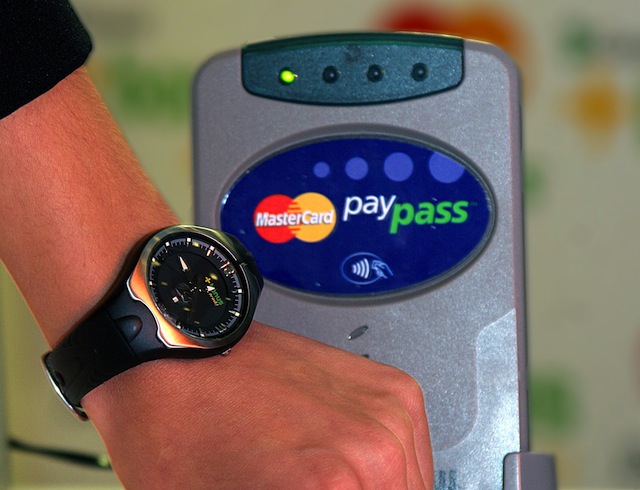
    With the right software an NFC equipped smartphone, tablet computer, or even a wristwatch could replace any electronic controller – this is already happening with Wi-Fi or Bluetooth enabled home sound systems, TV remote controllers and games consoles.

    An important effect of this is that it cuts out expensive custom replacements like bespoke control units or electronic car keys.

    Car keys are a good example of how what was previously a high cost profitable item becomes commodified and those business that had a nice revenue stream find new technology cuts them out.

    As keys become replaced with NFC enabled devices then then the scam of with new sets of keys costing up to a thousand dollars with fat profits for everybody involved becomes redundant.

    This is something we’re seeing across industries as incumbent businesses find their profitable activities disrupted by smart players using new technology.

    Just as manufacturing and publishing have been dealing with these disruptions for the past two decades, it’s coming to all industries and it’s going to take smart operators to deal with the changes.

    Similar posts: