Tag: internet

  • A big reset button on business

    A big reset button on business

    “Every large company is just another color of a spore in a petrie dish.”

    For the latest Decoding the New Economy video Internet Pioneer Doc Searls discusses The Respect Network, online privacy and the future of business on the web.

    Doc Searls is one of the internet’s pioneers who helped write The Cluetrain Manifesto that laid out many of the ideas that underpinned the philosophies driving the early days of the internet.

    Searls’ visit to Sydney was part of the rolling worldwide launch of the Respect Network, a system designed to improve internet users’ privacy through ‘personal clouds’ of information where people can choose to share data with companies and others.

    A big reset button on business

    In many ways The Respect Network shows how the internet has evolved since the days of the Cluetrain Manifesto, something that Searls puts in context.

    “We wrote the Cluetrain Manifesto in 1999,” says Searls. “At that time Microsoft ruled the world, Apple was considered a failure – Steve Jobs had come along and they had the iMac but it was all yet to be proven – Google barely existed and Facebook didn’t exist at all.”

    “On the one hand we saw the internet, we being the four authors of the Cluetrain Manifesto, and this whole new thing in the world that basically hit a big reset button on ‘business as usual’”

    “It did that. I think we’re vindicated on that.”

    Resetting business

    “What we have now are new industrial giants; Apple became an industrial giant, Microsoft are fading away, Nokia was the number one smartphone company and they’re all but gone.”

    One of the key things with today’s markets in Searls’ view is the amount of information that businesses can collect on their customers; something that ties into the original Cluetrain idea of all markets being conversations.

    With the evolution of Big Data and the internet of things, Searls sees challenges for companies using old marketing methods which rely upon online tracking. Something that’s a challenge for social media services and many of the existing internet giants.

    “The interesting thing is there’s a lot more intelligence that a company can get directly from their customers from things they already own than following us around on the internet.”

    Breaking the silos

    Searls also sees the current trend towards the internet being divided into little empires as a passing phase, “every company wants a unique offering but we need standards.”

    For Searls the key thing about the current era internet is we’re only at the beginning of a time that empowers the individual,  “the older I get, the earlier it seems.”

    “Anyone of us can do anything,” Searls says. “That’s the power – I’m optimistic about everything.”

    Similar posts:

    • No Related Posts
  • Respecting the user – Drummond Reed of the Respect Network

    Respecting the user – Drummond Reed of the Respect Network

    Drummond Reed, CEO of the Respect Network, is the latest guest on the Decoding the New Economy channel.

    The Respect Network offers ‘private clouds’ for individuals and companies where users can choose to trust others to share information.

    After over twenty years of working in the IT security industry, Drummond founded the Respect Network after becoming worried at the power social networks are having over individuals’ privacy.

    Drummond explains how a network designed to be private may be the future of online services.

    “The internet is only 18 years old,” says Drummond. “We want to bring it into adulthood.”

    Similar posts:

    • No Related Posts
  • Privacy and mutual respect

    Privacy and mutual respect

    Tonight was the Australian launch of the Respect Network in Sydney which followed similar events in London and San Francisco. I’ll be writing more on this over the next few days.

    One of the key questions when considering the Respect Network is how much the average internet user values privacy; the business model of the service relies upon people being prepared to pay to preserve their privacy.

    Another question is how many lies people will tell to get free or cheap stuff – respect is a two way thing.

    Similar posts:

    • No Related Posts
  • Fear in the cloud – the loss of trust in online business

    Fear in the cloud – the loss of trust in online business

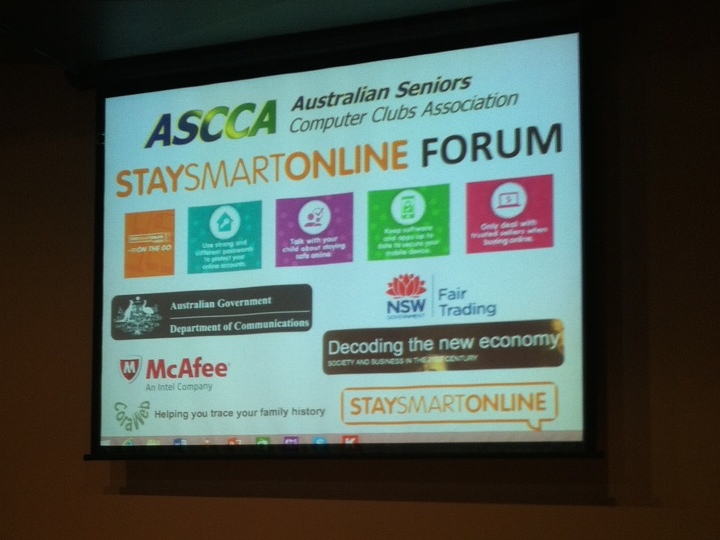
    Today I spoke about online safety to the Australian Seniors’ Computer Clubs Association about staying safe online.

    Hopefully I’ll have a copy of the presentation up tomorrow but what was notable about the morning was the concern among the audience about security and safety of cloud services.

    The ASCCA membership are a computer savvy bunch – anyone who disparages older peoples’ technology nous would be quickly put in their place by these folk – but it was notable just how concerned they are about online privacy. They are not happy.

    Another troubling aspect were my answers to the questions, invariably I had to fall back on the lines “only do what you’re comfortable with”  and “it all comes down to a question of trust.”

    The problem with the latter line is that it’s difficult to trust many online companies, particularly when their business models relies upon trading users’ data.

    Resolving this trust issue is going to be difficult and it’s hard to see how some social media platforms and online businesses can survive should users flee or governments enact stringent privacy laws.

    It may well be we’re seeing another transition effect happening in the online economy.

    Similar posts:

    • No Related Posts
  • Building an internet we’re not ashamed of

    Building an internet we’re not ashamed of

    Late last month writer, painter and software developer Maciej Ceglowski spoke at the design and technology conference, Beyond Tallerand in Dusseldorf.

    The Internet with a Human Face is his closing keynote for the conference – let’s try to kill that kill that awful term ‘locknote’ for closing presentations – and is a wonderful overview of the unintended consequences of the internet we’re now seeing emerge.

    Maciej compares the internet’s effects with that of the motor car in the Twentieth Century – the rise of the automobile totally changed society in ways our great grandparents couldn’t have expected.

    Unexpected consequences

    In many respects the changes were positive; the age of the motor car saw massive increases in living standards through the second half of the century. However the immediate downside of those efficient supply chains were equally massive increases in obesity rates, suburban alienation and urban sprawl.

    A similar thing is happening with this wave of technological changes; as Maciej describes in our presentation, our views of how the web was going to evolve is turning out to be very different to what we expected.

    One great example is in small business advertising where we expected online channels would democratise marketing. Instead the exact opposite has happened.

    Maciej’s view is far broader than just the relatively trivial problem of small business advertising, particularly with the ‘Internet never forgetting’ with the concentration of the industry in one of the world’s great earthquake zones as another major risk.

    Building an internet we’re not ashamed of

    Ultimately, though Maciej sees the problems facing the internet industry as a design problem.

    “I have no idea how to fix it. I’m hoping you’ll tell me how to fix it. But we should do something to fix it. We can try a hundred different things. You people are designers; treat it as a design problem! How do we change this industry to make it wonderful again? How do we build an Internet we’re not ashamed of?”

    While being ashamed is a big call, and probably unfair in that it’s like blaming Henry Ford for 2014 childhood obesity rates in Minnesota, Maciej has flagged that there are real adverse unintended consequences to the way the internet is evolving.

    All of us involved in the industry need to recognise those adverse effects and start acting to fix these problems.

    Similar posts:

    • No Related Posts