Tag: internet

  • Bridging the online advertising gap

    Bridging the online advertising gap

    At the Code Conference held outside Los Angeles last week, analyst Mary Meeker delivered her annual State of the Internet slideshow covering the trends and opportunities in the online world.

    One of the most watched graphs is the time spent on media versus the advertising spend on that channel.

    For years Meeker has shown print is receiving a higher share of advertising dollars for the amount of time consumers spend on it compared to online channels.

    That implies print revenue is due for collapse and online advertising revenues will surge. Here’s the 2014 chart.

    2014-advertising-spend-gap-mary-meeker-kpcb

    If we track this over the last five years, here’s what we see with the ‘difference’ column being the sum of print’s over-representation and online’s (mobile and web) under-spending.

    Year Print time Print share Online time Online share difference
    2010 12 26 28 13 29
    2011 7 25 36 23 31
    2012 6 23 38 25 30
    2013 5 19 45 26 35

    The collapse in print’s share of consumer time, down 60% in five years, is stunning and the 2012-13 changes may indicate advertising spend may is now collapsing as marketers start to adapt to the changed marketplace.

    It could be however that advertising as we know it has to change; one of the key reasons for online – particularly mobile’s – spending being under represented is because no-one is quite sure what works in the newer mediums.

    Advertisers may know that consumers are moving from print channels, but at least they know what works in print. Online the experts’ guesses are still not much better than the amateurs’.

    In short, we’re still watining for the digital era’s David Sarnoff. As Mary Meeker keeps reminding us, it’s a $20bn a year opportunity.


     

    Similar posts:

    • No Related Posts
  • Outage

    Outage

    A 16 hour outage by hosting service Bluehost knocks the wind out of this site’s sails.

    There’s much to say about customer engagement, engineering and management but it will have to wait for another day.

    Similar posts:

    • No Related Posts
  • Holy wars and internet empires

    Holy wars and internet empires

    A regular topic of this blog has been the rise of the internet empires that want to lock users into their kingdoms.

    On the edges of these empires things can get ugly as the competing groups fight for supremacy and to capture users.

    In these wars, no-one was capable of getting uglier that Steve Jobs.

    Which makes Steve Jobs’ declaration that 2011 would be a year of Holy War with Google unsurprising.

    The statement typical Jobsian hyperbole, but we should under estimate just how serious Apple’s staff would take such a statement.

    Apple’s intention to wage ‘holy war’ illustrates just how high the stakes as the online empires try to capture users.

    Those Holy Wars and the reason they are being fought is something all of us should keep in mind when we’re asked to choose between Apple, Google or Microsoft.

    Similar posts:

    • No Related Posts
  • Bill Gates and the fight for trustworthy computing

    Bill Gates and the fight for trustworthy computing

    Microsoft’s task of securing its software was a huge undertaking, one that isn’t over yet.

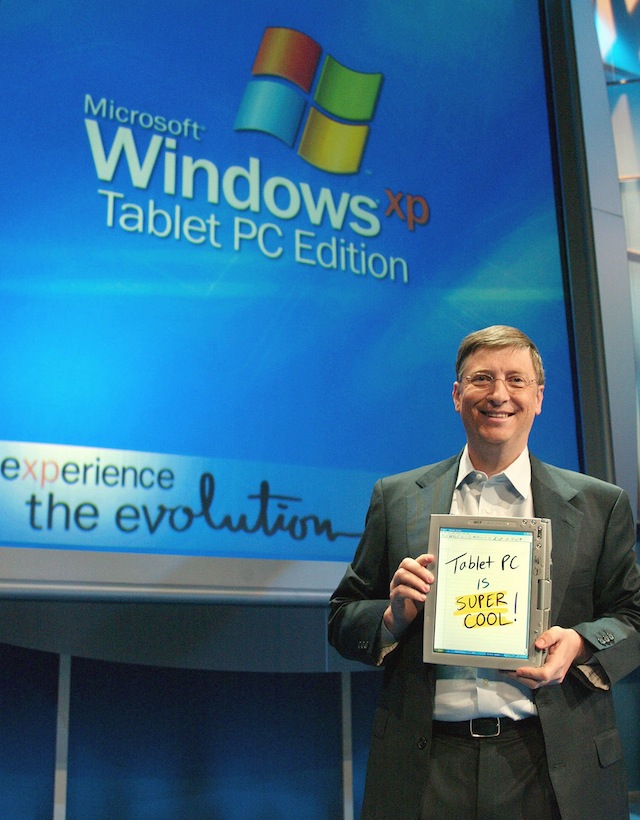
    One of the great, and possibly under recognised, business achievements of the computer age was Bill Gates’ recognition that Microsoft’s online strategy was flawed shortly after releasing Windows 95. A few years later he had to repeat the task when the company found its products were almost dangerously insecure.

    In a sprawling account of the company’s response to the security problems at the turn of the century, Life In The Digital Crosshairs, describes how Microsoft’s engineers responded to their then CEO’s call for Trustworthy Computing.

    The problems at the time were vast, compounded by Microsoft’s failure to take security seriously – the first version of Windows XP came out without a firewall which ensured thousands of users were quickly infected by the computer worms rampant on many ISPs networks at the time.

    As the story tells, it was a long difficult task for Microsoft to change complex and interdependent computer code involving 8,500 of the company’s engineers.

    One suspects the cultural challenges were even greater in getting the managers supervising the army of engineers to understand just how serious the security threat was to Microsoft’s users.

    The biggest challenge though was Microsoft’s own product line; because the company hadn’t ‘baked’ security into its software, key products like Microsoft Office relied on lax security practices to work properly.

    Office and Windows also had the problem of legacy code and applications; one of Microsoft’s selling points over Apple and other competitor systems was that the company took pride in supporting older hardware and software, this in itself creates security risks when programs designed in the MS-DOS days still want to write to the system kernel.

    For Microsoft the journey isn’t over, although the shift to cloud computing has changed – and simplified – the company’s security quest by making legacy issues in Office and Windows less important.

    Microsoft and Gates’ success in seeing off the threats posed by the internet gave the company another decade of computer industry dominance, however dealing with security issues was nowhere near successful.

    In the end however it wasn’t security issues that saw Microsoft lose its dominance; the internet eventually prevailed as Apple revolutionised mobile computing while Amazon and Google improved cloud services.

    With Bill Gates reportedly finding himself getting more involved in the company he founded, the challenges of both the internet and security are two that he’s going to be very familiar with. It will be interesting to see what we write about Microsoft in 2022.

    Similar posts:

    • No Related Posts
  • Could the Internet of Things grow by fifty times?

    Could the Internet of Things grow by fifty times?

    One of the annual events in the tech world is Cisco’s Visual Networking Index, the company’s survey of internet traffic trends.

    The numbers, as always, are staggering and this year Cisco are forecasting that global internet traffic will grow by a factor of eleven over the next four years to 190 exabytes – that’s 190,000,000,000,000Mb or the equivalent of 19o billion hard drives.

    What’s particularly fascinating about this year’s index Cisco forecast that by 2018 there will be more mobile devices on the planet than people.

    Many of those devices will be the sensors and equipment that makes up the Internet of Things (IoT), or Machine to Machine (M2M) technologies and Cisco expects the internet traffic in this area to surge fifty-fold over the next four years.

    This is remarkable as most of the M2M devices don’t use much data as the vast majority only need to send out the odd short signal – as opposed to smartphones that download megabytes of information each day.Cisco’s predictions underscore just how pervasive this technology is going to become in the next few years, the challenge for us is to understand how to use and protect the masses of data these systems are going to generate.

    Similar posts:

    • No Related Posts