Tag: investment

  • Scammed

    Scammed

    “Executive-level income without leaving home” claims the Facebook page, a sign at the end of my street promises a six figure wage from your own computer and one of the lead stories in this morning’s news is the tale of retirees being ripped off by ‘boiler rooms’ offering high return ‘investments’.

    We all believe we have the right to be rich so the quick, easy option and the promises of those that say we can be wealthy by simply handing over a modest amount of money or trusting our investments to someone else is a tempting offer.

    Deep down we know we’re being scammed.

    Right now nations are on the verge of collapse because politicians promised easy wealth, corporations skirt bankruptcy because executives were entitled to bonuses regardless of performance and in the suburbs desperate people clinging to the middle class lifestyle they believed was theirs by birthright fall for get rich quick scams.

    Just as the railways opened up opportunities for snake oil merchants in the 1850s and cheap telephone systems gave rise to the boiler room ripoffs of the 1970s and 80s, social media tools open up a whole new range of possibilities for the sneaky to fool the gullible or desperate.

    Naturally we’ll get the nanny goats and nincompoops demanding something be done about Internet scams – maybe a law, perhaps a treaty or a code of conduct – all of which will be as effective as stopping railways, telephones or the postal system in an effort to stamp out fraud.

    Fraud is technologically neutral; fraudsters just use whatever happens to be the most effective tools available at the time.

    The sad thing with the social media based scams is we get to see who among our friends and family have fallen for it. Invariably when we warn them we’re told off because we aren’t believers.

    Again though this is nothing new, the same thing happened when the snake oil merchant came to town or the shaman visited the village.

    In the 19th Century the phrase “there’s a sucker born every minute” was coined. In today’s hyper connected world, there’s one born every second. Don’t be that sucker.

    Similar posts:

  • The Internet Kool-Aide Machine

    The Internet Kool-Aide Machine

    Every few months, the web lights up with hype about the latest technology or website. For a few weeks, every tech conversation mentions this hot new product.

    Almost always this hype is driven by the company in question duchessing a few key “opinion leaders” in the tech, social media or other circles. These folk start writing up this product and, if they are lucky, the stories get picked up by the broader media and the product becomes “hot.”

    The aim is to find the greater fools, for the investors and founders of these business they want to cash out by selling the operation to a bigger entity.

    When you read the hype about the latest user generated, online sharing social media service that’s growing at a remarkable rate be aware you’re actually seeing a pitch to a big company being framed along the lines that “you can’t afford to miss out.”

    By all means sign up to the service to have a look but don’t buy the hype and remember you’re not the customer – the gullible big business manager looking for the next big thing is.

    Image courtesy of Blary54 through sxh.hu

    Similar posts:

  • Book review: Endgame by John Mauldin

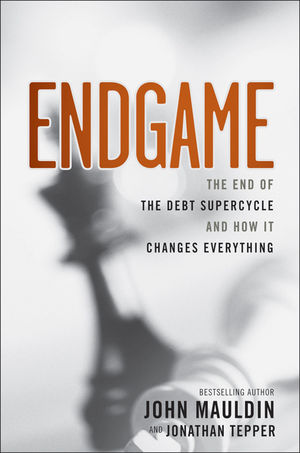
    Book review: Endgame by John Mauldin

    “There are no good choices – only bad ones” could sum up John Mauldin and Jonathan Tepper’s Endgame which looks at how our economies will evolve the end of the late 20th Century debt “supercycle” that has driven the world economy for the last fifty years.

    Endgame examines the choices that confront governments, societies, businesses and investors as the world economy adapts to the realities of the West’s aging populations and excessive debt levels.

    Much of Endgame relies on This Time Is Different by Carmen Reinhart and Kenneth Rogoff which the examined eight centuries of financial crises. While Reinhart’s and Rogoff’s conclusions are that speculative bubbles driven by debt almost always result in a banking crisis and painful economic restructure, each episode does have unique characteristics.

    In each case governments have three basic choices; reforming spending which is rare and maybe impossible given the debt levels in many nations, inflating debts away as Western governments have done since WWII or through outright defaults which have been associated with less developed nations.

    As we see with the convulsions the European Union is currently going through and the massive support given to banks around the world since the 2008 banking crisis, the default option is the one which governments will avoid at all costs.

    While the bulk of the book concentrates on the US, John does dedicate several chapters to the how the debt endgame will play out in other nations including Japan –“a bug in search of a windshield” – the UK, Eastern Europe and Australia, where he finds a massive property bubble that he believes could be the most spectacular endgame scenario of all.

    The clear lesson from Endgame is the post World War II social compact of working taxpayers supporting the aged, the sick and unemployed is over and was only propped up the illusion of wealth generated by loose credit and financial engineering throughout the 1980s, 90s and early 2000s.

    Some are hoping the Chinese economy can provide the global demand that was provided by US consumers. While Endgame doesn’t specifically look at this aspect, it’s unlikely China’s economy can do this.

    With consumers and governments now exhausted by debt and at the limits of what they can spend, the assumptions that have driven the economy along with our investment and consumption patterns of the last fifty years no hold true.

    Endgame is primarily a book for investors and John Mauldin’s emphasis is on where the safest investments will be in at the end of the debt supercycle. His view is it depends on whether governments choose to eliminate their national debts through deflation or inflation.

    For business owners, wage earners and retirees this is an important question too and Endgame describes what the consequences for everyone are under either scenario.

    The message of Endgame isn’t overwhelming negative; John Mauldin also looks at where the opportunities will lie after the credit endgame plays out. “We don’t know where the jobs will come from, but they will come” is another theme of the book.

    Whether you’re an investor or a business affected by the changing economy or building those businesses of the future, this is an important book for understanding the changing economic world in which we live.

    Similar posts:

  • Misunderstanding Chinese growth

    Misunderstanding Chinese growth

    When I first visited China in the late 1980s, I was amused at all the adverts for Rolex watches and Luis Vuitton handbags lining Shanghai’s Bund and the streets of Guanzhou; “how many Chinese can afford these goods?” I asked.

    The response was usually along the lines of there are a billion Chinese and if only one percent can afford these products then that’s a huge market.

    Over the years since we’ve seen consumer brands pour into China only to find the markets for Western style consumer goods aren’t what they expected. Many have left with their tails between their legs.

    The New York Times looked at this in their weekend story “Come On China, Buy our Stuff.”

    What many misunderstand is that while there are some millions of well heeled Chinese who can afford a Rolex, the vast majority simply cannot afford a Western style consumer lifestyle.

    The average Chinese income in 2010 was $4,270 per person according to the World Bank. For the United States, average income was over ten times China’s at $47,000. The average across the Europe Union is just over $32,000. India’s was only $1,330.

    So any business selling into the PRC expecting to find a consumer society like those of Northern Europe, Japan, the United States or Australia’s is in for a disappointing experience. Chinese households have neither the income or access to the credit lines that drove the Western consumerist societies over the last thirty years.

    For economists hoping that Chinese and Indian workers can pick up the world economy’s slack by becoming consumers on a level similar to European and US workers, they are deluded; this is at least a generation away.

    According to the Nation Master web site, the US had a similar average income to what China’s current levels in 1900. While there are clearly some differences in measures, we can say today’s Chinese workers are – in wealth terms – around a century behind their US colleagues.

    It may take a century for Chinese workers to catch up with Europe and North America, but it won’t happen as quickly as businesses and economists hope.

    Those hoping China will take up the slack left from the excesses of the 20th Century credit boom are going to have to look for a plan B. It may be up to the rest of us to find what’s going to drive the world economy for the next twenty years.

    Similar posts:

  • The four why’s of Sam Palmisano

    The four why’s of Sam Palmisano

    The New York Times’ profile of IBM’s outgoing CEO, Sam Palmisano, is an interesting study of how an established business can make well thought out long term plans through asking some basic questions.

    Under Palmisano, IBM moved a large part of their business from manufacturing and distributing computers to more Internet based products and services.

    A key part in IBM’s reinvention was recognising the PC hardware business was in decline as commoditisation of the computers and associated components eroded margins.

    To counter this, IBM looked at the areas where they believed the margins would be for the next decade and decided they lay in “on-demand” computing – what we now call “cloud computing”.

    What is particularly notable with IBM’s move to the cloud is this renting time on mainframes was the mainstay of their business up until the 1990s so the culture of reliable, accessible services backed by well priced plans is something not unknown to IBM.

    Having decided on the on-demand computing strategy, IBM then looked at who would buy their hardware division. Here they acted strategically and rather than selling to the highest bidder – someone like Dell or a private equity firm – they sold to China’s Lenovo which enhanced IBM’s standing within the Chinese markets.

    The notable thing with all of these plans is that they were made strategically and executed without the dithering we see at other companies struggling with similar issues. Yahoo! and HP being the two standouts in this area.

    While smaller businesses can’t execute on the same scale companies the size of IBM can should they choose, Sam Palmisano’s thinking was guided by four key questions;

    • “Why would someone spend their money with you — so what is unique about you?”
    •  “Why would somebody work for you?”
    • “Why would society allow you to operate in their defined geography — their country?”
    • “Why would somebody invest their money with you?”

    These four are something all of us could ask of ourselves and those around us. The answers to those questions are will guide what we do, where we do it and how we do it.

    For IBM, the future is fascinating as a new CEO comes in and they apply their investments in cloud computing, consulting and data mining to bigger picture projects like the Smarter Planet initiative.

    How this works for IBM and the other large technology companies remains to be seen although it’s quite clear that unlike many of their contemporaries, IBM’s management has a vision of where their business fits in the 21st Century.

    Similar posts: