Tag: iot

  • Microsoft and the Internet of Your Things

    Microsoft and the Internet of Your Things

    Microsoft has come late to the Internet of Things party, but it is has a good angle with it’s ‘Internet of Your Things’ tagline.

    General Manager of Microsoft’s embedded systems division, Barb Edson, spoke with Decoding The New Economy about the company’s strategy with the Internet of Things.

    For Microsoft, the emphasis is on the enterprise side of the business with Edson describing their strategy of “B2B2C” where the value in the IoT lies in managing the data for the businesses providing consumer services.

    Most notable is the company’s IoT tagline, as Edson says; “from Microsoft’s perspective we view the Internet of Things as ‘the internet of your things.”

    “Lots of companies out there talking about the Internet of Everything that there’s 212 billion devices, why do you care as business executive. You care about your things.”

    Microsoft’s strategy is based on leveraging their own assets such as Azure cloud services, SQL Server and Dynamics along their customers’ existing infrastructure.

    This retrofitting the internet of things to existing infrastructure is illustrated by Microsoft’s using the London Underground as its main reference site.

    Connecting all 270 stations of London’s 150 year old Tube network to the IoT is a massive undertaking and one that can only be done by retrofitting existing monitoring and SCADA systems.

    Interestingly the case study only look at Phase One of what appears to be pilot project in selected locations, the Microsoft spokespeople were a little unclear on this when asked.

    The London Underground is only one example of millions of organisations that will grapple with adding existing equipment to the internet of things in coming years; it’s an opportunity that Microsoft has been smart to identify.

    Edson however is clear on how Microsoft intends to help companies deal with the information overload facing managers, “I think the most exciting thing is we’re seeing real business problems being solved.”

    Similar posts:

  • Microsoft’s not like everybody else

    Microsoft’s not like everybody else

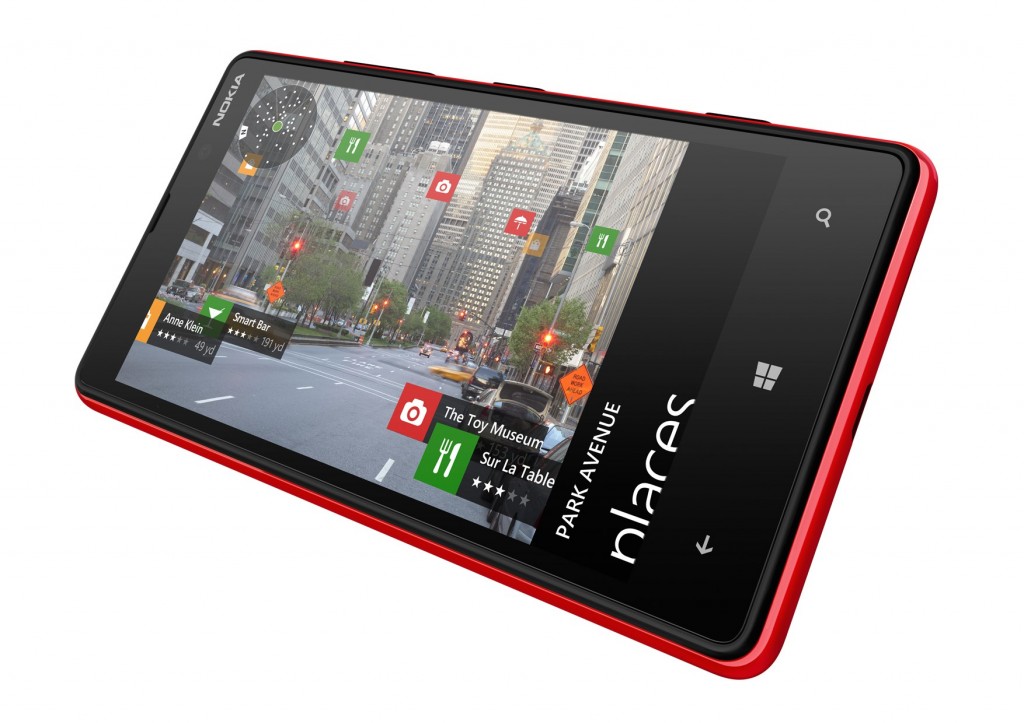
    “Not like everybody else” proclaims Microsoft’s first ad for its newly acquired Nokia phone division.

    In what way the Microsoft-Nokia product isn’t like its Apple and Android competitors isn’t clear from the ad, but hopefully they’ll tell us.

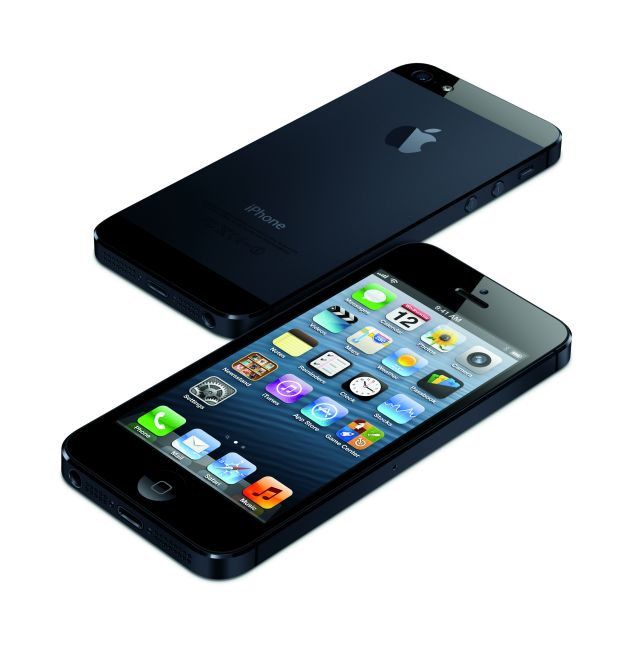
    The real concern with the Microsoft ad is that it again appears the business is being left behind in a marketplace shift as Google, Samsung, Apple and all the other smartphone leaders move to integrate their phones with smarthomes, fridges and even football stadiums.

    Sadly it might turn out that, once again, Microsoft isn’t like everybody else.

    Similar posts:

    • No Related Posts
  • Bleeding hearts and internet security

    Bleeding hearts and internet security

    The big tech news story of the last two days has been the Heartbleed security flaw, that might have compromised users’ passwords and other details.

    Given the nature of the bug where a server can tricked into giving away bits of what’s stored in its memory, it’s hard to say exactly what has been compromised – on most sites you’d be very unlucky to have your password on banking details in the system at the precise millisecond a malicious attacker exploited the bug – but the risks are still real.

    While webmasters and system admins around the world are frantically patching their systems, for the average user the best advice is to wait before changing your passwords as if the bad guys already have your details you’d have probably used them by now and changing your logins on a vulnerable server might actually increase the risk of crooks stealing your information.

    The Internet of Things

    The longer term risks with Heartbleed are actually in embedded systems and the Internet of Things; many systems will have hard coded implementations of the buggy software which may never be patched and these devices may be give up much richer data than a web server would.

    It’s another illustration of how difficult the task of keeping embedded technologies up to date and how to secure the Internet of Things.

    Open source blues

    While there’s no shortage of similar security lapses in commercial software, the Heartbleed saga is going to concentrate the minds of open source community on how to tighten peer review and audit version updates.

    Most open source projects are staffed by small groups of time poor volunteers, making auditing and quality control harder. That key parts of the internet and computer industries rely on these underfunded, and often unappreciated groups is a weakness for the entire sector.

    No technological change is simple or without problems and securing information is one of the great challenges of today’s tech revolution and Heartbleed is a strong reminder of that, hopefully we’ll learn some lessons about building robust systems.

    Similar posts:

    • No Related Posts
  • Apple’s long game

    Apple’s long game

    It’s always risky to make predictions about Apple, particularly when they are silly. The company plays a long game and isn’t known for panicked releases of me-too products.

    Time is ticking for Apple to announce an iWatch, say analysts is a good example of a silly prediction about Apple’s future products and something that’s quite rightly criticised by Daring Fireball’s John Gruber.

    As I’ve pointed out before, the watch market is tiny compared to the smartphone with the entire global wristwatch industry’s sales making up only one-seventh of Apple’s iPhone sales.

    Part of the problem with stories like CNBC’s is the tech media’s focus on consumer goods, particularly in the internet of things and wearable technology markets.

    Analysts like those quoted in CNBC’s story fall for this fallacy and overlook that the IoT market profits are going to come from the backend, B2B applications of the technologies.

    With Apple we’re already seeing this with iBeacon being deployed in sports stadiums and shopping centres – Apple’s recent partnership with United Airlines to provide inflight entertainment is another step towards locking up business deals.

    There’s no doubt those business deals will flow into the consumer market and an iWatch may well be part of Apple’s longer plan to lock customers into their products.

    However claiming Apple have 60 days to launch an iWatch is plain silly, particularly when you have a company with a track record of not being panicked into launching me-too products and playing the long game.

    Similar posts:

    • No Related Posts
  • The Internet of Racing Machines

    The Internet of Racing Machines

    For the Formula One racing circuit, the financial crisis of six years ago was an opportunity to reinvent the sport; today the teams use a combination of technologies to gain an advantage over their competitors.

    “A few years ago you wouldn’t have been here today,” Francois Puentes, Head Of Account Management at Team Lotus told a group of journalists ahead of this week’s Melbourne Grand Prix. “F1 was a completely different sport.”

    The 2009 financial crisis was the catalyst for the changes Puentes says; “we all sat down as teams at the same table to make the sport more sustainable, this obliged us to run the sport as a business.”

    “Before we didn’t know what the unit cost was for a part. We would very often produce two of the same parts without even knowing what was going on.”

    To tighten their management systems, Lotus bought in a range of cloud based business software such as Microsoft Dynamics and also accelerated its adoption of computerised manufacturing techniques.

    Speeding up development

    Lotus employs over 500 people to keep its two cars on the road and most of the vehicles parts are designed and manufactured at its headquarters in Oxford, England. During the season the team’s workshop may produce up to five hundred replacement or redesigned components each week.

    This brings together a number of technologies including Computer Aided Design, 3D Printing and cloud computing.

    The internet of racing machines

    Massive rule changes have also accelerated Formula One’s adoption of in car technology with information being gathered from sensors throughout the vehicles.

    During races data is transferred from the vehicles’ sensors by radio for the teams’ crews to analyse performance. This includes information like gear box temperature, tyre condition, and aerodynamic performance data.

    Following the race larger volumes of data are downloaded from the vehicle for engineers to tune the car for the next event.

    While Lotus has teamed with technology companies like Microsoft and EMC, rival team Caterham partnered with GE whose Global Research team worked to integrate the technologies demanded by the new F1 rules.

    Global technology

    Caterham’s cars use intercoolers developed in Germany, carbon fibre composites and fibre optic sensors from the United States, and big data analysis techniques developed in India.

    Key to gathering that data are sensors throughout the vehicle that capture a constant stream of data about forces acting on the car during the race, transmitting this information in a far more efficient way than traditional methods which relied on load sensors attached to the suspension.

    The result is massive volumes of raw data. On the track, Caterham cars generate 1,000 points of data a second from more than 2,000 data channels. Up to 500 different sensors constantly capture and relay data back to the team’s command centre for urgent analysis.

    Learning from Big Data

    By applying what the company has learned from its Industrial Internet projects, GE was able to help Caterham cut its data processing time in half, leaving the team in a stronger strategic and tactical position.

    Thanks to these analysis techniques, the Caterham team can look at slices of its data across an entire season, pinpoint setups that were particularly effective, and identify reliability issues earlier.

    Inside the vehicle, GE has also found a way to replace metal pipes with carbon fibre, reducing the overall weight of the vehicle.

    These technology developments will continue to find applications beyond the 2014 Grand Prix season.

    Carbon composites are being used extensively in the aviation industry and big data analysis is playing an important role in the renewable energy sector.

    Lewis Butler, Caterham’s chief designer, says working with GE is helping the team deepen its skills base.

    “GE are working with Caterham to help with the manufacturing process and knowledge transfer, and giving Caterham F1 Team the capability to manufacture its own parts,” he says.

    All the Formula One teams are using Internet of Things technologies to gather information on their vehicles, Big Data tools to manage that information along 3D printing to accelerate their research and manufacturing processes.

    The Formula One world is a glimpse into the future of business as various technologies come together to change the way industries operate.

    Paul travelled to the Melbourne Grand Prix as a guest of Microsoft and Team Lotus.

    Similar posts:
    • No Related Posts