Tag: journalism

  • The Daily Mail and the visibility fallacy

    The Daily Mail and the visibility fallacy

    Reuter’s Felix Salmon has an interesting take on the The Daily Mail’s internet success.

    The site might be a traffic powerhouse, but the internet is full of high-traffic sites which are worth very little. Traffic, in and of itself, is worth very little, and there’s no indication that readers are willing to pay for Mail Online, or that advertisers are willing to pay much for those readers. (The site’s revenue of $7.2 million is about 0.25% of DMGT’s $2.7 billion total revenue.)

    Felix Salmon makes an important point about the web and the fallacy of high traffic – many of the internet’s high traffic sites are of little value.

    In falling for this fallacy we’re making the mistake of thinking in old media terms where high newspaper circulation numbers or ratings winning TV programs translated directly into advertising dollars.

    That model worked because of restricted inventory. There were a limited number of TV stations or newspapers in our cities and regions which most people relied on for the day’s news and entertainment.

    In the internet age, inventory is not a problem. We live in an era awash with information and the old models of restricted supply no longer work.

    To make money, we have to add value. We can no longer rely on broadcasting licenses or prominent mastheads supported by classified advertisements and real estate puff pieces.

    Rewriting other peoples’ stuff in a way that grabs the attention of search engines is a way of getting fleeting readerships but it isn’t adding any value and, as revenues from online advertising continue to fall, it isn’t the way to make money either.

    Whoever figures out how to make money out of online news and journalism will be the Randolph Hearst or Rupert Murdoch of the 21st Century. Right now it doesn’t appear The Daily Mail, or competitors like The Huffington Post, will be those champions.
    Similar posts:

  • You call that a graph?

    You call that a graph?

    One way to illustrate a story is with charts. All too often though misleading graphs are used to make an incorrect point.

    A Verge story on Groupon shows how to get graphs right – clear, simple and tells the story of how the group buying service’s valuation soared and then plunged while it has never really been profitable.

    The vertical axis is the key to getting a graph right, cutting off most of the y-axis’ range is an easy way to mislead people with graphs. In this case you can see just the extent of Groupon’s valuation, profit and loss over the company’s short but troubled history.

    Since its inception, The Verge has been showing other sites how to tell stories online, their Scamworld story exposing the world of affiliate internet marketing sets the bar.

    Using graphs well is another area where The Verge is showing the rest of the media – including newspapers – how to do things well.

    For Groupon, things don’t look so good. As The Verge story points out, the company’s income largely tracked its workforce which grew from 126 at the start of 2010 to over 5,000 by April of 2011. Which illustrates how the business was tied into sales teams generating turnover.

    The spectacular growth of Groupon and other copycat businesses couldn’t last and hasn’t. The challenge for Groupon’s managers is to now build a sustainable business.

    For investors, those graphs of Groupon’s growth were a compelling story. Which is another reason why we all need to take care with what we think the charts tell us.

    Graph image courtesy of Striker_72 on SXC.HU

    Similar posts:

  • Can media salespeople think digital?

    Can media salespeople think digital?

    The future of journalism is bleak if sales teams can’t figure out how to sell ads on news sites.

    Eighteen months ago News Limited, the Australian print arm of News Corporation, put out the first indications that content was going behind a paywall.

    This was always going to be controversial so a softening up process was put in place including the then head of News Digital Media, Richard Freudenstein, speaking at various conferences.

    Inviting bloggers to a briefing on News Limited’s online future was another strategy which, predictably, resulted in varying views on the prospects from attendees like Laurel Papworth and Ross Dawson.

    Another part of the process was Freudenstein penning the odd article for The Australian describing the rationale behind the paywall.

    “And we will have completely solved how to sell advertising across print, tablet and digital.” Freudenstein said at both the end of his Australian article and a later Q&A at the Mumbrella 360 Conference.

    Sadly this appears not to have been the case, a year later News was struggling with digital revenues.

    This is not just a problem for News Limited or Australian publications, The Economist looked at the struggles of print media in 2012 and cited a graph from Reflections Of A Newsosaur showing how newspapers’ digital revenues have been flat lining for nearly a decade while their print revenues collapse.

    digital advertising revenues have been flatlining for decades

    One of the reasons for traditional media’s stagnation is their salespeople have been bought up selling newspaper display ads, are locked into antiquated KPI’s and have commission structures that reward print over digital.

    This was bought home to me a few weeks after News Limited started its charm offensive at a presentation by Cumberland Press, News Limited’s suburban division, where the salesman told a room of small business owners about the range of print advertising products available in the local newspapers.

    Not once was True Local, News Limited’s Google Places competitor, mentioned. When I asked about it, the salesman waved the idea away and said he’d throw in an annual sub if I took out a week’s worth of quarter page display ads in the Manly Daily.

    Many of the small business owners in the room thought that was a good deal, which shows its not just newspaper managers who are having a digital steamroller running over their revenues – but that’s a post for another time.

    As The Economist and Newsosuar shows, News Limited’s experience in selling digital advertising is the norm and it’s genuinely shocking that newspapers’ digital revenues have flatlined while the revenues of Google and other online advertisers soar.

    When News Limited announced its new strategy they also announced a community site to discuss the issues of digital news gathering and online advertising. They called it The Future of Journalism.

    Just over a year later The Future of Journalism site looks like this;

    the future of journalism is gone according to News LimitedThat’s a dismal view of the future of journalism but it’s pretty accurate if somebody can’t figure out how to sell ads on news sites and break newspapers out of their online advertising stagnation.

    Similar posts:

  • An infinite number of blogging monkeys

    An infinite number of blogging monkeys

    With the recent kerfuffle over writing for free, I thought I’d spend Christmas Day re-reading Chris Anderson’s Free.

    Deep in the book there’s the pertinent quote;

    Abundant information wants to be free. Scarce information wants to be expensive

    This is key question all writers, and anyone else in the creative industries need to ask, are we just adding to the tsunami of abundant information or are we adding something insightful and unique that has scarcity value?

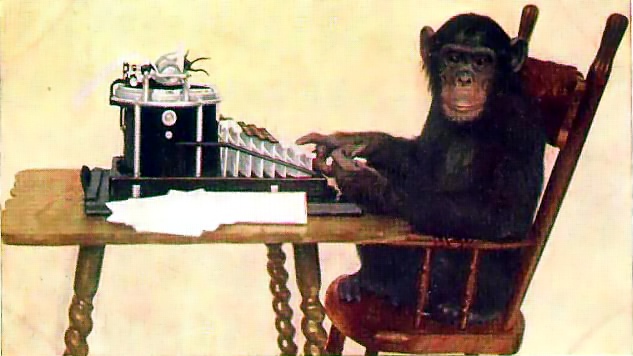
    On the web there’s a unlimited number of monkeys writing rubbish, even if we’re the one that’s managed to bash out Hamlet nobody is paying much attention.

    We need to be better than the noise, and the sites we give our work to – whether we get paid or not – need to be a step above those churning out rubbish.

    Similar posts:

  • Poor journalism and social media

    Poor journalism and social media

    Brother’s plea shows up online failings crows the Sydney Morning Herald over social media’s role in misidentifying the perpetrator of the Sandy Hook school shooting.

    The problem for the SMH is that social media wasn’t responsible for the story. As the Washington Post reported, CNN and various other outlets misidentified the shooter as his brother who had to take to social media to correct the record.

    For the mainstream media, the Sandy Hook shooting was not their finest hour; not only did they misidentify Ryan Lanza as the shooter, but they mistakenly reported his mother had worked at the school. When the Daily Mail does a better analysis of the story than many outlets, you know something is wrong.

    Something is certainly wrong at Fairfax as the cutting of resources results in the Sydney Morning Herald being three days behind the story and factually wrong on key aspects – not to mention adding a smug headline that is embarrassingly incorrect.

    While the writer of the SMH article should be held to account for sloppy work and poor research, the real responsibility for this embarrassment lies with the paper’s editors and management who should be ensuring what appears under the masthead is accurate and reliable.

    Both The Age and Sydney Morning Herald are essential to the fabric of their respective cities, this story is a good example of the important role the SMH has in shining light on the arcane dealings of the city’s business community. Fairfax can, and should, do far better than a poor, badly researched story on social media.

    Ironically, the mis-identification story quotes media academic Julie Posetti as saying “anyone with an internet connection could now contribute to and comment on the breaking news cycle without going through the filters of the traditional media.”

    At Fairfax, those filters are broken with the breathing space from selling its New Zealand digital operation, the company’s management has an opportunity to fix their credibility problem and focus on its core business.

    Similar posts: