Tag: law

  • Clerks, Dying Videos and Culture Clashes: Links of the week

    Clerks, Dying Videos and Culture Clashes: Links of the week

    The race to rescue VHS tapes, how Ford lost Google and the fascinating world of London legal clerks are among last week’s interesting links.

    London clerks

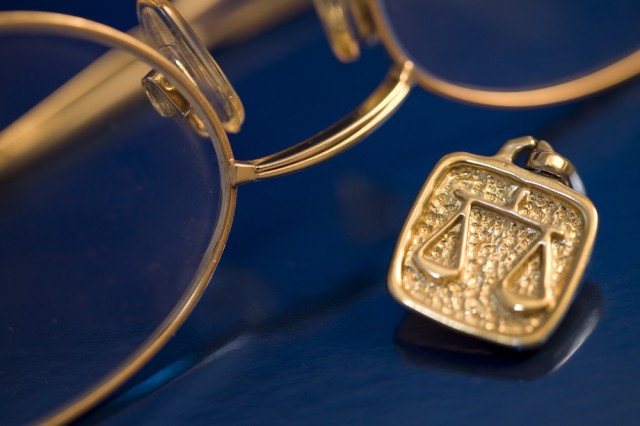
    Inside the antiquated, but very lucrative, world of London barristers’ clerks.  A fascinating a look at one aspect of the English legal profession where old traditions have conveniently merged with modern fees.

    Saving VHS tapes

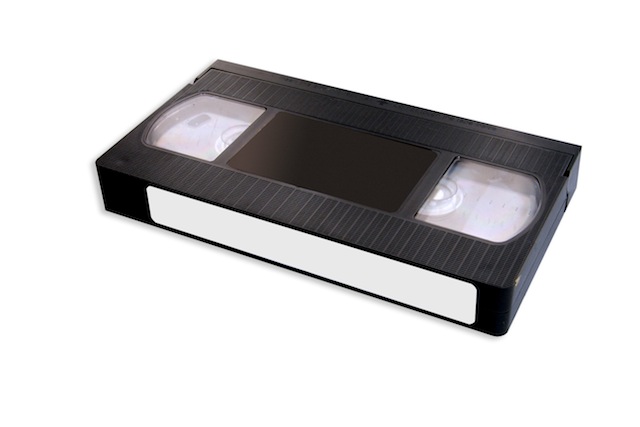
    One of the banes of modern culture is shifting standards. As VHS tapes decay, researchers are racing to preserve the culture of the 1980s and 90s, reports US National Public Radio.

    Google and Ford clash cultures

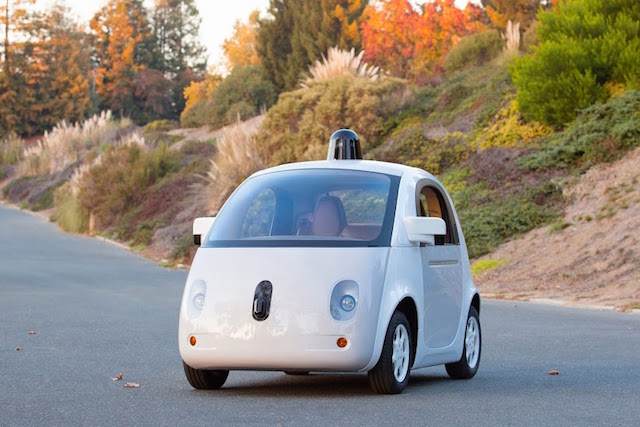
    Joint ventures and business partnerships are often problematic, as Ford found in their abortive autonomous vehicle project with Google.

    Similar posts:

    • No Related Posts
  • Liability and the Internet of Things

    Liability and the Internet of Things

    What happens when an internet connected device fails?

    In The Australian today I have a piece discussing the legal risk of the IoT.

    Lawyers warn that manufacturers, distributors and installers all face the possibility of damages should their devices malfunction or not perform as advertised.

    This risk is compounded by the data analysis with Michael Stojanovic of international law firm Bird & Bird citing the example of a gas monitoring device accurately detecting and reporting a surge but a company being liable because they didn’t warn their customer something was amiss.

    Equally there’s a risk with misreported or lost data. This in itself is presents a problem as many of the software vendors currently looking at supplying the IoT have a ‘best effort’ mentality where they don’t accept responsibility for service interruptions.

    While that attitude may have stood up before courts over the last twenty years, it’s unlikely to get much sympathy from judges and juries when critical systems are affected.

    Like everything else in life, the lawyers are coming for the IoT.

    Similar posts:

    • No Related Posts
  • Who owns a smartcar’s smarts?

    Who owns a smartcar’s smarts?

    Automakers Say You Don’t Really Own Your Car states the Electronic Frontiers Foundation.

    In their campaign to amend the US Digital Millenium Copyright Act to give vehicle owners the right to access and modify their automobiles’ software the EFF raises an important point.

    Should the software licensing model be applied to these devices then purchasers don’t really own them but rather have a license to use them until the vendor deems overwise.

    Cars, of course, are not the only devices where this problem arises. The core of the entire Internet of Things lies in the software running intelligent equipment, not the hardware. If that software is proprietary and closed then no purchaser of a smart device truly owns it.

    Locking down the smarthome

    This raises problems in smarthomes, offices and businesses where the devices people come to depend upon are ‘black boxes’ that they aren’t allowed to peer into. It’s not hard to see how in industrial or agricultural applications that arrangement will often be at best unworkable.

    Four years ago tech industry leader Marc Andreessen pointed out how software is eating the world; that most of the value in an information rich economy lies in the computer programs that processes the data, not the hardware which collects and distributes it.

    That shift was flagged decades ago when the initial fights over software patents occurred in the 1980s and 90s and today we’re facing the consequences of poorly thought out laws, court decisions and patent approvals that now challenge the concepts of ownership as we know it.

    Is ownership outdated?

    However it may well be that ‘ownership’ itself is an outdated concept. We could be entering a period where most of our possessions are leased rather than owned.

    If we are in a period where ownership is an antiquated concept then does it matter that our cars, fitness bands, kettles, smoke alarms and phones are in effect owned by a corporation incorporated in Delaware that pays most of its tax in the Dutch Antilles?

    Who owns the smartcar’s data?

    The next question of course is if the software in our smart devices is secret and untouchable then who owns the data they generate?

    Ownership of a smartcar’s data could well be the biggest issue of all in the internet of things and the collection of Big Data. That promises to be a substantial battle.

    In the meantime, it may not be a good idea to tinker too much with your car’s software or the data it generates.

    Similar posts:

    • No Related Posts
  • How the Internet of Things could overtake the law

    How the Internet of Things could overtake the law

    Last March the Australian internet industry celebrated twenty years of commercial operations with the Rewind/Fast Forward conference that looked at the evolution of the online economy down under and its future.

    Naturally the Internet of Things was an important part of the discussion looking at the internet’s future and one of the panels examined the effects of the IoT on industry and society.

    During the session chairman of the Communications Alliance industry association, John Stanton, raised an important point about how the IoT creates problems for existing laws and the regulators as a wave of connected devices are released onto the market place.

    The risks are varied, and Stanton’s list isn’t exhaustive with a few other aspects such as liability not explored while some of the issues he raises are a problem for other internet based services like cloud computing and social media.

    Roaming rules

    Having fought many regulatory battles over roaming charges and access between networks, it’s not surprising Stanton and the Communications Alliance would raise this as an issue.

    Dealing with roaming devices will probably be a big challenge for mobile Machine to Machine (M2M) technologies, particularly in the logistics, airline and travel industries. We can expect some bitter billing battles between clients and their providers before regulators start to step in.

    Number schemes

    Again this is more an issue for mobile M2M consumers. Currently every SIM card has its own phone number once the service is activated.  It may be that regulators have to revise their numbering schemes or allow providers to use alternative addressing methods to contact devices.

    Data sovereignty

    Where data lives is going to continue to be a vexed issue for cloud computing consumers, particularly given the varied laws between nations.

    Short of an international treaty, it’s difficult to see how this problem is going to be resolved beyond companies learning to manage the risks.

    Identity management

    Data integrity is essential for the IoT and accurately determining the identity of individuals and devices is going to be a challenge for those designing systems.

    Over time we can expect to see some elegant and clever solutions to identity management in the IoT however masquerading as a legitimate device will always be a way malicious actors will try to hack systems.

    Privacy

    For domestic users, the privacy of what remains in data stores is going to be a major concern as domestic devices and wearables gather greater amounts of personal information. We can expect laws to be tightened on the duties and obligations of those collecting the data.

    Access Security

    Who can do what with a networked device is another problem, should a malicious player or a defective component get onto the system, the damage they can do needs to be minimised. What constitutes unlawful access to a computer network and the penalties needs to be carefully thought out.

    Spectrum allocation and cost

    Governments around the world have been reaping the rewards of selling licenses to network operators. As the need for reliable but low data usage IoT networks grows, the economics of many of the existing licenses changes which could present challenges for both the operators and governments.

    Access to low cost and low data access networks

    Following on from the economics of M2M networks, the question of mandating slicing of scarce spectrum for IoT applications or reserving some frequencies becomes a question. How such licenses are granted will cause much friction and many headaches between regulators and operators.

    Commercial value of information

    How much data is worth will always be a problem in an economy where information is power and money. This though may turn out to be more subtle as information is only valuable in the eyes of the beholder.

    Where information becomes particularly valuable is in financial markets and highly competitive sectors so we can see the IoT becoming part of insider trading and unfair competition actions. These will, by definition, be complex.

    Like any new set of technologies the internet of things raises a whole new range of legal issues as society adapts to new ways of doing business and communicating. What we’re going to see is a period of experimentation with laws as we try to figure out how the IoT fits into society.

    Similar posts:
    • No Related Posts
  • Driverless cars outrun the law

    Driverless cars outrun the law

    Tesla founder Elon Musk believes there will be driverless cars on US roads by the summer, the New York Times reports.

    One of the key factors in whether Musk’s prediction comes to and driverless cars are on the road by the middle of the year is the law with most people assuming autonomous vehicles are currently illegal.

    Some experts however believe current laws don’t prevent driverless cars, with the New York Times quoting one industry leader who suggests there’s no legal barrier to autonomous vehicles taking to the road.

    Tesla is not alone in pushing the envelope. Chris Urmson, director of self-driving cars at Google, raised eyebrows at a January event in Detroit when he said Google did not believe there was currently a “regulatory block” that would prohibit self-driving cars, provided the vehicles themselves met crash-test and other safety standards.

    This view raises an interesting legal argument, who is the recognised driver of an autonomous vehicle? In the event of an accident or dispute does liability rest with the owner, the manufacturer or the passengers?

    What this debate over driverless vehicles illustrates is how laws specific to today’s society aren’t always applicable to tomorrow’s technologies; certainly many of the laws designed for the horse and buggy era became redundant as the motor car took over a hundred years ago.

    Another consequence of autonomous vehicles are the changes to occupations supporting the motor industry; it’s obvious that panel beaters and insurance lawyers may have their jobs at risk but Jay Zagorsky in The Conversation suggests nearly half of US police numbers would be redundant if there are no more car drivers.

    Given how the funds local and state governments raise from traffic offences, a shift to driverless technologies could even have an effect on city budgets.

    The motor car was the most far reaching technology of the Twentieth Century in the way it changed the economy and society over those years, it’s hardly surprising that we are only just beginning to comprehend how a shift to driverless vehicles may change our lives this century.

    Similar posts: