Tag: media

  • You don’t wanna be on the front page.

    Nothing amuses a journo or ruins a PR’s day more than a CEO or founder declaring “we want to be on the front page of x publication.”

    The sensible response to that demand is ‘why?’ and it’s an important question for anyone looking for media coverage.

    Usually ‘x publication’ is the nation’s major business outlet, think the AFR in Australia, the FT in the UK, or the Wall Street Journal in the United States. Every country has its equivalent.

    Positive stories leading a site or paper aren’t something easily won, unless you’re buying space which is a different story.

    However, regardless of whether you’re buying space or you’ve earned a story at the top of the page, is it something you really want and, if so, why?

    A favourite story of mine involves an old colleague who was editing one of Australia’s top tech magazines (back in the days when front cover CDs drove sales).

    Her magazine awarded ‘PC of the Year’ to a small suburban computer shop, resulting in that store deluged with orders.

    Great news, right?

    Not so for the business as the owners found themselves overwhelmed with work and, shortly after, buried with customer complaints as they struggled to meet demand. Eventually they went out of business with a horde of disaffected clients and consumer affairs on their tails.

    Most business owners don’t think through why they are looking for publicity – if you suddenly get attention are you risking ending up like that suburban computer shop?

    The answer to the ‘why’ question often turns out to be complex – some businesses are looking to juice sales or build their brand; others, particularly in the startup space, want to get on investors’ radars; while high-growth businesses may be looking at attracting good quality staff.

    And there’s ego, which is often the biggest driver of the “I wanna be on the front page” demand.

    The latter’s easy to get dispel with a litany of all the times CEOs and founders careers have been scuppered by a high-profile scandal on the front pages – basically the “you don’t wanna be on the front page” reply.

    More complex are the other motives, and they require a nuanced, well-thought out strategy with the audience and the desired end result being key considerations.

    Often, that audience is more in a niche publication, or even the company’s own social and owned channels, rather than a city or national publication.

    While it’s a good ego-stroke to see yourself illustrating the day’s top story in the national business paper, for most organisations that’s not where the real benefit of media coverage lies in building a name, selling a product, or catching the eye of well-heeled investors.

    Sensibly thinking about where you want to be seen is the first step to getting coverage. Of course, you still need to have something decent to cover.

    But, no, you really don’t need to be on the front page.
    Similar posts:

  • Being an industrial revolutionary

    Being an industrial revolutionary

    “The future isn’t pre-determined, technology doesn’t come from some outside force. It’s created by us. Some people have more power than others in that system, such as the big tech entrepreneurs, but at the end it’s people and organisations that have the power.”

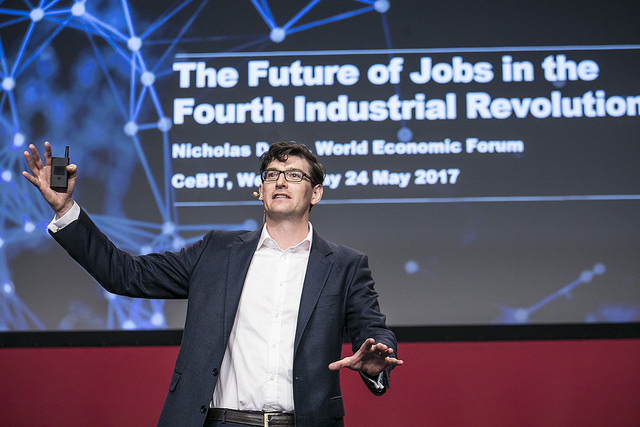
    Nicholas Davis, the World Economic Forum’s Head of Society and Innovation, was discussing at the recent Sydney CeBIT conference how we can take control of the digital economy and where workers fit into an increasingly automated world.

    Technology and online platforms aren’t neutral system, Davis observes. “It’s not just about how we use them, but the values that are designed into the systems, technology is not just a neutral thing. During a conversation like this if I put my iPhone between us, it’s proven that reduces our memory of that discussion and our sense of connection.”

    Politics and addiction

    “The purpose of the technology, the design of it, affects us in different ways.” Davis says, “if we design technologies for addiction, if we design business models that involve us being sucked into systems at the expense of other things in our lives, then that is a value choice that companies make and that we as users are trading off in our lives.”

    “In understanding that technology is not neutral then the question is how we, as revolutionaries have that political discussion? I don’t mean political like ‘Left’ and ‘Right’ but these are value decisions that we need to engage with.”

    “The difficulties about having discussions about technology is not getting sucked into a left-right divide and letting one group of people own innovation, but to say what do we want, How do we get there and how do we avoid the mistakes of previous industrial revolutions where the environment suffered, kids suffered and vulnerable populations suffered.”

    A change in thinking

    “One of the biggest problems is we don’t have regulatory or even democratic institutions where we can make collective decisions about technologies,” says Davis.

    “The average AI researcher, at the top of their game anywhere in the world, would only understand a small percentage of the AI space. So how do you expect a politician or a voter, to come to grips with it.”

    One of the key discussions missing in the public sphere is around automation and concepts like the Universal Basic Income, Davis believes. “We should have a serious chat about giving everyone the space to build up their skills.”

    In the development policy, Davis sees growing inequality and applying last century’s thinking to today’s challenges as among the biggest risks facing governments and communities.

    Rippling beyond business

    For business, the imperative is to recognise the effects of decisions on the wider community.

    “The big thing for business is understanding the technology decisions you make have a ripple effect beyond your company, you need to look forward to new ways of value adding.”

    Davis warns we are seeing a backlash against innovation and technology with concerns about privacy and security growing.

    “So much of the world is build on their use of data. Most companies and organisations don’t have good data hygiene or ontology to classify their information. People say data is their greatest assets – some say it’s the new oil – but it’s also their greatest liability. So understanding information security at the board level is critical.”

    The power of individuals

    For individuals, Davis believes the power lies with us in the choices we make as consumers.

    “Don’t underestimate your own power, but also don’t underestimate that more and more products around us are designed to influence our behaviour in ways we need to be aware of.”

    “In most cases, if the product is free then you and your data are the product, understand that and on what terms is important.”

    Conscious choices

    “Understand the externalities of these services as well. Appreciate the effects it has on your family, your mental health, on the ability to connect is important. Being able to make conscious choices about these things.”

    “Supporting open data standards and competition – not just accepting Android or Apple for instance – rather than allowing politicians and big business to fight over these things.”

    So in Davis’ view being an ‘industrial revolutionary’ in the digital era is a matter of being an informed, and empowered, consumer. Will that be enough?

    Similar posts:

  • Keeping the cyber utopian dream alive

    Keeping the cyber utopian dream alive

    “I stand before you as a failure,” was how I opened my presentation at the Talking Justice conference last weekend. “If I were giving this talk ten or fifteen years ago, I’d have described how the web and social media were going to usher in a new era of democracy and accountability.”

    “Like most of the cyber utopians, I was very, very wrong.”

    Basically we were wrong because we didn’t see how the internet would concentrate rather than diffuse power or the extent of how new gatekeepers and monopolies would be replaced the old ones.

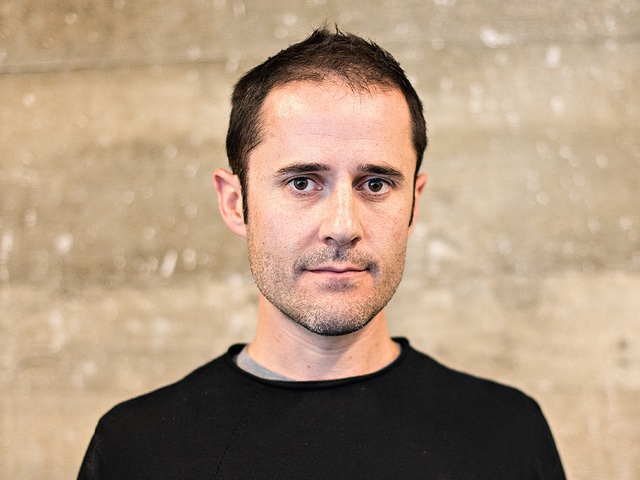
    My friends and I were not alone, in a somewhat rambling interview with the New York Times Twitter co-founder Evan Williams describes how “the internet is broken” and how he thought the messaging service could make the world better.

    “I thought once everybody could speak freely and exchange information and ideas, the world is automatically going to be a better place,” Mr. Williams says. “I was wrong about that.”

    Instead Twitter has become home to trolls, harassment and misinformation, something that saddens Williams and most of us who thought the web would bring about a more open and fair society.

    Hope isn’t completely gone though, we are still in the early days of social media and the internet so the current trends may only be a transition effect as audiences, markets, regulators and the community get to grips with the new medium.

    There’s also Amara’s law which states we overestimate the effect of a technology in the short run and underestimate the effect in the long run.

    So it’s best to be a pessimistic optimist where one accepts in the short run things are dire but over time things will turn out well.

    We can only hope.

    Similar posts:

  • Tinny vapid crap – last week’s links

    Tinny vapid crap – last week’s links

    Last week was an interesting time with an appearance before a Senate Committee and a trip to regional Victoria to talk about the media and social justice.

    While busy, there was time to read some fascinating articles ranging from Elton’s John’s views on modern pop music, software lawsuits and early losses in the war on ‘fake news’ through to how the shiny new Apple campus boast almost everything for employees except a childcare centre.

    Parents need not apply

    Apple’s new 5 billion dollar campus is the realisation of Steve Jobs’ final vision. It boasts a hundred thousand square foot gym and an attention to detail that extends to the sand used to make the windows.

    But it doesn’t have a day care centre, which gives a pretty clear message to aspiring employees – if you don’t have a stay at home spouse, something pretty rare in the hyper expensive Silicon Valley, then don’t bother applying.

    Thanks a latte

    Meanwhile in Australia, the government financed National Broadband Network is spending half a million dollars a year on maintaining its staff coffee machines.

    While the money is small change in a project recent estimates put at costing $56 billion, it is emblematic of how far from its original purpose the vision has drifted.

    Facebook Fails to Tackle ‘Fake News’

    The social media’s attempts to tackle ‘Fake News’ are failing dismally reports The Guardian as reactionary groups gleefully reshare and publicise anything flagged as such.

    While it’s early days, this isn’t a good start for Facebook although it also illustrates how powerful filter bubbles are and the lengths people will go to spread their ideologies.

    The lawyers always win

    Lasts week’s ransomware scares will trigger lawsuits says Reuters, quoting several legal experts.

    Unsurprisingly, it won’t be Microsoft who’ll be the target given their almost bulletproof terms and conditions but businesses who didn’t patch their systems could be liable.

    Fox News’ founder passes

    Roger Ailes, the founder of Fox News and one time Nixon adviser, passes a few months after being ousted from the network he created.

    Ailes personified the tabloidisation of the media as Rupert Murdoch applied the model which had worked so well for him at The Sun in the UK to newspapers and television in the United States.

    Many blame the internet for the click bait, sensational model of modern news reporting but the pattern was well established by the time the World Wide Web came along in the mid 1990s.

    Tinny, vapid crap

    Elton John weighs in on the state of pop music.


    Similar posts:

  • Roger Ailes’ legacy

    Roger Ailes’ legacy

    The passing of Roger Ailes, former NIxon advisor and founder of Fox News, is an opportunity to reflect on how the media has evolved over the past forty years.

    Ailes’ work shows how click bait, fake news and filter bubbles are not products of the world wide web but pre-date it by at least twenty years with the rise of tabloid television and the modern version of yellow journalism designed to scare people.

    While the web and social media proved wonderful ways to spread such messages, it was the arrival of programs  like A Current Affair twenty years earlier in the United States and reporters like Steve Dunleavy who changed popular journalism and taught us to fear our neighbours.

    The results of that have been profound in everything from kids not walking to school any more to the magnificently wasteful prison systems all of the English speaking countries have built in response to hysteria over crime rates.

    Ailes and his colleagues found a successful media model that attracted viewers and advertisers which set the pattern for today’s febrile environment of fake news and filter bubbles that have ushered in the most unstable and reactionary political climate since the early 1930s.

    Where we go next remains to be seen, it’s a shame Ailes won’t be around to pay the price of his works.

    Similar posts:

    • No Related Posts