Tag: microsoft

  • Tech’s tough days

    Tech’s tough days

    Today sees another tough day for tech stocks with both Apple and Amazon missing their projected earnings which again finds Microsoft being stood up at their own party.

    For Amazon, along with the costs involved with a new range of Kindles, there’s a huge write down in their Living Social investment, another indicator that the group buying bubble has passed into history alongside tulips, 19th Century Argentinian railway bonds and South Sea investments.

    It’s worrying that while Amazon’s quarterly sales have increased by 23% over last year’s figures to $11.546 billion dollars, their cost of sales has also gone up 23% from $8.325 to $10.319 billion. This is a trend to watch closely over the next few quarters.

    Unlike Amazon, Apple still made a fat profit with income going up to $8.2 billion for the quarter, an increase of 24%. This missed many Wall Street analysts’ estimates.

    Apple’s missed earnings were put down to supply chain constraints and development costs, but what jumps out looking at the cash flow is the six billion turnaround in the company’s Accounts Receivable. One assumes this is the value of pending invoices on the new ranges of iPhones, iMacs and iPads sent out to their sales channel.

    If that’s right, Apple are looking at a big boost in their cashflow next month, although there’s few companies who would like to have five billion dollars in outstanding invoices in today’s economic climate.

    Once again though, Apple have managed to steal Microsoft’s thunder. Despite the glitz and glamour of the Windows 8 launch in New York, Microsoft’s announcement has been muted by the tech and business press’ reaction to the earnings reports.

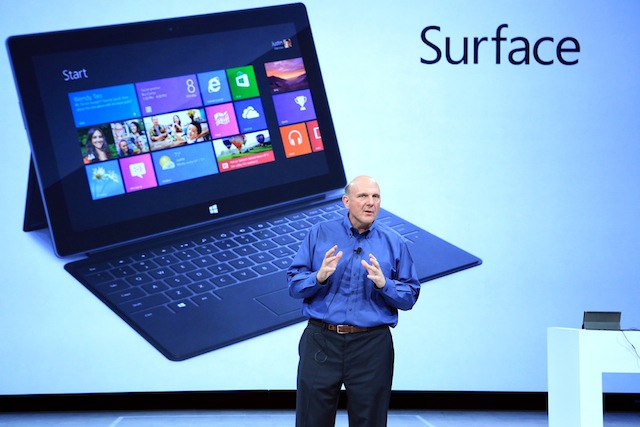
    What is clear from all three companies though is that hand held devices – the Apple iPad, Amazon Kindle and Microsoft Surface – are going dominate the tech and financial coverage of all three companies for the rest of the year.
    Similar posts:

  • Apple’s line in the sand

    Apple’s line in the sand

    The comprehensive refresh of Apple’s product lines announced by CEO Tim Cook this morning is a clear warning to Google and Microsoft that the market leader in the post-PC computer marketplace is not going away.

    With both Google and Microsoft having a major product releases over the next week, the pressure is now on both companies to match Apple’s announcements and product range.

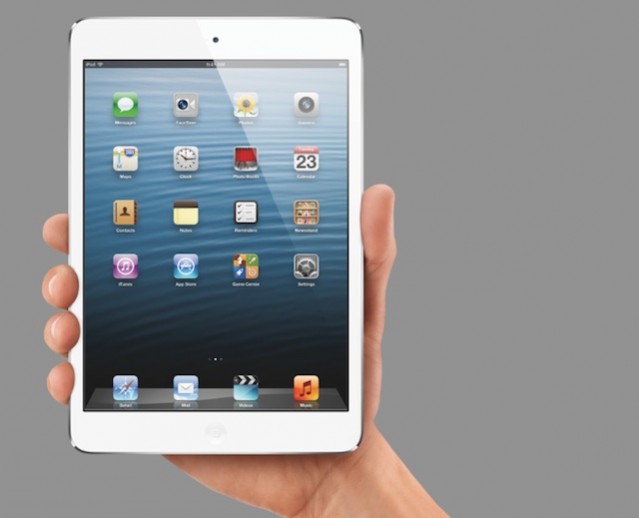
    For Microsoft, the stakes are now substantially higher for their Windows Surface tablets. The Fourth Generation iPad and iPad Mini (or is that iPod Maxi?) are going to be the benchmarks the Redmond tablet PCs will be measured against.

    An interesting part of the Apple presentation was marketing chief Phil Schiller trash talking the Android competitors with a side-by-side comparison between the iPad and the Nexus.

    These comparisons are becoming a hallmark of Schiller’s marketing in the post Steve Jobs Apple, whether this is good or bad remains to be seen, but it is a difference compared to the old boss’ way of doing things. Although Jobs wasn’t adverse to poking fun at some of Microsoft’s confusing habits.

    For geeks, and those who like shiny things that go “beep”, it’s an exciting week and Apple have shown why they are masters at controlling the tech media.

    It’s now up to Google and Microsoft to see if they can match Cook’s announcements and meet Apple’s price points.

    Similar posts:

  • Can Microsoft beat the PC marketplace’s structural decline?

    Can Microsoft beat the PC marketplace’s structural decline?

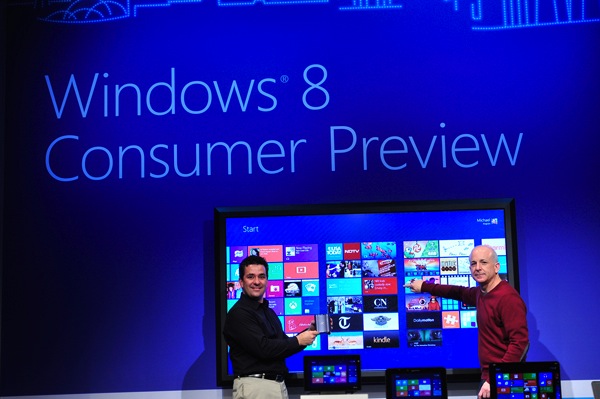
    In New York on Thursday Microsoft will have a marathon launch of their Windows 8 system and the futures of many of their hardware partners lie on the success of the new system.

    For Microsoft, Windows 8 could be the last throw of the dice for the desktop operating system that has sustained the company for thirty years.

    The figures aren’t good for Windows as Microsoft’s 2012 profit and loss shows, here are the figures broken out by operating unit segment from the company’s annual report.

    Year Ended June 30, 2012 2011 2010
    Revenue  bn $  bn $  bn $
    Windows & Windows Live Division 18,818 18,787 18,789
    Operating Income (Loss)
    Windows & Windows Live Division 11,908 11,971 12,193

    The core Windows & Windows Live Division has stagnant revenues and a slowly declining profit margin. We’ll leave the huge losses in the online division for a future post.

    Since the days of the first MS-DOS deal with IBM, Microsoft’s core business has been the licensing of operating systems to PC manufacturers and now that model is in trouble.

    For instance Dell had an 8% drop in revenue resulting in a worrying 22% drop in operating profit, their PC dominated consumer division suffered a fat 22% drop in sales and recorded a miniscule .5% profit margin. Similarly Asus had 25% drop in sales to record a 2011 loss.

    The pain being suffered by PC manufacturers’ sales and margins will almost certainly be shared by Microsoft as companies like Dell, HP and Asus simply can’t afford to pay the licensing fees which have sustained the Redmond business model for so long.

    Microsoft and their partners hope – or pray – that the PC decline is a temporary hiccup in computer sales similar to the traditional lull seen before the release of a new system.

    History’s not on their side with research company Asymco expecting sales of tablet computers to overtake PCs sometime in late 2013.

    This is not a cyclical trend – the PC industry is in structural decline; the traditional Windows upgrade cycle is dead and Google are running interference with their Chromebook networked laptops.

    Moving onto tablets and smartphones in this light makes sense for Microsoft and given the PC manufacturers have failed dismally to deliver decent tablet computers or phones over the last 15 years so it’s understandable the software giant wanted to develop their own hardware or team up with a struggling company like Nokia.

    The declining margins in personal computers means we’re seeing the end of the Windows desktop ecosystem. With the rise of the web and cloud computing the type of operating system we use is like arguing between Toyota and BMW drivers; one might be more prestigious but both will get you where you want to go.

    For Microsoft the challenge is to replace those Windows licensing rivers of gold with similar revenue streams through their phone and tablet products but with Apple and Google already dominating those fields, is it too late for the company that dominated personal computing? The next six months will tell us.

    Similar posts:

  • The risks of tablet pricing

    The risks of tablet pricing

    We often forget that tablet computers weren’t invented by Steve Jobs. For a decade before Microsoft and their partners like Toshiba or Dell had been selling ‘slate-like’ devices.

    The market wanted tablet computers, particularly business users in sectors like logistics and health care, but the Windows products on offer were heavy, clunky and expensive.

    It took the iPad to deliver what the market wanted —  a lightweight, easy to use and reasonably priced tablet computer. This was the reason Apple were so successful.

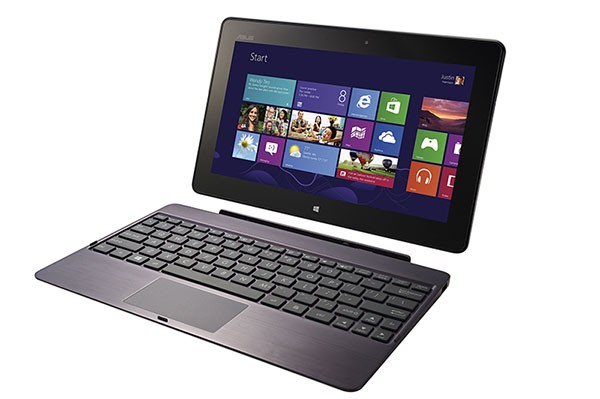
    With Asus’ pricing announcement of their new range of Windows 8 tablets it appears the mistakes made by the PC industry with tablet computers ten years ago are going to be repeated.

    The fundamental thing that will kill Windows tablets is cost and these tablets are too expensive compared to the Apple and Android competitors.

    While having Windows compatibility and the opportunity to save to USB drives or corporate networks is handy in a tablet, there seems to be little reason for customers not to buy a mid-priced laptop.

    It appears though these price points are part of Microsoft’s strategy. Steve Ballmer hinted at this in his Seattle Times interview last weekend.

    Q: The iPad has the largest share of the tablet market, but its soft spot, it seems to me, is the price.With the Surface, are you planning to compete with the iPad on price or on features?

    A: We haven’t announced pricing. I think we have a very competitive product from the features perspective. …

    I think most people would tell you that the iPad is not a superexpensive device. … (When) people offer cheaper, they do less. They look less good, they’re chintzier, they’re cheaper.

    If you say to somebody, would you use one of the 7-inch tablets, would somebody ever use a Kindle (Kindle Fire, $199) to do their homework? The answer is no; you never would. It’s just not a good enough product. It doesn’t mean you might not read a book on it….

    If you look at the bulk of the PC market, it would run between, say, probably $300 to about $700 or $800. That’s the sweet spot.

    The problem is the tablet computer market isn’t the PC market and those price points have changed.

    What’s more, the features that attract users to tablet devices or smartphones are different to that of PCs.

    Basically PCs, tablets and smartphones are different products.

    Applying PC pricing structures, or marketing models, to the tablet market is a risky strategy.

    Steve Jobs didn’t do this and Apple succeeded with the iPhone and iPad without damaging their Mac sales, whether Microsoft can pull of a similar achievement with the opposite strategy remains to be seen.

    Similar posts:

  • One platform united under Microsoft

    One platform united under Microsoft

    Microsoft’s annual Australian TechEd conference on the Gold Coast this week comes at an important time for the software giant as the company launches a range of products to meet the major threats to its tech industry dominance.

    With the move away from desktop and laptop computers to smartphones, tablets and cloud computing services Microsoft’s profitable server and office franchises have become less relevant in a rapidly evolving market place.

    To counter this move Microsoft are refreshing most of their key product lines this year including launches of Windows 8, Windows Server 2012 and the high stakes Windows Phone 8.

    Underlying these releases is Microsoft’s “one consistent platform” offering a seamless experience between traditional in-house servers, the company’s Azure cloud product along with the services of partners, integrators and resellers.

    Core to Microsoft’s enterprise strategy is their Hyper-V virtualisation product that allows businesses to reduce costs and business complexity by easily replicating systems onto different servers or networks. At present Microsoft claims 25% of the Australian virtualisation market compared to VMWare’s 50%.

    At the home and small business ends of the market Microsoft also have a “one consistent platform” strategy with services like Office365 offering the same look and feel regardless of whether they are using a smartphone, tablet or desktop computer.

    Microsoft hopes to replicate the success they had in the 1990s by locking customers into their integrated cloud and server environment. This is consistent with the “own the customer” strategies of other major players like Apple, Amazon, Facebook and Google.

    The flaw in trying to own the customer across all devices is the difference in technologies – what works on a desktop computer with a mouse, keyboard and large screen doesn’t necessarily succeed on a smartphone or tablet computer using a smaller touch screen.

    Windows 8’s development has illustrated how Microsoft are struggling with their aim delivering a consistent look across all platforms as early users struggle with the now renamed “Metro” touch screen interface and demand they get their start buttons back.

    The inconsistency between platforms also appears with the cloud based Office365 productivity suite which lacks many of the advanced features of the desktop Microsoft Office packages that dominate the PC market.

    Office’s advanced functions are one of the areas where Microsoft has successfully held off competitors like Google Apps as office workers – and writers – find the richer features in the desktop application actually matter when using word processors or spreadsheets.

    Another of the advantages Microsoft has over Google and other cloud based competitors is their army of software partners, integrators and resellers supporting their products.

    One of the pillars of the “One Consistent Platform” strategy are the service providers who have built their businesses on supporting Microsoft’s products. With the move to the cloud many of these integrators and resellers have been threatened by the reduced margins offered by online services.

    The stakes are high for Microsoft and their partners as the computer industry moves away from the model which has worked well for them over the last twenty years.

    Whether customers will stay with the revamped Microsoft services and products is going to depend on how well the “One Consistent Platform” is executed. As Apple, Facebook and Google have shown, customers will stick with one service if their needs are being met.

    Similar posts: