Tag: microsoft

  • Ranking managers

    Ranking managers

    Vanity Fair’s analysis of Microsoft’s lost decade focuses on an unlikely culprit – the management tool of stack ranking.

    Stack ranking, or “forced distribution”, is the practice of listing staff members in order of effectiveness or placing them on a bell curve where those in the middle are satisfactory and those at the right hand of the graph are exceptional.

    Those on the left of the curve or the bottom of the list are deemed to be underperformers and risk losing their bonuses or even their jobs should the company be shedding staff.

    Like all business tools, stack ranking can be useful. One manager of a North American multinational who encountered this when working with an Indian outsourcer described how it was used.

    “A senior manager told me how he applied it in his group. Of 300 people, everybody was given a ranking and were told that ranking and given a chance to put their case if they thought it was unfair.
    Then the bottom 5% were culled. Tough but fair.”
    So at the Indian outsourcer it was applied to large groups and the bottom tier were given the opportunity to put their case. There was some transparency and at least some fairness in the process.
    Used poorly though, it can backfire, “using it for groups of ten is stupid and lazy” said that manager who later saw it introduced at his own corporation with catastrophic results.

    The real problem at companies misusing tools like stank ranking is too much management.

    Like the old saw of “too many cooks spoil the broth”, too many managers create mischief. To justify and protect their positions they build little empires and make work for themselves.

    Give empire building middle managers a tool like “stack ranking ” and you have a problem where office politics and patronage become more important than technical skill or performance which is exactly what the Vanity Fair article describes at Microsoft.

    Ranking employees in a mindless way is symptom of a bigger problem in an organisation. In Microsoft’s case, the problem is too many managers.

    The solution to that problem is simple.

    Similar posts:

  • Is Microsoft’s Surface Tablet Vaporware?

    Is Microsoft’s Surface Tablet Vaporware?

    In the early 1990s the term “vapourware” appeared, it was born out of big software vendors announcing mythical products with a whole new bunch of features which the opposition already had.

    Usually that next great product never appeared; it was just a ploy to stop customers defecting to the competition’s superior product.

    There were a number of ways to spot vapourware – the lack of a working prototype, vague release dates and no firm pricing being just three.

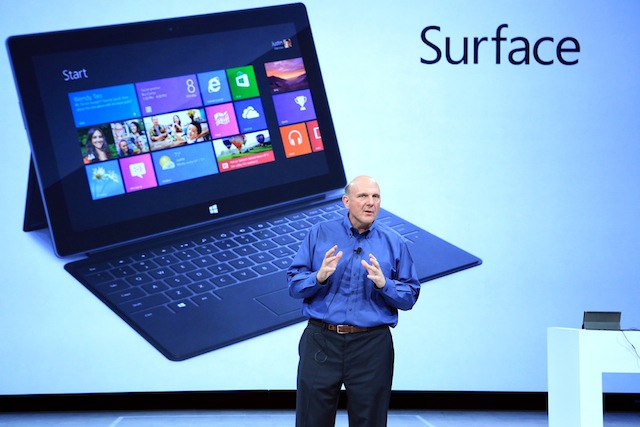
    Earlier this week, Microsoft brought tears to the eyes of grizzled IT industry veterans who missed the days of regular vapourware announcements with the “launch” of their Surface tablet computer.

    After springing the event at short notice on the tech media, forcing the poor petals to travel to Los Angeles rather than their usual haunts of Silicon Valley, Manhattan or Texas and then starting the event late, Microsoft added insult to injury by not even letting the journalists play with a working version of the Surface, let alone take one home to play with.

    One of the impressive things about vapourware are the specifications and this is true with the Microsoft Surface. The specifications of the base model Windows RT are about the same as the base model iPad with the added benefit of a keyboard, USB and Micro SD ports.

    Looking past the hype, it’s clear Microsoft are having trouble with their strategy of a unified operating system across smartphones, tablets and traditional PCs, which has forced them to announce two different versions of the Surface, running different operating systems on different chipsets.

    Having potentially incompatible products makes it even more important for tech journos and early adopters to play with the new devices to see how well they work – that version one of any new product doesn’t work well is another lesson from the 1990s IT industry.

    In the spirit of vapourware, Microsoft hasn’t mentioned what either version of the Surface will cost, which probably indicates they don’t know what the final sticker price will be either.

    Despite being funny, there was a serious side to vapourware – in the 1990s businesses often held off purchasing decisions or upgrades as they waited for promised products or features to arrive.

    While eager customers waited for products that never arrived, their productivity slipped and technologies that should have been adopted earlier ended up coming late to the office desktop.

    For Microsoft investors, the nature of the Surface announcement should be disturbing as the vapourware business tactic only works for incumbents in a strong market position and the software giant is anything but strong in the tablet computer market.

    While it would be good to see a credible competitor to the iPad, it’s going to be difficult to take Microsoft seriously until we see some working versions that we can play with.

    The lessons from the 1990s computer industry are clear – don’t fall for vapourware and buy what works for your business today.

    Similar posts:

  • Taxing the Internet laggards

    Taxing the Internet laggards

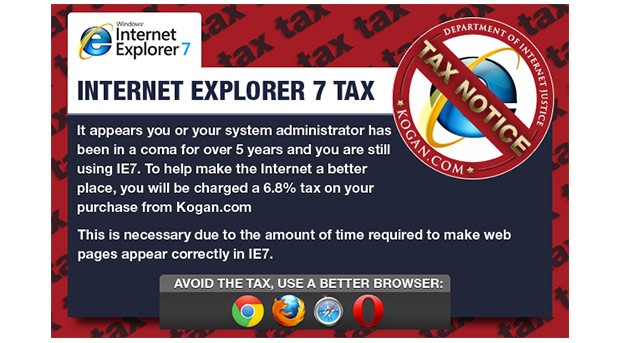
    Online retailer Ruslan Kogan is never short of a good stunt to promote his business. His latest, a tax on users of Internet Explorer 7 has given him worldwide attention.

    Ruslan touches on a real problem for web designers, e-commerce shopkeepers and the online community in general – that Microsoft’s older versions of their Internet Explorer web browsers don’t conform with standards.

    This means IE6 and 7 don’t display pages the way other browsers do meaning designers have to spend extra time catering for the people who won’t move to new versions.

    For those who insist on using the older versions of Internet Explorer, they are also taking a risk as these products are far less secure than the newer editions.

    It’s in everybody’s interests to have the latest browsers and security patches, so both Windows and Mac users should be making sure they have the latest updates on their computers.

    Even with the latest updates, it’s worthwhile using a different web browser to the one that comes with the system. That’s why Opera, Mozilla Firefox or Google Chrome are the better options for web browsers.

    Ruslan Kogan’s right in forcing users to move onto modern software, it’s a media stunt that might do some good.

    Similar posts:

  • FUD on the Desktop

    FUD on the Desktop

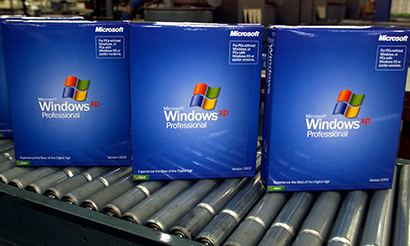
    “User productivity costs jump up a staggering 40 percent“, “return on investment over 130 percent over a three-year period” and an eighty four percent drop in IT support costs are some the latest claims from Microsoft in their campaign to wean users off Windows XP.

    These, undoubtedly true, claims are pretty impressive and compelling for cash strapped IT managers, but do they really matter anymore?

    With the rise of Bring Your Device policies and cloud computing, what operating system employees use is rapidly becoming irrelevant.

    In large organisations that supply workers’ computers, most systems are run on SOEs – Standard Operating Environments – which means users have limited accounts and can’t install rogue software.

    For those organisations wedded to supplying staff with desktop or laptop computers XP is fine and almost all of them are well advanced in their plans to redeploy to Windows 7 or 8 when the XP support period runs out in April 2014.

    We’re seeing fewer organisations locked into the SOE model as the financial sums and business benefits of moving over to an employee Bring Your Own Device – BYOD – model start to look compelling.

    Developing an SOE is a complex, time consuming task for an organisation – the package has to be tested to work on the company’s hardware which might include dozens of different types of printers, laptops and other devices. Then it has to be tested on all the software employees use.

    In a big organisation developing new operating environments is not done lightly. It’s a complex, expensive process.

    With a BYOD policy the company can develop a standard desktop environment that runs on a web browser. Staff can then bring their own device running on Mac OSX, Android, Linux or even Windows XP and, as long as their browser is up to date, they can run on the corporate network.

    The IT department no longer has to care about what the staff member has on their desk and can focus on more important business technology issues – although sadly the password issue doesn’t go away.

    For Microsoft, this evolution in corporate IT is a problem. Increasingly big organisations aren’t placing orders for big fleets of centrally managed desktops. The IT industry has moved to the cloud.

    In a perverse way Microsoft are winning the desktop battle, most of those workers in companies implementing BYOD policies will choose Windows 7 or 8 systems because they are cheap and work well in a business environment. The problem is that’s where the profit no longer lies.

    While we’ll see more FUD – Fear, Uncertainty and Doubt – about cloud computing, BYOD and Windows XP over the next year, the battle has been fought and won.

    Increasingly Microsoft are looking like an exhausted army that has won an irrelevant battle while the real war has moved elsewhere.

    The challenge for Microsoft is to find its way back to relevance in an era where the operating system doesn’t really matter.

    Similar posts:

  • Reading the global tea leaves

    Reading the global tea leaves

    Where is the world economy heading? An interesting exercise by the website Business Insider looks at the earnings reports and announcements by some of the world’s biggest corporations to get an idea of the the direction of the global business world.

    The results of Business Insider’s article are interesting and worthwhile of a closer look as we can see some real trends along with some risky bets by management who seem reluctant to acknowledge we’ve moved out of the 1980s.

    China’s western water shortage

    This is an interesting curve ball; one of the central planks of the China Cargo Cult that believes unfettered Chines growth will drive the world economy indefinitely is that the country’s inland provinces will grow in a similar pattern to that of the coastal provinces.

    Anyone who has travelled in those provinces, particularly in the poorer Northern regions like Gansu, has seen first hand the serious erosion, desertification and water problems these areas face.

    It shows the China story is not as simple as many of the cargo cultists believe.

    Europe is not dead

    Even in the darkest days there are opportunities for innovative organisations and regardless of what we think of McDonald’s products, they aren’t afraid to experiment and take risks.

    McDonald’s move to “value meals” in Europe replicates what worked in the United States in both the 2001 and 2008 economic downturns. This appears to be working in Europe just as it did in North America.

    We should also keep in mind that Europe is a diverse collection of cultures and economies so despair in Athens doesn’t necessarily mean pessimism in Arnhem.

    The bottom of the US housing market

    In his investor briefing, JP Morgan Chase CEO Jamie Dimon indicated the bank thought the US housing market is at the bottom subject to the American economy not going back into recession.

    While it’s possible that the US housing market has bottomed, it’s highly unlikely we’re going to see the US housing market roar back to 2005 levels even if there is a US recovery so we shouldn’t be expecting hockey stick style growth in the US domestic sector driving the world economy as it did through the early 2000s.

    Louis Vuitton confirms that the global market for ultra luxury goods is healthy

    The entire luxury goods boom is a side effect of the massive amount of money pumped into to the world economy to deal with the 2008 economic crisis.

    Like Macao casinos and Silicon Valley venture capital bubbles, this is transitory and at best a marginal influence on overall growth and employment.

    It’s interesting how many presentations I’ve seen recently citing the luxury goods markets as evidence all is good in the world economy. This shows the desperation of those whose businesses rely on mindless consumerism.

    China’s middle class will save us all

    If you were searching for a corporate example of the economic cargo cult surrounding China, then Yum Foods would be one of the best.

    The idea that China’s “consuming classes” will number half the nation’s population is some sort of economic Lake Wobegon, where everybody is above average.

    Even if Yum’s prediction proves to be true, the nature of China’s economy and the nation’s stage of growth means consumption patterns of the country’s middle – or “consuming” – classes are going to more like those of Americans in 1912 rather than 2002 which undermines any business model based upon the late 20th Century’s profligate spending.

    Businesses are once again investing in IT

    Microsoft suprised us all last week with their profit results. Earnings from Windows, servers and office suites were all up on improved personal computer sales.

    That businesses are investing in IT makes sense as one of the things that is cut early by organisations looking for savings is IT. That happened in 2009 in response to the economic crisis.

    Even before the 2009 financial shock, businesses had been under-investing in IT partly because of Microsoft’s failure with the Vista operating system.

    Now many businesses have decade old desktop computing systems and the pressures to upgrade are becoming intense.

    The worry for Microsoft is Apple’s domination of mobile devices and the rise of cloud computing means that its not necessarily Microsoft will benefit from most of the IT investment.

    Electricity prices will rise and low natural gas prices are unsustainable

    Energy prices are a riddle within an enigma, however there’s certainly some distorting effects in these markets. CSX’s views on natural gas markets illustrate this.

    We can expect more convulsions in energy prices as demand hinges on China, the US and European economic growth coupled with the threat of more conflict in Iran and Iraq.

    Should China deliver the growth that the cargo cultists believe then energy prices will continue to climb, which may happen anyway.

    The end of the telephone

    Again Business Insider’s headline is a little misleading, as Verizon see the decline of the POTS – Plain Old Telephone System – networks that were designed around voice data and a switch to data based networks that don’t treat all traffic as information packets.

    Data matters more than voice and we don’t want to be tied to a phone line.

    That the telcos see mobile data as their main revenue drivers shouldn’t be a surprise as this has been the trend for two decades.

    Consumers are borrowing again

    This claim is a worry as it indicates some consumers – along with many lenders – are falling into the habits that nearly bought them unstuck in 2008.

    A superficial view of the Amex announcement actually raises more questions than it answers and there’s a suspicion that the credit card provider is driving growth through special offers or reforming their excessive merchant charges.

    Like JP Morgan, much of Amex’s optimism is based upon the US economy moving out of recession and American consumers resuming their credit binge. The latter may prove to be a bridge too far.

    Winning in diverse European markets

    Like McDonald’s, IBM sees plenty of opportunity in Europe and makes the point that, like Asia, the European markets are diverse.

    IBM may turn out to be a more of a beneficiary of the increased IT spending that Microsoft is relying upon as Big Blue’s consulting services and cloud technologies are more attuned with where the enterprise computing market is going.

    Also in an era of government austerity, IBM may be able to offer process savings to cash strapped agencies and authorities.

    Asian consumers save the cigarette industry

    There’s no doubt East Asian societies like a smoke so the idea that international tobacco brands see great opportunities in markets like South Korea, the Philippines and Indonesia shouldn’t be a surprise.

    Interestingly China doesn’t feature in these projections as their market is largely closed to foreign manufacturers.

    While the short term looks good for tobacco companies in East Asia, it’s difficult not to see that rising affluence starts to see public health and anti smoking campaigns similar to those in the West developing over the longer term.

    Yahoo parties like it’s 1999

    Web surfers want relevant content according to Yahoo’s management. Next month we’ll see these business giants claim social networks and cloud computing are the next big thing.

    You can’t help but thing Yahoo’s management are very well qualified to tell us when horses have bolted and vanished over the horizon.

    The problem for Yahoo is that customised content is expensive unless you’re going to “crowdsource” it with a social layer as Facebook does and Google is trying to do.

    If Yahoo can pull something like this off – and there is no indication they can – then the business has a chance of surviving. Right now the smart money would be betting on the being broken up in the near future.

    So where is the world economy going?

    One unsurprising thing from these corporate projection is that some businesses are better prepared than others for the changes that are happening.

    IBM and McDonald’s stand out as those prepared to innovate and change their business models to suit the prevailing situations.

    Companies that believe the 1980s are just around the corner again seem to be the ones most vulnerable – its not surprising that its finance organisations like JP Morgan and Amex are betting the farm on continued massive growth in consumer debt.

    The China Cargo Cultist are also vulnerable. If it turns out that Chinese growth – like US consumer spending in the 1980s – can’t go on forever then companies like Yum Foods are going to struggle with growth rates far lower than they expect.

    One thing is clear, that there are a lot more nuances in the world’s economy that what you’d pick up from media headlines. The key for big and small entrepreneurs is figure out where these nuances present a business opportunity.

    Black tea image courtesy of Zsuzsanna Kilian and SXC storck photos.

    Similar posts: