Tag: mobile

  • The rise of new business models

    The rise of new business models

    As always Mary Meeker’s State of the Internet report hits us with mass of information, this year compressed onto a 355 slide Powerpoint presentation.

    There’s a wealth of detail in the report but two big trends stood out – that global internet advertising spend will overtake TV ad revenues and music industry revenues have reversed a 16 year decline as subscription services gain market share.

    Subscriptions becoming the main revenue source for music companies suggests ]new internet business models are slowly evolving although how that lessons can be applied to other industries remains to be seen.

    In the world of advertising, that online is now attracting a greater spend than TV is a major milestone in the shifting marketplace. Although Facebook and Google’s dominance – Meeker estimates 85% of revenue growth is going to the two companies – will present challenge to advertisers and agencies.

    Also notable is how mobile revenues and handset sales are slightly better than flat, indicating the biggest market of last decade is now mature.

    There’s many other insights in this report so it’s worth spending a few hours on it to reflect on how some of these trends may affect your industry.

    Similar posts:

    • No Related Posts
  • Alternatives to the National Broadband Network – ABC Nightlife

    Alternatives to the National Broadband Network – ABC Nightlife

    If you missed the show, you can listen through the ABC Nightlife website. Sadly we didn’t get to half the topics but our callers, as well as the NBN PR guy, were fabulous.

    Paul Wallbank joins Phillip Clark on ABC Nightlife across Australia from 10pm Australian Eastern time on Thursday, February 16 to discuss how technology affects your business and life.

    Last week the NBN announced a third of the country was now covered by their services and the company’s CEO, Bill Morrow, said Australians really don’t want super fast internet. A few weeks before, Telstra announced a new service that will deliver gigabit broadband over their mobile network. We can expect their competitors to offer similar products soon.
    At the same time we’re seeing a blast from the past as Nokia are rumoured to be soon releasing an updated version of their classic 3310 phone – are we going to see the ‘tradie phone’ making a comeback?
    While the old phone is nice, many people need fast broadband so how is the NBN going and, if you can’t get it, what can you do? Some of the questions
    • So how is the NBN going?
    • Wasn’t the government’s revised plan going to mean the whole thing is going to be cheaper and faster than the original project?
    • Who can get it?
    • Is it as good as promised?
    • So what alternatives to the NBN are there?
    • Doing the sums on those mobile plans, using them can be a pretty expensive business?
    • It seems we’re going backwards. How does Australian broadband compare globally?
    • How is this affecting regional communities and businesses?

    Join us

    Tune in on your local ABC radio station from 10pm Australian Eastern Summer time or listen online at www.abc.net.au/nightlife.

    We’d love to hear your views so join the conversation with your on-air questions, ideas or comments; phone in on 1300 800 222 within Australia or +61 2 8333 1000 from outside Australia.

    You can SMS Nightlife’s talkback on 19922702, or through twitter to @paulwallbank using the #abcnightlife hashtag or visit the Nightlife Facebook page.

    Similar posts:

    • No Related Posts
  • A gigabit milestone for mobile networks

    A gigabit milestone for mobile networks

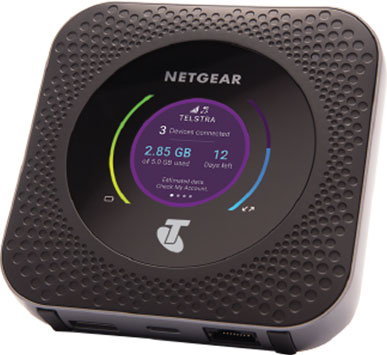
    Yesterday communications vendors Qualcomm, Netgear, Ericsson and Telstra, unveiled their Australian gigabit LTE service that gives users high speed internet connections over the 4G mobile network.

    Billed as a world’s first, Telstra will offer customers the Netgear supplied hotspots that can connect up to twenty devices over WiFi.

    Listening to the Telstra spiel yesterday, it wasn’t hard to conclude the company is making a pitch for the market frustrated by the National Broadband Network’s tardy rollout and patchy service.

    The service doesn’t come cheap though, as Finder’s Alex Kidman points out, an hour’s movie streaming on one device could easily cost $4500 dollars on Telstra’s current plans with one of the company’s executives emphasising the product is “aimed at the premium end of the market.”

    Being aimed at the premium end of the market is shame for Qualcomm as their spokespeople were keen to show off the gaming, AR and VR potential of the Snapdragon CPUs driving these devices. It would be a brave or very affluent family that bought one of these devices for their kids given the data costs.

    While the Telstra Gigabit LTE service might be an NBN replacement for deep pocketed customers, telco veteran John Lindsay points out the mobile network can’t support too many people doing so unless many more cells are deployed.

    For the moment the Telstra service is going to be attractive for companies needing high speed. low volume connections in the central business district and as the gigabit LTE upgrades roll out across the country, it will be useful for travellers as well as frustrated NBN customers.

    Ultimately the gigabit LTE product is another step toward the 5G networks that we’ll be seeing appear at the end of the decade, something that both the Ericsson and Telstra PR folk were keen to highlight.

    The key message for consumers and businesses is the rate of innovation in the mobile communications market is not slowing and another generation of connected devices is coming that will change things as dramatically as the smartphone did.

    Similar posts:

    • No Related Posts
  • Everyone’s a winner with Pokemon Go

    Everyone’s a winner with Pokemon Go

    It’s remarkable how the reworking of a 1990s video game is proving to be the first big augmented reality success.

    As I’m writing this in the Sydney Airport departures lounge, thousands of people are getting ready to trawl the city’s streets for Pokemon as the company’s servers struggle with the load.

    For Nintendo, a company that’s struggled to remain relevant in recent years, Pokemon Go’s success revitalises them while for Niantic, the augmented reality and mapping service spun off from Google, this validates their business.

    Niantic’s success after being spun off from Google probably indicates the future for many of Alphabet’s many companies. Freed from the constraints of Google’s sprawling bureaucracy, companies like Niantic are far more likely to be able to execute on their technologies.

    We can expect to see plenty of companies looking at replicating Pokemon Go’s success with their products and many millions of bits will created as the marketing industry ponders how it can make money from augmented reality games and applications. Most will fail.

    The big winner though from Pokemon Go’s success are those in the artificial and virtual reality communities, the great success of the product will have caught the imagination of many executives and entrepreneurs – particularly in the tech sector where the search for the next big is becoming a little frantic as investors and consumers become jaded with smartphones and social media.

    Pokemon Go marks the start of the augmented reality gold rush, who profits from it remains to be seen. It also gives Alphabet a strong indicator of how to monetize the companies under the Google umbrella.

    Similar posts:

    • No Related Posts
  • Rolling out innovation on 5G mobile networks

    Rolling out innovation on 5G mobile networks

    “We’re in the flip phone era of 5G networks, people don’t realise today’s 4G mobile standards were written for the era of the flip phone,” says John Smee, the Senior Director of Engineering at Qualcomm Research

    John was speaking to me at chipset manufacturer Qualcomm’s San Diego head office to discuss the next generation of mobile phone services.

    Putting together communications standards isn’t a simple thing, as John says “what we’re discussing now is what today’s five year olds will be using when they turn fifteen.”

    John sees the new standard as giving the next generation of internet giants their market opening, pointing out companies such as Facebook and Uber benefitted from the rollout of 4G networks and some of today’s startups will get a similar boost from 5G services. “A few clicks and you’ve ordered a ride. That wouldn’t have been possible without 3G connectivity, high powered smartphones and networks that are scalable.”

    “What are going to be some interesting new startups that become huge multibillion dollar industries from 2030,” he asks. “By definition we don’t understand the future.”

    For telco executives being a ‘dumb pipe’ is one of their nightmares and John believes they can avoid that fate in a 5G world by concentrating on their advantages with licensed spectrum. “If they are looking a high reliability and low latency services then the quality of the connectivity they can offer becomes essential,” he says.

    While the standards groups continue to work on the 5G standards, the technologies continue to evolve. John Smee’s message is that these new products are going to offer opportunities for new companies.

    The trick is to figure out which of today’s startup companies will be the Uber or Facebook of 2025.

    Similar posts:

    • No Related Posts