Tag: outsourcing

  • Proudly designed in Gyeonggi

    Proudly designed in Gyeonggi

    “Designed by Apple in California ” is the boast on the box of every new iPad or Macbook. That the slogan says ‘designed’ rather than ‘made’ says everything about how manufacturing has fled the United States.

    Last year the New York Times looked at Apple’s overseas manufacturing operations, pointing out that even if Apple wanted to make their product in the the US many of the necessary skills and infrastructure have been lost.

    Now the US is facing the problem that Asian countries are looking at moving up the intellectual property food chain and doing their own designs.

    In some ways this is expected as it’s exactly what Japan did with both the consumer electronics and car industries during the 1960s and 70s.

    The big difference is that Japanese manufacturers travelled to the US and Europe to study the design and manufacturing methods of the world’s leading companies. In the 1990s and 2000s, the world’s leading companies gave their future competitors the skills through outsourcing and offshoring.

    In the next decade we’ll see the latest consumer products coming with labels reading “Designed by Lenovo in Fujian” or “Developed by Samsung in Gyeonggi”.

    For western countries, the question is what do we want to be proudly be putting our names to?

    Image from Kristajo via SXC.HU

    Similar posts:

  • Outsourcing the service economy

    Outsourcing the service economy

    Through the 1970s and 80s we accepted manufacturing industries moving jobs offshore because those jobs were done by working class, blue collar workers and the future lay in white collar, middle class service industries.

    As a consequence of moving manufacturing offshore, the US, British and Australian economies became more service based. The thought in the 1980s was that while goods could be made in Taiwan, the ‘knowledge industries’ couldn’t be.

    Then the Internet came along.

    A panel on The Future of Outsourcing convened by the Indian Institute of Technologies Association of Australia last night discussed some of these issues.

    Now the service industries are being offshored, at first it was the low skilled service jobs like call centres but it didn’t take long for higher value work – such as paralegal, medical transcription and of course IT services – to follow.

    The belief that white collar jobs couldn’t be taken over by cheaper foreign labour has been proved wrong.

    It isn’t just those working in the call centres or IT departments of telcos and big banks that are being affected, those small businesses in support industries like secretarial services or design are finding their clients are moving offshore too.

    What’s interesting with all of this is how long the executive classes can resist being outsourced. Indian and Chinese managers work for harder for less than their US, British or Australian colleagues and in many cases are better educated.

    One can only wonder how long the partners of major consulting business can hold the line as well, these guys – the vast majority are men – have done very nicely charging first world rates while increasingly paying developing world rates.

    Already Indian outsourcing companies, including at least two sitting on that Sydney panel, have set up their own consulting arms that cut out the expensive middle men. Without the overheads flashy offices and big packages for entitled partners, they’ll have a pretty competitive offering.

    While we can cry for the high paid management consultants and executives who are increasingly threatened by these changes, the Anglo-Saxon economies have a real problem as service industries move offshore.

    In Australia, the Bureau of Statistic’s 100 Years of Change in Australian Industry tracks how the nation’s industries have changed – in the 1950s Australian manufacturing peaked just shy of 30% of the workforce, by 2000 it had shrunk to 11% while service industries were doubled from around 25% to 50% of the economy.

    While it’s unlikely we’d see the service sector workforce shrink by 2/3rd over the next fifty years, there’s a good chance incomes will fall in these industries unless we start to invest in education and skills which allow Australia to stake a place in the global economy.

    One of the key takeaways from the Future of Outsourcing event was that this change is happening regardless of what we think is a fair wage for our work. It’s something our government and business leaders need to start considering.

    Similar posts:

  • Redefining affluence

    Redefining affluence

    Finance writer Scott Pape always has an interesting perspective in his regular columns.

    This week he talks about Melissa a mother of three who lives in the US state of Georgia who also happens to be Scott’s virtual PA.

    Scott hires Melissa because she’s cheap; far cheaper than her competitors in Australia.

    For the $8 an hour she earns, she gets no sick pay, no health insurance and no retirement benefits. Unless Melissa has a well paid partner and her work for Scott is just a sideline to help pay the bills, she will work until she drops.

    This is the new reality for those in America, Spain, the UK and most of the West. It’s slowly becoming the reality in Australia as well despite the current hubris about the Down Under Economic Miracle.

    Melissa’s job as a secretary or PA was safe and comfortable twenty years ago. Today – just like auto workers, shop assistants, accountants and even lawyers – secretaries are having to trade their secure jobs for precarious, and reduced, incomes in the globalised and casualised marketplace.

    Scott makes perfectly valid points that individual drive and determination will be important in the globalised economy, but nothing changes the fact that Melissa and millions like her – including ourselves – will not have the living standards of her parents.

    While we can talk about billions of Indians and Chinese improving their standard of living the new globalised world, we shouldn’t forget for a moment that living standards are declining for the most of developed world’s middle and working classes.

    This decline isn’t totally due to globalisation and was probably going to happen regardless of the rise of China. The West’s prosperity was built upon the post World War II reconstruction and the credit booms of the 1980s and 2000s. Eventually the money – or the credit – had to run out.

    How we as a society deal with this will define our nations and communities over the next fifty years. Our governments, business leaders and media commentators are ill prepared for the effects even if they recognise the problem.

    Those most deeply affected are the businesses based on the twentieth century model of ever increasing prosperity. As our retailers are finding, this model is running out of steam.

    While some expect the newly affluent Chinese and Indians to save their well padded hides, most will find Asian consumption patterns in the 21st Century will be different to US auto workers of the 1950s or English real estate agents of the 1980s.

    Even financial planners like Scott are going to find things different – many financial planners thought they could get rich just skimming commissions off their clients’ portfolios which grew with the ever climbing stock and property markets. That model dropped dead in September 2008.

    For those of us born and raised during the Western world’s era of great prosperity, we’re going to find we have to work a lot harder and not take affluence for granted.

    Melissa and her eight dollar an hour secretarial service is the future and it’s probably Scott’s, yours and mine as well.

    Some may say that’s a pessimistic view of the world, but a leaner, harder economy may be the best thing could happen for us as individuals and a society.

    Similar posts:

  • When taxpayers hearts sink

    When taxpayers hearts sink

    Nothing is sadder than a government or business that believes it will gain huge savings through outsourcing.

    Part of the 1980s management mindset is that outsiders can do a job better and cheaper than existing staff. Almost always this is proved to be expensively wrong.

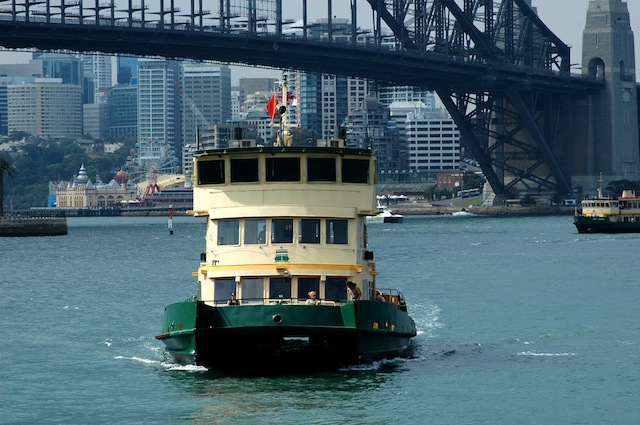
    The announcement the New South Wales Government will outsource Sydney Ferries is a good example of this. Media reports claim the “government is hoping to save hundreds of millions of dollars over the next decade.”

    Good luck with that. As the people of Melbourne found when the Victorian government outsourced operations of suburban trains and trams the levels of service remained poor, subsidies increased and new level of bureaucracy developed to manage the disconnect between a private operator running a service accountable to the public.

    Advocates of outsourcing always overlook the cost, time and skills involved in supervising contractors.

    This is something the banks found in the early days of offshoring services as the claimed massive labour cost savings by moving operations to the developing world were offset by higher supervision costs.

    Governments have a bigger problem with outsourcing as the public service generally lacks the contractual and project management skills to effectively specify and supervise major service outsourcing contracts.

    A good example of this is the Royal North Shore Cleaning contract where the hospital has seen a fall in hygiene levelsas the contractor attempt to meet their KPIs under an agreement that has been designed primarily to save the area health service money.

    Focusing on cost savings when outsourcing is almost always a recipe for failure. In both business and government its rare that a function or operating unit is so badly managed that savings offset the increased management expenses.

    This isn’t to say outsourcing isn’t always appropriate. Sometimes those savings are achievable – albeit not as often as proponents claim – and outsourcing can deliver skills that the parent organisation lacks.

    Which is another concern about the Sydney Ferries outsourcing. The Sydney Morning Herald article referred to above says the following about the CEO of the winning consortium.

    Mr Faurby, who has more than 20 years maritime experience, has never run a passenger service before. But he said he understood what it would take to improve Sydney’s ferries.

    ”It doesn’t really matter very much if it is a towage, tug company, or a container shipping company, or for that matter a ferry company … what matters is that you have the competencies to run it in an efficient, safe and effective manner.”

    Um no. That’s 1980s management school thinking where every business – from airlines to software – can be reduced to selling soap.

    Not having experience in running a passenger service with all the customer service issues that come when you’re dealing with the public is a concern. One hopes, prays even, that Mr Faurby and his employers have the wisdom to support the CEO with managers who do have a customer service ethos.

    Then there’s the black hole of Australian public transport – ticketing.

    While it’s impossible to quantify just how poor Australian governments have proved themselves to be with ticketing systems; Sydney’s convoluted, complex, siloed and passenger unfriendly public transport system adds another layer of complexity that the new management of Sydney Ferries is going to have to deal with.

    There’s no doubt though that Sydney Ferries need reform; its management was incompetent and, beyond the usual cheerful deckhands, the staff were surly with little concept of customer service.

    Done well, outsourcing Sydney Ferries could be for the better; but the emphasis on cost savings and what appears to be naive management expectations should make taxpayers’ hearts sink.

    Similar posts:

  • Risks and opportunities in crowdsourcing

    Risks and opportunities in crowdsourcing

    Crowdsourcing and offshoring are changing bringing to small business the same changes we’ve seen in manufacturing and low level office jobs over the last forty years.

    Those trends are going to affect local businesses – particularly the home based service providers – in a serious way as the local web designer and bookkeeper find themselves undercut by freelancers in countries where an Australian day rate is a month’s pay.

    With those thoughts in mind I went along to a round table discussion with crowdsourcing advocate Ross Dawson, Freelancer CEO Matt Barrie and Design Crowd founder Alec Lynch to hear them discuss some of the issues around the concept ahead of their half day workshops in Sydney later this months.

    Having read Ross’ recent book, Getting Results From Crowds, many of the concepts and arguments are familiar but its worthwhile considering how the trend of a globalised workforce is changing.

    The benefits of crowdsourcing services

    Crowdsourcing services like Design Crowd and Freelancer have benefits traditional outsourcing services don’t have.

    Alec Lynch describes these as reduced expense, speed and risk. A broad range of cheap, accessible suppliers mean businesses aren’t locked into costly contracts with the attendant risks while they can bring projects to fruition in days.

    Until recently, globalisation only bought benefits for major corporations with manufacturers contracting work out to China, back office functions to India and software development to Eastern Europe.

    The rise of web based services where smaller, one off projects could be paid for by credit card has bought global outsourcing into the small and medium sized business markets.

    Now local businesses are affected by business practices that, until recently, were the concern of those working for large organisations.

    This is bad news for local service businesses; the suburban web designer or bookkeeper is now finding themselves competing with individuals who, as Matt Barrie points out, have a very good weeks’ income for the equivalent of a day’s pay in Australia.

    Basically the same forces that drove most low value manufacturing offshore are now driving services and white collar jobs the same way.

    Responding to the threat

    There are major downsides for clients using these project based outsourcing services; for instance designing a logo is only part of a much bigger branding exercise which in turn has to be considered against the orgainisation’s longer term objectives.

    Often, most of us don’t know what we don’t know and that’s the real reason why we hire an expert to explain why a logo should look a certain way, an expense should be allocated to one specific cost centre and not another or why we should one software package over another.

    When we outsource our services, particularly to a low cost provider, we lose that expert insight and end up with someone just carrying out a task; it is up to us to supervise something we probably don’t understand ourselves.

    Part of that supervisory role is project management, in the design field managing creatives can be like herding cats. This is why experienced project managers are worth their weight in gold.

    Like many essential skills, project management is one of those which most of us don’t have and is chronically undervalued but when a business is outsourcing to a freelancer in Estonia or Eritrea then this service is essential.

    Providing those skilled supervisor and management roles is where the opportunities lie in a crowdsourced market place.

    In many ways, we’re seeing the end result of the post-industrial society. Just as we offshored the manufacturing industries through the 1970s and 80s then the low skilled office work in the 1990s and 2000s, we’re now outsourcing local services to low cost countries.

    Whether ultimately this is a good thing or not is a big question but for local businesses, the trend is clear and much of the basic work is going offshore. Those who choose to whinge rather than adapt will be left behind.

    Similar posts: