Tag: PCs

  • Intel’s challenge to find a new message and market

    Intel’s challenge to find a new message and market

    Twenty years ago people cared about the specifications of their computers and chip maker Intel led the industry with its marketing of 486, Pentiums, Pentium Duos and Pentium IIs.

    As we come to the end of the PC era, the consumerisation of technology and the rise of cloud computing mean customers no longer care about what’s inside their systems and Intel is struggling to find a new message.

    Over the last few months Intel have been showing off their latest range of Central Processing Units (CPUs) to enterprise and small to medium business (SMB) groups. Last week the company hosted an SMB event in Sydney that illustrated how Intel is struggling to cut through the market.

    Speaking at the event was Steph Hinds – an evangelist for cloud computing – who told the story of how her Growthwise accounting practice was flooding out during storms.

    Because her systems were on the cloud Steph and her staff were able to work from home and local cafes while the landlord fixed her offices. Had Growthwise been using a server based system the business would have been crippled while her IT people implemented a disaster recovery plan.

    Steph’s story in itself illustrated the Clean, Well Lighted Place argument for cloud computing and also showed how Intel is struggling to sell its PC and server upgrade cycle message in an era where that business model is dead.

    This didn’t stop some of the other speakers at the small business event trying to sell the idea that upgrading computer systems and retaining an IT support company were essential to small business success but it’s a message that was valid a decade ago.

    For Intel the challenge is to find a new message – it may well be that the company’s future lies in supplying the powerful CPUs that run data centres, or maybe the low energy and maintenance chips required to control the billions of intelligent devices that will run the internet of everything.

    The company’s launch of their Galileo board – a tiny computer designed to compete in the intelligent devices market with the likes of the Raspberry Pi – is a step in the latter direction and shows Intel is exploring the possibilities.

    Wherever Intel’s future lies, it doesn’t lie in trying to sell a business model that is quickly going the way of the Brontosaurus.

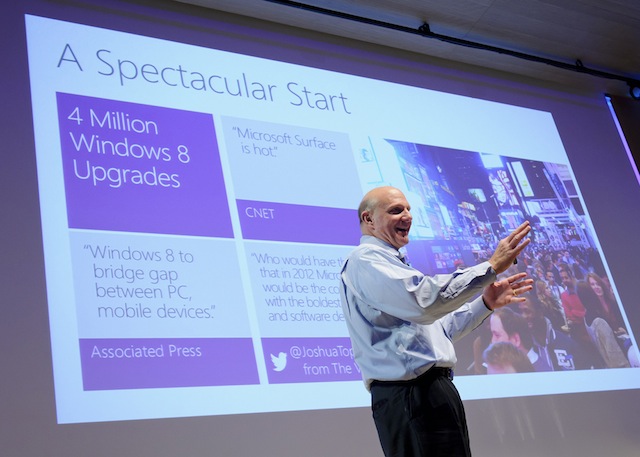
    During most of the PC era, it was the Wintel partnership that dominated the computer industry, now Microsoft have realised this fundamental market change and started their journey to become a devices and services company.

    The challenge now lies with Intel to decide where their journey will take them in a post PC world.
    Similar posts:

    • No Related Posts
  • IT industry feuds are buried as business models collapse

    IT industry feuds are buried as business models collapse

    The collapsing personal computing and server markets are forcing once powerful competitors to bury animosities and feuds as industry giants face a troubled future.

    Samsung’s exit from selling desktop computers illustrates how quickly the PC industry is collapsing which underscores Michael Dell’s urgency in his attempts to take Dell Computer private along with the spectacle of once hostile competitors like Oracle and Microsoft embracing each other.

    Earlier this week Microsoft Australia hosted a briefing at their North Ryde office to show what the company is doing with their Azure cloud computing service, which is part of the company’s quest to find revenues in the post-PC world.

    Microsoft are quickly adapting to the new marketplace. This week in Madrid, the company hosted their European TechEd conference where they showed off their Cloud First design principles of software built around online services rather than servers and desktop PCs.

    One important part of Microsoft’s cloud strategy is establishing pairs of data centres to provide continuity to the various zones, including China, across the globe. Each individual centre is at least 400 miles apart from its twin to avoid interruptions from natural disasters.

    Interestingly, this is the opposite of Google’s data centre strategy and quite different from how Amazon offers its data services where customers can choose the zones and level of redundancy they want.

    There’s no real reason to think any of these three different philosophies are flawed, it’s a difference in implementation and each approach brings its own advantages and downsides which customers are going to have choose between.

    While Microsoft is showing off its new direction, HP CEO Meg Whitman was in Beijing proclaiming that “HP is here to stay” and laying out the company’s path to survival in the post-PC world.

    Like Microsoft, HP is putting bets on cloud computing and China, Whitman emphasized the work she’s been doing engaging with Chinese companies while promising “a new style of IT” and that “HP is in China for China.”

    A key difference to Microsoft and Dell is that HP is doubling down on its desktop and server businesses with a focus on selling into the Chinese market. This is a high risk move given China’s investment into high speed networks and the global nature of the cloud computing movement.

    One of the boasts of Whitman and her management team is that HP have added a thousand Chinese channel partners over the last twelve months, this is an effort to replicate Microsoft’s market strength in mature markets which has given the software giant breathing space against strong, cashed up competitors like Google and Apple.

    Whether this works for HP in China remains to be seen, in the meantime Microsoft are trying to move their huge channel partner community onto the cloud with various offerings that give integrators who’ve traditionally made money selling servers and desktops some opportunity to sell online services.

    A selling point for Microsoft is yesterday’s announcement they will offer Oracle databases on their Azure platform. The ending of animosities between Microsoft and Oracle is an illustration of just how the collapse in the PC and server markets is forcing market giants to forget old feuds and build new alliances.

    With the server and personal computing markets being turned upside down, we’re going to see more unthinkable alliances and pivoting corporations as once untouchable industry giants realise the threats facing them.

    Similar posts:

  • Michael Dell’s struggle to transform his business

    Michael Dell’s struggle to transform his business

    Michael Dell continues to press on with his buy out bid for the computer manufacturing giant he created with a presentation to shareholders stating his case why Dell Computers would have a better future as a private company.

    Dell’s assertion is the company has to move from being a PC manufacturer to a Enterprise Solutions and Services business (ESS) as computer manufacturing margins collapse in the face of a changing market and more nimble, low cost, competitors.

    What’s telling in Dell’s presentation is just how fast these changes have happened, here’s some key bullet points from the slide deck.

    • Dell’s transformation from a PC-focused business to an Enterprise Solutions and Services (ESS) -focused business is critical to its future success, especially as the PC market is changing faster than anticipated.
    • The transition to the “New Dell” is highly dependent on challenged “Core Dell”performance.
    • The speed of transformation is critical, yet “Core Dell” operating income is declining faster than the growth of “New Dell” operating income.
    • Dell’s rate of transformation is being outpaced by the rapid market shift to cloud.

    The market is shifting quickly against Dell’s core PC manufacturing and sales business and the company’s founder is under no illusions just how serious the problem is.

    Should Michael Dell succeed, the challenge in transforming his business is going to be immense – Dell Computing was one of the 1990s businesses that reinvented both the PC industry and the vast, precise logistics chain that supports it.

    It was PC companies like Dell and Gateway who showed the dot com industry how to deliver goods quickly and profitably to customers around the world. Businesses like Amazon built their models upon the sophisticated logistics systems and relationships the computer manufacturers created.

    A lesson though for all of those companies that followed Dell and Gateway is that those supply chains may turn around and bite you in the future, as Michael says in his presentation;

    Within the PC market, Dell faces increasingly aggressive competition from low cost competitors around the world and shifts in product demand to segments where Dell has historically been weaker.

    Those low cost competitors were many of Dell’s suppliers as over time the company’s Chinese manufacturers, Filipino call centres and Malaysian assemblers have developed the management skills to compete with the US retailers rather than just be their contractors.

    Something that’s being missed in the debate about globalisation at present is that its not just low value work that can be done offshore – increasingly sales, marketing and legal are moving offshore along with programmers and engineers. Now the same thing is happening with management.

    The same thing is also happening with corporations as Asian giants like Samsung, Huawei, Wipro and others displace US and European incumbents.

    Dell Computing has been a much a victim of that move as it has been of the decline in the PC market which means its more than one battle Michael Dell has to fight.

    It may well be that Dell can survive, but we shouldn’t underestimate just how great the challenge is as the company faces major changes to its markets and the global economy.

    Similar posts:

  • Hurtling into the post PC era

    Hurtling into the post PC era

    Consulting firm IDC quarterly report on PC shipment figures this quarter shows a stunning 14% drop of global computer sales. On those numbers, the PC era is definately over.

    Across the board the figures are horrible with double digit declines across the board. Market leader HP reported PC sales had fallen by nearly a quarter yet they retained their market lead as all of their competitors reported similar falls.

    What’s also notable is the PC industry’s ultrabook attempt to wean consumers off cheap nebooks has backfired terrible, as the analysts note;

    Fading Mini Notebook shipments have taken a big chunk out of the low-end market while tablets and smartphones continue to divert consumer spending.

    Instead of buying higher priced ultabooks, consumers have abandoned portable PCs altogether and gone to smartphones or tablet computers.

    The PC manufacturers must be rueing how they let the tablet computer market slip through their fingers during the 2000s.

    Failing to ship decent tablet computers is symptomatic of a bigger problem for the PC manufacturers – their inability to innovate.

    The PC industry is struggling to identify innovations that differentiate PCs from other products and inspire consumers to buy, and instead is meeting significant resistance to changes perceived as cumbersome or costly.

    As IDC point out, even if they do introduce new products, consumers are wary that any “innovation” is going to be cumbersome. Basically the PC manufacturers have lost their customers’ trust.

    How this affects Dell’s proposed buy out remains to be seen; it’s hard to see how investors would not be concerns at a 10% fall in sales, although Dell was one of the better performers.

    For Microsoft, this news should further accelerate their moving products and customers to their cloud and enterprise products. For their Windows division it looks like there are tough times ahead.

    The decline of the PC market is itself a study in product and innovation cycles. It could well be that the personal computer is going the way of the fax machine.

    For some businesses that will be tragedy, but the market – and the opportunities – move on.

    Similar posts:

  • Was the netbook the Trabant or Model T of the computer world?

    Was the netbook the Trabant or Model T of the computer world?

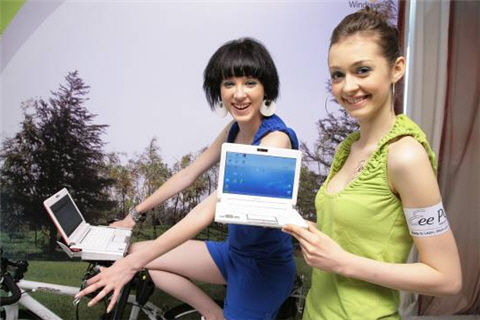
    Taiwanese technology website Digitimes reports Asustek have shipped their last eeePC netbooks, bringing to an end a product that promised to change the computing world when they were first released in 2007.

    At the time the eeePC netbook picked up on a number of trends – cheap hardware, the maturity of the open source Linux operating system, affordable wireless access and, most importantly, the accessibility of cloud computing services.

    There’d been a pent up demand for usable portable computers for years but Microsoft and their hardware partners consistently released clunky, overpriced tablet computers that simply didn’t deliver on their promises.

    For users wanting a cheap, fairly robust portable computer then netbooks were a good choice, at the price you could even risk having one eaten by lions.

    into the lions den with an Asus eeePC netbook

    Unfortunately for netbook a few things went against the idea.

    Customers don’t like Linux

    An early blow to the eeePC was that retail users don’t like Linux. Most computer users are happy with Windows and MacOS and weaning them off what they know is a very hard sell.

    Sadly on this topic I have first hand knowledge having suffered the pain of co-founding a business in the mid 2000s that tried to sell Linux to small businesses.

    Asustek discovered this when they found customers preferred the more expensive Windows XP version over the original Linux equipped devices.

    Unfortunately Microsoft’s licenses damaged the economics of the netbook and held the manufacturers hostage to Microsoft who, at the time, wasn’t particularly inclined to encourage customers to use cloud services.

    Manufacturer resistance

    Microsoft weren’t the only supplier unhappy with netbooks. Harry McCracken at Time Tech describes how chip supplier Intel worked against the products.

    For manufacturers, the netbooks were bad news as they crushed margins in an industry already struggling with tiny profits. However all of them couldn’t ignore the sales volumes and released their own netbooks which cannabilised their own low end laptop and desktop ranges.

    In turn this irritated the army of PC resellers who found their commissions and margins were falling due to the lower ticket prices of netbooks.

    The rise of the tablet

    The one computer manufacturer who stayed aloof from the rush into low margin netbooks was Apple who had no reason to rush down the commodity computing rabbit hole. It was Steve Jobs who launched the product that made netbooks irrelevant.

    “Netbooks aren’t better at anything… they are just cheaper, they are just cheap laptops” Jobs said at the iPad launch in January 2010.

    Immediately the iPad redefined the computer market; those who’d been waiting a decade for a decent tablet computer scooped the devices up.

    Executives who wouldn’t have dreamt of replacing their Blackberries with an iPhone, let alone using an Apple computer proudly showed off their shiny iPads.

    The arrival of the iPad in boardrooms and executive suites also had the side effect of kick starting the Bring Your Own Device movement as CIOs and IT managers found that their policy of Just Say No was a career limiting move when the Managing Director wanted to connect her iPad to the corporate network.

    Rebuilding PC margins

    Around the time of the iPad’s released the major PC manufacturers declared a detente over netbooks and joined Intel in developing the Ultrabook specification.

    Intel designed the Ultrabook portable computer specification

    The aim of the Ultrabook was to de-commodify the PC laptop market by offering higher quality machines with better margins.

    While the Ultrabook has worked to a point, competition from tablet computers and the demands of consumers who’ve been trained to look for sub $500 portables means the more expensive systems are gradually coming down to the netbook’s price points.

    Today’s Ultrabook will be next month’s netbook.

    For the PC manufacturers, the lesson is that computers have been a commodity item for nearly a decade and only savvy marketing and product development – both of which have been Apple’s strengths – is the only way for long term success in the marketplace.

    Those US based manufacturers who haven’t figured this out are only go to find that Chinese manufacturers – led by companies like Taiwan’s Asustek – will increasingly take the bottom end of the market from them.

    The car industry is a good comparison to personal computers in commoditisation – with the passing of the netbook, the question is whether we’ll remember the eeePC  as a Trabant, Model T Ford or a Volkswagen Beatle.

    Similar posts: