Tag: PR

  • Confidence and open communications

    Confidence and open communications

    One of the big technology industry stories currently is the merger of Dell and data storage giant EMC, which at seventy billion dollars will be the biggest merger in the tech industry’s history.

    With fifty thousand employees managing such a change presents a challenge for EMC’s managers and something noticeable attending the company’s EMC World conference in Las Vegas this week is how upbeat almost all the staffers about the impending merger.

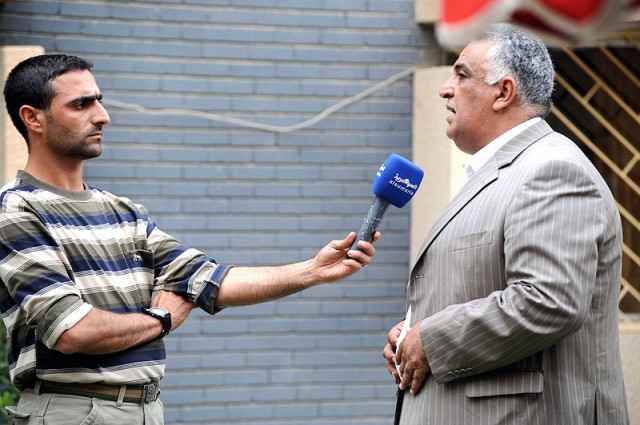
    In an interview with David Goulden, the CEO of EMC’s Infrastructure division, which is the company’s core business, I asked him how they were keeping staff morale up in the face of changes that will almost certainly cost jobs.

    “Change creates uncertainty,” says Goulden. “One thing I’ve learned from this is you cannot over-communicate and that’s true internally and it’s true with our customers. We’ve put an incredible amount of effort in communications so our teams are engaged to go and speak to their customers.”

    As change is now a constant in all industries Goulden’s lesson should be noted by all managers and business leaders – clear, honest and open communications with employees and customers is essential in keeping the trust of the markets and workforce.

    The old model of restricting information and hoping no-one finds out is increasingly harder to sustain and from a business point of view unprofitable in the medium term as well.

    Paul travelled to Las Vegas as a guest of EMC and Netsuite.

    Similar posts:

  • Towards the post journalist media world

    Towards the post journalist media world

    For years I resisted attending the Tech Leaders conference, formerly Kickstart, as I felt a bit of an imposter being invited to attend as a journalist.  As a consequence I missed the peak days of the event.

    In the ‘good old days’ dozens of journalists, most in the employ of profitable media companies, would fly to a Queensland resort to wine, dine and debauch themselves as PR agencies who were picking up the tab would try to introduce their clients and pitch to the group of hungover scribes.

    Funding these events was relatively straightforward, public relations agencies and their clients were happy to pay substantial sums for access to journalists. In the golden days of technology journalism, large IT supplements were full of lucrative advertising for jobs and products.

    That river of advertising gold has long dried up and in the technology industry that shift has been exacerbated by the collapse in IT industry margins which has further hurt advertising budgets.

    As the industry has faded so too have the numbers of media professionals, many journalists have either moved into PR roles themselves or are now desperate freelancers.

    The industry shift to freelancers has been problematic for the organisers as the remaining staff journalists are chronically time poor so can’t lightly take a day away from the desk and the independent reporters don’t offer direct access into trade journals and general news outlets.

    Events like Tech Leaders are giving the PR industry a glimpse of the journalist free media landscape of the near future where the traditional pitching to outlets in the hope of being published is effectively obsolete. Looking at the numbers at Tech Leaders, it’s clear that world is not far off.

    The question everyone in the industry has to ask is ‘how do people perceive I add value?’ For many, including myself, the answer is ‘we don’t’.

    In an age where there is an almost unlimited supply of information and commentary, journalists and PR people have to find a new way to convince the market they add value.

    Similar posts:

    • No Related Posts
  • Happy shiny people

    Happy shiny people

    “If you have anything negative to say, please don’t use the hashtag” implored the organiser to her stable of ‘influencers’ ahead of a recent social media campaign.

    Like everyone in the PR, marketing and advertising industries, that organiser was desperately keeping a shiny patina on their clients’ brands at a time where they are one tweet away from disaster in today’s world of message obsessed management.

    With influencer programs those risks are magnified as marketers co-opt amateurs to promote their clients in return for access and freebies*. Those unpaid posters on Instagram, Twitter and Facebook may be happy to give a positive view to everything but their fans may not be so kind.

    Given their clients’ aversion to risk, it’s not unusual to see marketers setting out terms to ‘influencers’ demanding the brand has the right to vet posts – as one telco requested to this site last year – or outright prohibiting anything negative being said about their client.

    Happy Shiny People

    Perversely, selecting happy shiny people to promote brands on social media while suppressing critical thinking could actually create distrust of brands argues communications consultant Joanne Jacobs who states “this distrust is caused by campaigns of undifferentiated positivity and uncritical thinking.”

    A good example of this potential damage is a recent influencer campaign by Chinese telecommunications Huawei where a group of influencers were flown to the 2016 Mobile World Congress to post about their experiences with the brand.

    The Facebook post below shows the influencers enjoying the vendor’s hospitality but it also illustrates the lack of diversity in the group, something that was quickly called out in the comments.

    huawei-men

    For the Huawei influencers who had spent the previous week gushing about the vendor’s products and events this was an opportunity to provide leadership on the lack of diversity in the tech and telco industries..

    Instead the critics – some of whom had more influential online audiences than the ‘influencers’ – were dismissed with the passive aggressive accusation of being ‘negative’, the cardinal sin of social media marketing.

    For Huawei, there was a real risk their happy shiny influencers clumsy attempts to protect the brand would damage for the company and it was unsurprising the company’s professional PR managers stepped in to defuse the situation which in the hands of amateur ‘brand ambassadors’ threatened to become a self inflicted disaster.

    Brittle brands of happiness

    Huawei’s experience illustrates a key problem with the happy shiny influencer campaigns in their brittleness when faced with genuine criticism. The happy consumerist gleefully liking Instagram photos of shoes or hamburgers will quickly abandon the product should the brand be perceived as acting dishonestly or unethically.

    For those influencers who’ve tied themselves too closely to brands, such a scandal could find their own names tarnished and their hard won audiences and reputation deserting them.

    In an age of conversation where critical voices can be heard, the nice shiny facades can easily collapse. The days when the tobacco industry or brands like Coca-Cola could drown out critical voices simply by the weight of their advertising campaigns are long gone.

    Struggles with a fragmented media

    The struggles for the PR and marketing industries in dealing with today’s fragmented world are not to be underestimated – the old models of broadcast advertising and engaging with journalists and celebrities have lost their effectiveness and the industry is grappling with what works with the new channels.

    In a building a brand that will last in today’s media landscape, pandering to shallow thinking consumerists is at best going to be a short term fix. To succeed, building a believable trustworthy name that tolerates dissent, allows complaints and acknowledges informed criticism is much more important and exponentially more valuable.

    Shallow thinking and shiny people might have worked for Coca-Cola selling to young baby boomers in 1965 but fifty years later things the critics and deeper thinkers have a voice to. Co-opting those voices will only strengthen the brand.

    *Disclaimer: This writer has been on a number of influencer programs and received various degrees of corporate largess including a Huawei smartphone.

    Similar posts:

    • No Related Posts
  • Actuaries and the future of Public Relations

    Actuaries and the future of Public Relations

    One of the truisms of modern industry is we’re going to need more workers with data skills. Could it be actuaries will be the profession of the information age.

    Much of the focus around how companies will deal with an information rich age come down to the need for ‘data scientists’, those with a combination of statistical, analytical and coding skills will be required to coax insights out of complex and rapidly changing data sets.

    At a Future of PR meetup in Sydney earlier this week, one of the panellists raised the possibility that tomorrow’s most valued agency employees will be actuaries as data analytics comes to dominate the industry.

    That boring old actuaries – one particularly cruel joke is atuaries are accountants who failed the personality test – could be the hottest profession in the sexy PR industry is quite a delicious scenario.

    Should that turn out to be the case though, it won’t just be the PR industry chasing actuaries, almost every industry is going to demanding the same set of skills.

    In a strange way it could be the staid professions of today that are the exciting jobs of tomorrow, we’ll reserve judgement on the actuaries though.

    Similar posts:

  • Crisis management for startups

    Crisis management for startups

    What does a startup do when it’s faced with a PR crisis? Recently Australia witnessed a spectacular example of what not to do when Sociabl, a startup that promised to connect users with celebrities, flamed out spectacularly.

    Sociabl promised to connect punters over video with celebrities for a fee ranging from $500 up to $100,000 for individuals like Richard Branson with half the money going to a charity of the celebrities choice.

    The app and its two young founders had plenty of coverage and all looked good until one of them, Brandon Reynolds, appeared on prime time evening show A Current Affair to spruik the service.

    Unfortunately for Brandon he was interviewed by one of the celebrities listed by his app and the host, singer and presenter David Campbell, had never heard of the service.

    A true PR disaster

    Needless to say the interview didn’t go well with poor Brandon meekly declaring at one point “we’re not a major fraud!” You can watch the train wreck on the show’s website.

    To compound the problem Brandon then wrote a defiant Medium post – later removed – accusing the program of slandering him and posting a pile of correspondence with the various celebrities’ agents.

    Earlier this week I was invited to join a panel consisting of a journalist, a startup founder and a lawyer who also runs a startup along with myself we looked at how a startup can avoid a Sociabl like disaster. The lessons from it were clear.

    Stop digging

    Rule one in crisis management is when you find yourself in a hole, the first thing to do is stop making it deeper.

    Brandon clearly missed that memo and his defiant post that accused the journalists and the network of defaming him only antagonised them. What’s worse, the attempt to throw the celebrities’ agents under the bus was only going to take him and his business partners into a new world of pain.

    So when things are looking bad, stopping and taking a deep breath is the first thing to do. The absolute wrong action is lashing out publicly at media, advisors or business partners.

    It’s probably not a crisis

    There is no doubt Sociabl’s debacle was a crisis, but it’s an outlier and a situation that few startups or any businesses will find themselves. In most cases what appears to be a crisis is just a minor hiccup that looks like a big problem because you’re too close to it.

    Most startup founders and small business owners are working hard, under stress and deeply emotionally engaged in their business. It’s understandable to over-react to what is often a minor, or even imagined, crisis.

    By stopping digging, or panicking, and taking that deep breath you have the opportunity to get things into perspective. It’s also the opportunity to take advice.

    Talk to your friends

    One of the first things any new business should set up is an advisory board or panel. Helping with a crisis is exactly what those advisors are for. Talk to them and get their wisdom, usually they’ll bring some perspective and more experienced friends will know how to manage a crisis (if it exists).

    An important aspect of asking for advice is actually taking what’s offered. One way of burning bridges with friends and trusted advisors is to ignore their advice after asking for it.

    If you have investors then talk to them, particularly if they have seats on your board. They’ll want to know about the crisis anyway and if they’re experienced may well be the best people to help.

    Get professional help

    For early stage startups this tip isn’t much use as good PR and crisis communications professionals quite rightly charge a lot of money for their services.

    If you do have raised substantial money however, then a good PR agency should be one of the first professional services engaged with the funds. Sociabl claimed to have raised $210,000 which probably wasn’t enough to get a good one.

    Had Sociable engaged a competent and professional PR firm, it’s likely they would have avoided the disaster on A Current Affair.

    Rally the fans

    If you have loyal customers, user or supporters then a crisis is the time to get them onside by engaging honestly on the web, through email and on social media. Be honest, be open and be quick to reply.

    If you have made a genuine mistake then it’s likely your fans will support you as long as you come clean. All bets are off however if you’re ripping those loyal supporter off.

    Have a plan

    Early in your business do a risk analysis to identify where things could go wrong and have a plan to deal with known risks. Hopefully you’ll never use it but it’s handy to have when something foreseeable happens.

    Don’t be a fraud (of any size)

    “We’re not a major fraud” will go down as one of the greatest lines of the current startup mania and one that Brandon Reynolds will struggle to live down for many decades.

    At this stage I should point out I don’t believe Reynolds and Sociabl were a fraud of any size – he and his team simply didn’t understand how the world of celebrity engagement and the media work.

    The key lesson is don’t be dishonest. Only make claims you can justify and promises you can deliver. Hell hath no fury like customers, investors or journalists who believe they have been misled.

    For those raising money through crowd sourcing this is an important point as overstated claims and missed delivery dates will not only cause a crisis but see loyal supporters desert you.

    More importantly, a crisis brought on by dishonesty may get the attention of the authorities if you’ve breached consumer law with your customers or securities regulations with your investors. Don’t be evil is a good philosophy for a young business.

    In summary, the best advice for a startup in avoiding a crisis is not to put get in the position where you might find yourself in one however sometimes things are outside your control, when they do take a deep breath and talk to your friends.

    Similar posts: